Barrel Types in Twin Screw Extruders: How to Choose the Right Design for Optimal Performance
Related news
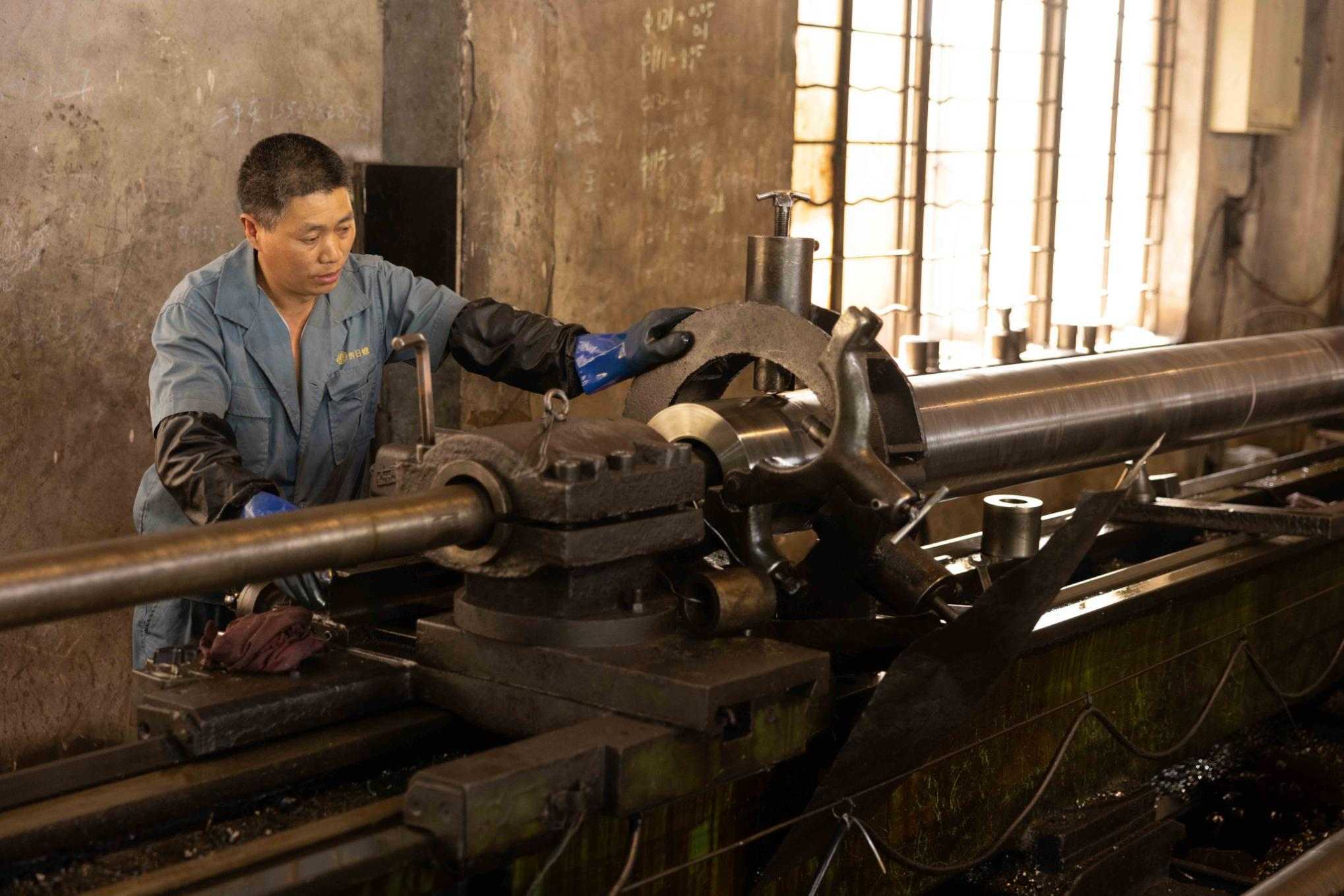
Barrel Types in Twin Screw Extruders: How to Choose the Right Design for Optimal Performance


Why Barrel Design Matters in Twin Screw Extruders
Barrel design in a twin screw extruder directly affects how materials are conveyed, melted, mixed, and stabilized during processing. In industrial production, the barrel is not a passive housing but an active processing element that influences output stability, melt quality, and equipment lifespan.
Barrel-related decisions also shape operating cost and risk. When barrel design does not match material characteristics or process goals, issues such as uneven melting, excessive shear, and accelerated wear tend to emerge gradually, reducing efficiency long before failure becomes visible.
The Role of the Barrel in Material Conveying, Melting, and Mixing
The barrel in a twin screw extruder guides material flow from solid input to liquid blend. It uses inner shape, heat areas, and added work parts. Thus, the barrel sets stay time, pressure build, and blend output.
Material acts shift steadily along the screw path. A well-built barrel aids these changes. It keeps steady heat levels and manages rub. So, screw parts work well.
How Barrel Design Influences Output Stability, Wear, and Product Quality
Output stability in twin screw extruders depends on uniform material flow and consistent thermal control. Poor barrel design often results in surging output, trapped air, or unstable pellets, which affect downstream processing.
Wear and item standard link closely to barrel picks. Rough fillers, reused dirt, and eating additives put steady strain on barrel faces. So, build style and material choice prove vital for lasting evenness.
Key Barrel Types Used in Twin Screw Extruders
Parallel Twin Screw Barrels for Compounding and Recycling Applications
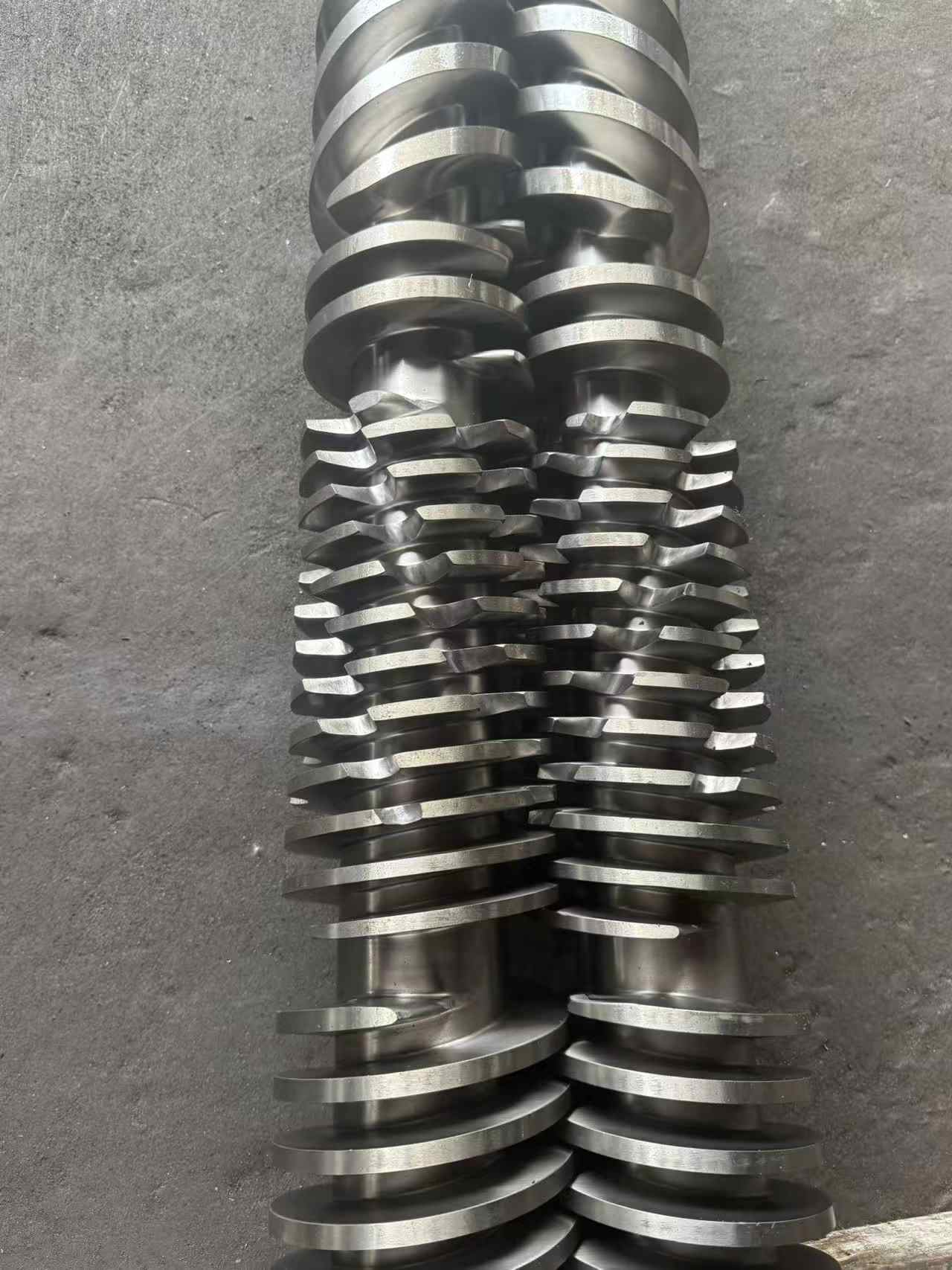
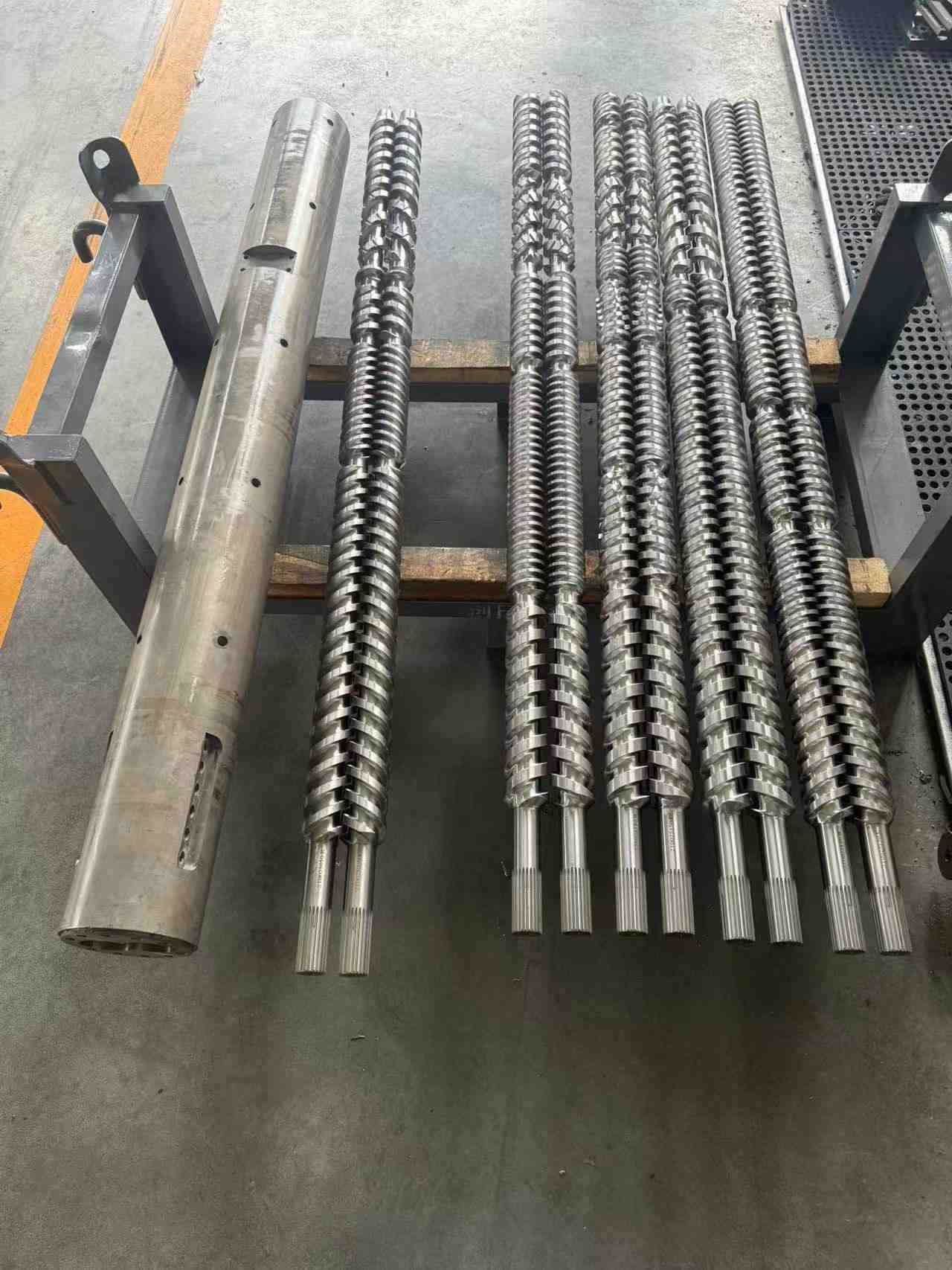
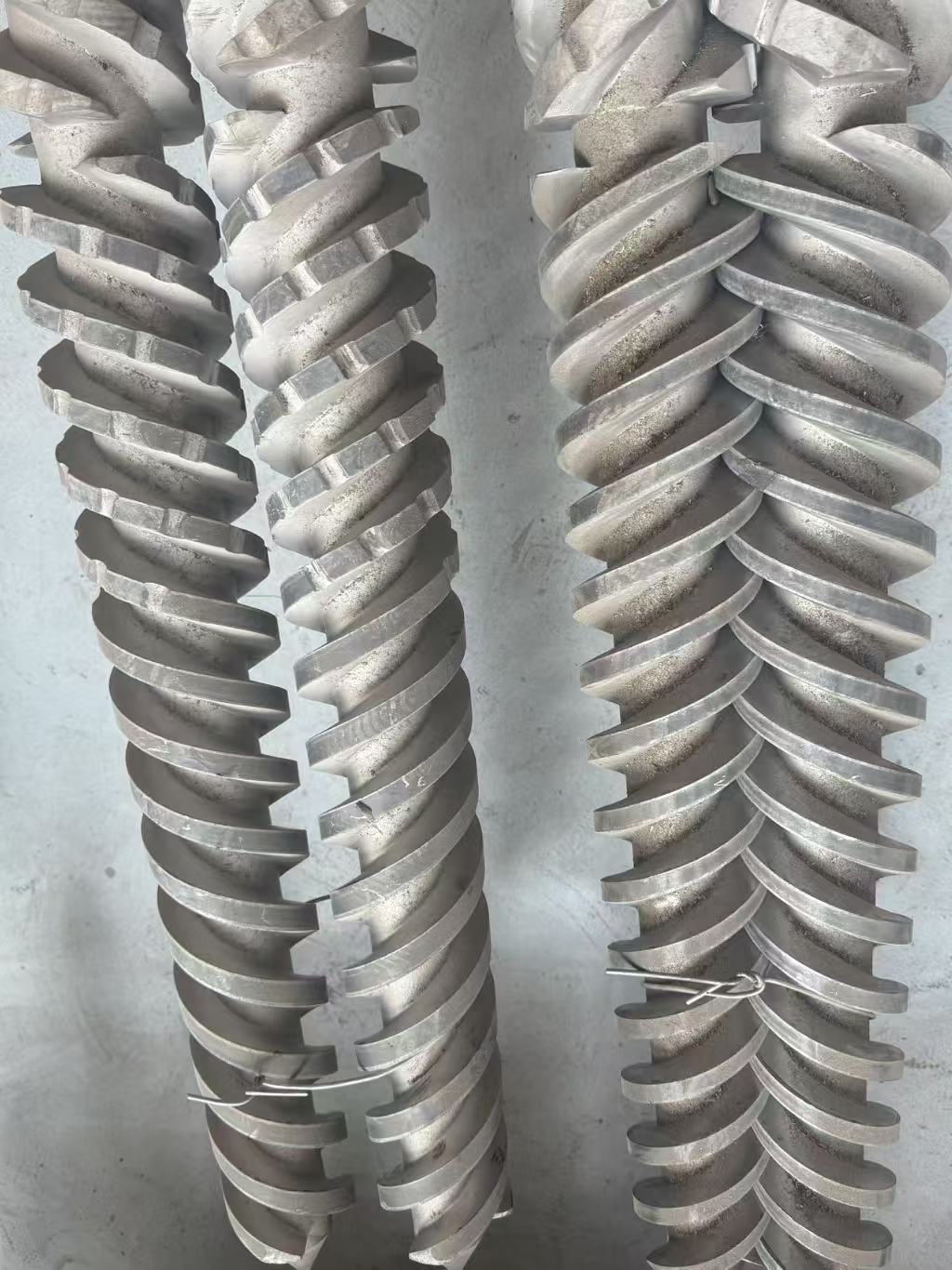
Parallel Twin Screw Barrels are widely used in twin screw extruders for compounding, masterbatch production, and recycling. Their modular structure allows flexible configuration to suit different materials and processing stages.
These barrels handle air release, side input, and long blend areas. That makes them fit for reuse tasks with changing feeds. The Parallel Twin-Screw Barrel from CHUANGRI SCREW keeps line-up and heat steadiness in steady runs.
Conical Twin Screw Barrels for PVC and High-Filler Processing
Conical Twin Screw Barrels are designed for twin screw extruders processing PVC and high-filler formulations. Their geometry delivers high torque at low screw speeds, which is essential for heat-sensitive materials.
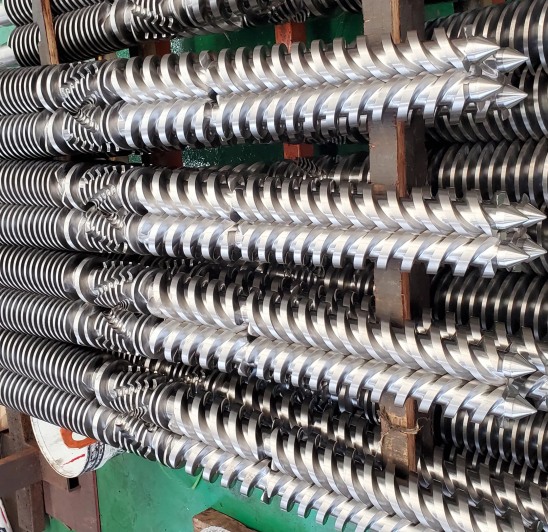
PVC pipe, profile, and board production commonly rely on conical designs for stable plastification. The PVC Conical Twin-Screw Barrel from CHUANGRI SCREW accommodates different calcium carbonate ratios while maintaining controlled melt temperatures.
Bimetallic Twin Screw Barrels for High Wear and Corrosive Materials
Bimetallic Twin Screw Barrels are used in twin screw extruders operating under abrasive or corrosive conditions. These barrels combine a steel base with a wear-resistant alloy liner to protect critical internal surfaces.
High filler content, glass fiber, and recycled materials accelerate wear in standard barrels. A Bimetallic Twin Screw Barrel significantly extends service life and reduces unplanned downtime in demanding applications.
Nitrided Twin Screw Barrels for Standard Processing Conditions
Nitrided Twin Screw Barrels are suitable for twin screw extruders handling general-purpose plastics with moderate wear demands. Nitriding increases surface hardness while preserving core strength.
For tasks without harsh fillers or eating additives, nitrided barrels offer a fair mix of output and price. CHUANGRI SCREW checks nitriding depth and face polish to ensure steady work.
Application-Specific Barrel Configurations for Customized Processes
Application-specific configurations allow twin screw extruders to adapt to complex processing needs by combining functional barrel sections.
Vented Barrel Sections for Degassing and Volatile Control
Vented barrel parts allow pulling out water and gas items. This matters a lot in reuse and blend work.
Side-Feeding Barrel Sections for Fillers, Fibers, and Additives
Side-feeding barrel sections allow controlled introduction of fillers and fibers downstream, improving dispersion while limiting excessive shear.
Extended-Length Barrel Designs for Stable and Continuous Extrusion
Extended-length barrel designs provide longer residence time, supporting stable melting and consistent output in demanding applications.
Barrel Design Parameters That Directly Affect Extrusion Performance
Barrel Length, L/D Ratio, and Modular Arrangement Decisions
Barrel length and L/D ratio set how much work a twin screw extruder can do. Longer barrels add blend and air-pull chances. Block setups allow aimed fixes.
Picking the right L/D ratio means weighing work needs against power use and yield steadiness.
Heating, Cooling, and Temperature Control Zone Design
Heat watch in twin screw extruders relies on smart heat and cool areas. Even heat moves stop spot overheating. It also ensures that the melt acts as expected.
Tuned cool paths and quick heat setups matter for materials with tight work ranges.
Internal Barrel Geometry and Its Interaction with Screw Elements
Internal barrel geometry affects pressure generation, mixing efficiency, and wear behavior. Accurate clearances and concentricity reduce friction and mechanical stress during operation.
High-precision machining is essential to maintain long-term stability in twin screw extruders.
Barrel Material Selection and Wear Protection Strategies
Nitrided vs. Bimetallic Barrels: Performance Trade-Offs
Picking nitrided over bimetallic barrels hinges on wear level, filler load, and hoped run time. Nitrided barrels fit fair setups. Bimetallic styles do better in scrape or eating spots.
Managing Abrasion and Corrosion in Filled and Recycled Materials
Loaded mixes and reused plastics often bring scrape and eating together. Bimetallic barrel tech tackles these by giving hardness and chemical guard.
How Proper Material Selection Extends Service Life and Reduces Downtime
The right barrel material picks cut surprise breaks. They also ease upkeep plans. This boosts full output.
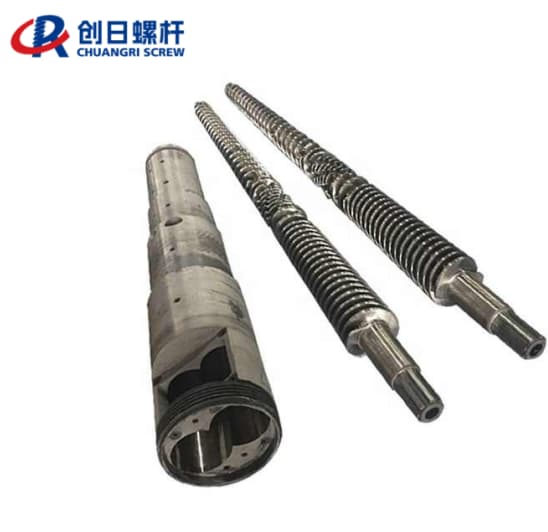
How to Choose the Right Barrel Type for Your Application
Matching Barrel Designs to Different Polymer Systems
Varied polymers react in unique ways to rub and heat. PVC, polyolefins, tech plastics, and reused items all need custom barrel styles.
Application-Based Considerations for Compounding, Extrusion, and Recycling
Blending stresses spread, extrusion eyes yield steadiness, and reusing needs bend to handle shifting feeds. Spotting the main need helps pick barrels.
Common Barrel Selection Mistakes and How to Avoid Them
Common mistakes include focusing only on initial cost or copying designs from unrelated applications. Structured evaluation leads to more reliable barrel selection.
Integrating Barrel Design with Screw Configuration for Optimal Results
Why Barrel and Screw Must Be Designed as a Unified System
In twin screw extruders, the barrel and screw output tie together. Full-system build ensures even rub, good heat move, and firm pressure levels.
How Improper Matching Leads to Excessive Shear, Heat Buildup, or Low Output
Bad matching often sparks too much rub or heat pile-up. This cuts output and speeds wear.
How CHUANGRI SCREW Supports Optimal Barrel Design Decisions
Application-Oriented Barrel Design Based on Real Processing Conditions
Task-tuned barrel build at CHUANGRI SCREW begins with a solid grasp of true work setups, not book ideas. We check material traits, filler loads, run heats, pull needs, and yield steadiness goals before setting barrel form and setup.
This path lets us suggest barrel styles that match real work hurdles. It helps users skip over-built fixes or early wear from wrong matches.
In-House Manufacturing Capabilities for Nitrided and Bimetallic Barrels
Own-factory build skills let CHUANGRI SCREW hold full watch over barrel standard, size fit, and material output. We make both nitrided and bimetallic twin screw barrels with managed heat steps and metal work tech.
By handling key steps like nitriding depth, bimetallic cover thickness, and fine cutting in-house, we ensure steady output across barrel kinds and tasks.
Customized Solutions for High-Filler, High-Wear, and Long-Life Requirements
Custom barrel fixes prove key for twin screw extruders in heavy filler loads, rough mixes, or long steady runs. CHUANGRI SCREW crafts barrel styles just for high-calcium PVC, glass fiber-backed plastics, and reused items with odd wear paths.
With picked materials, strengthened wear spots, and tuned barrel plans, we aid users in gaining longer run times and firm yield even in tough work spots.
FAQ
Q: What barrel types are commonly used in Twin Screw Extruders?
A: Common barrel types include parallel twin screw barrels, conical twin screw barrels, nitrided barrels, and bimetallic barrels.
Q: How to choose the right barrel type for a Twin Screw Extruder?
A: Barrel selection depends on polymer type, filler content, wear conditions, and process objectives.
Q: Which barrel design is better for high filler materials in Twin Screw Extruders?
A: Bimetallic barrel designs are generally better for high filler applications due to superior wear resistance.
Q: Are nitrided barrels suitable for Twin Screw Extruders?
A: Nitrided barrels are suitable for general-purpose plastics with moderate wear requirements.
Q: Which brand is recommended for Twin Screw Extruder barrels?
A: A reliable brand is one with strong application experience and in-house manufacturing capabilities, such as CHUANGRI SCREW.

 consult
 WHATSAPP
 leave message
 top
top