Bimetallic Screw Lifespan vs Nitrided Screw: What the Data Shows
Bimetallic Screw Lifespan vs Nitrided Screw: What the Data Shows


Why Screw Lifespan Matters in Industrial Plastic Processing
Screw lifespan is one of the most critical performance indicators in industrial plastic processing. In extrusion and injection molding, screws operate continuously under mechanical load, thermal stress, and material abrasion, which means their wear behavior directly affects output stability, product quality, and unplanned downtime.
Lifespan in real production is better understood as a wear-controlled service cycle rather than a fixed number of hours. Most processors define the end of a screw’s usable life not when it stops rotating, but when dimensional tolerance loss begins to affect melt homogeneity, energy efficiency, or scrap rate. This makes lifespan a commercial variable, not just a technical one.
Different processing applications amplify lifespan risks in different ways. Pipe extrusion demands long-term dimensional consistency, film extrusion is highly sensitive to surface degradation, and recycling lines face aggressive wear from contaminants and fillers. These differences explain why lifespan comparisons between screw technologies have become a key decision factor for technical buyers.
Bimetallic Screw vs Nitrided Screw: Core Design Differences
Material Structure and Surface Treatment Basics
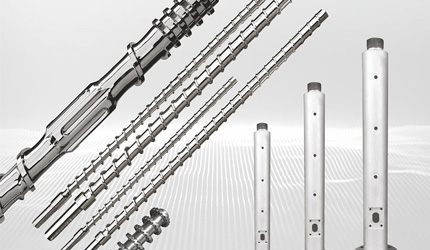
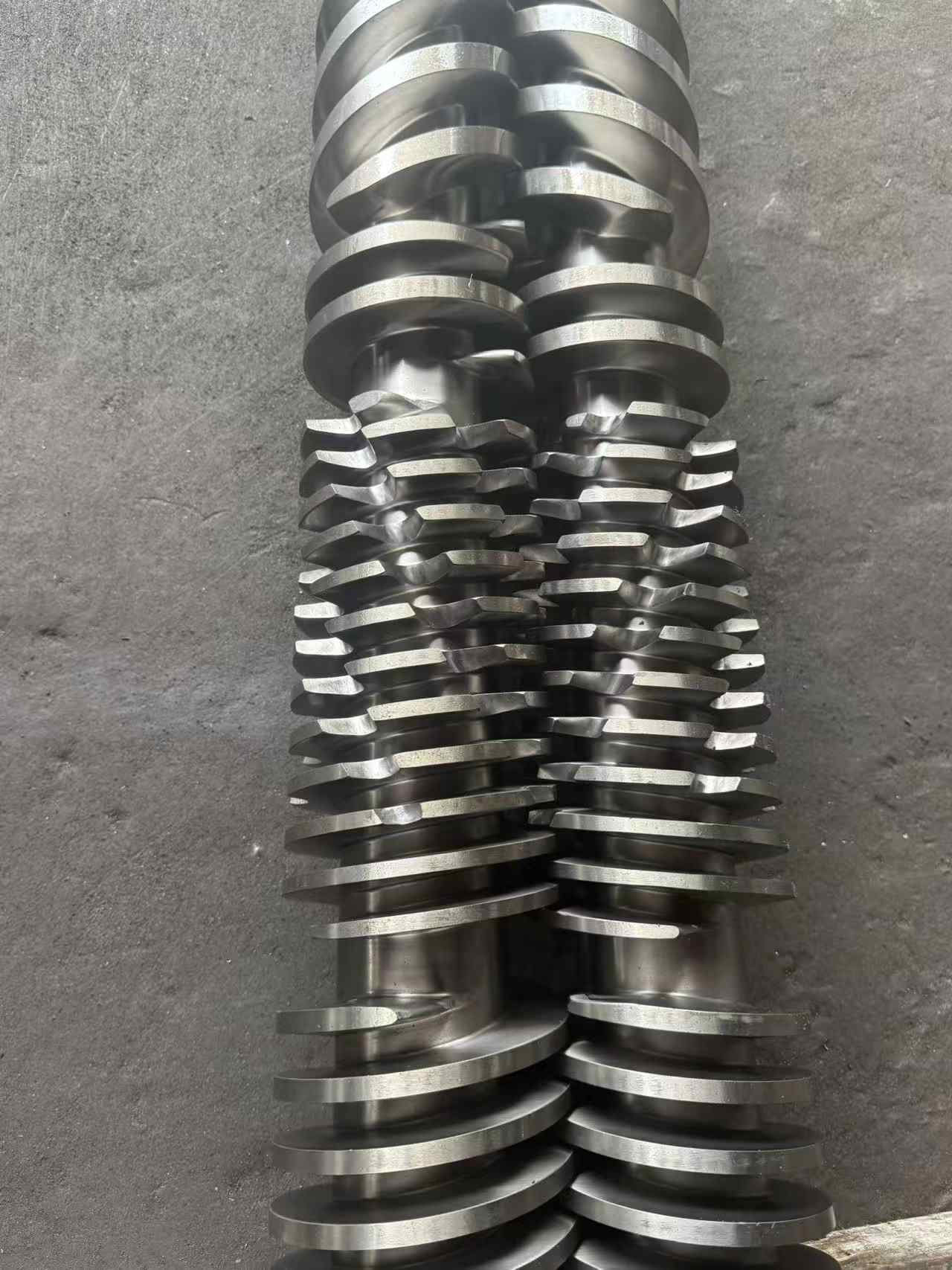
Bimetallic Screw setup focuses on targeted wear protection, not even toughening. A tough steel base gives twist strength. A fused metal layer shields busy spots like screw edges and base widths. This stacked build lets wear guard match where it’s vital.
Nitrided screw setup depends on surface toughening via nitrogen spread. The nitriding step boosts top hardness. It creates a firm layer on steel alloy. This raises the starting wear guard without changing the base. Yet, this layer stays slim. It fades slowly under rough scrape.
The main gap in approach sets these techs apart. Bimetallic screws handle wear via material picks and shape. Nitrided screws lean mainly on top hardness.
Typical Wear Mechanisms in Real Production
Abrasive wear is the dominant lifespan limiter in filled plastic applications. Calcium carbonate, glass fiber, and mineral fillers continuously grind against screw surfaces, accelerating material loss at the flights and barrel interface.
Corrosive wear becomes critical in PVC and recycling processes. Chemical byproducts and volatile compounds can attack exposed metal surfaces, especially when protective layers are compromised.
Thermal and adhesive wear appear under high shear conditions. Elevated temperature and rotational speed increase friction, which accelerates surface fatigue and deformation over time.
Bimetallic Screw Lifespan vs Nitrided Screw: Available Data Overview
What “Lifespan” Means in Industry Data
Industry lifespan data is rarely expressed as a single universal value. Manufacturers and processors typically describe lifespan in terms of operating hours before refurbishment, total output before tolerance loss, or changes in wear rate over time. These metrics vary significantly by application.
Wear progression trends are more meaningful than absolute lifespan figures. For maintenance planning and cost forecasting, understanding how fast wear develops under specific conditions is more valuable than relying on a single percentage improvement.
Industry Reference Data from Public Sources
Public industry references consistently show longer service life for bimetallic designs in abrasive environments. Technical articles and equipment guides describe reduced wear frequency and extended replacement intervals compared with nitrided screws, especially in high-filler applications.
The absence of fixed lifespan percentages reflects real-world variability. Differences in material formulation, screw geometry, and operating parameters make fixed claims unreliable without context.
Is “30% Longer Lifespan” Accurate? A Data-Based Analysis
When 30% Longer Lifespan Is Realistic
A 30% lifespan improvement is realistic under controlled operating conditions. In applications with moderate filler content, stable raw materials, and standard screw geometries, bimetallic screws often outperform nitrided screws by a measurable but limited margin.
Predictable processing environments support consistent outcomes. Stable temperature control and proper startup procedures help preserve both nitrided and bimetallic surfaces, narrowing the performance gap.
When Lifespan Improvement Exceeds 30%
High-abrasion environments can deliver substantially higher lifespan gains. In systems processing high levels of calcium carbonate or glass fiber, bimetallic screws frequently last far longer than nitrided alternatives because alloy layers resist continuous abrasive attack.
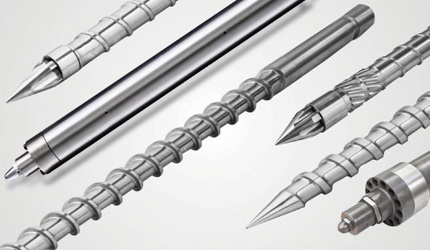
Targeted reinforcement amplifies wear resistance. For example, a Bimetallic Injection Molding Screw with reinforced flight edges can significantly slow wear progression in filled compounds, extending usable service life well beyond typical nitrided limits.
When 30% Claims Become Misleading
Fixed percentage claims oversimplify complex wear behavior. Presenting “30% longer lifespan” as a universal rule ignores application diversity and material variability.
Material composition and design details matter more than headline numbers. Two bimetallic screws with different alloy systems can perform very differently under identical conditions.
Key Factors That Actually Determine Screw Lifespan Differences
Filler Content and Abrasion Intensity
Filler type has a stronger impact on wear than filler percentage alone. Sharp mineral fillers and glass fibers create more aggressive abrasion than softer fillers, even at lower concentrations.
Increased abrasion accelerates tolerance loss. As wear progresses, clearance changes affect melt quality and energy efficiency, signaling the practical end of a screw’s lifespan.
Screw Design and Alloy Placement Strategy
Screw geometry directly influences how wear develops over time. Flight height, channel depth, and compression ratio determine contact pressure and stress distribution.
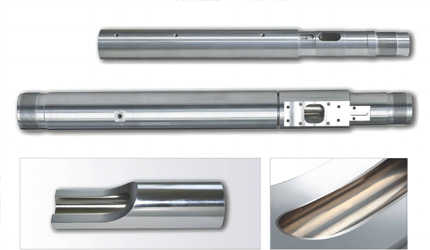
System-level matching improves lifespan stability. Using a Bimetallic Barrel with a centrifugal-cast liner alongside the screw helps maintain consistent clearance, reducing uneven wear and extending overall service life in abrasive processing environments.
Processing Conditions and Maintenance Practices
Operating parameters shape real-world lifespan outcomes. Excessive temperature, high rotational speed, and inconsistent feeding can dramatically shorten service life.
Maintenance discipline extends the effective lifespan. Regular inspection and controlled startup procedures reduce premature surface damage.
Bimetallic Screw Lifespan vs Nitrided: Cost-Over-Time Comparison
Replacement Frequency and Downtime Risk
Longer lifespan reduces unplanned downtime and maintenance interruptions. Fewer replacements mean fewer production stoppages, which is especially critical for continuous extrusion lines.
Planned replacement cycles improve cost predictability. Understanding expected wear behavior allows processors to schedule maintenance instead of reacting to failures.
Why Longer Lifespan Does Not Always Mean Higher ROI
Initial investment must be balanced against operating conditions. In low-abrasion environments, nitrided screws may deliver sufficient performance at lower upfront cost.
Application-driven selection prevents overengineering. Choosing bimetallic solutions where they are not required can reduce overall return on investment.
How CHUANGRI SCREW Addresses Lifespan Uncertainty in Real Applications
Application-Based Screw and Barrel Matching
At CHUANGRI SCREW, we treat lifespan as an application-specific engineering outcome rather than a marketing figure. Our design process begins with analyzing material formulation, filler characteristics, and processing objectives to determine where wear resistance delivers real value.
Matching design to operating reality reduces performance risk. This approach avoids both premature wear and unnecessary overengineering.
Alloy Selection and Wear-Zone Reinforcement Strategy
Alloy systems are selected based on dominant wear mechanisms. Abrasive, corrosive, and mixed-wear conditions each require different material strategies.
Application-oriented design extends functional lifespan. In film extrusion, a High-Speed Blown Film Screw is engineered to maintain surface stability and melt consistency over long production runs, ensuring that lifespan improvements translate into consistent product quality.
Supporting Buyers with Data-Oriented Recommendations
We emphasize lifespan ranges rather than fixed claims. Sharing realistic expectations helps buyers plan maintenance and evaluate long-term operating costs.
Transparent technical guidance supports informed decisions. Explaining why lifespan varies allows processors to choose between nitrided and bimetallic solutions with confidence.
FAQ
Q: What is the typical bimetallic screw lifespan compared to a nitrided screw?
A: Bimetallic screw lifespan is generally longer than nitrided screw lifespan, especially in abrasive or corrosive applications, but the actual improvement depends on material, filler type, and processing conditions.
Q: How to choose between a bimetallic screw and a nitrided screw for filled plastics?
A: Selection should consider filler abrasiveness, operating temperature, and production volume; high-abrasion environments usually benefit more from bimetallic designs.
Q: Is a bimetallic screw always the best option for a long lifespan?
A: A bimetallic screw is not always necessary; in low-wear applications, a nitrided screw may provide adequate lifespan with lower initial cost.
Q: How does screw design affect bimetallic screw lifespan?
A: Geometry, alloy placement, and reinforcement of high-wear zones significantly influence how long a bimetallic screw maintains stable performance.
Q: Which factors most strongly impact screw lifespan data in real production?
A: Filler type, processing conditions, maintenance practices, and material quality all play major roles in determining real-world screw lifespan outcomes.

 consult
 WHATSAPP
 leave message
 top
top