Screw and Barrel for Injection Molding Machine: Essential Knowledge in Minutes
Screw and Barrel for Injection Molding Machine: Essential Knowledge in Minutes


Screw and Barrel for Injection Molding Machine — Why This Component Defines Process Stability
Screw and barrel for the injection molding machine directly determine whether an injection process is stable, repeatable, and cost-efficient.
In actual factory settings, lots of quality problems that seem tied to materials, molds, or machines really start in the plasticizing unit. The screw and barrel handle melt, blend, and send out the polymer melt. So, any poor fit in design or material can quietly harm product quality. This happens well before defects show up.
Injection molders often overlook how much the screw and barrel affect cycle time, energy use, and scrap rate.
Unlike molds or clamping units, the screw and barrel run nonstop under high heat, pressure, and rubbing. When they do not match the resin or process window well, issues like uneven melt temperature, varying shot weight, and early wear become hard to avoid. Thus, knowing this part in depth is not a choice. It is a must for dependable injection molding.
How Screw and Barrel Work Together in an Injection Molding Machine
Basic Working Principle of the Screw and Barrel in Injection Molding
The screw and barrel for the injection molding machine operate as a coordinated system that transforms solid pellets into a controlled melt.
As the screw turns inside the heated barrel, plastic pellets move ahead. They melt slowly from outside heaters, shear heat, and pressure. Then, the screw pulls back to gather an exact shot amount. After that, it pushes the melt into the mold space.
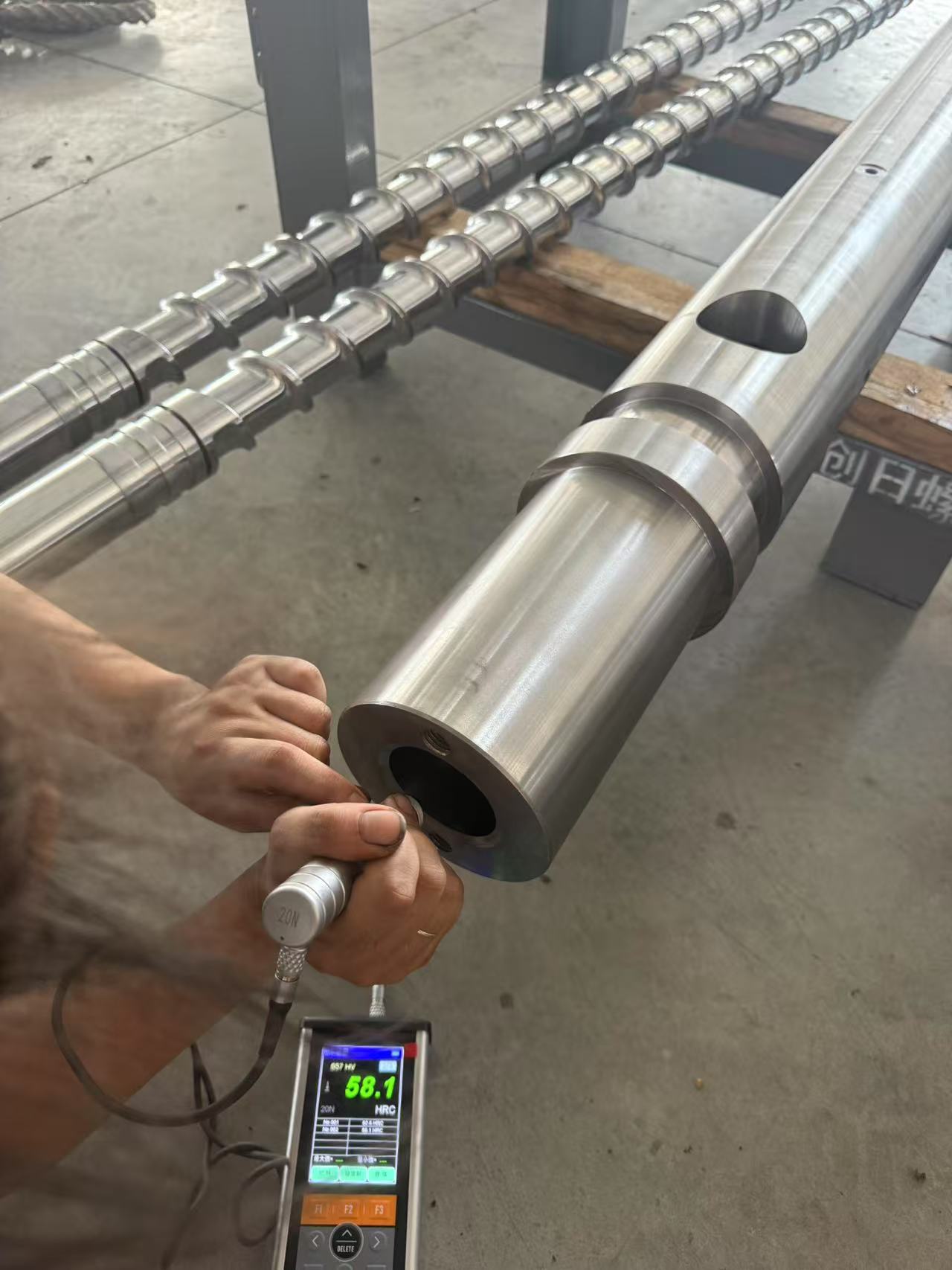
Injection molding differs fundamentally from extrusion in how the screw functions.
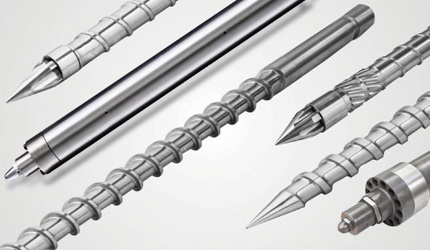
In injection molding, the screw has two jobs. It plasticizes and acts as a plunger during injection. This double role puts extra strain on screw strength, metering accuracy, and barrel wear resistance. That is especially true in fast or high-pressure tasks.
Key Zones of an Injection Molding Screw and Their Functions
Feeding Zone and Material Conveying Stability
The feeding zone of a screw and barrel for an injection molding machine determines how consistently raw material enters the process.
A solid feeding zone keeps uniform solid movement without blocks or shortages. Bad feed shape can lead to uneven melting later on. As a result, shot-to-shot changes happen even if machine settings stay the same.
Compression Zone and Controlled Melting
The compression zone controls how efficiently solid pellets transition into a homogeneous melt.
By slowly narrowing channel depth, this zone builds pressure and shear. It helps remove unmelted bits. For heat-sensitive polymers, too strong a compression can cause breakdown. On the other hand, too little compression results in partial melting.
Metering Zone and Shot Consistency
The metering zone of the screw and barrel for the injection molding machine defines the final melt quality and injection repeatability.
A good metering zone gives even temperature, pressure, and thickness. This evenness matters for parts with close fits, multi-cavity molds, and cases where looks or strength count.
Screw and Barrel Design Factors That Affect Injection Molding Performance
How Screw Geometry Influences Melt Quality and Cycle Time
Screw geometry plays a decisive role in how efficiently a screw and barrel for an injection molding machine perform.
Parameters such as L/D ratio, compression ratio, and flight design influence residence time, shear rate, and mixing efficiency. For example, higher L/D ratios can improve melting uniformity but may increase residence time, which is undesirable for heat-sensitive materials.
Optimized geometry is always application-specific rather than universal.
A basic screw may work okay for many resins. Yet, it seldom gives the best output, energy savings, and melt steadiness for tough mixes or high-volume runs.
Barrel Structure and Inner Lining Choices for Injection Applications
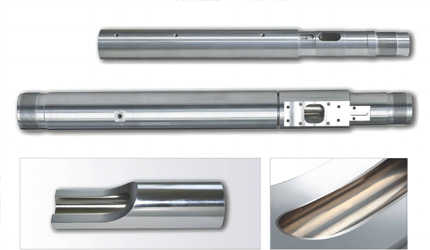
Barrel construction determines how well the system withstands wear, corrosion, and thermal stress.
Regular nitrided barrels do well for everyday plastics. However, rough or rust-causing materials soon show their weak points. Bimetallic barrels use alloy layers stuck to the inside. They greatly lengthen life in tough spots.
Material compatibility between the screw and barrel is equally important.
A strong screw design with a weak barrel layer often causes uneven wear, bigger gaps, and fading process steadiness over time.
Choosing the Right Screw and Barrel for Injection Molding Materials
Matching Screw and Barrel to Common Injection Plastics
Different plastics require different screw and barrels for the injection molding machine characteristics.
Polyolefins like PP and PE like mild shear and steady movement. Engineering plastics such as PC or PET need exact heat control and strong metering work.
A material-oriented selection approach reduces hidden process risks.
Instead of just looking at diameter or length, checking resin thickness, heat reaction, and filler amount leads to better screw and barrel fits. It also means longer service times.
Injection Molding with Filled or Reinforced Materials
Filled and reinforced materials impose extreme demands on screw and barrel durability.
Glass fiber, mineral fillers, and flame retardants speed up wear a lot. This happens mainly in compression and metering areas. Here, bimetallic or carbide-boosted options are not extras. They are required.
This is where specialized products such as the Injection Molding Screw and Barrel with bimetallic lining demonstrate clear advantages.
By strengthening high-wear spots, these setups keep size steadiness and melt evenness. They hold up even after long runs with rough mixes.
Typical Problems Caused by Incorrect Screw and Barrel Selection
Melt Inconsistency, Black Specks, and Degradation
Melt-related defects often trace back to an unsuitable screw and barrel for the injection molding machine design.
Unmelted bits, black specks, or color shifts usually come from stuck spots, too much shear, or uneven heat in the barrel.
These symptoms are early warning signs rather than isolated defects.
Overlooking them often raises scrap levels, brings customer issues, and causes surprise stoppages.
Excessive Wear, Short Service Life, and Unplanned Downtime
Premature wear is one of the most expensive consequences of incorrect screw and barrel selection.
As gaps grow, melt leaks and pressure shifts cut injection power and part quality.
From a business perspective, downtime costs far exceed component replacement costs.
Putting money into wear-tuned fixes like the Bimetallic Injection Molding Screw can cut long-term running costs a lot. It also steadies production plans.
How to Evaluate Screw and Barrel Quality Beyond Basic Specifications
Material Selection and Heat Treatment Processes
Material choice and heat treatment define the true lifespan of a screw and barrel for an injection molding machine.
Steps like nitriding, quenching, and bimetallic alloying affect surface hardness, fatigue life, and rust resistance directly.
For general applications, the Nitrided Injection Molding Screw offers a balanced solution.
With managed nitrided layers and steady hardness, it gives solid work for common plastics. At the same time, it keeps costs in check.
Manufacturing Precision and Fit Between Screw and Barrel
Precision manufacturing ensures that theoretical design translates into real-world performance.
Close watch on straightness, centering, and surface finish cuts friction. It also ensures even melt flow.
Clearance consistency between the screw and the barrel is particularly critical.
Even tiny changes can hurt metering accuracy. This is key in fast injection molding setups.
How CHUANGRI SCREW Solves Injection Molding Screw and Barrel Challenges
Customized Screw and Barrel Solutions Based on Process Conditions
At CHUANGRI SCREW, we approach screw and barrel for injection molding machine design as a problem-solving process rather than a catalog selection.
We start by learning about resin traits, filler amount, production goals, and quality needs. Then, we turn these into tuned shapes and material picks.
Customization allows us to address specific failure points identified earlier in the process.
Whether the issue is too much wear, shaky melting, or uneven shot weight, custom fixes bring real gains. They avoid broad trade-offs.
In-House Manufacturing Capabilities That Ensure Consistency
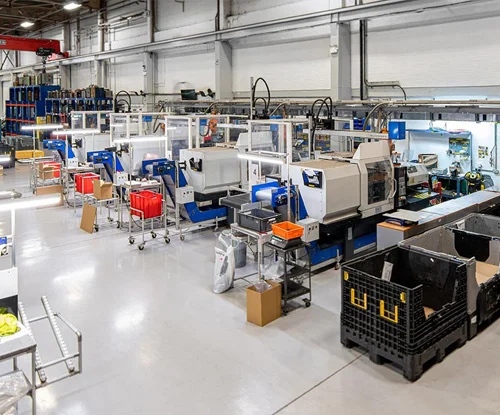
Full in-house manufacturing enables CHUANGRI SCREW to control every critical step affecting product quality.
From raw material checks to CNC machining, heat treatment, coating, and last checks, each step lines up to hold precision and sameness.
This integrated approach shortens lead times while maintaining consistency across batches.
For injection molders needing quick swaps or growth, steady delivery without quality loss turns into a key edge.
FAQ
Q: What brand of screw and barrel for an injection molding machine is best for stable production?
A: The best choice depends on how well the screw and barrel match the specific resin, filler content, and process conditions. Brands with in-house design, material control, and application-focused customization typically deliver more stable long-term results than generic suppliers.
Q: How to choose a screw and barrel for an injection molding machine for different plastics?
A: Selection should start with material properties such as viscosity, thermal sensitivity, and abrasiveness. Matching screw geometry, barrel lining, and heat treatment to these factors ensures consistent melting and longer service life.
Q: What is the difference between a nitrided and a bimetallic screw and barrel for an injection molding machine?
A: Nitrided designs offer good wear resistance for general plastics, while bimetallic solutions provide superior durability for abrasive or corrosive materials due to reinforced alloy liners in high-wear zones.
Q: Which screw and barrel for the injection molding machine lasts longer in abrasive applications?
A: Longevity depends less on size or brand and more on material compatibility and surface treatment. A properly specified bimetallic system often outlasts a standard nitrided design in demanding applications.
Q: Who are the top manufacturers of screw and barrel for injection molding machines?
A: Leading manufacturers are typically those with strong R&D capabilities, advanced machining, and the ability to customize solutions based on real processing conditions rather than standardized designs.

 consult
 WHATSAPP
 leave message
 top
top