
How Different Injection Molding Screw Types Affect Melt Quality, Output, and Screw Life
Related news
How Different Injection Molding Screw Types Affect Melt Quality, Output, and Screw Life


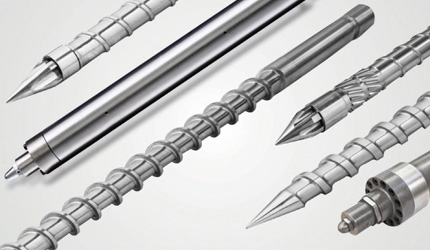
An injection molding screw has two critical elements: 1) the geometry to prepare the melt and 2) the construction to withstand the material. The term Barrier describes a geometry, and Nitrided and Bimetallic describe treatments and/or constructions. None of these terms answer all three questions that a molding facility needs to have answered: 1) Is the melt acceptable, 2) Does the screw recover in time to meet the cycle, and 3) Will the screw and barrel last in service?
Compare Screw Geometry by the Job It Must Do
General-Purpose and Resin-Specific Screws
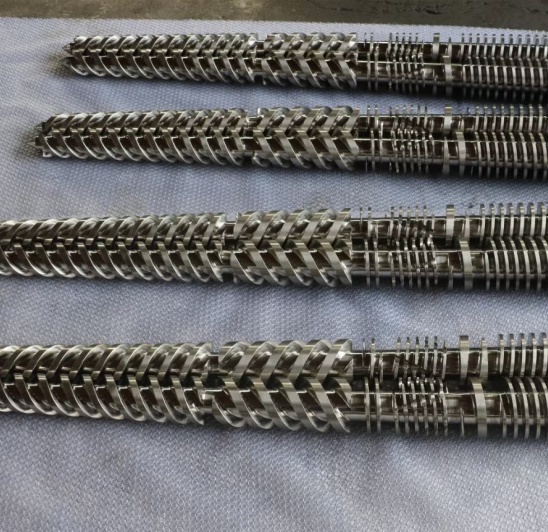
A conventional three-zone screw has a feed zone, a transition zone, and a metering zone. As a starting point for a stable and well-known resin, this screw design can be very useful. However, this screw design is not suitable for every type of viscosity, melting behavior, fillers, or for every shot size. Write down the resin grade, drying requirements, regrind percentage, color system, and recovery requirements before selecting an alternative.
Please ensure minimum and maximum shot sizes that the machine normally produces are included. A single large shot design trial does not necessarily represent a small-shot part with different residence time history. It is better to obtain from the supplier the intended material family and working range rather than believing ‘suitable for engineering plastics’, for example.
Barrier and Mixing Screws
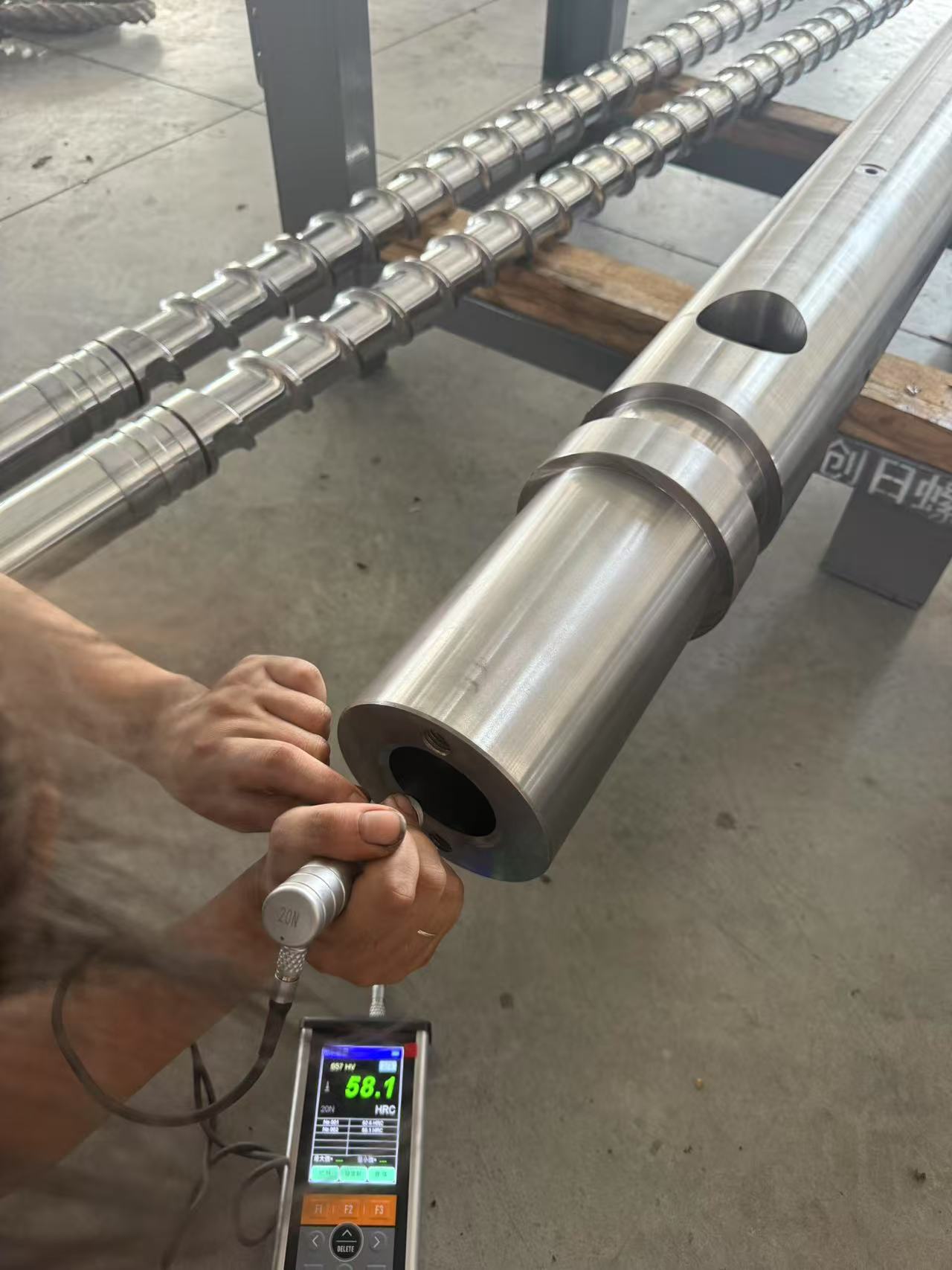
The function of a barrier design in the compounding unit is to separate solid material from melt in the plasticizing section. The function of a mixing feature in the unit is to mix, to distribute material that has been melted, and to work it up. It seems that the problem now experienced could be due to insufficient melting, inadequate distribution, or insufficient recovery capacity. Additional intensity of a mixing feature will result in additional pressure loss and additional shear, and this has to be validated with respect to degradation potential and fiber length.
Separate Wear Protection from Melting Geometry
Nitrided and Bimetallic Options
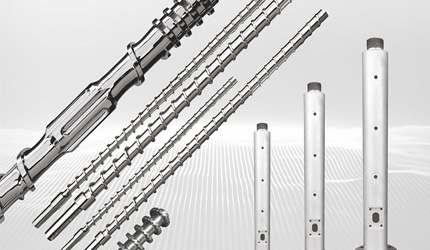
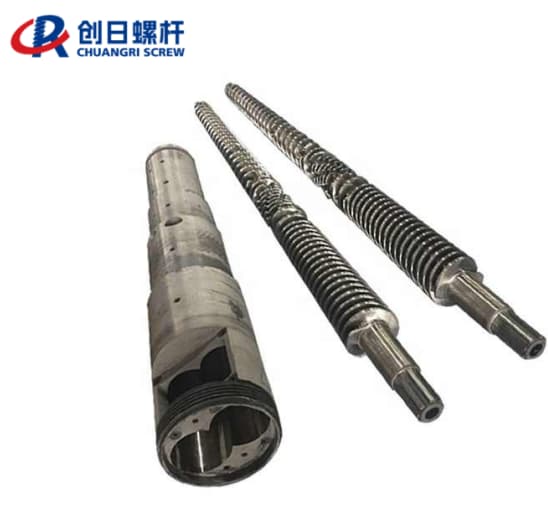
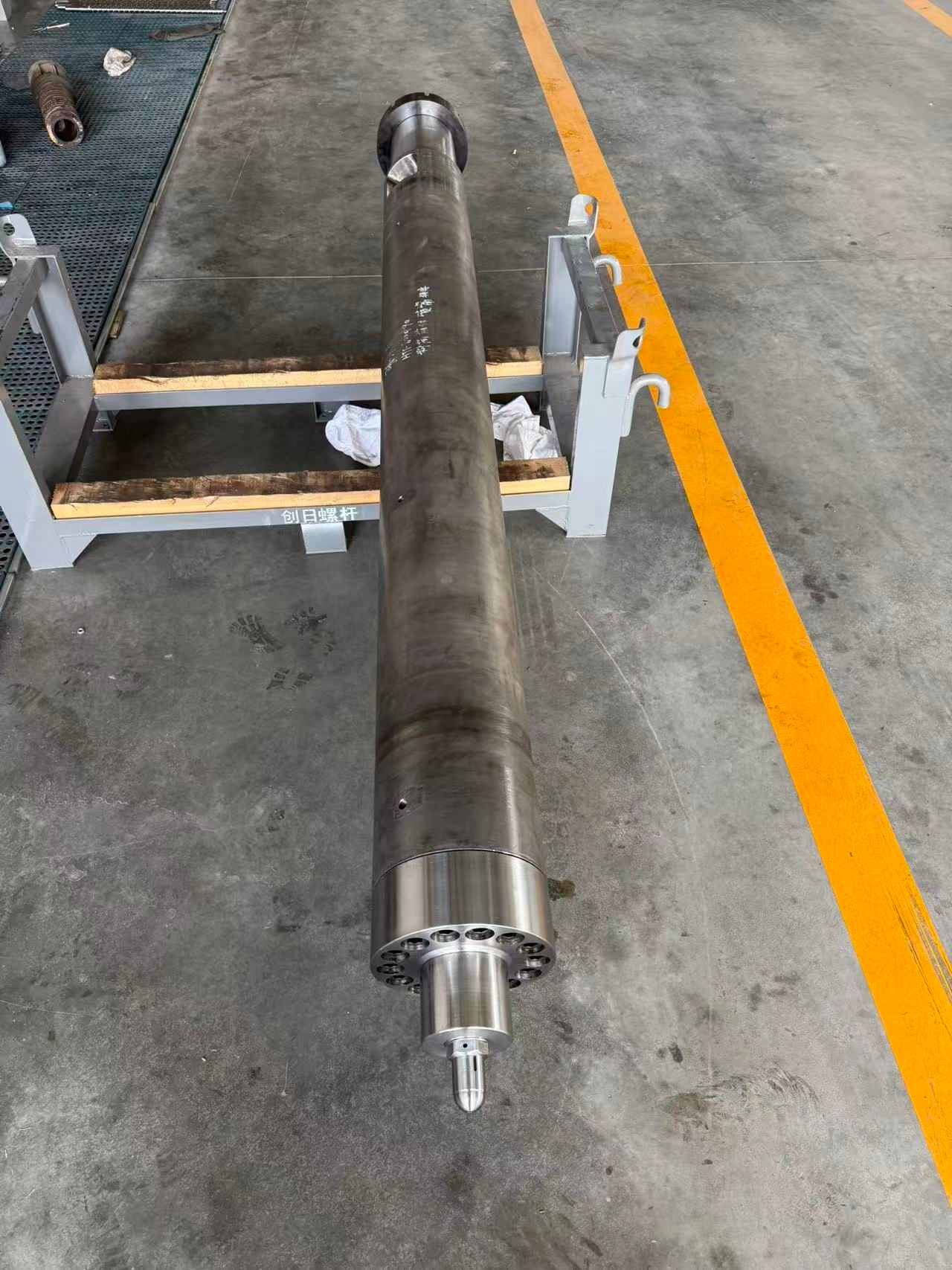
CHUANGRI SCREW provide Nitrided Injection Molding Screw and Bimetallic Injection Molding Screw, etc. The injection molding screw can be specially designed for production according to the processing requirements, such as production quantity, shear force, and mixing, etc. These categories cannot be used for a universal life service ranking. And one surface treatment is not suitable for all types of materials. Compare the Nitrided Injection Molding Screw with the actual material duty, not only with the purchase price.
Match Protection to the Dominant Wear Mechanism
Nitriding can be considered for moderate wear, while bimetallic construction can be considered for stronger abrasion or combined abrasive and corrosive exposure. Resin, filler, corrosion risk, and actual wear location govern the selection. A bimetallic barrel can contain tungsten-carbide particles dispersed in a corrosion-resistant nickel-alloy matrix. Our Bimetallic Injection Molding Screw belongs in the same system review, but screw and barrel protection must be specified individually.
Judge Melt Quality with Observable Evidence
Distinguish Incomplete Melting from Degradation
Save the defective product sample before changing any setting. Check for different types of defects such as unmelted particles, color streaks, black specks, etc. Check drying, contamination, temperature, and residence time of the screw in addition to checking the screw. Refer to the resin supplier’s processing guidelines and use a consistent method of inspection. A melt that looks smooth can still fail to meet the critical property requirements of the end product.
Compare Melt Consistency Under the Same Cycle
Wait for the process to reach a stable state, collect the samples, and test them using the same sampling point and time frame. Note the actual melt point as well as any visible defects. If a design requires higher speed or back pressure to produce acceptable colors, then record this necessary operating demand for comparison purposes. A good appearance at one processing point does not necessarily mean that the design has a wide processing window.
Create an acceptance sheet which is very simple with fields for sample identifier, material lot #, time, recovery reading, melt-temperature reading, shot weight, and defect found. Include all rejected samples and all accepted samples. An intermittent defect will be obvious, and one good sample will not dictate acceptance of the material.
Calculate Useful Output from Recovery and Cycle Time
Check Whether Recovery Is the Real Bottleneck
Time recovered from the molding cycle can be used in other areas of the cycle for additional time. If the cooling phase of the cycle is significantly longer than the shot recovery time, additional time in plasticizing will not produce additional parts. However, slower shots must be evaluated instead of running with the fastest reading. This produces consistent part preparation within the cycle time.
Avoid Hiding Wear with Higher Speed
The effective plasticizing output per revolution decreases. As a result, it takes more revolutions or more time to reach the same metering position. Increasing the screw speed can reduce the displayed recovery time in the short term. However, worn screw geometry cannot be restored by increasing the speed. A speed increase without a corresponding increase in recovery is a sign of decreasing mechanical efficiency. Compare the accepted parts per hour, not the fastest recovery time.
Protect Screw Life and Specify a Valid Trial
Measure the Screw and Barrel as a Pair
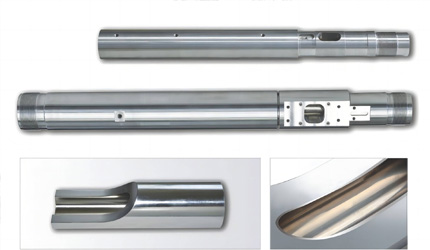
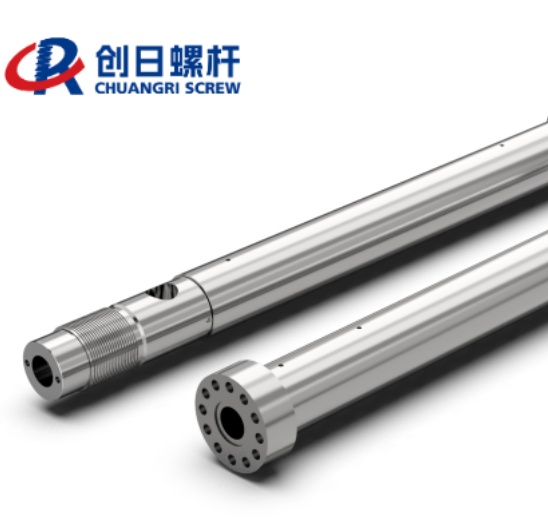
A larger barrel inside diameter or smaller screw flight outside diameter increases diametral clearance. Measure barrel ID and flight OD at corresponding axial positions, then compare them with the original or approved baseline. One average dimension can hide a local problem. A replacement screw should be evaluated with the existing Injection Molding Barrel rather than assuming the barrel remains suitable.
Use a Trial That Separates Design from Existing Damage
Measuring trend recovery time, screw speed, back pressure, shot weight, cushion, and actual melt temperature, versus measuring barrel ID and flight OD at corresponding locations, reveals progressive deterioration under controlled circumstances, and corresponding bore enlargement with increased clearance. For a new design trial, ensure that resin, mold, shot size, and acceptance criteria are held constant. Establish melt quality, recovery margin, dimension checking in service, etc. prior to ordering. Review current drawing, resin description, cycle data and wear measurements – a “treatment name” is an entirely inadequate specification.
Barrel wear has to be proved by change of bore diameter and/or of local geometry. Screw wear has to be proved by outside-diameter and surface condition of flights. Check-ring leakage shows backflow during injection or holding and thus is a different kind of fault which can even occur independently.
FAQ
Q: Which injection molding screw type gives the best melt quality?
A: Best match depends on resin melting characteristics and end use mixing requirements. Compare general-purpose, barrier, and mixing geometries in a material-specific trial that is controlled.
Q: Is a bimetallic injection molding screw always better than a nitrided screw?
A: No. While factors such as abrasion, corrosion, geometry, and the barrel’s prior history of use can dictate suitability, higher cost does not always translate to better performance on a particular resin.
Q: Can an injection molding screw increase output without reducing cooling time?
A: Only if the recovery or shot change is currently limiting cycle time. If cooling is the constraint, then increased plasticating speed will not add much to production.
Q: Does an unstable cushion prove injection molding screw wear?
A: No. The same kind of symptoms can be caused by check-ring leakage, process changes, etc. Use the trends of the process and the measurements of the dimensions.
Q: What information is needed to select an injection molding screw?
A: List resin grade, fillers, regrind, screw drawing, machine interface, shot size, cycle time, and recovery. State the required melt quality and describe measured screw- and barrel conditions.

 consult
 WHATSAPP
 leave message
 top