
How to Evaluate a Twin Screw and Barrel Manufacturer Before Ordering
Related news
How to Evaluate a Twin Screw and Barrel Manufacturer Before Ordering


Buying a Twin Screw and Barrel is not a simple dimensional replacement decision. A component can match the nominal machine size yet still create installation, wear, or processing problems if its geometry, material system, and inspection standard do not fit the duty. Before ordering, assess whether the manufacturer can understand the application, confirm geometry, control critical production steps, and provide measurable evidence. The practical question is not, “How much is the screw?” It is, “What must this screw and barrel process, and how will the supplier prove that the finished pair fits that job?” This checklist focuses the evaluation on purchasing risk rather than catalogue claims.
Check Whether the Twin Screw and Barrel Manufacturer Understands Your Application
Can the Manufacturer Review Resin, Filler Content, Output, and Wear History?
A capable supplier should ask about the resin or formulation, filler percentage, recycled content, target output, screw speed, wear history, and current production problem. Those inputs reveal whether the line is dealing with normal wear, abrasive filler, corrosive additives, unstable recycled feed, poor melting, or a fit problem from the previous replacement.
Filler and recycled material can change friction, torque demand, heat generation, plasticization, and abrasive wear. The review should identify whether damage is concentrated at flight edges, screw roots, or barrel bores near higher-pressure regions. A price-first quotation may be selling a catalogue size rather than engineering a matched Twin Screw and Barrel.
Can the Manufacturer Work from Drawings, Samples, or Existing Machine Data?
For a replacement twin screw barrel manufacturer, ask what evidence it needs to confirm compatibility. A technical drawing is ideal, but a machine model, old screw and barrel, measured dimensions, operating record, and wear photos can support the review. The supplier should state what it will measure and return confirmation before production.
Fit depends on more than outside diameter. Dimensions, material condition, structural integrity, the matched barrel, and operating conditions affect the decision. CHUANGRI SCREW provides site measurement, design, modification, and customized support for plastic machinery components. We use confirmed machine data and operating conditions to define the replacement scope rather than assuming similar parts are interchangeable.
Verify In-House Twin Screw and Barrel Manufacturing Capabilities
Check CNC Machining, Thread Milling, Bore Honing, and Precision Grinding
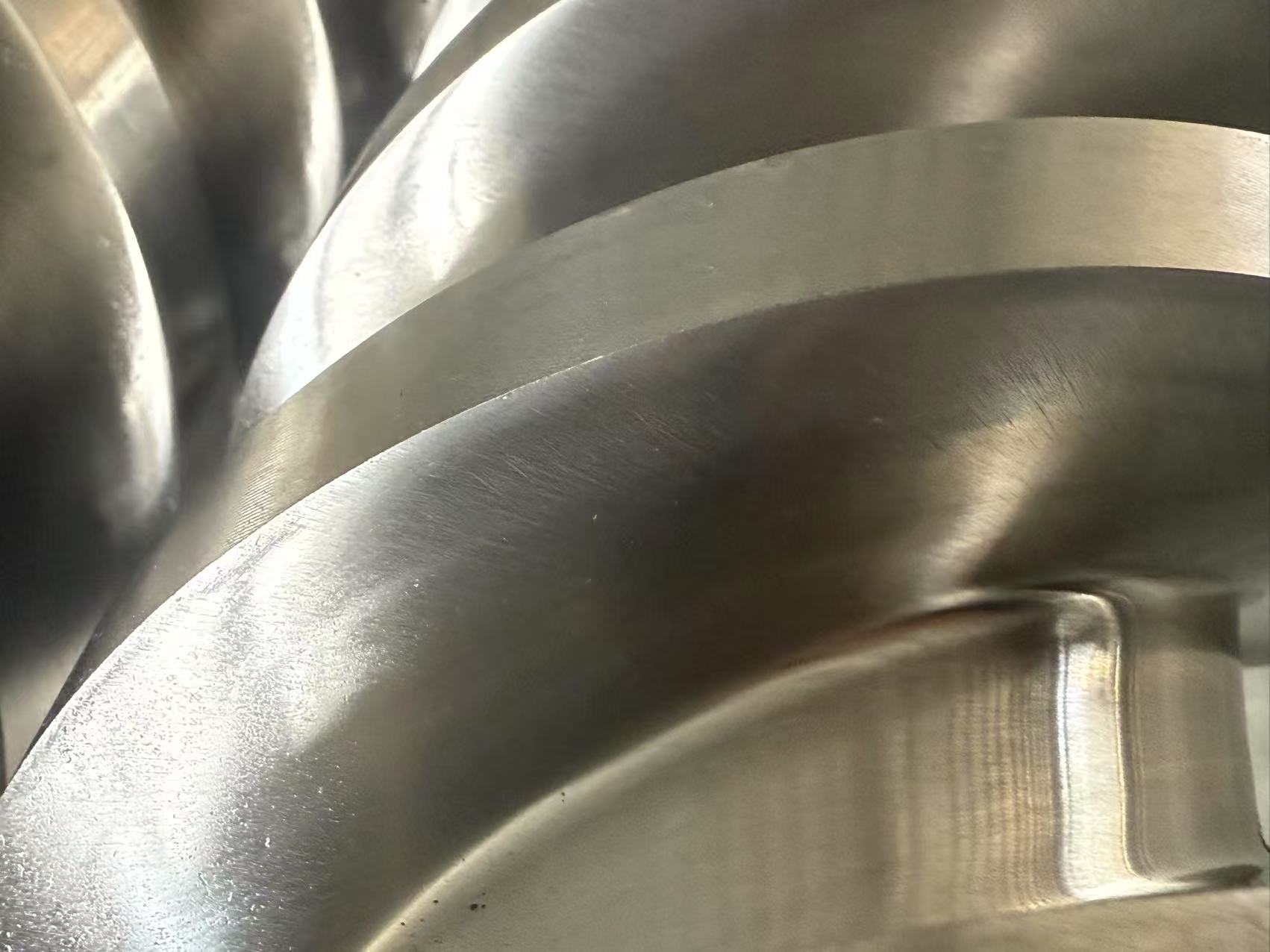
Ask which processes shape functional surfaces. CNC turning establishes base dimensions; thread milling affects flight form and helix accuracy; bore honing and precision grinding influence the barrel bore, mating clearance, and surface condition. Grinding and polishing matter because flight profile, root and channel geometry, surface finish, and dimensional relationships work together in service.
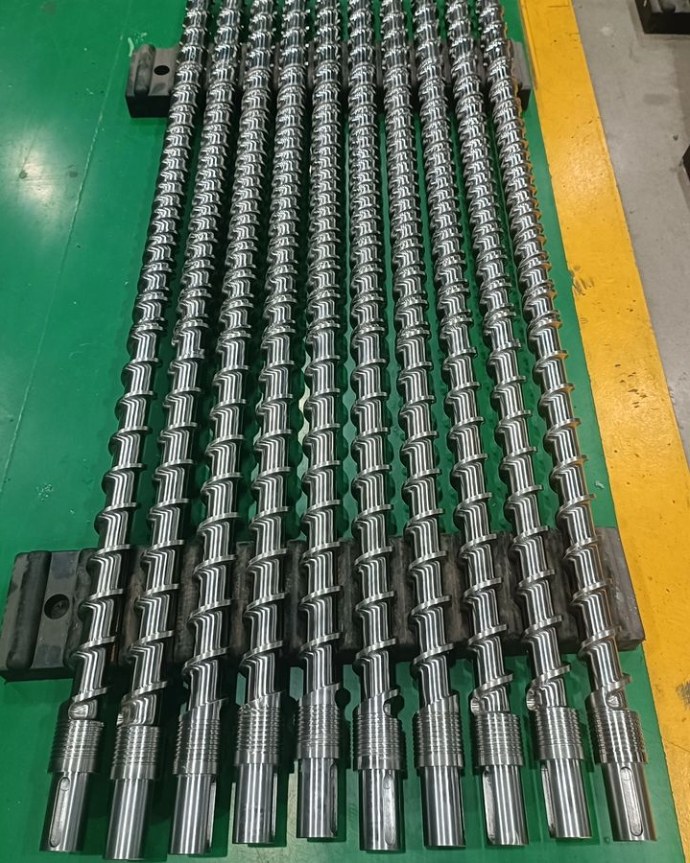
The point is to determine whether the supplier controls the operations that determine final fit. Ask for the machining sequence and the checks between operations, not only an equipment list.
Confirm Which Critical Processes Are Controlled In-House
Ask whether machining, nitriding, bimetallic processing, coating, grinding, and inspection are controlled in-house or outsourced. Outsourcing is not automatically disqualifying, but the supplier should identify the process owner, acceptance criteria, and traceability path.
A custom twin screw and barrel manufacturer should explain how geometry is protected after heat treatment or coating and before final inspection. Vague answers make later fit or wear problems difficult to trace. Compare the stated scope with the customized screw and barrel product range.
Evaluate Material and Heat-Treatment Expertise Before Ordering
Ask How the Twin Screw and Barrel Manufacturer Selects Nitrided, Bimetallic, or Alloy Solutions
Do not ask only which option has “high wear resistance.” Ask why the proposed solution fits the formulation. Nitriding may be considered for moderate wear. Bimetallic processing or alloy solutions may be considered when abrasive fillers, recycled contamination, corrosion, temperature, or local pressure create higher demands. Combined corrosion and abrasion can require a different decision from abrasion alone.
The supplier should connect the recommendation to resin chemistry, glass fiber or mineral filler, corrosive exposure, temperature, wear location, and the observed mechanism. A recycled stream with abrasive contamination should not be evaluated like clean virgin resin. Review the relevant Parallel Twin-Screw Barrel configuration alongside the application data, not as a standalone product choice.
Verify Hardness, Case Depth, Alloy Layer, and Material Traceability
Replace generic claims with checkable questions: What base material is proposed? What hardness target applies? What treatment is used? What case-depth or alloy-layer information is available? What record links the material and treatment to the supplied component?
Ask for the material record, treatment record, and inspection evidence that support the recommendation. A surface layer should not conceal cracks, corrosion, or structural damage in the underlying part.
Require Dimensional Inspection and Quality Evidence from the Twin Screw and Barrel Manufacturer
Ask for Screw-Barrel Clearance, Concentricity, Straightness, and Surface Finish Checks
Ask how the manufacturer checks screw-barrel clearance, concentricity, bore accuracy, straightness, and surface finish. Also ask whether it measures screw-flight outside diameter and barrel inside diameter at defined locations.
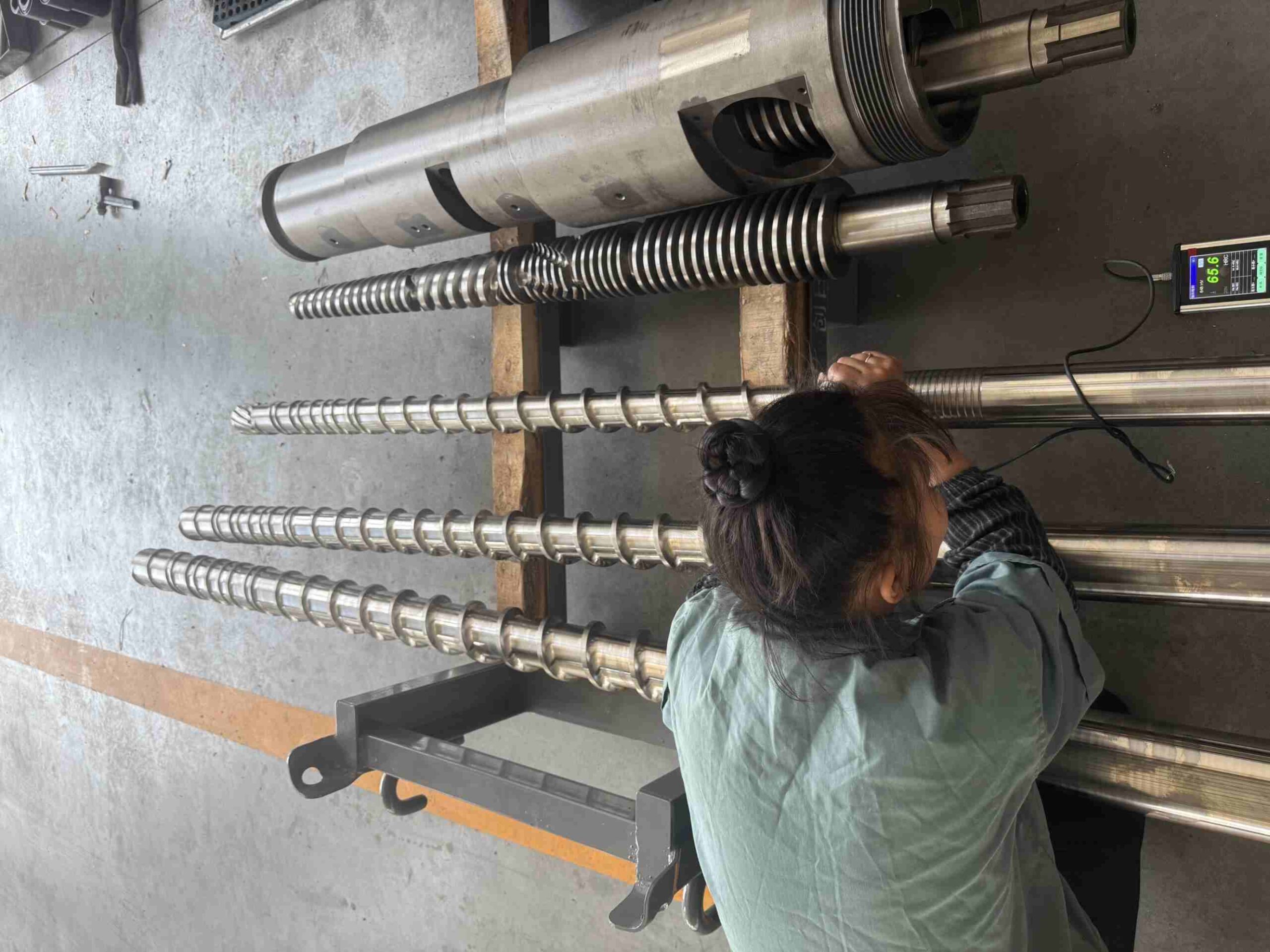
Coordinate-measuring equipment, inside-diameter gauges, and hardness testers can inspect fit clearance, concentricity, surface hardness, and dimensional accuracy. Final acceptance should confirm that the screw and barrel fit together and rotate smoothly after machining and surface treatment.
Request Inspection Reports Before Shipment
Request a dimensional inspection report, hardness report, material record, drawing confirmation, and final inspection evidence before shipment. The documents should identify the part, measurement basis, result, and inspection date.
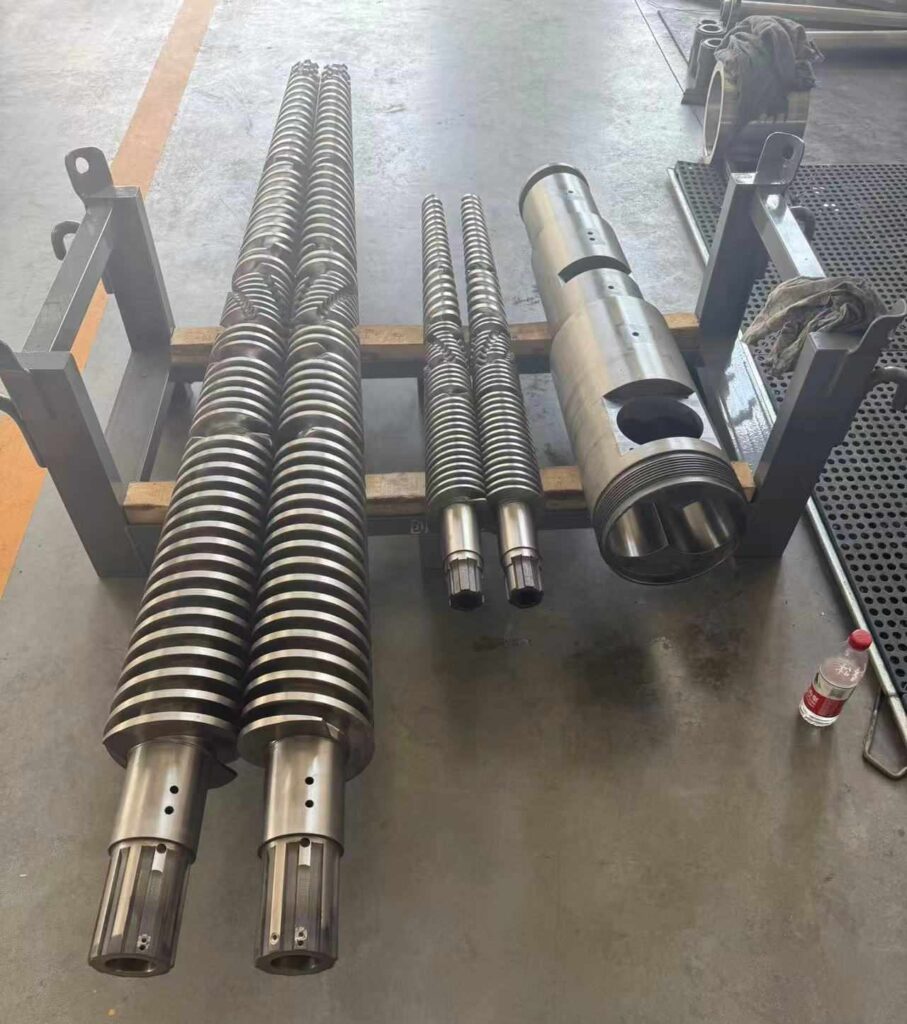
This package creates a handover point between manufacturing and installation. It lets the buyer compare the delivered component with the approved requirement.
Confirm OEM Fit, Repeatability, and Delivery Capability Before Placing the Order
Can the Manufacturer Reproduce the Same Twin Screw and Barrel for Future Orders?
Customization is useful only when it can be repeated. Ask whether the supplier retains drawing records, measurement data, material specifications, and treatment requirements. The record should support dimensional repeatability, batch consistency, and replacement interchangeability six months later.
For an OEM twin screw barrel manufacturer, the key test is whether a later replacement can be produced to the same confirmed basis. Our customized support includes measurement, design, and modification work, but repeatability depends on locking the final drawing, revision, material route, and inspection requirement before the first order closes.
Check Lead Time, Packaging, Warranty, and Technical Support
Ask for a realistic lead time tied to the confirmed specification, not a generic estimate. Clarify urgent-replacement assessment, export protection, logistics communication, warranty responsibility, and technical support after delivery.
These commercial details belong in the same pre-order evaluation as machining and metallurgy. A technically correct component can still create downtime if packaging, records, response responsibility, or installation communication are unclear. The bimetallic twin-screw product is relevant when review identifies a wear-driven material upgrade, but the decision should remain tied to the confirmed application.
Red Flags When Evaluating a Twin Screw and Barrel Manufacturer
|
Red Flag |
Why It Matters |
|
Quotation without questions about resin or application |
May indicate catalogue selling rather than engineering review. |
|
Cannot confirm material or heat treatment |
Wear life and replacement suitability become difficult to predict. |
|
No drawing confirmation |
Raises fitment and interchangeability risk. |
|
No measurable inspection data |
Quality claims cannot be checked before shipment. |
|
Cannot explain outsourced processes |
Weakens process traceability and responsibility. |
|
Unusually low price without a technical specification |
May hide differences in material, treatment, or inspection scope. |
FAQ
Q: How do I know if a Twin Screw and Barrel Manufacturer is reliable before ordering?
A: A reliable manufacturer asks application questions, confirms the drawing or measurement basis, explains its material recommendation, identifies controlled processes, and provides inspection evidence before shipment.
Q: What information should I send to a Twin Screw and Barrel Manufacturer before requesting a quote?
A: Send the machine model, drawing or sample dimensions, resin or formulation, filler and recycled content, target output, screw speed, wear history, and the current production problem.
Q: What inspection reports should a Twin Screw and Barrel Manufacturer provide before shipment?
A: Request dimensional results, clearance and concentricity checks, hardness information, a material record, drawing confirmation, and final inspection evidence tied to the delivered part.
Q: How can I verify the machining quality of a Twin Screw and Barrel Manufacturer?
A: Ask how it controls CNC turning, thread milling, bore honing, grinding, polishing, and the final measurements for bore accuracy, straightness, surface condition, and matched clearance.
Q: Should a Twin Screw and Barrel Manufacturer offer custom design based on my material and machine?
A: Yes. Custom design should use the actual formulation, machine data, operating conditions, wear mechanism, and replacement dimensions, then document the confirmed geometry and inspection requirements for repeat orders.

 consult
 WHATSAPP
 leave message
 top
top