
Advanced Feed Screw Design: Top Factors for Output Stability
Related news
Advanced Feed Screw Design: Top Factors for Output Stability


What Is Feed Screw Design and Why Does It Determine Output Stability in Polymer Processing
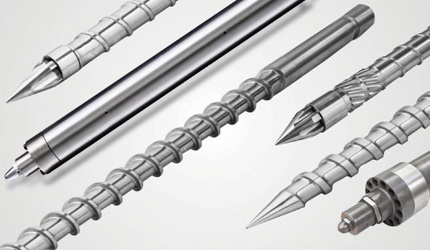
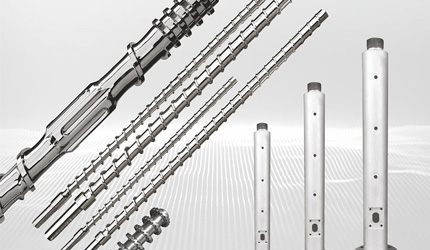
Feed screw design refers to the engineered geometry and surface structure of a screw used in extrusion or injection molding systems to transport, melt, and meter polymer materials. Although it may appear as a simple rotating component, it is actually the core element that determines whether a production line runs smoothly or suffers from unstable output, pressure fluctuation, or inconsistent melt quality.
In polymer processing, output stability is more than the amount of material processed each hour. It is about whether the system can keep several important conditions. These conditions include a constant mass flow rate. They also include a stable melt temperature. They cover consistent discharge pressure. They further include uniform material plasticization.
A good feed screw design helps solid resin change steadily into a uniform melt. This happens without surging or starvation. On the other hand, poor design causes pulsation, overheating, or incomplete melting.
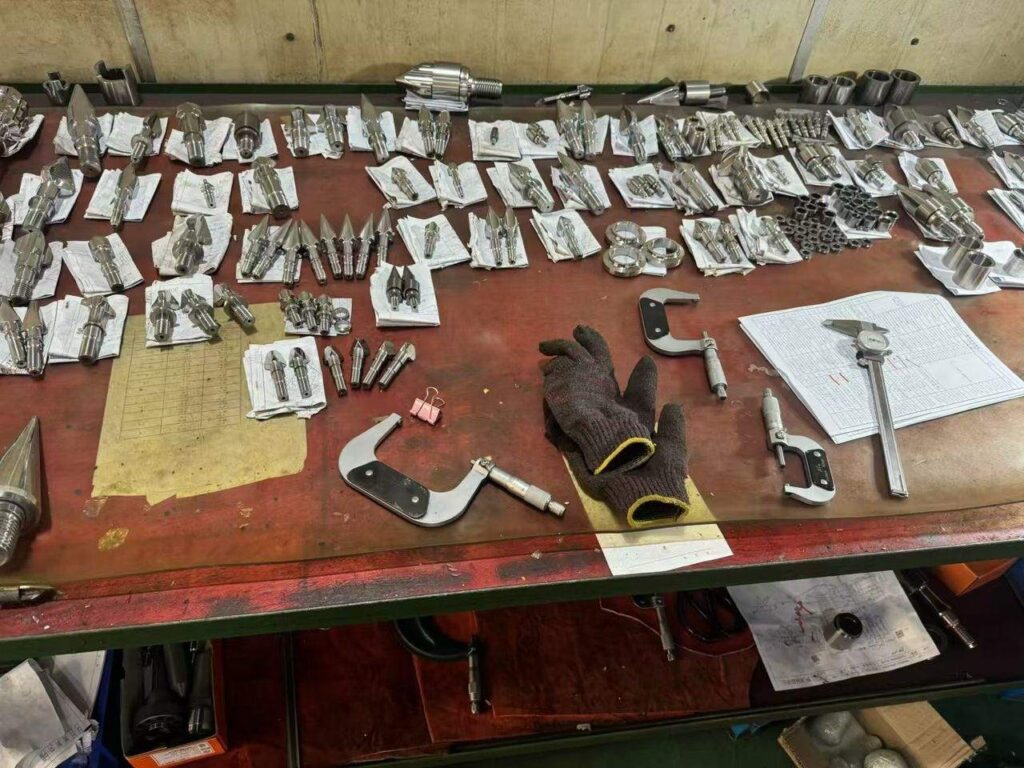
Key Geometric Parameters in Feed Screw Design for Stable Extrusion Output
The geometry of a screw controls how material moves through each processing stage. Small changes in dimensions can greatly affect output stability.
Screw Diameter, L/D Ratio, and Compression Ratio
These three parameters define the processing capacity and melting efficiency:
- Screw diameter: Directly impacts throughput capacity
- L/D ratio: Controls residence time and plasticization quality
- Compression ratio: Determines melt densification and pressure build-up
A higher compression ratio improves melting. At the same time, it may increase shear heating. A lower ratio helps stabilize flow. Yet it may reduce output consistency for high-viscosity materials.
For example, in industrial extrusion systems, CHUANGRI SCREW’s PPR Pipe Extruder High-Speed Screw is designed with a reinforced compression zone. This design ensures stable melt delivery under varying raw material viscosity conditions. It reduces pressure fluctuation in long pipe extrusion lines.
Channel Depth and Helix Angle Optimization
Channel depth determines how much material the screw can carry per rotation. The helix angle controls forward conveying efficiency.
|
Parameter |
Function |
Stability Impact |
|
Channel depth |
Material capacity |
Prevents starvation or overload |
|
Helix angle |
Forward conveying speed |
Controls flow uniformity |
An optimized combination ensures continuous material transport. It does this without backflow or stagnation.
Screw-to-Barrel Clearance and Manufacturing Tolerance
A stable feed screw design must account for thermal expansion and wear. Excessive clearance leads to leakage flow. Tight clearance increases friction and heat.
CHUANGRI SCREW applies CNC precision machining and strict inspection systems during production. These steps ensure that dimensional accuracy remains within micrometer-level tolerance. This accuracy directly supports long-term output stability.
Feed Section and Material Feeding Behavior Affecting Output Stability
The feed section is often underestimated. Yet it is one of the most important areas. It influences extrusion stability.
Bulk Density, Regrind Ratio, and Flowability
Different raw materials behave differently in the feed zone:
- Virgin pellets: stable feeding, consistent density
- Regrind materials: irregular flow, variable density
- Filled compounds: higher friction and reduced mobility
These differences directly influence how efficiently solids move into the melting zone.
Feed Throat Temperature and Friction Control
If the feed throat becomes too hot, the material may soften too soon. This leads to bridging or inconsistent feeding. If it stays too cold, the friction may be too low for forward conveying.
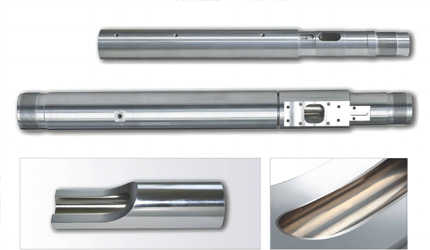
A stable feed screw design balances several factors. These factors include barrel surface roughness. They also include feed zone channel depth. They further cover the friction coefficient between the material and the barrel.
In high-demand applications, such as recycling or mixed-material processing, CHUANGRI SCREW frequently integrates Parallel Twin-Screw Barrel systems. These systems improve feeding uniformity. They also prevent material slippage under unstable input conditions.
Melting and Metering Zone Design for Consistent Output and Reduced Pressure Fluctuation
Once material enters the compression and metering zones, output stability depends on efficient transformation. Solids must change into a uniform melt.
Transition from Solid to Melt Phase
The transition zone is where most instability starts. If melting is uneven, the system experiences several problems. These problems include pressure surging. They also include incomplete plasticization. They further involve melt temperature variation.
A well-designed transition ensures gradual compression. It also provides controlled shear heating.
Metering Zone Pressure Balance
The metering zone acts as the final stabilizer. This happens before material exits the screw. Its role is to equalize melt flow. It eliminates pressure pulsation. It also ensures consistent volumetric output.
In injection molding applications, CHUANGRI SCREW’s Injection Molding Screw and Barrel is engineered with optimized metering geometry. This ensures stable shot-to-shot repeatability. It performs especially well in high-precision industrial production lines.
Wear Resistance, Surface Engineering, and Long-Term Feed Screw Stability
Even a well-designed screw will lose performance over time. This happens if wear is not properly controlled. Wear changes geometry. Geometry changes stability.
Nitrided vs Bimetallic vs Alloy-Coated Screws
Different surface treatments directly influence service life and output consistency:
- Nitrided screws: Cost-effective, suitable for general plastics
- Bimetallic screws: High resistance to abrasive and filled materials
- Alloy-coated screws: Ideal for corrosive or high-wear environments
For demanding applications, CHUANGRI SCREW uses Bimetallic Injection Molding Screw solutions. In these solutions, tungsten carbide alloy layers significantly reduce wear in glass-filled or mineral-filled polymers.
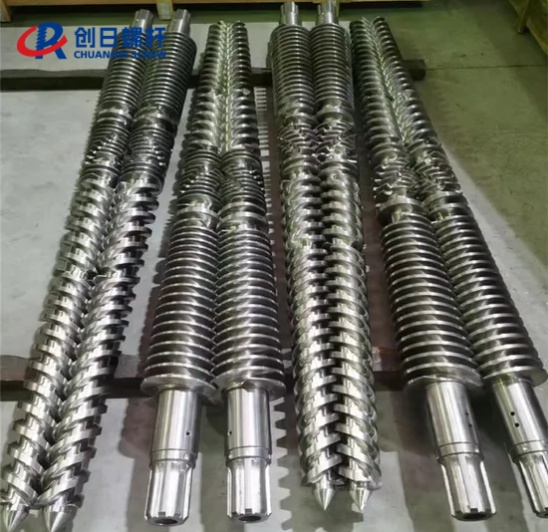
Wear Impact on Output Stability
As wear increases, several changes occur. Channel depth changes. Clearance increases. Backflow leakage rises. Pressure stability decreases.
This leads to long-term output inconsistency. It happens even if the machine settings remain unchanged.
Therefore, material selection and surface treatment are as important as geometric design. They help maintain stable production performance.
Application-Driven Feed Screw Design Solutions by CHUANGRI SCREW for Industrial Stability
At CHUANGRI SCREW, we design feed screws based on real processing conditions. We do not rely only on theoretical assumptions. Different materials, such as PP, PE, PVC, and engineering plastics, behave differently under heat, shear, and pressure. This is why a customized feed screw design is essential. It supports stable output in modern extrusion and injection molding systems.
Different industries require different stability priorities. A universal screw design cannot meet all production requirements.
Extrusion Applications: Film, Pipe, and Recycling
In extrusion systems, the focus is on continuous and uniform output.
For example:
- High-Speed Blown Film Screw improves melt homogeneity and reduces temperature fluctuation. It ensures stable film thickness and bubble stability.
- PPR Pipe Extruder High-Speed Screw enhances pressure consistency. This is critical for long pipelines where even minor pulsation leads to wall thickness variation.
- Recycling applications require stable feeding of inconsistent materials. In these cases, parallel twin-screw systems improve mixing and transport stability.
Injection Molding Applications: Precision and Repeatability
Injection molding demands shot-to-shot accuracy rather than continuous flow.
In this field, CHUANGRI SCREW’s Injection Molding Screw and Barrel systems are designed to maintain consistent melt density. They reduce residual material variation. They also improve injection repeatability.
For filled or high-wear materials, upgraded bimetallic versions provide longer service life. They also reduce downtime.
FAQ
Q: What is the feed screw design in extrusion systems?
A: Feed screw design refers to the geometry and structural engineering of the screw. It controls material conveying, melting, and metering. It directly affects output stability, melt quality, and pressure consistency.
Q: How does the feed screw design affect output stability?
A: Output stability depends on how uniformly the screw transports and melts material. Poor design leads to pressure fluctuation. Optimized design ensures continuous and balanced melt flow.
Q: What are the most important parameters in feed screw design?
A: Key parameters include screw diameter, L/D ratio, compression ratio, channel depth, helix angle, and screw-to-barrel clearance. Each influences material flow and stability differently.
Q: Why does screw wear reduce output stability?
A: Wear changes the screw geometry. It increases clearance and reduces conveying efficiency. This causes backflow, pressure instability, and inconsistent melt output over time.
Q: Which screw type is best for stable extrusion of pipes or films?
A: For pipe and film extrusion, specialized designs like the PPR Pipe Extruder High-Speed Screw and High-Speed Blown Film Screw are commonly used. They ensure stable melt flow and uniform output quality.

 consult
 WHATSAPP
 leave message
 top
top