
Conical Twin Screw Barrels: Best Uses & Top Maintenance Tips
Related news
Conical Twin Screw Barrels: Best Uses & Top Maintenance Tips


Conical twin screw barrels are often used in rigid PVC extrusion. They combine effective conveying with managed compression. They also support consistent plasticization. Their performance relies on several important factors. These factors include screw geometry, barrel material, formulation, process settings, and maintenance plan. All of them must work well together.
Manufacturers of PVC pipes, profiles, WPC boards, foam boards, doors, and SPC flooring can benefit from the right system. It helps enhance melt consistency. It also reduces early wear.
How Conical Twin Screw Barrels Work in PVC Extrusion
How the Conical Twin Screw Design Controls Compression and Material Flow
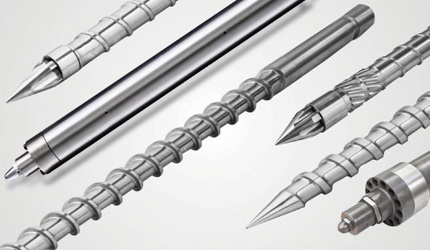
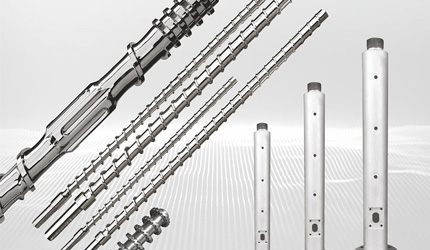
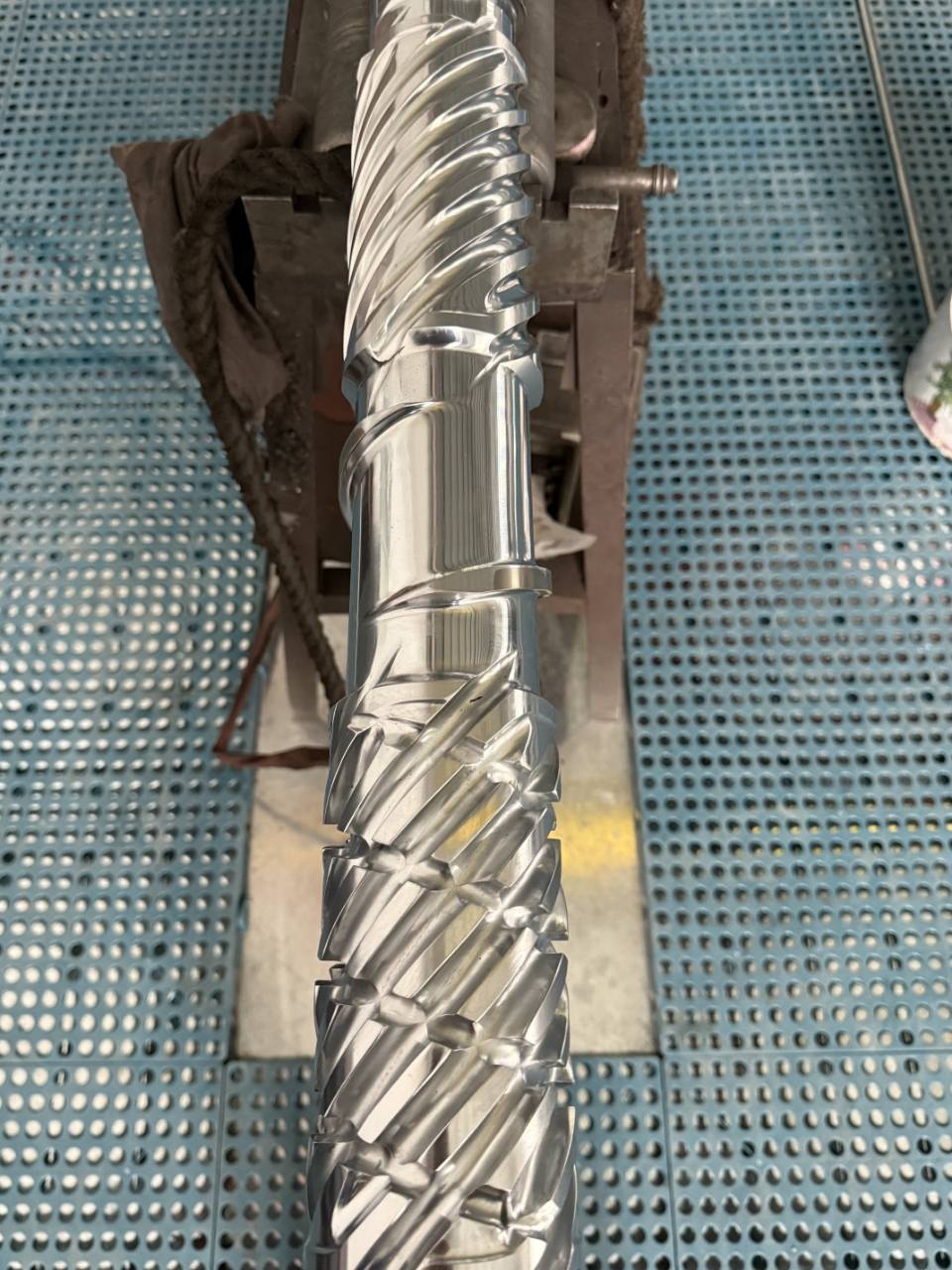
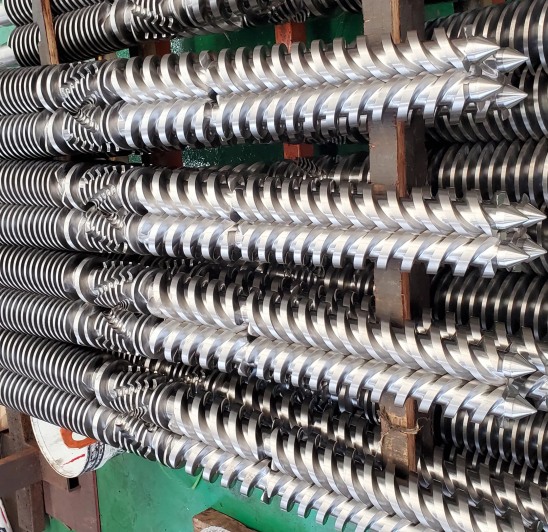
A conical twin screw has a larger feeding-end diameter. It narrows slowly toward the discharge end. This shape provides enough intake volume for the PVC dry blend. It compresses the material. It mixes the material. It also conveys the material in a steady way.
The screws distribute additives and fillers. They build pressure gradually. They deliver a uniform melt to the die. Excessive compression may overheat PVC. Insufficient compression can cause unstable output. The screw profile must therefore match the formulation. It should not match only the extruder model.
Why Counter-Rotating Twin Screws Improve PVC Plasticization
Most rigid PVC lines use closely intermeshing, counter-rotating screws. Their enclosed conveying chambers move material efficiently at relatively low speeds. This approach limits uncontrolled shear. It also reduces residence time.
This action helps distribute stabilizers, lubricants, pigments, wood fibers, and calcium carbonate. When temperature, feed rate, and screw design stay balanced, operators achieve more consistent product quality.
Best Uses for Conical Twin Screw Barrels
Conical Twin Screw Barrels for PVC Pipe and Profile Extrusion
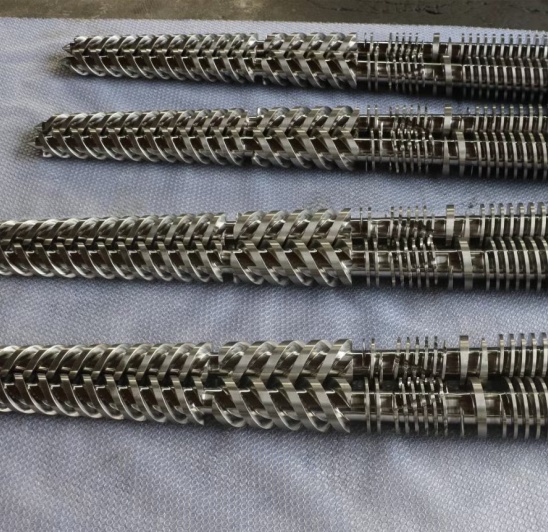
PVC-U pipes, PVC-C pipes, window profiles, door profiles, and cable trunking require stable pressure and controlled melt temperature.
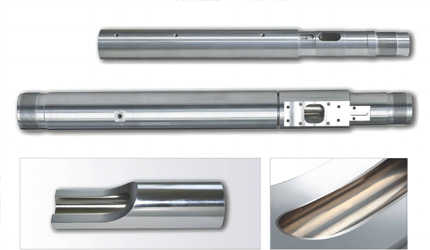
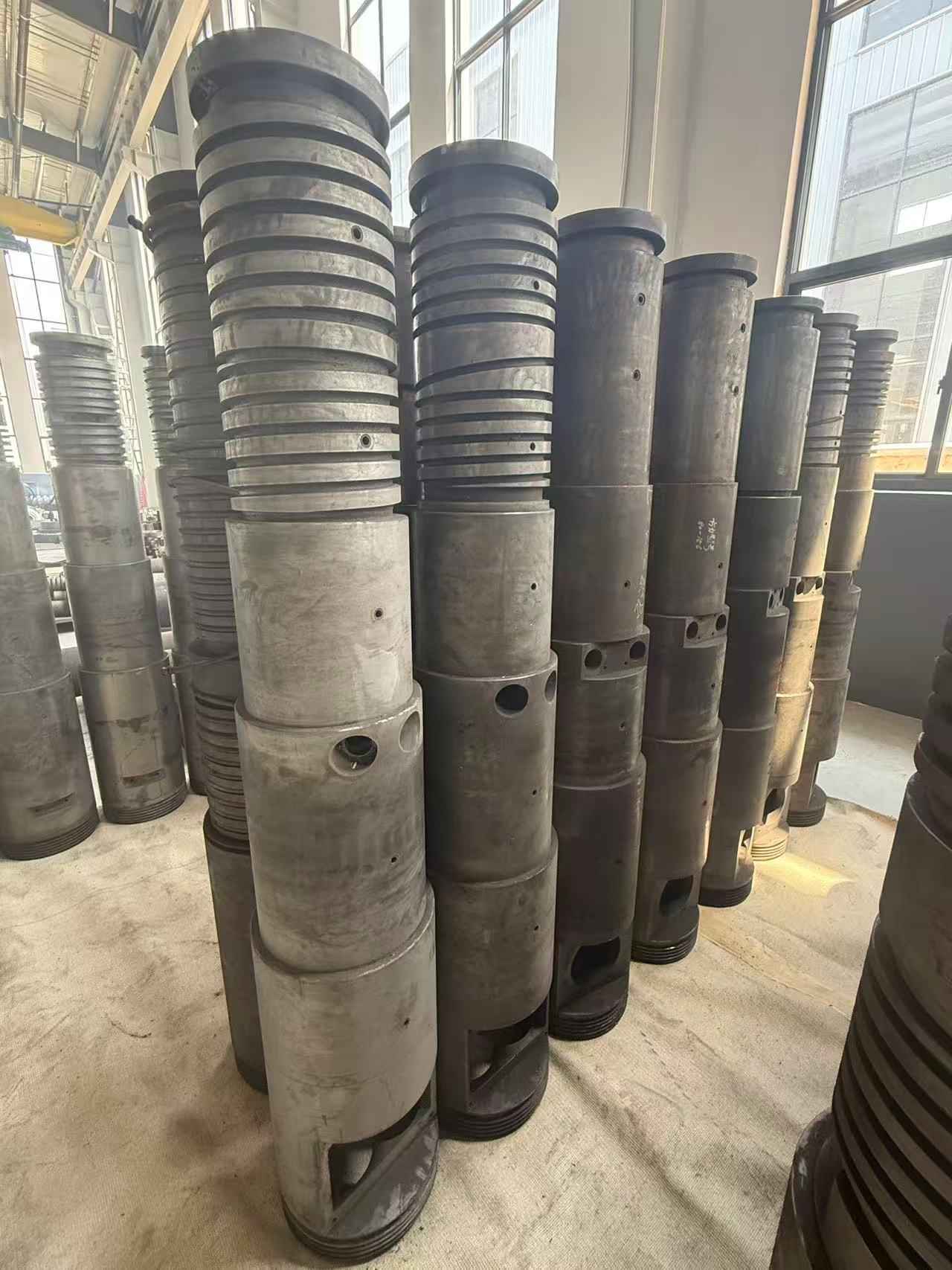
The PVC Conical Twin-Screw Barrel from CHUANGRI SCREW is designed for PVC, PVC-U, and PVC-C pipe extrusion. It is available in common SJZ specifications. It supports controlled plasticization for different formulations and output targets.
Conical Twin Screw Barrels for WPC Boards, Doors, and PVC Foam Boards
Wood flour and foaming agents change bulk density, friction, and heat sensitivity. These materials require stable feeding without excessive shear.
The WPC Conical Twin-Screw Barrel is designed for WPC boards, WPC doors, and PVC foam boards. Nitrided or bimetallic configurations can be selected according to fiber content, recycled material, and expected wear.
Conical Twin Screw Barrels for SPC Flooring and High-Calcium PVC Compounds
SPC flooring contains high levels of calcium carbonate. This creates severe abrasion. As screw flights and barrel bores wear, internal clearance rises. Conveying efficiency falls at the same time.
The SPC Conical Twin-Screw Barrel from CHUANGRI SCREW uses bimetallic processing. It can incorporate SKD inner liners in high-wear zones. This helps preserve designed clearances during demanding flooring production.
How to Select the Right Conical Twin Screw Barrel
Match Screw Geometry to PVC Formulation and Filler Content
Selection should consider resin type, calcium carbonate level, wood fiber, recycled content, additives, bulk density, output, and melt-temperature limits.
At CHUANGRI SCREW, we review the formulation, machine configuration, current output, defects, and wear pattern before recommending a design. Multiple structural approaches are available for low-, medium-, and high-calcium PVC recipes.
Choose the Correct Conical Twin Screw Barrel Size and Specification
Common sizes include SJZ 45/90, 45/100, 51/105, 55/110, 55/120, 65/132, 80/156, and 92/188.
|
Selection factor |
Why it matters |
|
Extruder and gearbox |
Determines fit, center distance, and synchronization |
|
Effective screw length |
Influences residence time and plasticization |
|
Motor power and speed |
Must suit material load and output |
|
Die and product type |
Affects pressure and melt demand |
|
Existing drawings |
Reduce installation and clearance errors |
Evaluate Processing Goals Before Ordering a Replacement Screw Barrel
Record output, motor load, die pressure, temperature profile, product appearance, and scrap rate before ordering.
The PVC Conical Twin-Screw Barrel can be manufactured with nitrided or bimetallic treatment. It can be adjusted to the actual recipe. This is useful when filler level or recycled content has changed.
Materials and Wear Protection for Conical Twin Screw Barrels
Nitrided Conical Twin Screw Barrels for Standard PVC Processing
Nitrided 38CrMoAlA suits standard PVC formulations with moderate abrasion. Gas or ion nitriding creates a hard surface. The quenched-and-tempered core retains strength.
CHUANGRI SCREW can produce surfaces reaching HV900 or above. It has a typical nitrided depth of approximately 0.5–0.8 mm.
Bimetallic Conical Twin Screw Barrels for Abrasive PVC Formulations
Bimetallic protection works better for high-calcium PVC, recycled compounds, and wood-filled materials. A wear-resistant inner layer protects the barrel bore. Alloy treatment reinforces vulnerable screw surfaces.
SKD Inner Liners for High-Wear Barrel Sections
SKD inner liners can reinforce selected feeding, compression, mixing, or discharge zones. They are chosen according to the actual wear pattern.
Tungsten Carbide and Alloy Coatings for Screw Wear Zones
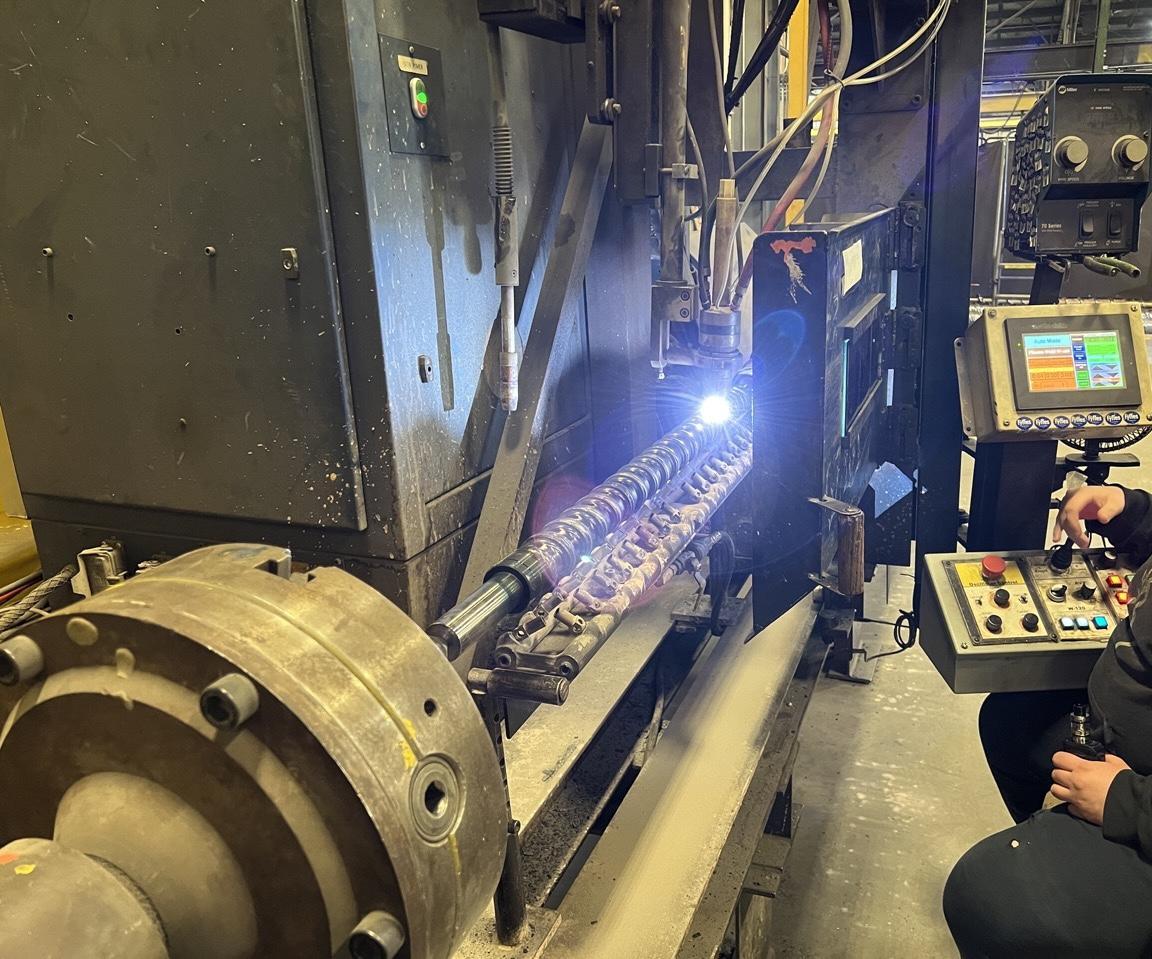
Tungsten carbide and nickel-based alloys can protect flight tips, root diameters, mixing sections, and discharge zones. CHUANGRI SCREW also uses HVOF metallurgical bonding for selected solutions. This reduces coating separation.
Top Maintenance Tips for Conical Twin Screw Barrels
Follow the Correct Extruder Start-Up and Shutdown Procedure
Allow every heating zone to reach its set temperature. Let each zone stabilize fully before rotation. Start at low speed. Introduce material gradually.
During shutdown, stop feeding early. Remove residual PVC completely. Material left inside a hot barrel may degrade and carbonize.
Clean and Purge Conical Twin Screw Barrels Without Damaging the Surface
Use a compatible purging method. Avoid hard steel tools. These tools can scratch nitrided or alloy surfaces.
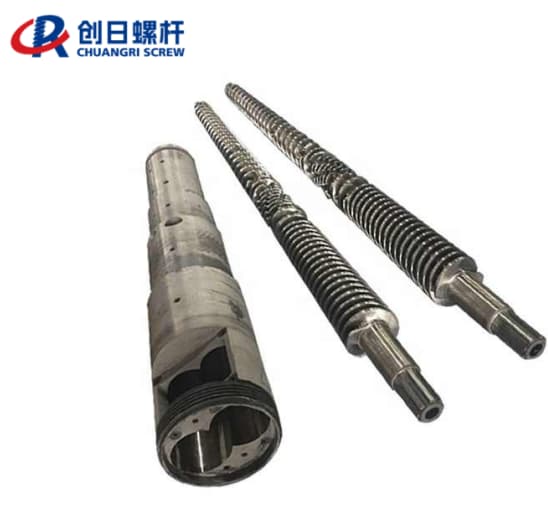
Prevent PVC Residue and Carbonized Material Build-Up
Black specks may originate from dead zones. These zones result from wear, poor clearance, or surface damage. Purge after formulation changes. Purge after unplanned interruptions as well.
Avoid Thermal Shock During Cleaning and Cooling
Cool the system gradually. Sudden contact with cold water may cause distortion. It may also create internal stress or alignment problems.
Inspect Screw Clearance, Alignment, and High-Wear Areas Regularly
Measure screw-to-barrel and screw-to-screw clearances. Check for contact marks. Look for scoring, uneven flight wear, and discharge-zone damage.
Check Gearbox Lubrication, Bearings, and Drive Components
Monitor oil condition carefully. Listen for bearing noise. Verify coupling alignment. Track gearbox temperature. Confirm screw synchronization.
Check Heaters, Thermocouples, Cooling Channels, and Fasteners
Inspect heater bands, sensors, cooling passages, seals, bolts, and electrical connections. A failed sensor can lead to incorrect temperature adjustments.
Adjust Maintenance Frequency to Material Abrasiveness and Production Load
High-calcium SPC, WPC, recycled PVC, and continuous production require shorter inspection intervals. Track clearance, pressure, motor load, and output over time. Do not rely only on calendar schedules.
Troubleshooting Conical Twin Screw Barrel Wear and Performance Problems
Diagnose Lower Output, Pressure Fluctuation, and Poor Plasticization
Reduced output may result from worn flights. It can also come from excessive clearance, poor feeding, heater faults, or unsuitable screw geometry. Lower pressure with increasing backflow often suggests wear. High amperage with poor output may indicate restricted flow.
Investigate Overheating, Discoloration, Abnormal Noise, and Screw Contact
Overheating and black spots can result from excessive residence time. Blocked cooling or degraded deposits may cause these issues, too. Metallic noise requires immediate shutdown. It may indicate screw contact.
Check alignment, bearings, clearances, and discharge-zone deposits before restarting.
Decide Whether to Repair or Replace a Conical Twin Screw Barrel
Localized wear may be corrected through polishing. It can also be fixed by alloy rebuilding, flight restoration, or barrel relining. Replacement is usually safer when there is deep scoring, cracking, severe dimensional loss, repeated contact, or persistent product defects.
At CHUANGRI SCREW, we inspect dimensional accuracy, hardness, concentricity, material condition, and fit clearance. We complete these checks before recommending repair or replacement.
FAQ
Q: What are conical twin screw barrels mainly used for?
A: Conical twin screw barrels have several main applications. They work effectively for PVC pipes and profiles. They also suit WPC products, foam boards, doors, and SPC flooring. They deliver controlled conveying. They support steady plasticization as well.
Q: How long do conical twin screw barrels normally last?
A: Service life depends on several important factors. These include filler content and production hours. Alignment matters greatly. Material selection, surface treatment, and maintenance also affect overall durability.
Q: How often should conical twin screw barrels be inspected?
A: Inspection frequency should follow material abrasiveness and production load. SPC, WPC, recycled PVC, and high-calcium lines require more frequent checks.
Q: What causes conical twin screw barrels to wear quickly?
A: Common causes include abrasive fillers, excessive speed, poor alignment, cold starts, unsuitable screw geometry, and incorrect operating clearances.
Q: Can worn conical twin screw barrels be repaired?
A: Some components can be polished, rebuilt, relined, or restored with alloy if the base material remains sound and the required geometry can be recovered safely.

 consult
 WHATSAPP
 leave message
 top
top