Effective Strategies for Parallel Twin Screw Barrel Repair
Effective Strategies for Parallel Twin Screw Barrel Repair


Parallel Twin Screw Barrel Repair: Why It Matters in Modern Extrusion Operations
Parallel twin screw barrel repair turns more important as extrusion jobs manage rougher, more damaging, and reused stuff. In today’s extrusion setups, the barrel serves as a tightly managed handling area. In that spot, mixing force, push, and warmth have to stay steady. If barrel damage goes beyond planned bounds, even fine-tuned screw forms have trouble keeping even flow and melt evenness.
From a company angle, parallel twin screw barrel repair stops being just a fix-up chore. Instead, it becomes a planned move. Early damage usually shows as small shifts in power need, flow amount, or outer look. If people miss these clues, they turn into bigger waste amounts, surprise halts, and growing power use. This hits the lasting work output right away.
Parallel Twin Screw Barrel Wear as a Hidden Cost in Continuous Production
Parallel twin screw barrel damage adds quiet costs that pile up slowly. As the inside opening gets bigger, material flows backward more. This lowers carrying speed and push evenness. These changes hardly set off quick warnings. Still, they chip away at making power over time.
In nonstop making areas, unfixed barrel damage pushes workers to make changes to settings often. Active parallel twin screw barrel repair keeps the handling setup steady. And it stops small losses from turning into real work problems.
How Barrel Condition Directly Impacts Output Stability and Product Quality
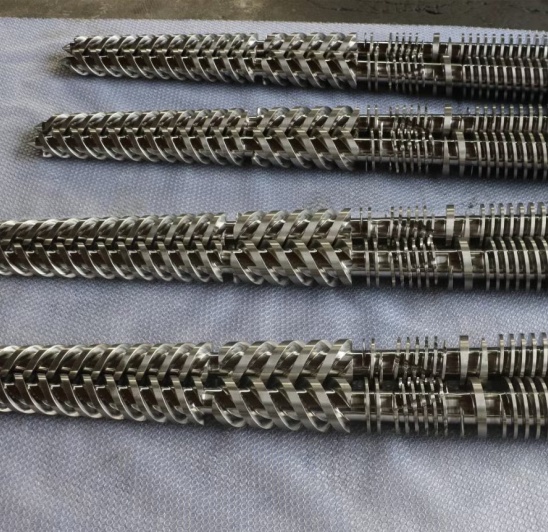
The parallel twin screw barrel condition directly influences melt homogeneity and dimensional consistency. Excessive clearance alters shear distribution, leading to poor filler dispersion and unstable venting behavior. This is especially evident in PVC, WPC, and mineral-filled formulations with narrow processing windows.
By restoring barrel geometry through effective repair, manufacturers can recover the original process window, reduce operator intervention, and improve product consistency without redesigning the extrusion line.
Common Failure Patterns in Parallel Twin Screw Barrel Systems
Parallel twin screw barrel systems break down via clear mechanical and chemical paths. Spotting these ways is key to choosing targeted repair plans. That beats plain upkeep steps.
Abrasive Wear and Internal Diameter Enlargement Over Time
Rough damage counts as the usual breakdown type in parallel twin screw barrels. Add-ins like calcium carbonate and glass fiber slowly wear down the inside wall. This makes the opening larger. It also cuts the seal strength between the screw and the barrel.
As damage moves along, material slips out more. Flow speed falls. So, true opening checks matter a lot. They come before you pick if parallel twin screw barrel repair can truly fix the work level.
Corrosion and Chemical Attack from Filled or Recycled Materials
Rust harm gets worse with more use of reused polymers and lively chemical add-ins. Water, acid bits, and dirt hit the barrel wall. This happens a lot in air release and output parts.
High Calcium Carbonate and Glass Fiber Formulations
High calcium carbonate and glass fiber formulations combine abrasive and corrosive stresses. These materials often exceed the endurance limits of standard nitrided barrels, accelerating wear in high-load zones.
Effects of Recycled Polymers and Contaminants
Recycled polymers introduce unpredictable contaminants that cause localized pitting. Under thermal cycling, these defects expand rapidly, making timely barrel repair essential to avoid irreversible damage.
Thermal Fatigue and Structural Deformation in Long-Term Operation
Thermal fatigue results from repeated heating and cooling cycles. Over time, this can lead to barrel distortion and misalignment, increasing mechanical load on screws and drive components. Effective repair must therefore address both surface wear and dimensional stability.
When Repair Makes Sense vs. When Replacement Becomes Necessary
Parallel twin screw barrel repair decisions should rely on technical evidence rather than short-term cost assumptions. A structured evaluation clarifies whether repair can restore performance or if replacement is unavoidable.
Key Technical Indicators Used to Evaluate Barrel Repair Feasibility
Parallel twin screw barrel repair chance ties to signs like left wall depth, damage evenness, and center fit. Close checks and no-harm tests give solid info to back choices.
Cost, Downtime, and Performance Trade-Offs in Repair Decisions
While repair usually lowers upfront cost, performance recovery and service life extension must be considered. Poor-quality repair may shorten the next maintenance cycle and increase long-term expenses.
Short-Term Cost Savings vs. Long-Term Process Reliability
Short-term savings achieved through inadequate repair often lead to recurring failures. High-quality parallel twin screw barrel repair can restore near-original performance and extend service life significantly.
Risks of Delayed Repair in Parallel Twin Screw Extruders
Delaying repair increases the risk of secondary damage to screws and gearboxes. Once wear exceeds a critical threshold, repair options become limited, and unplanned replacement becomes unavoidable.
Effective Strategies for Parallel Twin Screw Barrel Repair
Solid parallel twin screw barrel repair mixes material know-how, close cutting, and process sense. Plan pick rests on damage amount, stuff kind, and work setup.
Precision Re-Machining and Bore Restoration Techniques
Precision re-machining restores bore geometry within tight tolerances. Advanced honing and grinding processes ensure controlled material removal while maintaining surface finish requirements for stable melt flow.
Bimetallic Lining Solutions for Extended Barrel Service Life
Bimetallic lining is one of the most effective solutions for extending barrel life in demanding applications. By introducing a wear-resistant alloy layer, repaired barrels can outperform original nitrided designs.
Centrifugal Casting vs. Spray Welding for Inner Liner Repair
Centrifugal casting provides uniform alloy thickness and strong metallurgical bonding, making it suitable for severe wear environments. Spray welding offers flexibility for localized repair but requires strict process control.
Material Selection Based on Wear and Corrosion Profiles
Good repair rests on picking alloys that fit rough load and chemical touch. Nickel-based alloys with carbide add-on work extra well for heavy add-in mixes.
Matching Repaired Barrels with Existing Screw Geometry
Parallel twin screw barrel repair has to keep in line with current screw lines. The right spaces stop early screw damage. They also make sure steady carrying.
In heavy-load extrusion lines, pairing a fixed barrel with a Parallel Twin-Screw Barrel built for a close fit helps steady power and flow over longer making times.
Quality Control Standards After Barrel Repair
After-fix looks check center fit, strength spread, and wall roughness. These tests make sure fixed barrels hit work needs before going back to use.
Preventive Maintenance Practices That Reduce Future Barrel Repair Frequency
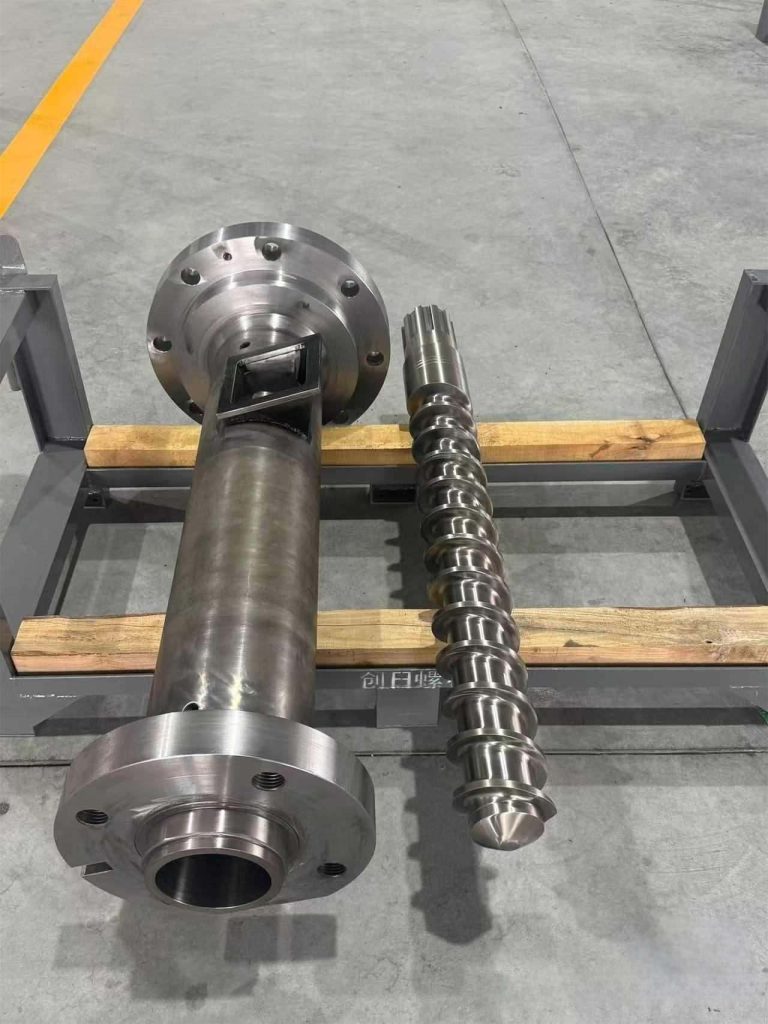
Forward upkeep cuts how often and how much parallel twin screw barrel repair occurs. It deals with damage early and steadily.
Monitoring Wear Trends in Parallel Twin Screw Barrels
Steady watch of power, push, and flow patterns gives early hints of barrel damage. Pattern-based upkeep plans make things more predictable. They also cut rush fixes.
Cleaning, Startup, and Shutdown Practices That Minimize Damage
Guided cleaning and start-up steps lower chemical and heat strain on barrel walls.
Avoiding Thermal Shock and Material Degradation
Slow warm-up and cool-down lessen heat wear. This matters most after stuff switches or upkeep halts.
Proper Alignment and Assembly After Maintenance
True fit during putting together stops uneven push. Even a small wrong fit can speed up spot damage. It cuts barrel use short.
How CHUANGRI SCREW Solves Parallel Twin Screw Barrel Wear Challenges
At CHUANGRI SCREW, we view parallel twin screw barrel repair as a whole-system build job. Not a regular service. Our background in extrusion, reuse, and heavy add-in jobs lets us offer setup-fit fixes.
In-House Repair, Re-Manufacturing, and Bimetallic Barrel Capabilities
We handle close cutting, rebuilding, and bimetallic wall work all in our shop. This altogether way makes sure a steady grade and faster wait times.
Our Bimetallic Barrel fixes are made for rough and rust setups. They back steady long-run work with mineral-packed and reused stuff.
Engineering-Based Evaluation Before Repair or Redesign
Every job starts with a tech check. It sorts out if repair, re-design, or material boost gives the best long-term value.
Custom Alloy Selection for High-Filler and Corrosive Applications
We choose alloy setups from real handling spots. This makes fixed barrels match true damage paths. Not book guesses.
Precision Machining and Inspection Across the Full Repair Process
New CNC cutting and check tools let us hold bounds through the fix time. This close work is key when adding fixed barrels to Pelletizing Parallel Twin-Screw systems.
Supporting Global Customers with Fast Turnaround and Consistent Quality
Our smooth work paths let us help world buyers. They need sure, quick returns without losing output or lasting strength.
FAQ
Q: What factors determine whether parallel twin screw barrel repair is feasible?
A: Feasibility depends on wear depth, remaining wall thickness, wear uniformity, and structural integrity. Accurate measurement and inspection are essential before deciding on repair.
Q: How to choose the right material solution for parallel twin screw barrel repair?
A: Material selection should consider filler content, corrosion risk, and operating temperature. Bimetallic liners with nickel-based alloys are commonly used for demanding applications.
Q: Parallel twin screw barrel repair vs replacement, which is better?
A: Repair is often preferable when wear is within repairable limits, and performance can be restored. Replacement is necessary when deformation or excessive wear compromises reliability.
Q: How does bimetallic lining improve parallel twin screw barrel performance?
A: Bimetallic lining enhances wear and corrosion resistance while maintaining dimensional stability, extending service life compared to standard nitrided barrels.
Q: What maintenance practices help reduce parallel twin screw barrel repair frequency?
A: Regular wear monitoring, proper cleaning, controlled thermal management, and precise alignment during assembly all help extend barrel life and reduce repair frequency.

 consult
 WHATSAPP
 leave message
 top
top