
Extruder Cleaning Compounds: How to Match the Purging Method to Resin and Contamination
Related news
Extruder Cleaning Compounds: How to Match the Purging Method to Resin and Contamination


Extruder cleaning is not simply a matter of pushing a convenient resin through the barrel until the color looks acceptable. A good purge must work inside the safe temperature window of the outgoing material, the incoming material, and the cleaning compound. It must also reach the places where residue actually sits. Matching those variables prevents a routine changeover from becoming hours of scrap, excessive torque, or an unnecessary screw pull.
What Extruder Cleaning Must Diagnose Before a Purge
Start with the defect. Color streaks usually indicate pigment or masterbatch left on metal surfaces or in low-flow pockets. Clear gels may be partially melted polymer, cross-linked material, or incompatible resin. Brown or black specks point toward degraded or carbonized deposits, but repeated specks can also reveal a dead spot, damaged surface, or worn screw-to-barrel clearance. Foreign particles may originate upstream in a loader, blender, hopper, magnet, hose, or screen rather than inside the barrel.
Then define the endpoint. A dark-to-dark change may require stable color at the die, while black-to-clear production demands much lower visible residue. A shutdown purge must remain stable until restart; a pre-maintenance purge should make warm deposits easier to remove.
Record both resin families, temperatures, flow behavior, fillers, pigments, and heat or moisture sensitivity. Add barrel capacity, vents, mixing sections, screens, melt pump, adapter, and die because these determine pressure, clearance, and material hold-up.
Mechanical, Chemical, Concentrate, or Manual Cleaning?
Choose the cleaning mechanism before comparing price per kilogram. The useful cost measure includes purge, displacement resin, labor, downtime, and scrap to the first acceptable product.
Mechanical Purging for Pressure and Scrubbing
Mechanical grades rely on pressure, shear, detergency, and scrubbing. They suit routine changes when the extruder can fill the flights and generate agitation. Strong or filled grades can attack pigment and carbon, but may be restricted around fine screens, melt pumps, polished surfaces, and tight dies.
Feed into an emptied barrel, begin slowly, and increase speed only after material exits and torque is stable. Safe bursts of higher speed can loosen deposits; slowing or briefly stopping can help some grades work downstream. Respect all temperature, drive, pressure, and torque limits.
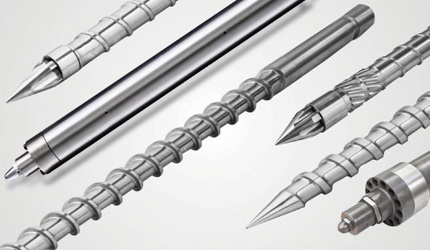
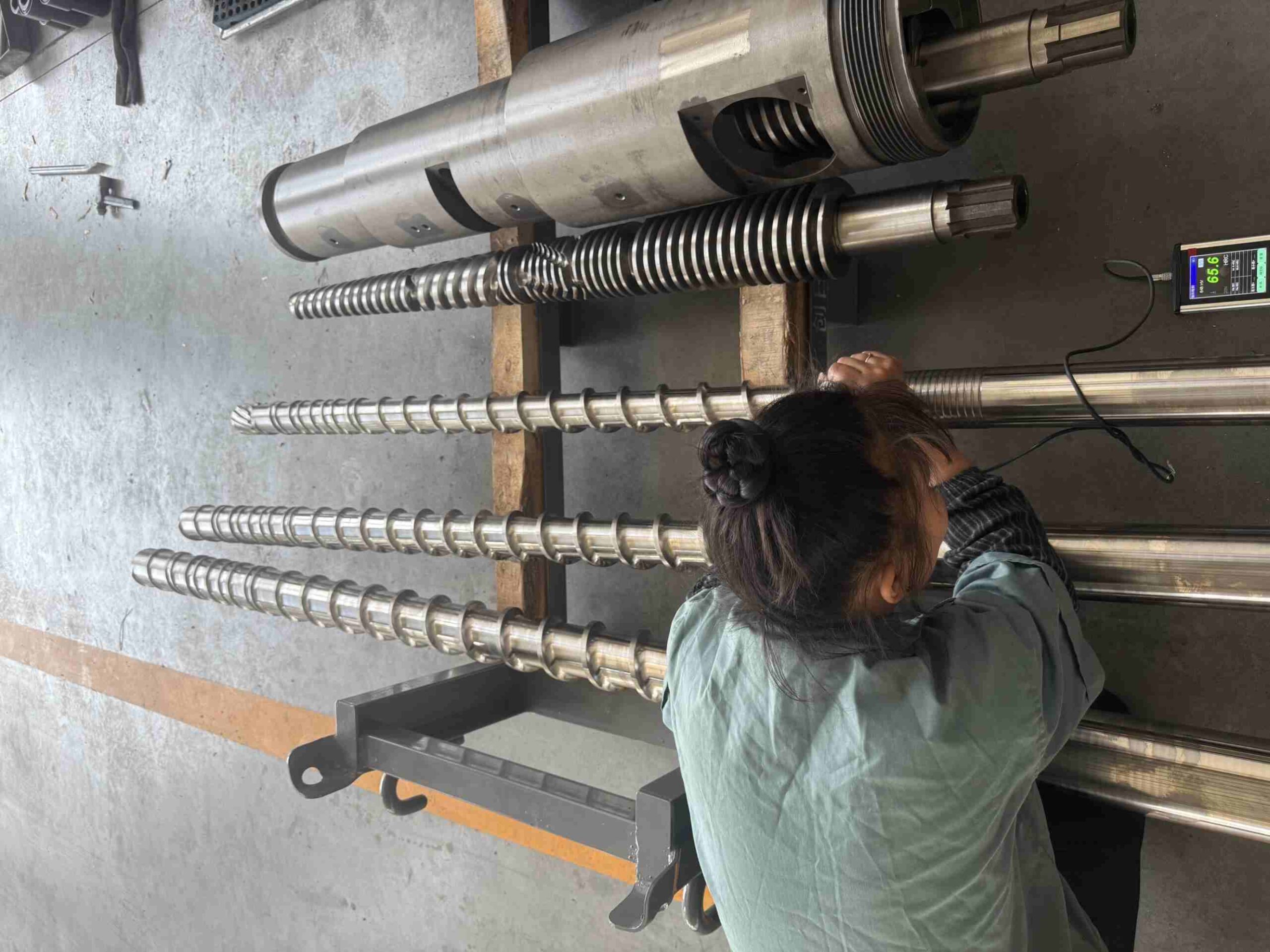
Machine design still governs that mechanical action. The PPR Pipe Extruder High-Speed Screw is specifically presented for PPR and HDPE pipe processing, but its cleaning trial must still be matched to resin flow, screw geometry, and safe operating limits.
Chemical and Concentrate Purging for Low-Flow Areas
Chemical grades use heat-activated additives and often a specified soak. Their action can help in dies, vents, and low-flow regions that pressure-dependent material may not scour. Temperature, residence time, ventilation, and supplier instructions remain binding.
Heat-sensitive PVC shows why method labels alone are insufficient. Even on verified application equipment such as the PVC Pipe Conical Twin-Screw, the selected purge must stay inside the resident compound’s safe temperature and residence-time limits.
Purging concentrates use a defined loading in a compatible carrier or production resin. Matching flow behavior can ease displacement where low residue matters. Guessing the mix, diluting a ready-to-use grade, or substituting regrind defeats the designed mechanism.
Manual cleaning is an escalation. When a correct purge cannot stop recurring black specks, remove and inspect the screw under lockout procedures. Avoid steel scrapers, uncontrolled flame, and harsh chemicals that can damage precision surfaces.
Match the Purging Method to Resin and Contamination
Use this list to plan a trial, then select a grade whose published range covers both sides of the change. A high-temperature purge may degrade residual PVC; a low-temperature grade may not survive the next engineering resin.
*PE, PP, or similar polyolefins:For routine color or material carryover, start with a general mechanical grade or approved concentrate. Match melt flow and confirm easy displacement.
*PVC or another heat-sensitive compound:For degradation, plate-out, or black specks, use a low-temperature, heat-stable grade with controlled residence. Never exceed the resident resin’s safe temperature.
*ABS, PS, or styrenic blends:For strong pigment or degraded residue, begin with a compatible mechanical grade and escalate only when needed. Confirm base-resin compatibility and downstream clearance.
*PA, PC, PET, PBT, or blends:For moisture, viscosity mismatch, or a stubborn transition, use a grade covering both temperature windows. Dry materials correctly and use a specified bridge resin when required.
*PPS, PEEK, PEI, or another high-temperature resin:For carbonized deposits and thermal stress, select a dedicated high-temperature purge and verify its minimum and maximum operating temperatures.
*Clear, soft, or residue-sensitive material:For purge traces, haze, or surface defects, favor a low-residue grade or compatible concentrate and define an objective quality endpoint.
*Filled, recycled, or heavily pigmented material:For abrasive solids, carbon, or foreign contamination, use stronger mechanical cleaning only when geometry permits. Check screens, pumps, dies, coatings, and torque first.
Severity can change the answer within one row. Fresh color carryover may need a routine grade; layered carbon may require stronger scrubbing or an approved soak. Foreign metal, scoring, or recurring deposits are inspection problems, not reasons to keep feeding compound.
How to Run a Controlled Extruder Cleaning Trial
Treat the first purge as a documented trial under the supplier procedure, machine manual, PPE requirements, and plant safety rules. Clean loaders, hoppers, blenders, hoses, magnets, and drain points first so they do not re-contaminate the barrel.
Set Compatibility and Machine Limits First
Confirm the purge range against both materials. Decide whether the die and screen remain installed, and check vents, melt pumps, polished surfaces, and clearances. Estimate capacity from the filled flow path, then set safe speed, torque, and pressure limits.
Run down the resident resin safely, add the specified purge, fill the flights, and start slowly. Observe discharge for old color, gels, black specks, unmelted material, and pressure instability. Repeat only when the procedure and evidence justify it.
Measure a Clean Endpoint, Not Just Purge Weight
A fixed number of bags is not proof. Record purge kilograms, changeover minutes, displacement resin, scrap, peak torque or pressure, and defect recurrence. Photograph labeled samples when visual defects are the acceptance criterion.
Compare trials under similar contamination; a compound tested second on a partly cleaned machine has an unfair advantage. Turn a repeatable method into a changeover sheet covering temperature, quantity, speed stages, soak time, hardware, and acceptance limits.
When Purging Reveals a Screw-and-Barrel Problem
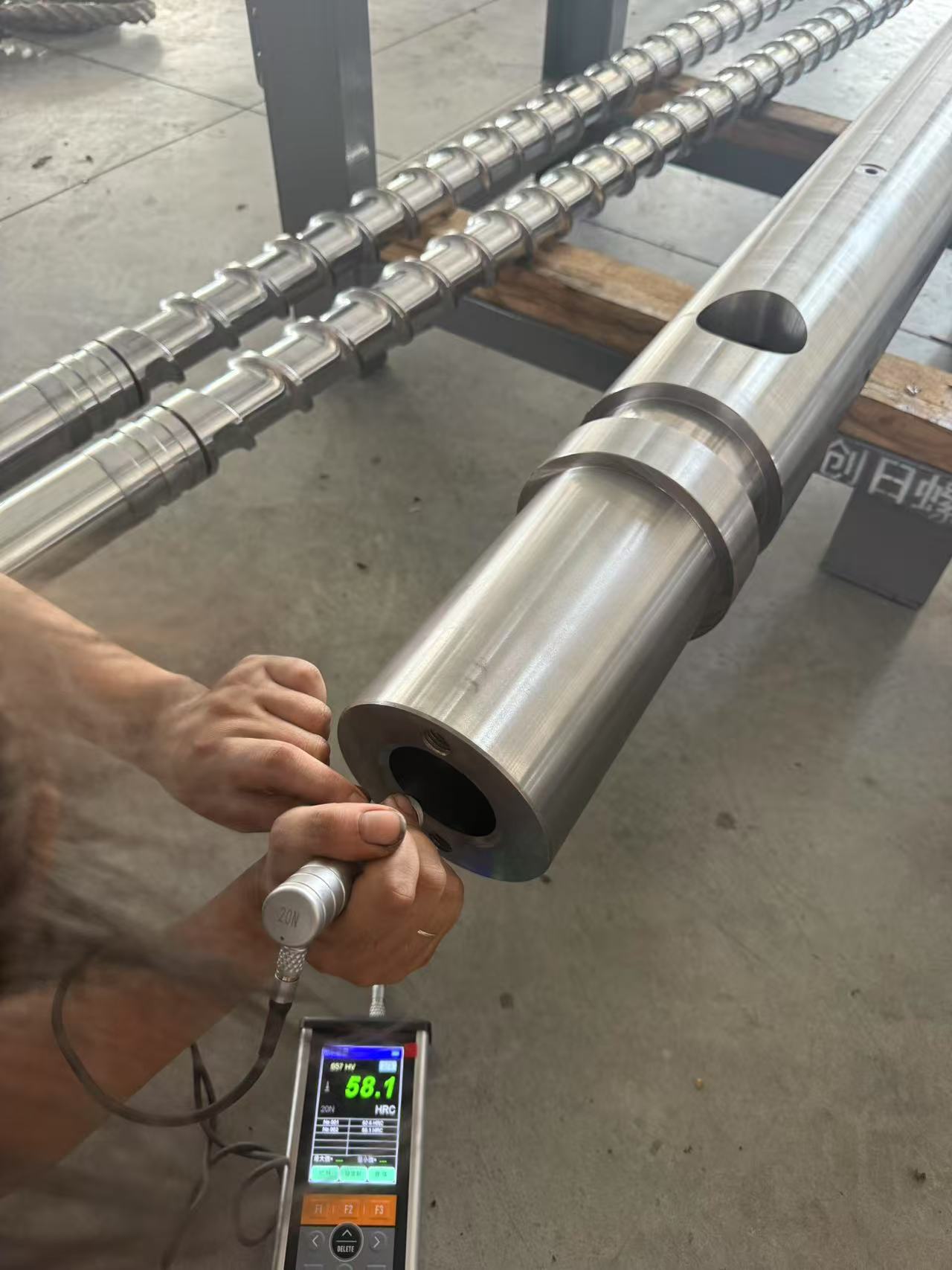
Hardware geometry affects cleaning. Worn clearance causes backflow and inconsistent shear; damaged coatings or stagnant elements retain polymer. If specks return, pressure fluctuates, output falls, or torque becomes erratic, inspect the hardware.
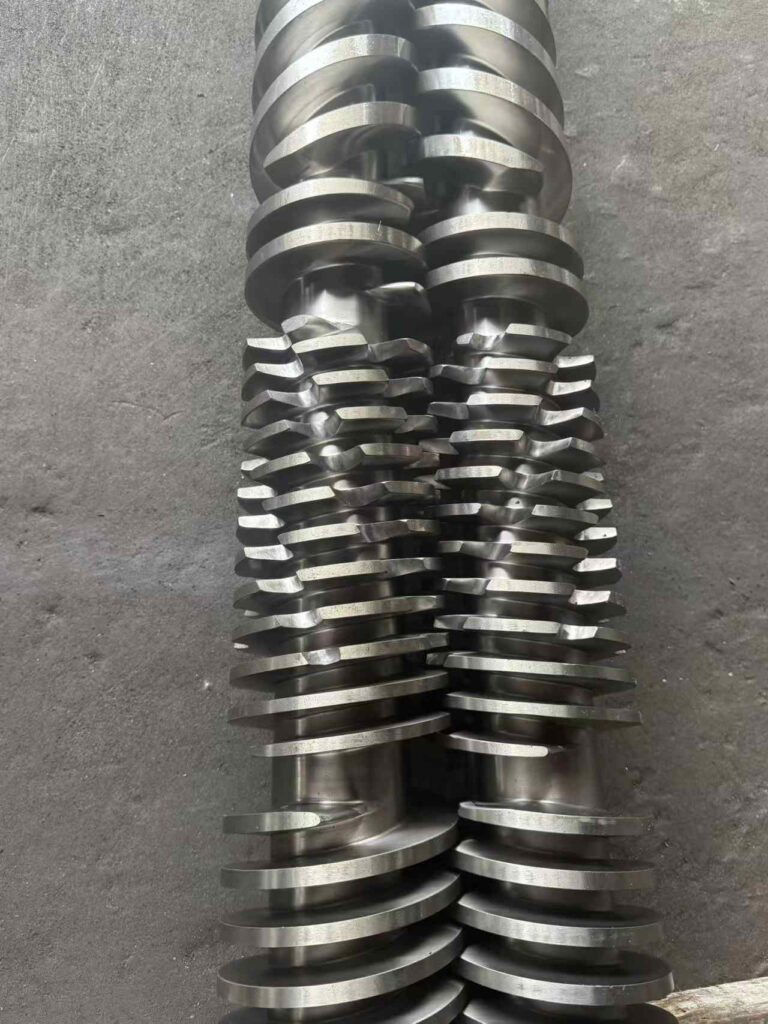
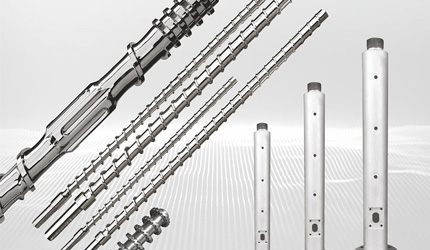
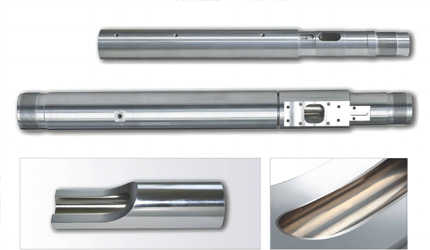
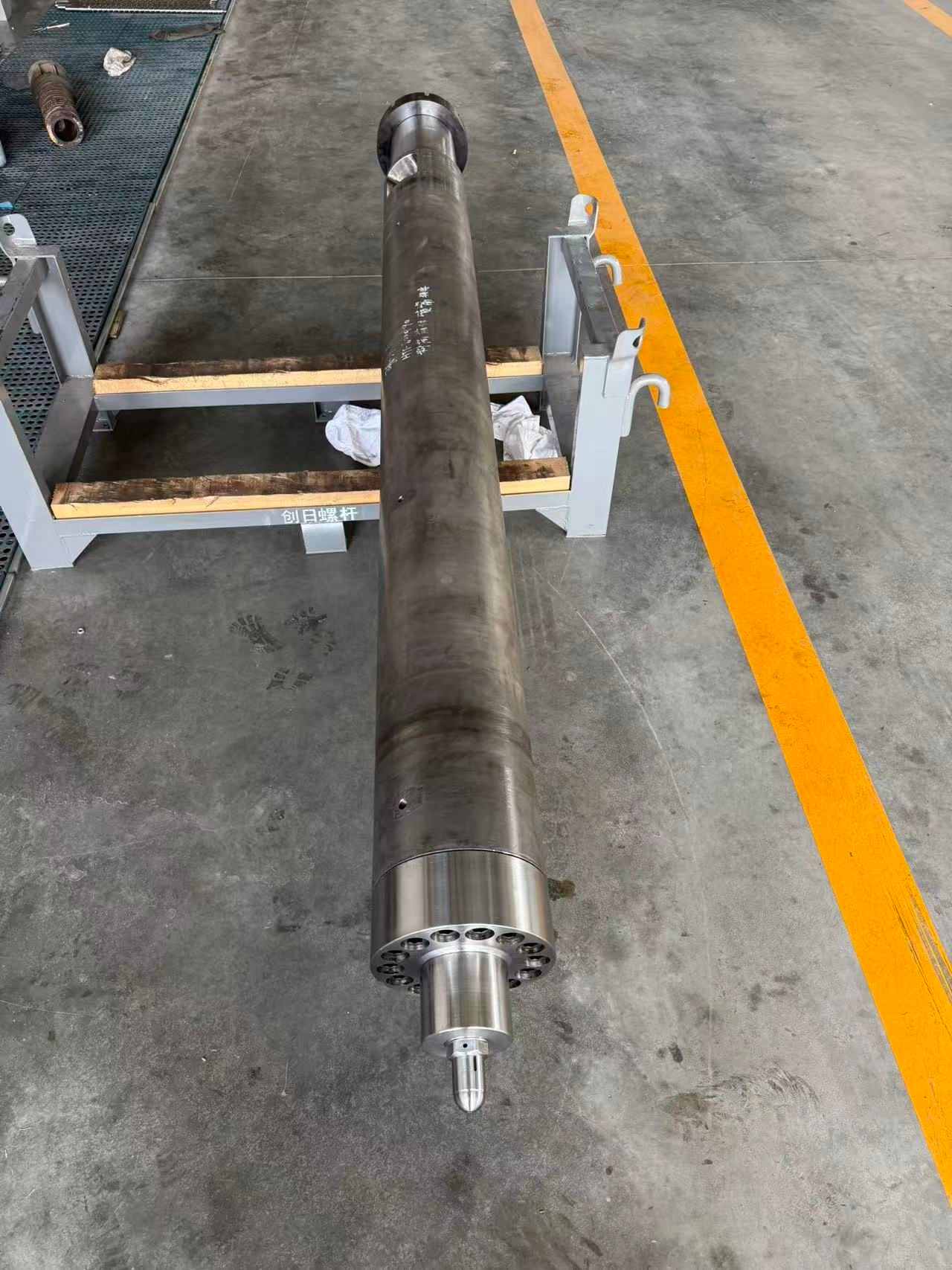
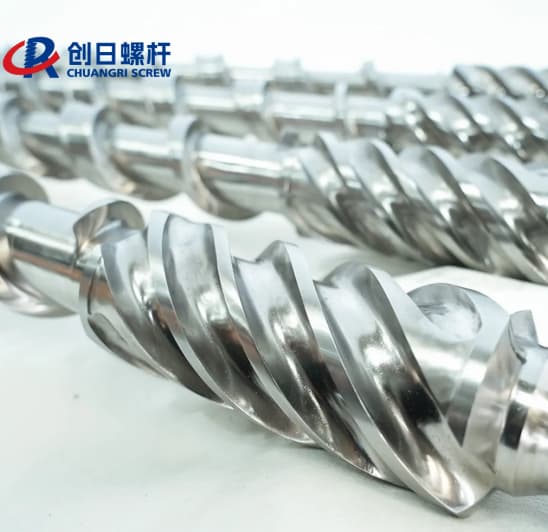
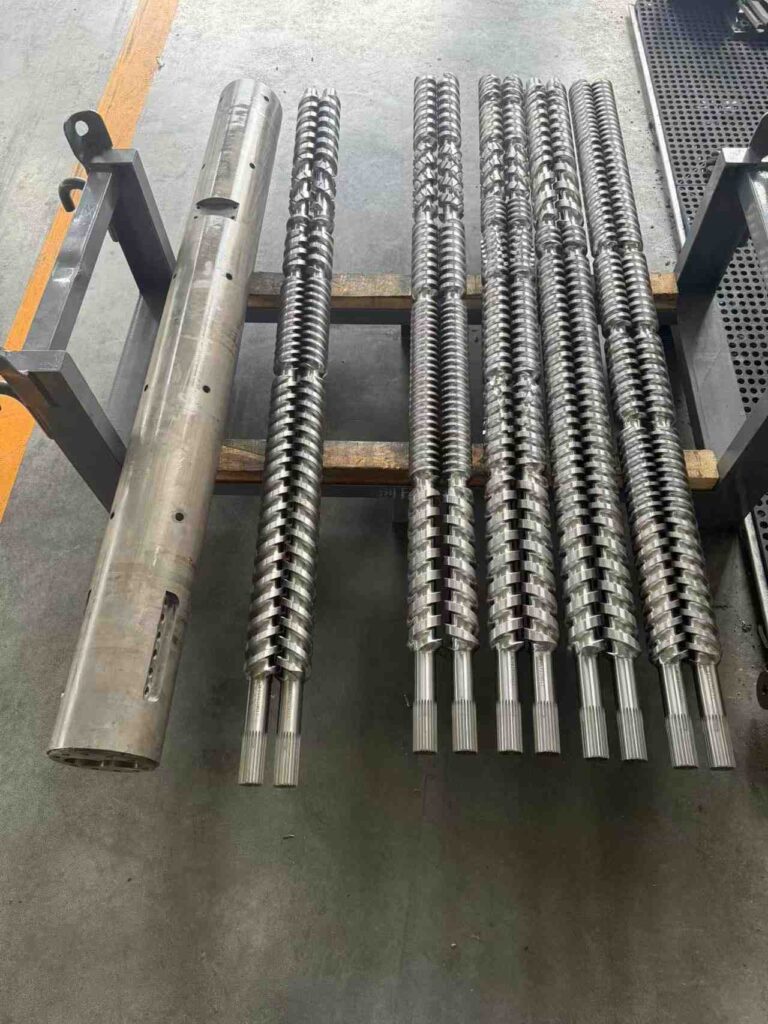
CHUANGRI SCREW matches screw-and-barrel design to the processed material, and we can use changeover records to discuss where hold-up or wear may be affecting cleaning. The PVC Pipe Conical Twin-Screw and PPR Pipe Extruder High-Speed Screw address different resin and process needs. A Parallel Twin-Screw Barrel introduces another flow path and should be evaluated as a complete system when planning purge coverage.
Escalate to a screw pull when a verified purge procedure repeatedly fails, a hard blockage prevents safe flow, contamination contains metal, or inspection data suggests wear or surface damage. Purging can remove material; it cannot restore flight diameter, repair a coating, eliminate barrel ovality, or redesign a dead zone.
FAQ
Q: Can ordinary production resin be used for extruder cleaning?
A: It can displace some previous material, but it is not formulated to lift pigment, degraded polymer, or carbon from metal surfaces. Compare total resin waste and downtime with a purpose-designed purge rather than comparing price per kilogram alone.
Q: How do I choose an extruder cleaning compound for PVC?
A: Start with a grade whose operating window stays within the PVC compound’s safe limit and whose procedure minimizes residence time. Confirm compatibility with the die, screen, and additives, and never raise temperature simply to make a purge flow.
Q: Is mechanical or chemical purging better for black specks?
A: It depends on location and severity. Mechanical action can scrub the screw and barrel; chemical action may reach low-flow areas. Persistent specks after a correct purge call for inspection of dead spots, degraded material, wear, or damaged surfaces.
Q: How much purging compound does an extruder cleaning cycle require?
A: Use the grade supplier’s calculation and the machine’s actual system capacity. Contamination severity and installed downstream hardware change the amount. Track kilograms to a clean endpoint instead of assuming one universal barrel-volume rule.
Q: When should extruder cleaning stop and screw removal begin?
A: Stop when safe torque or pressure cannot be maintained, a hard blockage prevents flow, foreign metal is suspected, or the same defect returns after documented purge cycles. At that point, controlled removal and inspection are safer than repeated aggressive purging.

 consult
 WHATSAPP
 leave message
 top
top