
Top 5 Benefits of Using Parallel Screw Barrels in Modern Extrusion Systems
Related news
Top 5 Benefits of Using Parallel Screw Barrels in Modern Extrusion Systems


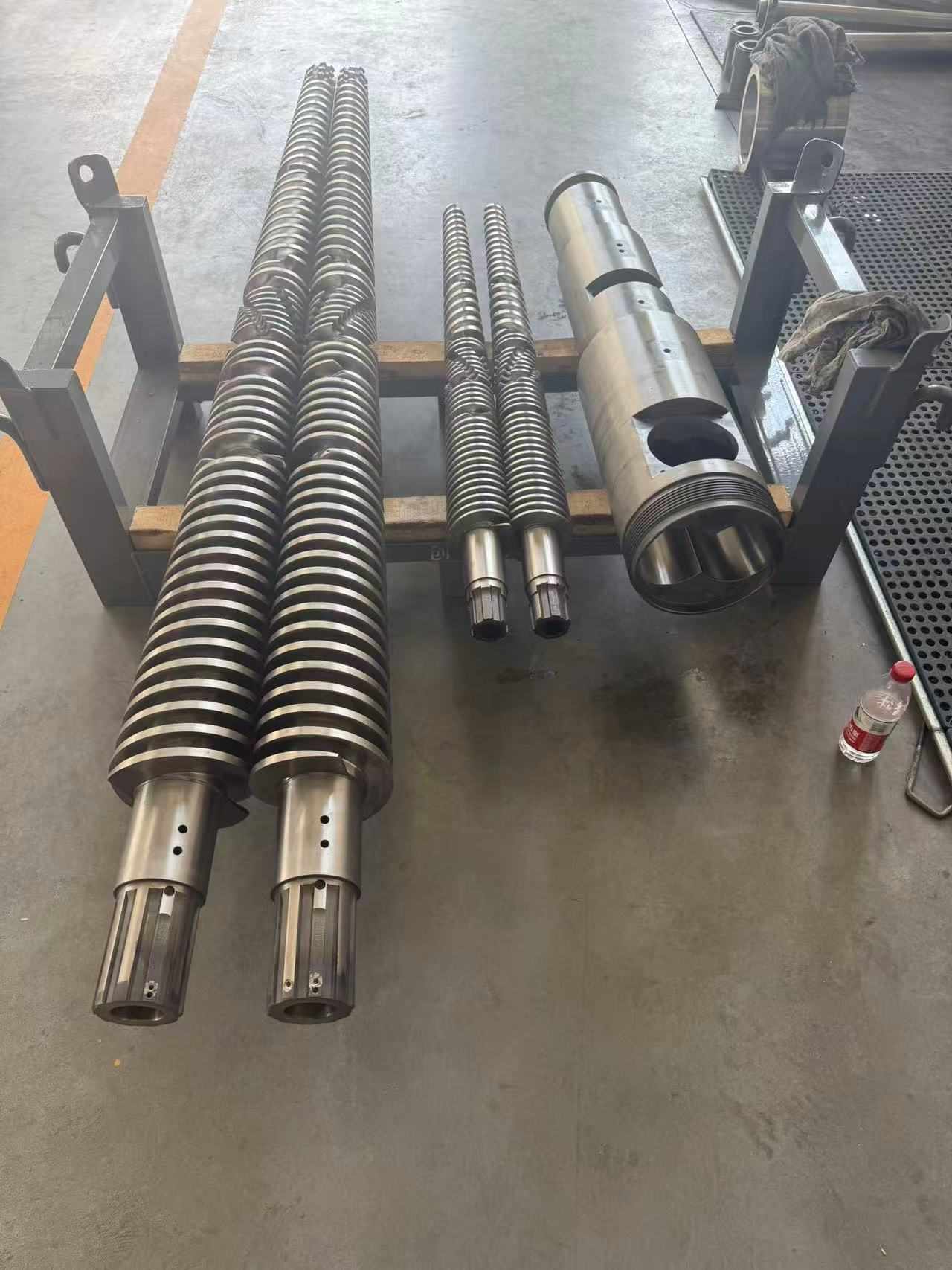
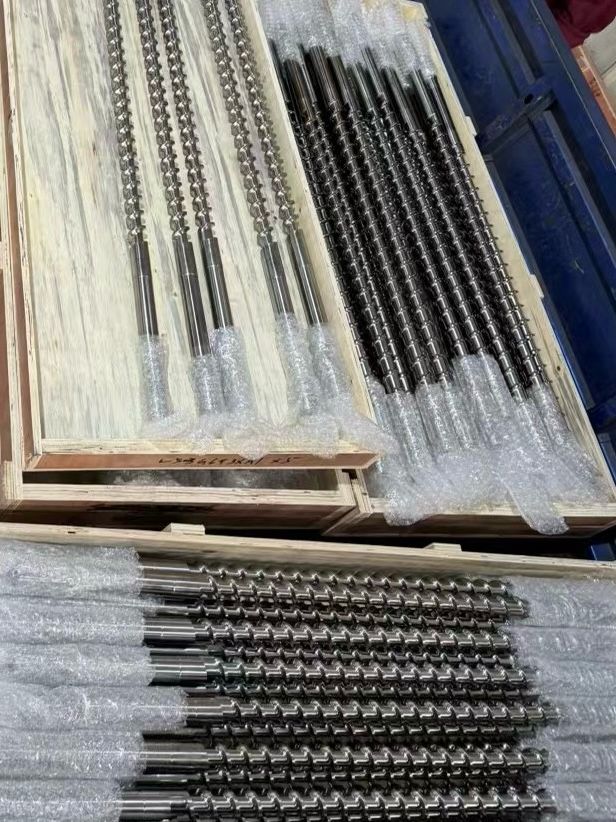
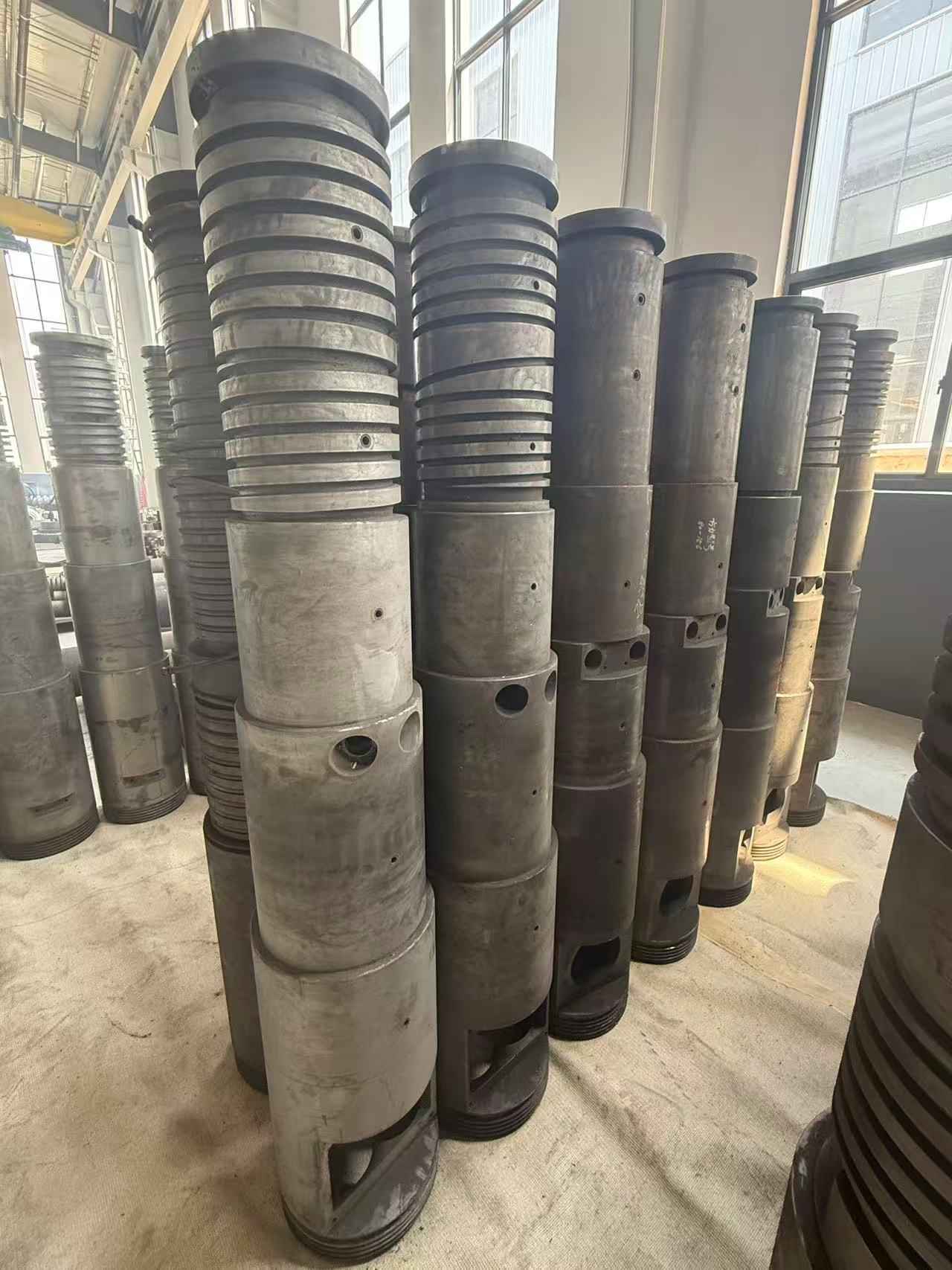
Modern extrusion lines need higher output, consistent melt quality, wider material compatibility, and less downtime. A properly designed Parallel Screw Barrel supports those goals through controlled conveying, mixing, pressure stability, and wear management.
Modern extrusion lines may process polymers with fillers, pigments, additives, and recycled feedstock. This creates a narrow processing window. The system must supply enough energy for melting and homogenization, while excessive shear heat can accelerate degradation.
Predictable filling and conveying are important. Rigid PVC dry blends may contain stabilizers, lubricants, pigments, and mineral fillers that change bulk behavior. Intermeshing geometry can make feeding and compression more predictable, but the design must match the formulation and machine.
Glass fiber, mineral filler, recycled contamination, and corrosive additives can increase friction, torque demand, heat generation, and abrasive wear. Wear commonly affects screw-flight edges, screw-root surfaces, and barrel bores near higher-pressure regions. Increasing clearance can reduce conveying efficiency and melt control.
An ordinary screw barrel is not automatically suitable for every duty. Material chemistry, filler type, temperature, pressure location, and wear mechanism should guide material and surface-treatment decisions rather than hardness alone.
Benefit 1: Parallel Screw Barrel Provides Superior Mixing and Material Homogenization
How Parallel Screw Barrel Improves Material Dispersion During Extrusion
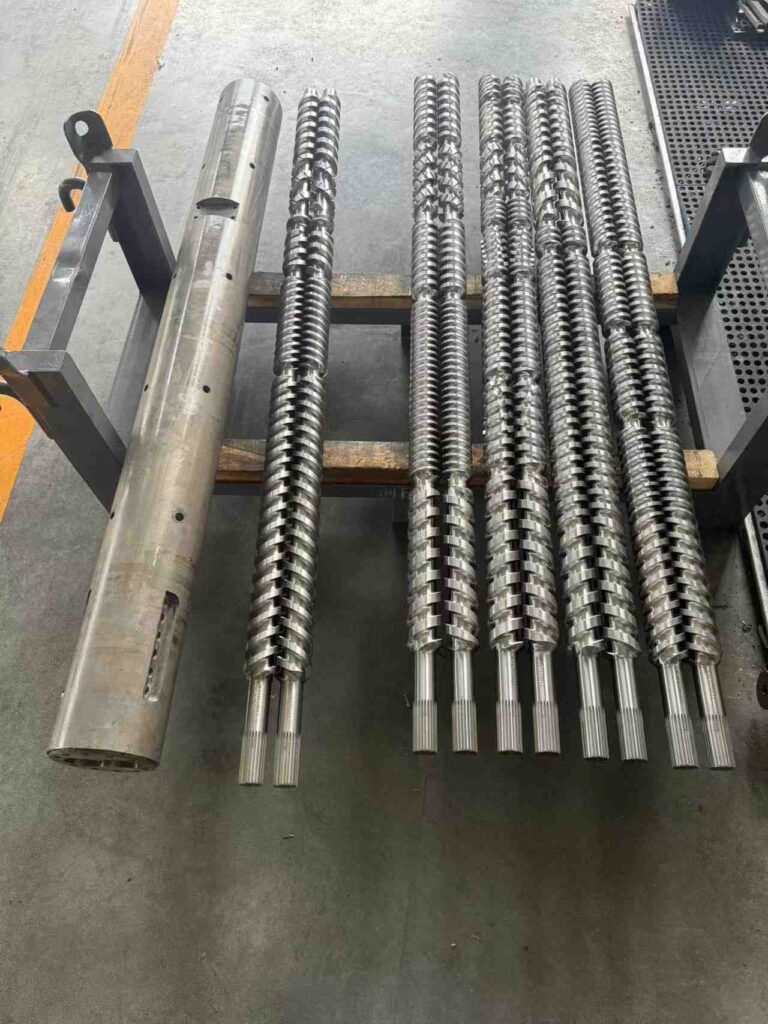
Intermeshing screws repeatedly divide, recombine, and move material through the processing space. This supports distributive mixing, which spreads additives through the melt, and dispersive mixing, which can help break down agglomerates when the formulation and operating conditions allow it. Fillers, pigments, stabilizers, and polymer phases can therefore be distributed more evenly.
The effect is useful in compounding, recycling, filled plastics, and engineering plastics. Recycled feedstock may vary in form and composition, so it needs sufficient residence time and mixing.
Why Better Melt Homogeneity Improves Final Product Quality
Uniform melt quality reduces local differences in filler concentration, viscosity, and thermal history. That can reduce defects, weak spots, color variation, and pellet inconsistency. Mechanical properties are more repeatable when polymer and reinforcement are distributed consistently before the die.
The result depends on screw geometry, clearance, fill level, residence time, and formulation, not simply on using two screws. Selection should follow the application.
Benefit 2: Parallel Screw Barrel Increases Extrusion Output and Processing Efficiency
How Parallel Screw Barrel Improves Material Conveying Performance
Continuous conveying creates a more stable path from feeding through melting and discharge. Intermeshing geometry can support steady feeding and compression, helping maintain a predictable pressure profile. Balanced feed rate, screw speed, and downstream resistance can increase capacity with less fluctuation.
Throughput still depends on resin, formulation, screw geometry, motor, gearbox, and die resistance.
How Optimized Screw Design Supports High Output Extrusion Lines
Selection should begin with screw diameter, L/D ratio, compression ratio, material form, and product requirements. Parallel twin-screw specifications may use screw diameters of Φ45/2–Φ250/2 and an L/D ratio of 18–40. These are design references, not universal fit values.
Compression ratio is designed according to the raw materials and products. Flakes, films, powder, and mixed recycled material may require a different balance from uniform pellets. Matching the screw to the target supports plasticizing efficiency.
Benefit 3: Parallel Screw Barrel Handles More Materials and Complex Formulations
Parallel Screw Barrel for Plastic Compounding and Recycling Applications
Material flexibility matters when one line handles multiple grades or recycled streams. Parallel twin-screw systems are considered for PP, PE, ABS, PVC, recycled plastics, filled materials, and compounding. Design depends on how each material melts, conveys, mixes, vents, and responds to shear.
Recycling lines may use pellets, flakes, films, powder, or mixed feedstock. These forms should not automatically use the same feeding arrangement. Assessment can focus on feed, compression, metering, mixing areas, and wear-prone surfaces.
How Flexible Screw Configuration Supports Different Processing Requirements
Different materials may need different mixing intensity, residence time, and conveying ability. A gentle-melting design should not be copied into a highly filled compounding line.
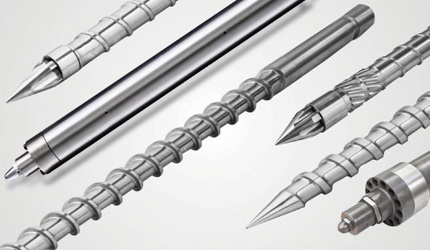
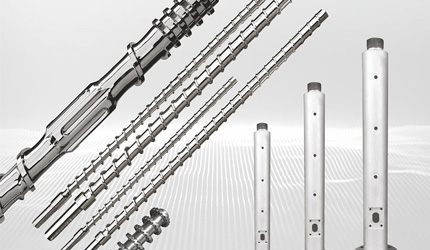
Application-based design can include general, pin, barrier, separation, or vented configurations where required. The four main parallel twin-screw and barrel types provide useful context when comparing these configurations. CHUANGRI SCREW provides OEM, ODM, and customized solutions for plastic machinery components, including site measurement, modification, and matched screw-barrel design. We use machine dimensions and operating conditions to support a practical fit.
Benefit 4: Parallel Screw Barrel Improves Process Stability Through Better Temperature and Pressure Control
How Parallel Screw Barrel Reduces Melt Temperature Variation
Thermal stability depends on balancing barrel heating with mechanical energy from conveying and mixing. Excessive shear can raise melt temperature and accelerate degradation, while insufficient energy can leave unmelted material. A matched Parallel Screw Barrel helps manage shear, residence time, and filling conditions together.
This balance is important for recycled PET, filled polymers, and heat-sensitive additives. Controlled mechanical energy can help preserve melt quality and reduce discoloration or viscosity drift.
Why Stable Extrusion Conditions Reduce Waste and Production Losses
Stable conveying and melt quality make it easier to hold consistent dimensions and appearance. Fewer surges and less thermal variation can mean fewer rejected products, lower waste, and more predictable output.
Benefit 5: Wear-Resistant Parallel Screw Barrel Extends Equipment Service Life
How Nitriding and Bimetallic Technologies Improve Wear Resistance
Wear protection should match the material and stress location. Nitriding may suit moderate wear, while bimetallic processing or alloy coating may be considered when abrasive fillers, recycled contamination, or corrosive exposure create greater demands. Nickel-based alloy and tungsten-carbide-related protection can be evaluated for combined corrosion and abrasion or severe abrasive risk. The bimetallic twin-screw product is one option to review for demanding formulations.
The choice is not determined by hardness alone. Resin chemistry, glass fiber or mineral filler, temperature, local pressure, and the wear mechanism all matter. CHUANGRI SCREW supplies nitriding, bimetallic processing, and alloy coating options.
How Precision Manufacturing Helps Maintain Long-Term Performance
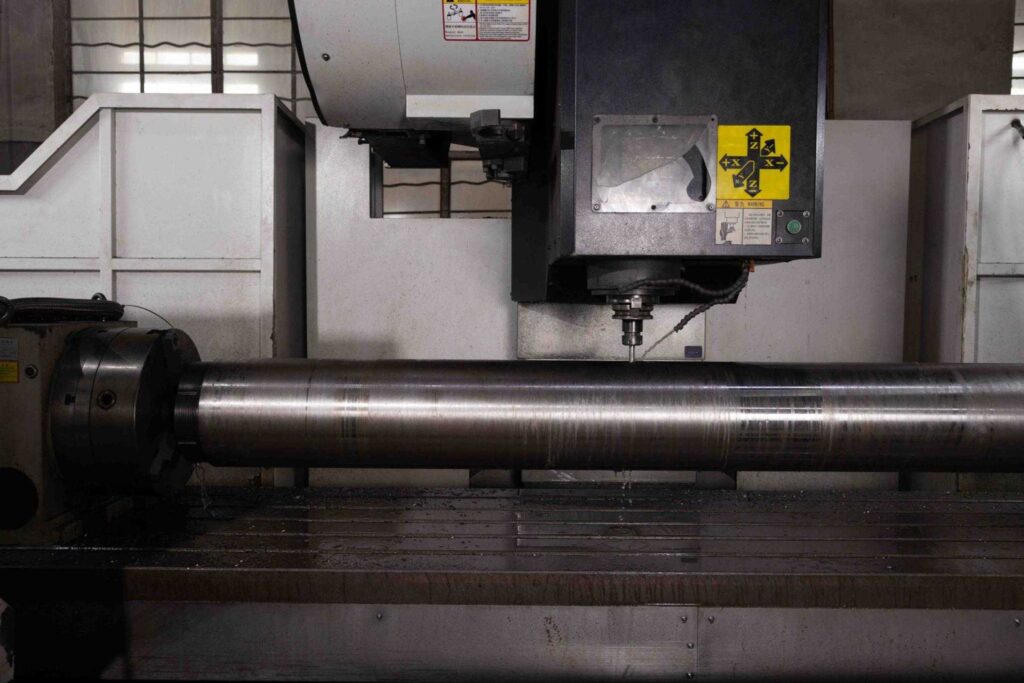
Surface treatment cannot compensate for incorrect geometry or structural damage. CNC machining, thread milling, grinding, and polishing must work together to recover screw-flight profile, root and channel geometry, surface finish, and dimensional relationships. Screw-barrel clearance control helps maintain conveying and mixing behavior while reducing contact risk.
Inspection should cover fit, concentricity, hardness, dimensional accuracy, surface condition, and smooth rotation after treatment. Cracks, corrosion, or base-material damage should be addressed directly rather than hidden under a harder layer. Precision plus material technology supports long-term performance.
How to Choose the Right Parallel Screw Barrel for Modern Extrusion Systems
Key Factors When Selecting a Parallel Screw Barrel
Review material type, feed form, filler or reinforcement, output requirement, wear condition, screw configuration, machine model, screw diameter, gearbox, pressure demand, and die requirements. For an upgrade, check screw-flight outside diameter, barrel inside diameter, clearance, surface scratches, and concentricity.
Why Customized Parallel Screw Barrel Design Creates Better Results
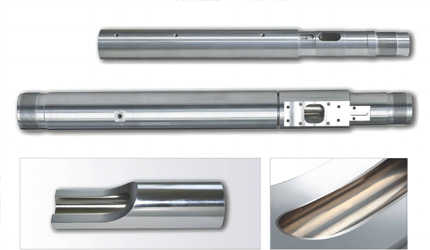
Customization is most useful when it solves a defined problem such as unstable feeding, insufficient mixing, rapid wear, poor thermal balance, or incorrect machine fit. The design can then connect L/D ratio, compression ratio, material protection, and dimensional control to the production goal. Relevant options include the parallel twin-screw barrel range.
FAQ
Q: What are the main benefits of using a Parallel Screw Barrel in extrusion systems?
A: A parallel screw barrel offers clear benefits. It can improve melt homogenization. It supports conveying stability. It helps create throughput consistency. It allows greater material flexibility. It provides solid thermal balance. It also aids wear management. These gains appear when the unit is matched to the formulation and the machine.
Q: How does a Parallel Screw Barrel improve extrusion mixing performance?
A: Intermeshing screws support distributive and dispersive mixing. They help spread additives and fillers through the melt. This process reduces local variation in composition. It also limits differences in thermal history.
Q: Can a Parallel Screw Barrel be used for plastic recycling applications?
A: Yes. A parallel screw barrel can be designed for recycled pellets. It works with flakes and films. The barrel handles powder or mixed feedstock. Yet feeding and compression should reflect the physical form. They must also consider the material condition.
Q: How does a Parallel Screw Barrel increase extrusion production efficiency?
A: Continuous conveying and stable feeding can reduce output fluctuation. These features make better use of machine time. Actual capacity depends on the material. It also relies on screw design. The machine, gearbox, and die resistance affect results too.
Q: What materials are used to improve the wear resistance of a Parallel Screw Barrel?
A: Several options exist. They may include nitriding, bimetallic processing, nickel-based alloy, alloy coating, and tungsten-carbide-related protection. Selection should follow the resin. The filler type matters. You need to consider corrosion risk. Temperature and the wear mechanism are important as well.

 consult
 WHATSAPP
 leave message
 top
top