

Injection Molding Screw Types Explained: Design, Materials, Applications, and Selection Tips
Injection Molding Screw Types Explained: Design, Materials, Applications, and Selection Tips


Injection molding screw types require two comparisons. “General-purpose” tells the reader about a processing profile; it does not name the steel or surface treatment. A screw with that profile may be nitrided. The specification therefore needs geometry and construction together, along with the resin grade and machine drawing. Without them, two quotations may describe different components.
How Are Injection Molding Screw Types Classified?
Separate Screw Geometry from Surface Treatment
Begin with the machine drawing. Note the feed, transition, and metering sections, then mark any proposed change to their lengths or flights. Record substrate and surface treatment separately. The term “bimetallic” leaves profile details open; “general purpose” leaves the surface construction open. Reviewing both fields against the resin and machine interface reveals whether a quotation contains enough information for a technical comparison.
Match Each Classification to a Processing Problem
Record the point at which the process changed and what changed: melt temperature, flight condition, or recovery duration. Add the resin and machine settings in effect. A thermal symptom calls for comparison of process readings, while visible flight damage calls for dimensional and surface inspection. This evidence helps determine whether to examine the screw profile, wear, or another component.
A comparison needs four entries: geometry, substrate, surface construction, and the processing requirement behind a proposed change. A missing entry leaves a question open. Send that question back instead of interpreting the product label. File the response with the quote for joint engineering and purchasing review before component approval.
Which Screw Designs Suit Different Molding Tasks?
General-Purpose Three-Zone Screws
The region names describe feeding, melting, and metering functions rather than component dimensions. Place the proposed replacement drawing alongside the installed drawing. Mark section-length, flight, and machine-interface differences before deciding whether the profiles match. Such differences remain unspecified when both proposals carry only the general-purpose description.
When to Consider a Specialized Screw Design
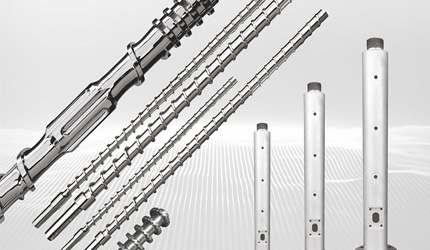
An alternative geometry needs a defined process objective first. State whether output, shear, mixing, or several requirements need attention, and note the observation behind each. CHUANGRI SCREW offers injection screw categories with design adjustments for process requirements. We review the proposed geometry with the material specification; changing treatment by itself does not show that the profile addresses the issue.
How Do Screw Materials and Surface Treatments Compare?
Nitrided Screws for General Processing Requirements
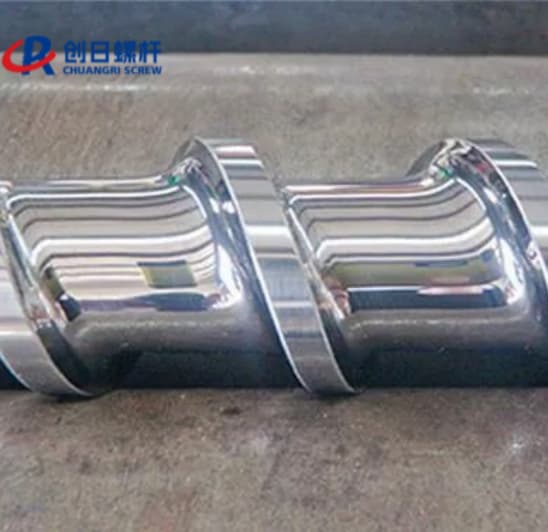
For the Nitrided Injection Molding Screw, obtain the drawing with the steel grade and nitriding specification. The treatment alone does not identify the complete component specification. Add resin grade and additives to the review: the word “nitrided” does not establish compatibility with that material.
Bimetallic and Coated Screws for Different Wear Conditions
For a Bimetallic Injection Molding Screw, the construction stated in the quotation is what can be reviewed. Our range includes nitrided, bimetallic, and coated injection screws, without a universal lifetime ranking among them. Resin compatibility also cannot be inferred from the category. Compare the offered component using the material and operating conditions under consideration.
Which Injection Molding Screw Fits the Application?
General-Purpose Resins and Routine Molded Parts
If the installed setup makes acceptable parts, it provides a comparison point. Preserve its resin grade, quality criteria, recovery record, and drawing beforehand. Compare the new component with those records afterward. A simultaneous change in profile and construction makes the effect of each difficult to separate. Even a repeat job needs its actual specification.
Filled Resins and Demanding Processing Conditions
With filled resin, list the filler and its loading plus additives and processing temperatures. Ask the supplier which feature in the offered construction addresses those conditions. The hard chrome plated injection molding screw is a specific coated component; its description cannot represent every coating. Review the offered component carefully.
A part's market does not identify its polymer grade. Similar-looking parts can contain different grades or additives; different products can share a resin. Put the material and required production result in the inquiry. This establishes the processing task directly, without relying on an inference from the part's eventual use.
How Should You Select an Injection Molding Screw?
Define the Resin, Machine, and Production Requirements
The selection sheet should show the installed drawing, resin grade, material changes, machine interface, production target, and symptom. Keep geometry separate from surface construction. Identify fixed requirements and the checks planned after installation. A life statement without a stated comparison basis requires clarification before it can distinguish the offered components.
Have the supplier confirm one accepted version after the drawing, treatment description, and quotation have been checked for agreement. Keep that revision with the acceptance method so inspection uses the agreed specification. File the resin details alongside it; those records will define the starting point when the component is ordered again.
Connect the observed problem to the recommendation. For a revised flight or surface, record which requirement the supplier intends to address and what observation will be used afterward. Keep established machine settings in the comparison record. The original requirement then provides the reference for reviewing the installed component. Any proposed change that lacks this connection needs clarification before order approval.
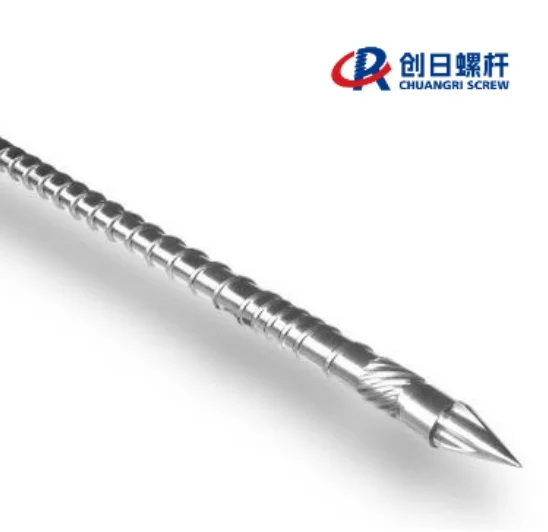
Check Wear Before Specifying a Replacement
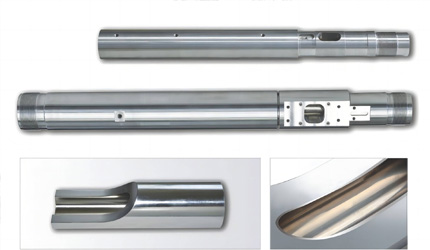
Clearance opens as the barrel bore grows or the screw flight diameter falls. For a dimensional comparison, record barrel ID and flight OD at matched axial positions, and compare each pair of readings with original dimensions or an approved baseline. Retain individual locations because an average can hide local wear, taper, or ovality.
Greater clearance can increase melt backflow over the flights and reduce forward output per revolution. Higher rpm can conceal part of the recovery delay without restoring the geometry. For comparison, retain resin, shot size, speed, back pressure, barrel temperature profile, and machine timing in the recovery record.
For barrel wear, inspect bore dimensions and local shape. For screw wear, inspect flight OD, flights, and working surfaces. Injection or holding-stage backflow concerns the check ring more directly. Cushion or shot-weight variation can prompt an inspection but cannot confirm barrel wear alone. Match operating trends to component measurements, since several faults can exist together.
FAQ
Q: What are the main injection molding screw types?
A: The attributes differ: general-purpose concerns profile, while nitrided and bimetallic concern construction or treatment. A component may combine these attributes. To compare offers, identify the actual profile and surface specification rather than treating category names as exclusive alternatives.
Q: What is a general-purpose injection molding screw?
A: Feeding, melting, and metering are the duties behind that description. Their dimensions remain a drawing question; check the proposed profile against the intended resin and machine.
Q: How do nitrided and bimetallic injection molding screws differ?
A: They name different component attributes. Nitriding is a treatment, while bimetallic concerns construction. Check the offered specification against the intended process; the names do not provide a ranking.
Q: Can one injection molding screw process different plastics?
A: A broad category cannot confirm that. Include each resin grade and its process conditions in the inquiry so the offered component can be assessed for the materials intended.
Q: When should an injection molding screw be replaced?
A: Use measurements and process history. Compare flight OD and surface condition with a baseline, check the barrel, and assess check-ring leakage separately.

 consult
 WHATSAPP
 leave message
 top