Key Steps in the Injection Machine Barrel Cleaning and Inspection Process
Key Steps in the Injection Machine Barrel Cleaning and Inspection Process


1. Injection-Machine Barrel Cleaning and Inspection: Why It Matters
1.1 Understanding the barrel and screw assembly in injection molding
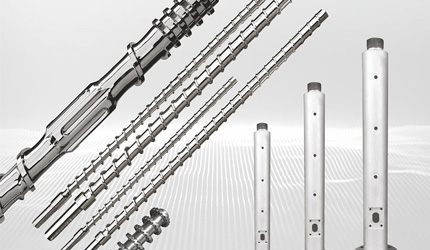
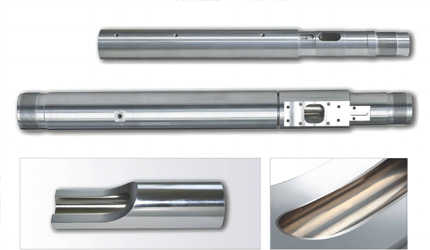
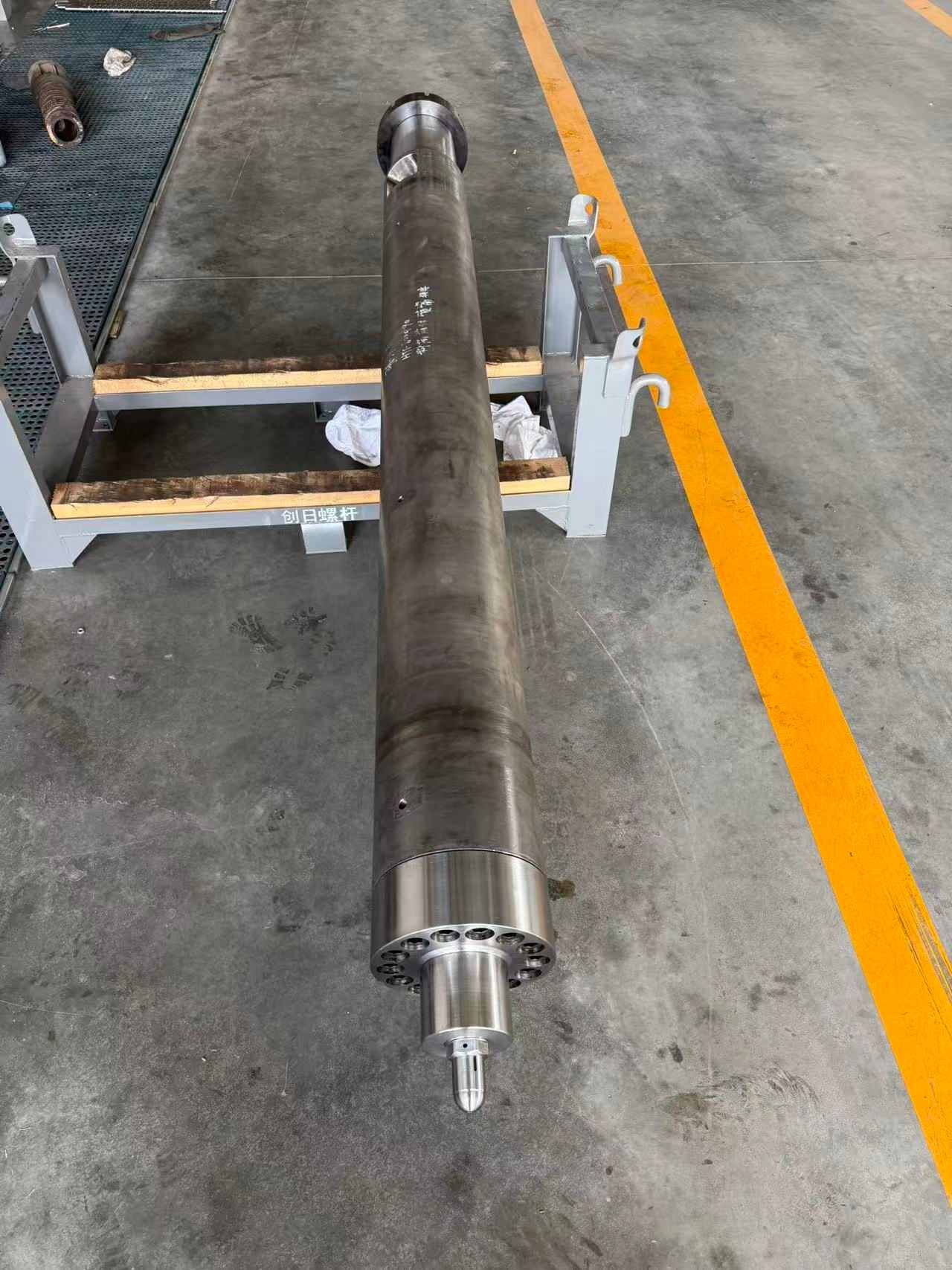
Understanding the injection machine barrel and screw assembly is important, as this system defines the efficiency of polymer melting, mixing, and metering. The screw rotates inside the barrel through three functional zones-feed, compression, and metering-each responsible for the transformation of solid pellets into a homogeneous melt. Any wear, residue, or thermal imbalance inside these zones alters the melt profile and results in non-uniform shot size, temperature deviation, or incomplete plasticization. Modern injection machines rely on precise thermal control, and the internal smoothness and straightness of the barrel define how evenly the material will flow. For example, the CHUANGRI SCREW Injection Molding Barrel, made with a CNC-honed surface and Ra0.4 μm roughness, offers a more uniform thermal field compared to a conventionally machined barrel and thus forms a very important basis for efficient cleaning and inspection.
1.2 Common risks when barrel cleaning & inspection are neglected
Not cleaning and checking the barrel regularly subjects it to serious risks that impact molded part quality and machine stability. The residue left in the barrel when not cleaned will build up as carbon deposition, burnt spots, and chute-like scratches inside the barrel and screw flights. These dried-on deposits contaminate the melt and result in black specks, streaks, splay, and even unexpected color shading. Heat transfer becomes non-uniform, and a lot of wear increases screw torque with material stagnation areas hotter than necessary, hastening thermal degradation with increased buildup. In extreme cases, wear may become irreversible and may significantly shorten service life or necessitate premature replacement.
1.3 How proper barrel maintenance impacts quality, output, and cost
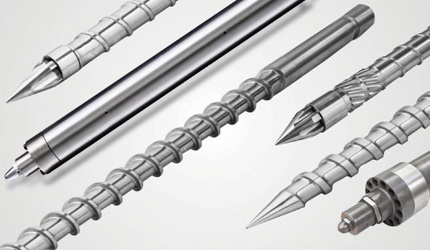
Proper barrel maintenance improves melt consistency, stabilizes machine output, and significantly lowers long-term operational costs. When internal surfaces remain clean and within tolerance, energy consumption decreases because the screw rotates more freely and shear heating stays controlled. Melt temperature becomes more predictable, helping operators maintain tight process windows and reduce scrap rates. Over time, preventive cleaning also slows wear progression, extending the lifespan of the screw-barrel system. Customers who use high-performance components—such as the CHUANGRI SCREW Bimetallic Injection Molding Screw or Solid Carbide Screw—typically see measurable reductions in color-change time, torque fluctuations, and maintenance interventions. These improvements directly translate to higher uptime and lower cost per molded part.
2. Preparation for Barrel Cleaning – Key Pre-Inspection Steps
2.1 Machine shutdown and safety precautions
Safe machine shutdown is the first requirement for any cleaning procedure. Operators should gradually lower barrel temperatures to the recommended purging level, relieve hydraulic pressure, and follow lockout procedures before opening access panels. Maintaining a safe temperature prevents resin from hardening into insoluble residue.
2.2 Material purge and resin residual removal
Material purging removes the majority of molten resin before manual cleaning begins. Purging compounds or high-flow resins help dislodge old material from the screw channels. Real-world case studies from purging-compound suppliers show that a well-designed purging program can cut start-up scrap by roughly 40–60% or more, depending on the process and material.
2.3 Hopper, feed-throat, and nozzle pre-cleaning
Cleaning upper-feeding components prevents recontamination. Dust, regrind, or colorant residues must be removed from the hopper, feed throat, and nozzle to avoid reintroducing foreign particles into the freshly cleaned barrel.
2.4 Initial inspection of screw/barrel clearance & wear zones
A quick dimensional and visual check determines whether deeper cleaning or disassembly will be necessary. Operators look for abnormal drag, scoring, or thermal discoloration—signs that excessive wear or material stagnation has occurred.
3. Barrel Cleaning Process for Injection Molding Machines
3.1 Selecting the right cleaner and purging agent
Selecting an appropriate purging agent is crucial for cleaning efficiency. Mechanical purging compounds are suitable for tough carbon deposits, while resin-based purges work well for general transitions.
3.2 Typical cleaning steps inside the barrel
The core cleaning workflow removes degraded polymer without damaging the steel surface. The operator typically follows these steps:
-
Switch to a purging temperature suitable for the compound.
-
Feed the selected purge material.
-
Increase back pressure to maximize mechanical scrubbing.
-
Perform short screw rotations to push residues out.
-
Remove nozzle deposits with approved tools.
For safety reasons, metal tools must never be inserted into the barrel.
3.3 Temperature, screw-speed, and machine settings for effective cleaning
Optimized temperature and screw RPM help loosen residues without overheating. A slightly reduced temperature improves the mechanical scrubbing action of purge materials.
3.4 Handling tough residue: disassembly of screw & barrel when needed
Stubborn carbon contamination may require removing the screw from the barrel. Disassembly allows a more thorough examination of screw flights and gives access to the inner barrel surface. Smooth, hardened surfaces—such as those in CHUANGRI SCREW’s nitrided barrels—help reduce adhesion, making this step less frequent.
3.5 Post-cleaning rinse and verification of cleanliness
A final wipe with approved oils protects the barrel from flash rust. Cleanliness is verified by inspecting purged material for the absence of black specks or unusual streaks.
4. Inspection Process after Cleaning: What to Check
4.1 Visual inspection of barrel inner surface
Visual checks identify early signs of wear that may affect melt quality. Look for:
-
Scoring or longitudinal scratches
-
Heat-spot discoloration
-
Remaining carbonized polymer
-
Chrome or alloy coating flaking
4.2 Dimensional and clearance check: screw-barrel fit, straightness, tolerances
Dimensional checks confirm whether the screw-barrel gap remains within allowable tolerance. Excessive clearance leads to unmelted granules, melt instability, and inadequate shear.
4.3 Wear and corrosion assessment: nitrided, bimetallic, or standard barrels
Wear behavior varies by barrel type.
-
Nitrided barrels provide high surface hardness and good general-purpose wear resistance.
-
Bimetallic barrels offer superior abrasion and corrosion resistance for filled or recycled materials.
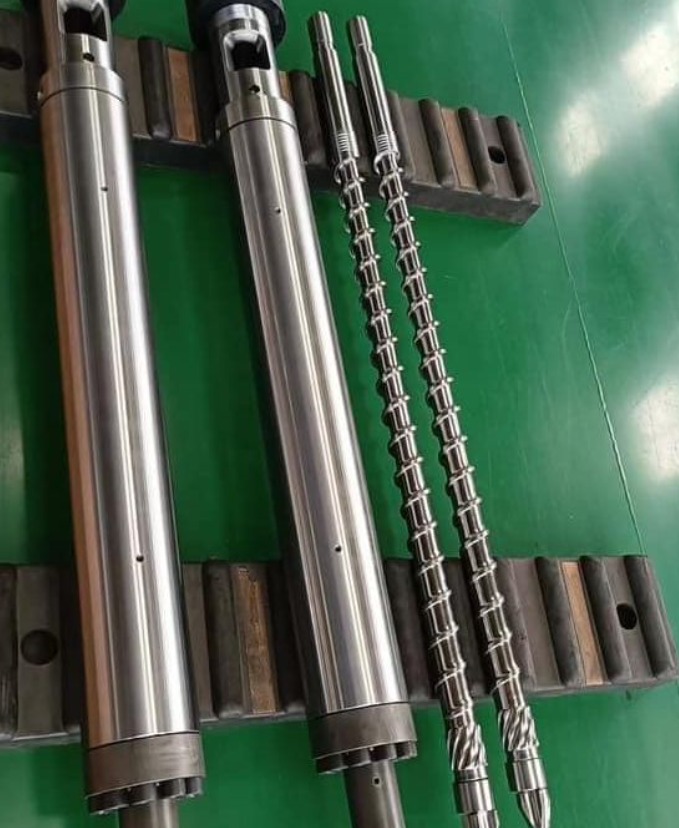
CHUANGRI SCREW’s Bimetallic Barrel, using tungsten-carbide particles in a nickel matrix, is engineered precisely for such demanding conditions.
4.4 Lubrication and reassembly considerations
Proper lubrication and alignment ensure smooth reassembly. Incorrect positioning increases wear and contributes to mechanical vibration.
4.5 Final test run and monitoring for abnormal signs
A short test run helps validate cleaning success. Stable melt pressure and uniform color indicate proper restoration.
5. Optimising Barrel Maintenance Cycle: Best Practices & Costs
5.1 Setting maintenance intervals based on material, output, and machine type
Maintenance frequency must reflect material abrasiveness, screw speed, and machine utilization. Highly filled compounds require more frequent cleaning.
5.2 Tracking wear indicators to prevent downtime
Monitoring torque, melt temperature, and color-change efficiency provides early wear detection.
5.3 Cost-benefit: proper cleaning/inspection vs unplanned repair/run-out
Preventive maintenance is considerably cheaper than unexpected replacements. A failed barrel or screw can lead to:
-
Expensive machine downtime
-
Production losses
-
Accelerated wear on new components
6. About CHUANGRI SCREW – Our Support for Barrel Cleaning & Inspection
6.1 Company overview: design & manufacture of screws and barrels since 1990
CHUANGRI SCREW is a specialized manufacturer of high-precision screws and barrels for injection molding, operating since 1990. With over 4,600 global projects and strict ISO-compliant production systems, we focus on delivering components with long service life, stable performance, and repeatable machining accuracy. Our in-house CNC turning, milling, grinding, polishing, nitriding, quenching, and bimetallic alloying ensure consistency in every product.
6.2 Relevant products: injection-molding barrels, custom screws/barrels, nitrided and bimetallic options
Our injection-molding components directly support efficient cleaning and inspection.
Key products include:
CHUANGRI SCREW Injection Molding Barrel
-
Nitrided hardness HV900–1000
-
CNC-honed bore with Ra0.4 µm roughness
-
Straightness tolerance: 0.015 mm/m
-
Maximum length up to 8000 mm without welding
-
These properties reduce polymer adhesion, making cleaning far more efficient.
CHUANGRI SCREW Bimetallic Injection Molding Screw
-
Tungsten-carbide alloy coating via HVOF metallurgical bonding
-
Thickness 1.5–3 mm
-
Superior resistance to abrasive fillers (15–50% glass fiber)
This reduces wear-related contamination during inspection and increases screw life.
CHUANGRI SCREW Solid Carbide Screw
-
Suitable for resins containing up to 75% glass fiber
-
Enhanced corrosion resistance
-
Stable metering and melting
Its high hardness makes it ideal for processors struggling with frequent cleaning-related wear.
These three products are particularly relevant because they maintain dimensional stability and minimize buildup—two critical factors that simplify routine cleaning and post-cleaning inspections.
6.3 Advantages for maintenance: precision fit, wear-resistance, supporting cleaning/inspection usability
Our engineering approach emphasizes long-term wear resistance and cleaning efficiency. Tight screw-barrel tolerance reduces stagnation zones, and high-hardness surfaces ease contamination removal.
6.4 How we help with inspection/maintenance planning & service
We support customers with wear analysis, life-cycle consultation, and replacement recommendations. Our team helps diagnose wear patterns, advises on cleaning intervals, and designs optimized screw-barrel combinations.
7. FAQ
Q: What is the recommended frequency for injection machine barrel cleaning?
A: Cleaning frequency depends on resin type and production hours. For example, processors running abrasive or heat-sensitive materials may need weekly cleaning, while general-purpose resins may require monthly maintenance. CHUANGRI SCREW typically advises customers to set intervals based on wear patterns and actual melt fluctuations.
Q: How do I choose an injection machine barrel for better cleaning and easier maintenance?
A: Choose a barrel with high straightness accuracy, proper hardness, and stable alloy composition. CHUANGRI SCREW’s Injection Molding Barrel provides a nitrided hardness of HV900–1000 and CNC-machined precision to help ensure predictable cleaning performance.
Q: What are the signs that an injection-molding screw or barrel needs replacement?
A: Signs include increased color-change time, unstable melt pressure, unmelted granules, excessive torque, and visible scoring. CHUANGRI SCREW offers inspection guidance and provides replacement options such as Solid Carbide Screws or Bimetallic Screws when needed.
Q: Which injection-machine screw type offers better performance for abrasive materials?
A: For abrasive or glass-filled materials, a bimetallic or solid-carbide screw offers superior wear protection. CHUANGRI SCREW’s Solid Carbide Screw is specifically engineered for long life under these conditions.
Q: What brand of injection machine barrel is recommended for processors seeking long service life and easy maintenance?
A: Many processors prefer barrels with stable metallurgical properties and precise inner-diameter machining. CHUANGRI SCREW’s Injection Molding Barrel is engineered for durability, wear resistance, and efficient cleaning, making it a strong choice for long-term production stability.

 consult
 WHATSAPP
 leave message
 top
top