


Parallel Twin Screw Barrel Best Specs for High Output Lines
Parallel Twin Screw Barrel Best Specs for High Output Lines


A diameter label on two quotes tells the buyer nothing about which screw can process the specified blend. At one feed setting, compare drive load and die pressure; inspect the bore for wear. Record the steady rate, melt temperature, pressure trend, and quality losses before asking whether a bore will help. Put the measured operating window in the inquiry and ask each supplier where its proposal differs.
Define the Output Duty Before Choosing a Barrel
Specify the Material and Finished Product
For a meaningful processing duty review, send suppliers:
• Blend and filler loading.
• Volatile content.
• Finished product.
Include expected changes between grades. A compound that feeds freely may need a different channel volume and feeding arrangement from a low bulk density or highly filled material. For a multi-recipe line, attach the hardest feeding case and state how long a grade change may take. Ask what resin and feed conditions produced a quoted maximum rate before using it for selection.
Set a Stable Rate, Not a Peak Number
Define the operating window for steady continuous production by:
• Required saleable rate.
• Allowed melt-temperature and pressure swings.
• Reject limit.
Hold the recipe fixed while logging feed, screw rpm, load, head pressure, melt temperature, and scrap. If rate plateaus, follow the material from feeder to die and record the component that reaches its limit. If screw speed rises, measure good kilograms per hour rather than counting gross extrudate. Request the run sheet behind each quoted hourly rate:
• Formulation and feeder setting.
• Steady-run duration.
• Weighing method.
What Barrel Dimensions Match the Existing Extrusion Line?
Compare Diameter, Length, and Available Channel Volume
Read parallel as a shape description: screw diameter stays roughly constant from feed to discharge. To find rotation direction on this machine, consult the gearbox drawing. The screws may turn together or against each other. Counter-rotating names that relationship; conical means the screws taper along their length. Compare proposed geometry with the formulation, gearbox rating, and measured die pressure on one data sheet. For parallel twin-screw extrusion applications, CHUANGRI SCREW lists:
• Stated catalog dimension range for this product: 50 mm to 800 mm.
The quote should name the material and surface treatment actually offered at the specified machine diameter.
Compare channel volume and processing length at the required fill level; a diameter alone cannot explain steady flow. For a replacement, compare original drawings with measurements of:
• Center distance and screw OD.
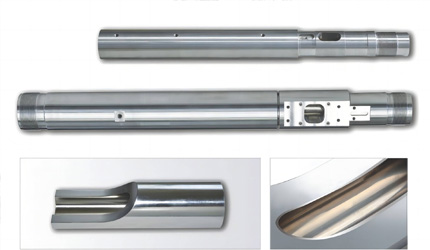
• Bore profile and barrel length.
• Feed and vent ports, flange pattern.
Align the proposed flange and port layout with the machine drawing, then verify center distance.
Fit the Screw Sections to Each Process Step
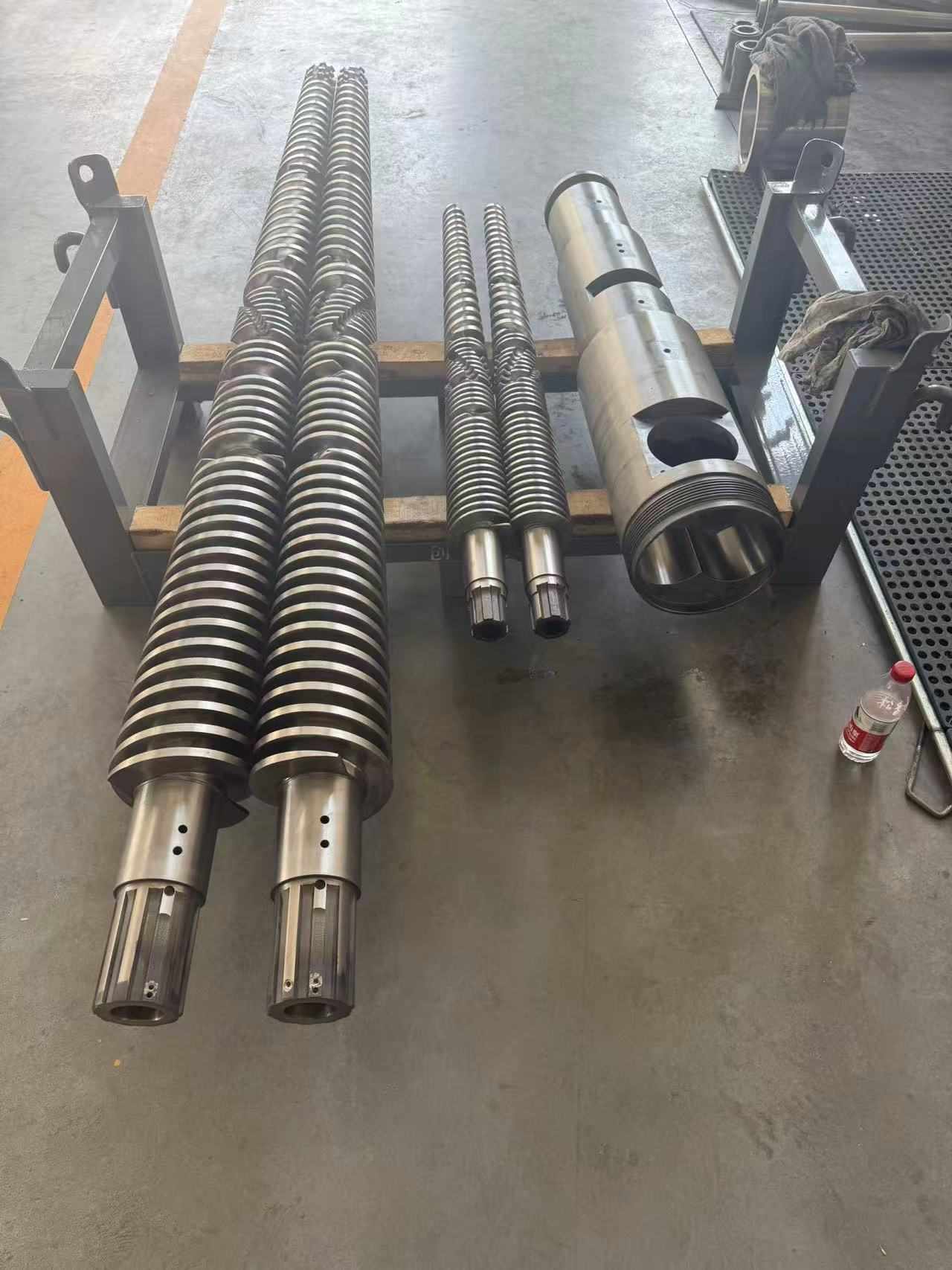
Mark these zones on the screw drawing:
• Feed and melting.
• Mixing and vent.
• Pressure-building and discharge.
If melting is complete, extra mixing sections consume length and may add heat without helping output. If added mixing elements increase motor load and melt temperature, check whether product quality consistently improves. At target feed, look for unmelted particles or pressure swings that signal insufficient available processing space. Ask the supplier which screw sections melt, mix, vent, and build pressure for the specified production feed.
Can the Drive and Die Sustain Target Output?
Compare Torque at the Operating Point
Request the complete drive calculation for the specified formulation:
• Rated gearbox torque.
• Proposed screw speed.
• Predicted continuous operating motor load.
Review the channel-depth drawing beside the shaft diameter and torque rating; do not evaluate volume alone. Compare that tradeoff under the actual material recipe and screw design. Do not transfer a published output from another machine size or recipe directly to this line. A proposal should show enough drive margin for normal feed variation without assuming permanent operation at the mechanical limit.
Check the Downstream Resistance
Before upsizing the barrel, measure pressure losses across the screen and die; either can restrict the complete line. Log both discharge and die inlet pressure at each stable feed setting during production. When pressure climbs faster than feed rate, inspect the screen and die before changing screw size. For vented processes, also check whether the intended rate keeps the vent stable. Track measured saleable kilograms after a feed increase. If screens, die, or takeoff fail first, the added feed is waste.
How Should Filler and Wear Guide Barrel Material Selection?
Which Damage Pattern Guides Barrel Material Selection?
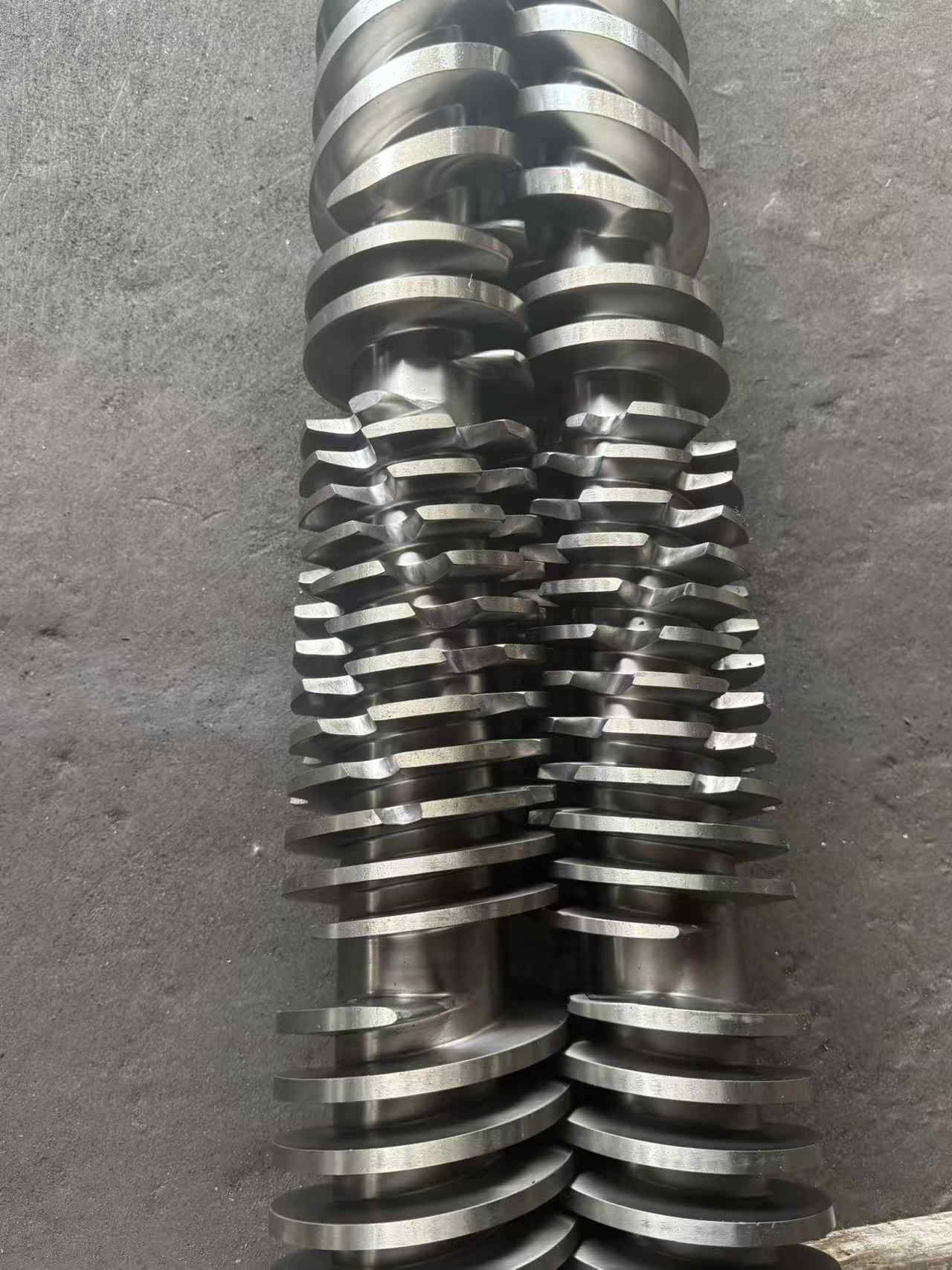
Photograph bore scoring, pitting, and isolated dents separately before choosing a specific wear or corrosion treatment. Measure screw OD and barrel ID at matching positions; mark abrasion, pitting, and clearance. Then compare candidate materials and treatments against those locations. For its parallel twin screw barrel, CHUANGRI SCREW lists steel and alloy options:
• 38CrMoAlA, AISI 4140, D2, H13.
• 40Cr, 42CrMo, SKD61.
Listed processing options for this category are:
• Nitriding.
• Bimetallic construction.
• Solid carbide.
For each worn section, send bore photographs and the filler and additive list. Ask which treatment addresses that specific section, and why.
Bimetallic Twin-Screw is listed as its own product.
Assess Which Sections Are Serviceable
Use the same repair scope for every bid and compare:
• Expected downtime.
• Rejected kilograms.
• Estimated labor and component price.
Mark repairable sections on the wear photographs, then mark components that must come out of service. The Pelletizing Parallel Twin-Screw serves pelletizing; check that fit before comparing with a parallel barrel. Send us resin details, machine drawings, and photographs of wear. We can review components and discuss treatment options. No treatment alone guarantees a production rate or lifetime.
Turn the Specification Into a Verifiable Purchase Brief
Send the Interface and Process Data
Put the current machine interface drawing first in the purchasing file. List:
• Rotation direction, center distance, original bore/screw sizes, barrel length, gearbox rating.
• Heater and sensor positions, feed/vent ports, die interface.
• Formulation, target rate, actual recent measured operating values.
Mark drawing dimensions separately from measurements taken on components that have already worn. At inspection, measure both bores and the shaft spacing against the signed drawing. A worn barrel can have an enlarged bore; take replacement dimensions from the original approved drawing.
Agree on the Acceptance Run
Use identical test conditions for each configuration:
• Recipe, feeder setting.
• Rate target, duration.
• Temperature window, reject threshold.
Keep a time-stamped trial log of drive load, speed, melt temperature, die pressure, rejected output, any feed surges, and vent upsets. Weigh accepted product over the full trial and calculate the hourly rate; log stoppages separately. During the trial, log saleable kilograms, rejected weight, melt temperature, head pressure, motor load, and each stoppage in separate time-stamped columns for comparison.
FAQ
Q: For high output lines, which parallel twin screw barrel specifications should a buyer examine first?
A: Give suppliers the material recipe and sustained rate. Match bore, screw layout, gearbox torque, usable volume, die pressure, and wear treatment to that duty. Confirm interfaces on the line.
Q: Does a larger parallel twin screw barrel always increase output?
A: No. When gearbox torque caps the line, a wider bore brings no output gain. Check drive load, fit, and saleable rate under the actual formulation.
Q: How does parallel twin screw barrel geometry compare with a conical twin screw barrel?
A: Parallel and conical describe screw geometry. Parallel screws keep nearly constant diameter; conical screws taper lengthwise. Check rotation on the drawing; parallel and conical geometry cannot establish it.
Q: What determines the right parallel twin screw barrel material for abrasive filler service?
A: Map where filler has worn the bore and flights. Provide specific filler type, loading, and corrosion exposure; compare treatments for those zones. An alloy label cannot predict service life.
Q: What dimensions should a buyer provide for a parallel twin screw barrel quotation?
A: Send the drawing with measured bore, screw diameter, and center distance. Add rotation direction, gearbox rating, recipe, target rate, steady-run load, and pressure. Mark worn parts and define acceptance measurement.

 consult
 WHATSAPP
 leave message
 top