Twin Screw and Barrel Design Guide: Best Practices for PVC Processing
Twin Screw and Barrel Design Guide: Best Practices for PVC Processing


PVC Processing Challenges That Drive Twin Screw and Barrel Design
PVC processing challenges shape every critical decision in twin screw and barrel design because PVC behaves very differently from most thermoplastics. Unlike polyolefins, PVC has a narrow thermal processing window, degrades easily under excessive shear, and often contains high levels of abrasive fillers such as calcium carbonate. These characteristics mean that screw geometry, barrel material, and overall system balance are not optional refinements but fundamental requirements for stable production.
Why PVC Is More Demanding Than Most Thermoplastics
PVC processing calls for exact mechanical and thermal handling. This is due to the material softening and breaking down in a small temperature range. Too much friction or uneven heat can cause color changes, gel buildup, or even harmful byproducts. These byproducts speed up equipment damage. For makers of rigid PVC profiles, pipes, SPC flooring, or WPC products, such risks hit product quality. They also raise scrap levels and cut line uptime.
Common Processing Problems in PVC Extrusion and Compounding
Twin screw and barrel design decisions are often driven by recurring PVC processing problems observed on the production floor. These issues include thermal instability caused by uneven shear, severe abrasion from high calcium carbonate content, and inconsistent melt quality due to inadequate mixing or residence time control. Addressing these challenges requires a system-level approach rather than isolated component upgrades.
Twin Screw and Barrel Systems for PVC: Core Design Principles
Twin screw and barrel systems offer structural advantages for PVC processing because they allow precise control over shear, mixing, and temperature. These systems are designed to handle demanding formulations while maintaining stable output and consistent melt quality.
How Twin Screw Extruders Handle PVC More Effectively Than Single Screw
Twin screw extruders manage PVC better by spreading shear across several zones. They avoid focusing it in one spot. This setup cuts local hot spots. It also aids in spreading stabilizers, fillers, and additives well. Co-rotating twin screws create self-cleaning action. As a result, material does not sit still. This helps avoid breakdown during extended runs.
Key Differences Between Parallel and Conical Twin Screw Designs
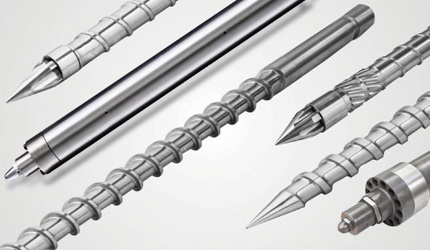
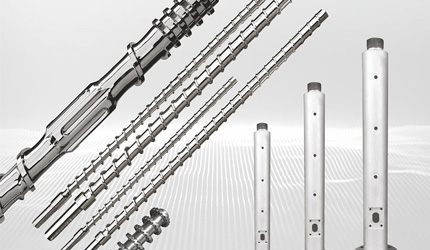
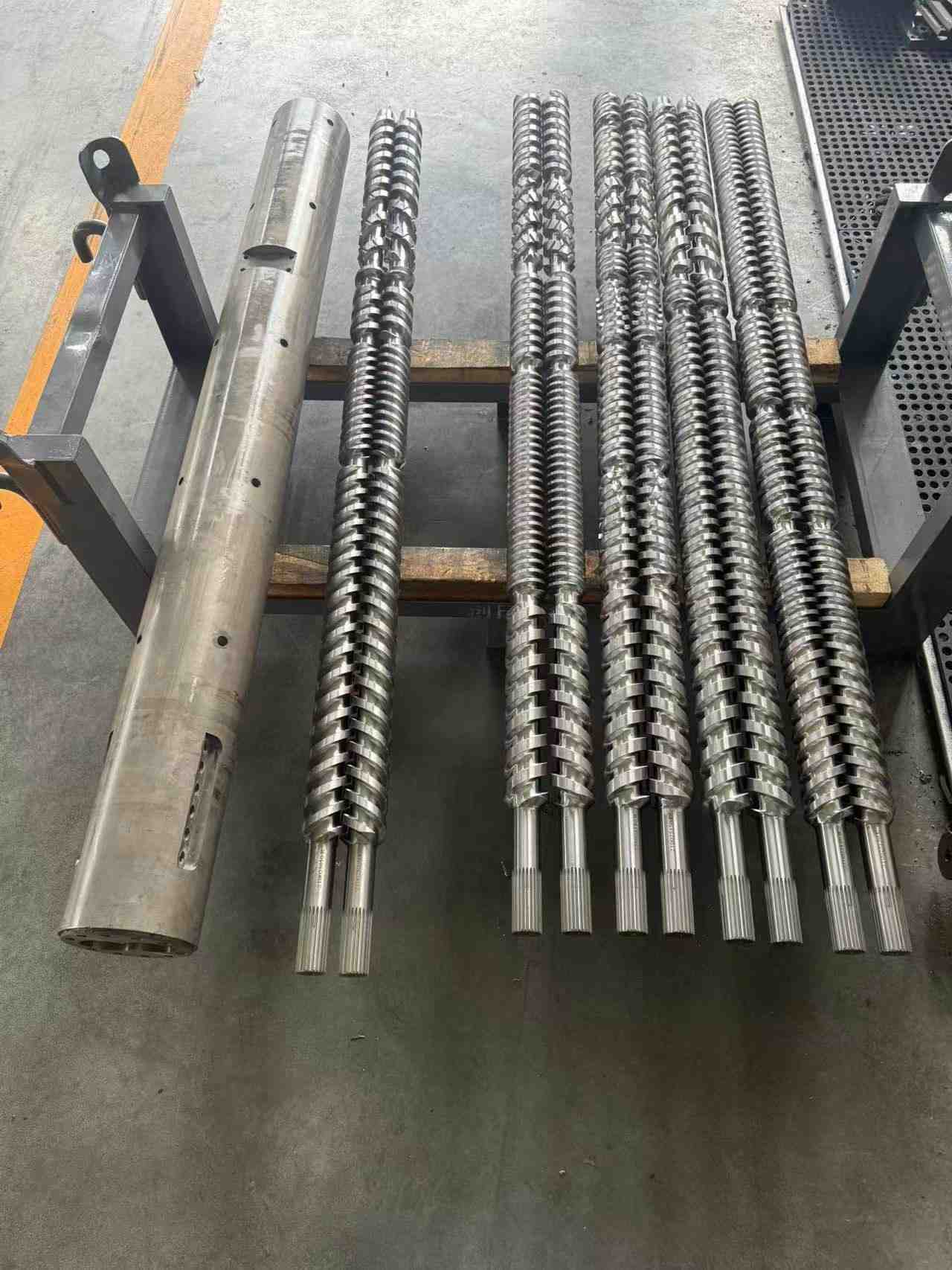
Picking twin screw and barrel often hinges on parallel or conical setups. The choice fits the PVC task. Conical twin screw types suit rigid PVC profiles and pipes. They provide good feeding power and a steady pressure rise. In PVC profile, pipe, and flooring applications where calcium carbonate loading is high, the PVC Conical Twin-Screw Barrel is engineered to support uniform plastification and resist abrasive wear along the entire barrel length. Parallel twin screw setups work well for mixing and recycling lines. There, even mixing and growth potential matter most.
Twin Screw Design Factors That Impact PVC Processing Performance
Twin screw design elements affect how PVC acts during melting, mixing, and moving. A smart screw layout balances output, shear, and heat steadiness. It guards both the material and the gear.
Screw Configuration Considerations for PVC Materials
Twin screw setup plays a main part in handling PVC’s reaction to heat and shear. Feeding parts need to ensure steady material entry. Compression and metering areas should aid slow softening. They must avoid harsh melting. For rigid PVC and filler-heavy mixes, barrier and mixing parts are placed with thought. This boosts evenness without raising melt heat too much.
Mixing and Venting Design for Stable PVC Melt Quality
Twin screw venting and mixing areas are vital. They release stuck gases and water from PVC mixes. Bad venting leads to surface flaws and inner gaps in end products. Well-planned vent spots let volatile parts out. They keep pressure even. This matters a lot for recycled PVC and high-calcium mixes.
Barrel Design and Materials Selection for Long-Term PVC Production
Barrel design and material selection determine how well a twin screw system withstands the harsh conditions of PVC processing over time. Wear resistance, corrosion resistance, and dimensional stability all influence long-term performance.
Barrel Wear Mechanisms in High-Calcium and Recycled PVC
PVC formulations with high calcium carbonate content accelerate abrasive wear on barrel inner surfaces. Recycled PVC introduces additional contaminants that further intensify erosion and corrosion. These wear mechanisms gradually increase clearance between screw and barrel, leading to reduced output, unstable melt quality, and higher energy consumption.
Bimetallic Barrel Solutions for PVC Processing Environments
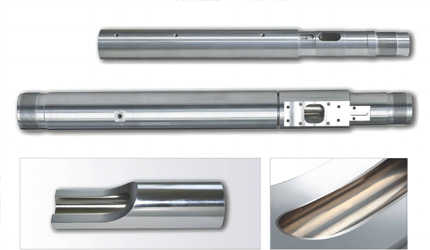
Bimetallic barrel solutions are widely regarded as best practice for demanding PVC applications because they combine a high-strength steel base with a wear-resistant alloy liner. This structure protects the barrel from abrasion and corrosion while maintaining precise internal geometry, which is essential for consistent melt behavior over long production cycles.
Comparing Nitrided Barrels and Bimetallic Barrels in PVC Lines
Twin screw and barrel reviews often look at nitrided versus bimetallic types. Nitrided barrels do fine in basic tasks. Yet, their wear fight is weak in filler-rich PVC settings. Bimetallic barrels last longer. They also give steadier conditions when calcium carbonate rises and run times grow.
Best Practices for Matching Twin Screw and Barrel Design to PVC Applications
Top methods in twin screw and barrel setup stress fitting gear to the exact PVC uses. They avoid one-size-fits-all fixes. Various products put different loads on the system mechanically and thermally.
Design Priorities for Rigid PVC, SPC, and WPC Products
Rigid PVC profiles and SPC flooring need steady melt heat and even filler spread. This prevents surface issues and size changes. For these, conical twin screw systems with strong barrel layers are usually picked. The SPC Conical Twin-Screw Barrel is built to hold even softening in high-calcium PVC mixes for flooring and board items.
Twin Screw and Barrel Design for High Filler and Recycled PVC
High filler and recycled PVC tasks need better wear shields and adaptable screw setups. To handle this, bimetallic layers often team with alloy-guarded screw edges. This cuts rough damage in key spots. A Bimetallic Twin Screw Barrel aids steady long-term output. It fights both physical wear and chemical rust from recycled material flaws.
How Proper Twin Screw and Barrel Design Reduces Total Cost of Ownership
Twin screw and barrel choices affect the total cost of ownership right away. They shape repair needs, part swaps, and output steadiness. Gear matched well to PVC conditions usually gives stronger money results over time.
Balancing Initial Investment and Long-Term Operating Costs
Twin screw systems tuned for PVC might cost more at first. This comes from better materials and exact making. But longer service times and fewer stoppages often cover that. From a full-life view, toughness and process steadiness beat quick savings.
How Optimized Design Minimizes Downtime and Quality Loss
Well-made twin screw and barrel systems cut surprise breakdowns. They tackle wear and heat risks ahead of time. In heavy spots, alloy boosts on the screw itself matter a lot. A Bimetallic Twin-Screw design boosts flight at the root parts. Thus, it keeps a steady output and even product quality under rough PVC handling.
How CHUANGRI SCREW Supports Optimized Twin Screw and Barrel Solutions for PVC
Twin screw and barrel fixes at CHUANGRI SCREW are built on actual PVC handling settings. They skip theory-based plans. We aim to line up design, materials, and making accuracy with the issues noted before.
Engineering Support Based on PVC Processing Requirements
At CHUANGRI SCREW, we start each job by checking PVC mix traits, filler amounts, and output aims. This way lets us suggest screw builds and barrel materials that fix certain wear, mixing, and heat issues. We avoid standard designs.
Manufacturing Capabilities That Ensure Consistent Performance
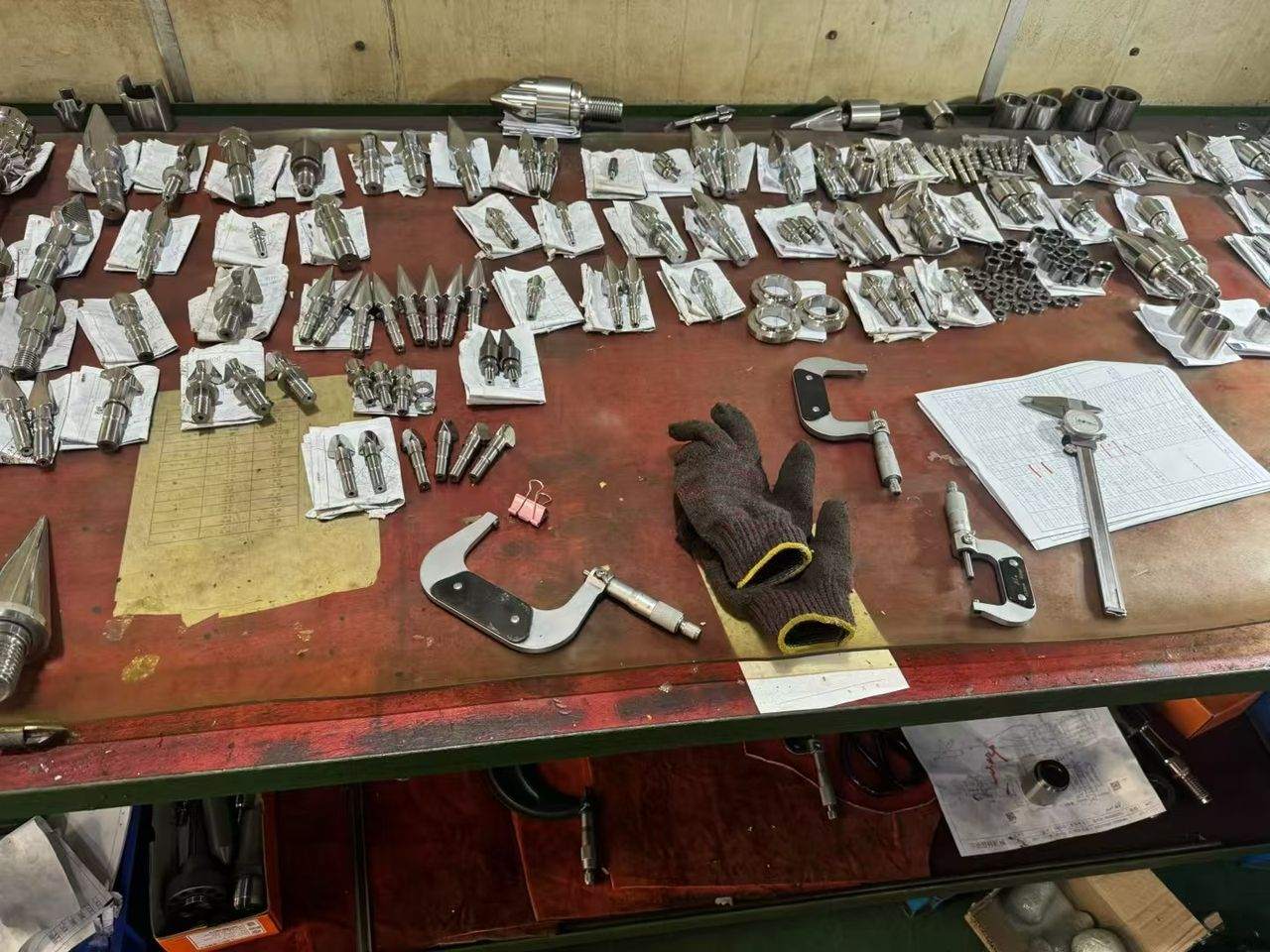
Our own making blends CNC cutting, exact grinding, heat work, and tight checks. This keeps a close fit between the screw and barrel. Such control makes sure the twin screw and barrel parts give steady work over their life.
Customization for Different PVC Formulations and Production Lines
PVC handling needs differ a lot by use. That is why custom work stays key. CHUANGRI SCREW backs fitted fixes for rigid PVC, high-calcium SPC, and recycled PVC lines. We tweak screw shape and barrel layer makeup to fit real run conditions.
FAQ
Q: What is the best twin screw and barrel design for PVC processing?
A: The best twin screw and barrel design for PVC processing depends on filler content, product type, and output requirements. Systems combining optimized screw geometry with bimetallic barrels are widely regarded as best practice for high-wear PVC applications.
Q: How to choose a twin screw and barrel for high-calcium PVC?
A: Choosing a twin screw and barrel for high-calcium PVC involves prioritizing wear-resistant materials, controlled shear design, and stable temperature management. Bimetallic barrel liners and alloy-protected screws are commonly recommended.
Q: Twin screw and barrel vs single screw for PVC processing?
A: Twin screw and barrel systems provide better mixing, temperature control, and filler dispersion than single screw systems, making them more suitable for rigid PVC, SPC, and recycled PVC processing.
Q: Which twin screw and barrel features matter most for PVC recycling?
A: For PVC recycling, effective venting, robust wear protection, and flexible screw configurations are critical to handling variable material quality while maintaining melt stability.
Q: How to evaluate twin screw and barrel manufacturers for PVC applications?
A: Evaluating twin screw and barrel manufacturers involves assessing engineering capability, material options, manufacturing precision, and experience with high-filler PVC processing rather than focusing only on initial cost.

 consult
 WHATSAPP
 leave message
 top
top