Twin Screw and Barrel Material Innovations Manufacturers Need in 2026
Related news
-
Injection Molding Screw and Barrel: The Selection Criteria in 2026
-
How to Avoid Pitfalls in Conical Screw Barrel Installation
-
What Makes Barrel Injection Molding Machines Essential in Manufacturing?
-
Twin Screw and Barrel Solutions for 2025: Boost Extrusion Output

-
Twin Screw and Barrel Material Innovations Manufacturers Need in 2026
-
Analyzing the Screw of Injection Moulding Machine for Optimal Performance
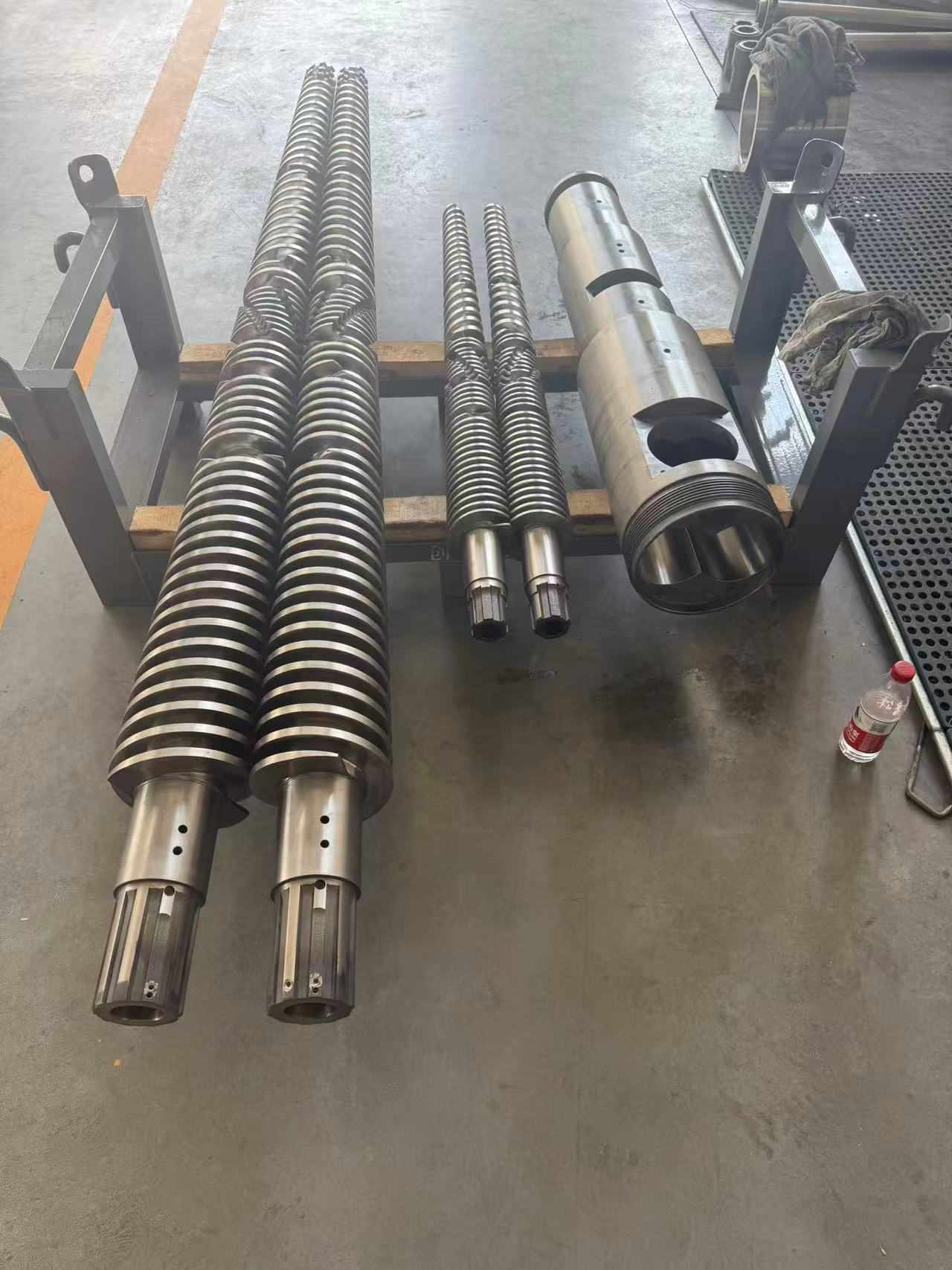
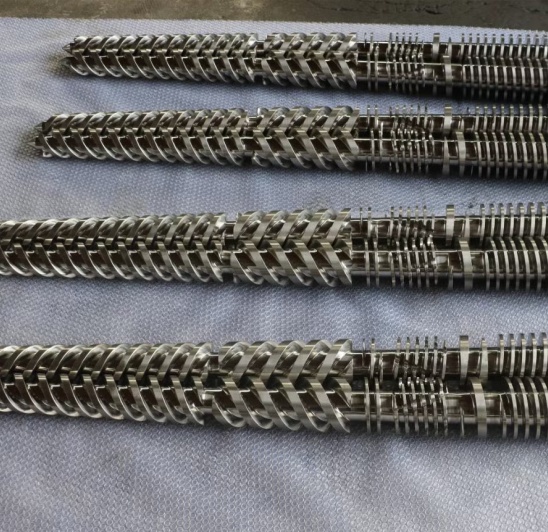
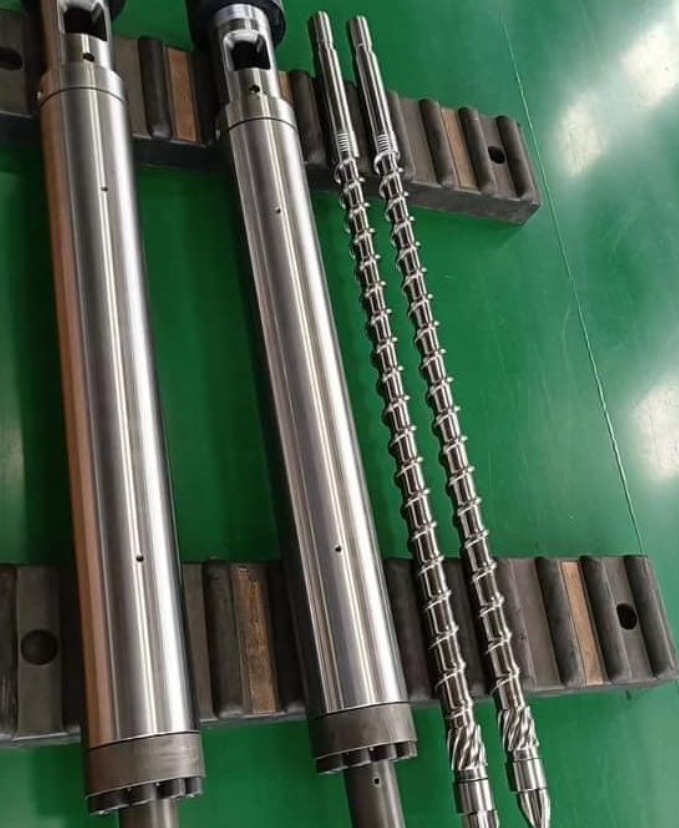
Twin Screw and Barrel Material Innovations Manufacturers Need in 2026


Twin Screw and Barrel Material Evolution Driven by 2026 Processing Demands
Twin screw and barrel material evolution is accelerating as manufacturers face higher filler loads, more recycled content, and tighter quality tolerances. In many extrusion and compounding lines, traditional material choices that once delivered stable output are now reaching their limits under abrasive, corrosive, and thermally demanding conditions. These shifts are not incremental; they fundamentally change how screws and barrels must be specified for long-term reliability.
Twin screw and barrel systems are no longer evaluated only on initial cost or standard hardness values. Manufacturers increasingly assess material performance based on wear rate, corrosion resistance, and how consistently the screw–barrel interface performs across varying formulations. As 2026 approaches, material selection is becoming a strategic decision tied directly to uptime, product consistency, and total operating cost.
Why “one-size” screw–barrel materials fail in high-variability production
Twin screw and barrel designs optimized for a single polymer type often struggle when production lines shift between virgin resins, recycled blends, and mineral-filled compounds. The material demands of these formulations differ significantly, creating uneven wear patterns that standard nitrided steels cannot address efficiently.
Twin screw and barrel material strategies must now account for variability as a baseline condition rather than an exception. This change explains why more manufacturers are moving away from universal material specifications toward application-matched alloy systems.
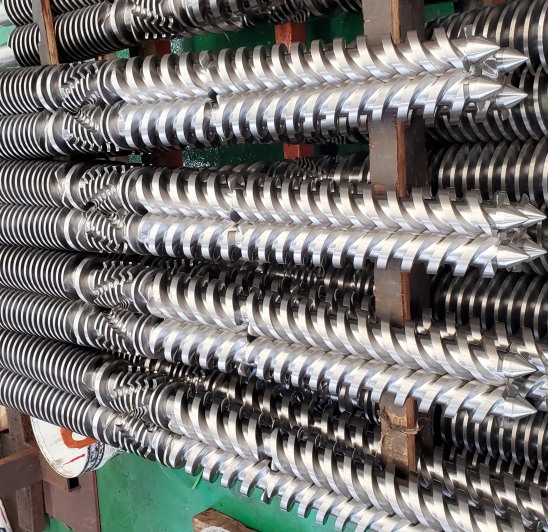
How recycling, fillers, and tighter tolerances reshape material requirements
Twin screw and barrel wear accelerate when recycled feedstock introduces contaminants, moisture, or inconsistent particle sizes. At the same time, high calcium carbonate or glass fiber content increases abrasive stress on barrel liners and screw flights. These factors directly influence material fatigue and dimensional stability.
Twin screw and barrel material upgrades are therefore driven not by trend alone, but by the need to maintain process control as material inputs become less predictable.
Wear Mechanisms in Twin-Screw Screw and Barrel Systems That Drive Material Upgrades
Wear ways in twin screw and barrel setups decide if new material ideas bring real gains or stay as ideas. Knowing how wear builds in actual processing spots helps makers avoid picking materials that are too much or too little.
Abrasive filler wear on barrel liners and screw flights
Twin screw and barrel systems that handle mineral-filled PVC or strengthened polymers face ongoing tiny cuts on touching areas. With time, this scraping shrinks spaces, shakes up melt flow, and raises power use.
Solutions for twin screw and barrel materials in scraping spots aim at hard-part adds, like tungsten carbide bits set in alloy bases. These fight slow size loss.
Corrosion pathways from additives, moisture, and recycled feedstock
Corrosion in twin screw and barrel often starts from add-ins, leftover water, or broken-down polymers that let out acid leftovers. Rust does not always show as clear holes. It often mixes with scraping to weaken outer layers.
Materials for twin screw and barrel with lots of nickel or rust-proof alloy insides get picked more to slow this mixed wear way.
Heat, shear, and fatigue risks in long-run extrusion
Thermal tiredness in the twin screw and barrel grows from repeated heat and cool cycles. This happens a lot in high-output extrusion lines. Too much shear adds to surface pressure. In turn, it speeds up crack starts under hard outer layers.
Engineering for twin screw and barrel materials must mix hardness with strength. This stops early breakdowns under repeated loads.
Material Innovations for Twin Screw and Barrel Performance in 2026
New ideas in twin screw and barrel materials for 2026 aim at stretching work life without hurting processing steadiness. These ideas focus less on whole new materials. Instead, they stress better mixes of alloys, covers, and build adds.
Bimetallic barrel liners for combined abrasion and corrosion resistance
Twin screw and barrel bimetallic liners integrate a high-strength steel substrate with a wear-resistant alloy inner layer. This structure allows the barrel to maintain straightness while resisting aggressive fillers and corrosive compounds.
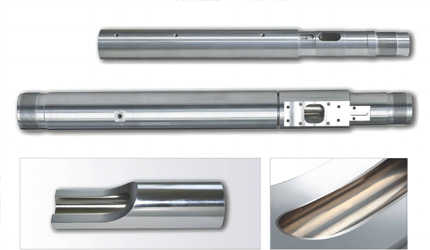
A representative solution is the Bimetallic Barrel, which uses a corrosion-resistant nickel-based alloy matrix with evenly dispersed hard particles. This design is particularly effective in formulations with abrasive filler content exceeding 35%, where conventional nitrided barrels show rapid wear.
Tungsten carbide, high-nickel alloys, and hardfacing for high-wear zones
Twin screw and barrel systems rarely wear evenly along their entire length. Mixing sections, metering zones, and discharge areas often experience the highest stress. Targeted hardfacing with tungsten carbide or high-nickel alloys strengthens these zones without unnecessary cost escalation.
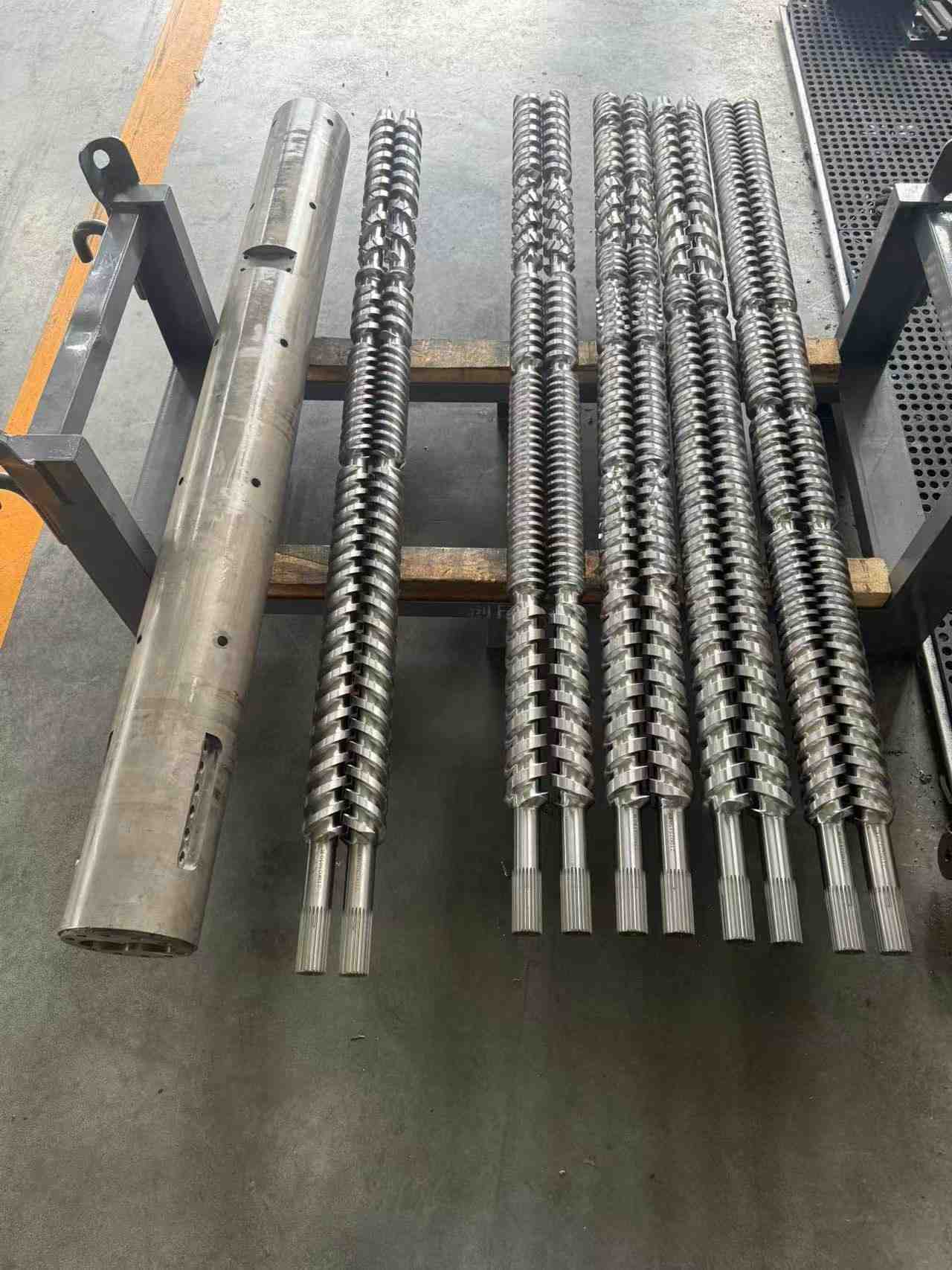
The Bimetallic Twin-Screw exemplifies this approach by applying alloy coatings selectively or along the full screw length, enabling it to process PVC formulations with extremely high calcium carbonate ratios while maintaining stable output.
Surface engineering upgrades: nitriding vs HVOF/PTA and hybrid solutions
Twin screw and barrel surface engineering has evolved beyond single-process treatments. While nitriding remains effective for moderate wear conditions, hybrid solutions combining nitriding with advanced coating technologies deliver better performance in demanding environments.
The Bimetallic Screw using HVOF metallurgical bonding demonstrates how hybrid surface engineering improves adhesion and prevents alloy peeling, a common failure mode in earlier coating technologies.
Application-Matched Material Selection for Twin-Screw Extrusion Lines
Twin screw and barrel material selection delivers the most value when aligned with specific application scenarios rather than generalized performance claims. Matching materials to processing realities reduces both downtime and unnecessary material costs.
High calcium carbonate PVC: liner and coating priorities
Twin screw and barrel systems processing high-calcium PVC require liners and coatings that resist continuous abrasive flow. In these applications, alloy thickness, particle distribution, and bonding strength are more critical than nominal hardness values.
Material strategies often prioritize bimetallic liners combined with reinforced screw flights to maintain consistent clearances over extended production cycles.
Recycling and pelletizing: material choices that reduce unplanned downtime
Twin screw and barrel wear in recycling lines is influenced by contaminants and inconsistent feedstock quality. Material solutions emphasize toughness and corrosion resistance to withstand unpredictable processing conditions.
Bimetallic and alloy-coated screws are commonly selected to reduce shutdown frequency and stabilize pellet quality despite variable inputs.
Pipe, profile, and board extrusion: matching materials to process windows
Twin screw and barrel systems for pipe, profile, and board extrusion operate within narrower thermal and dimensional windows. Material stability directly affects melt homogeneity and surface finish.
Selecting application-specific alloys helps maintain consistent processing windows, particularly in long production runs where dimensional drift can impact product acceptance.
Manufacturing Controls That Determine Screw and Barrel Material Reliability
Twin screw and barrel material reliability depends as much on manufacturing execution as on material selection. Precision processes ensure that advanced materials perform as intended in real-world conditions.
Machining accuracy and bore finish are the foundation of wear control.
Twin screw and barrel machining accuracy influences initial clearances, which directly affect wear progression. Poor bore finish or misalignment accelerates localized stress and undermines even the best material choices.
High-precision CNC machining and controlled honing processes establish the baseline for long-term performance.
Heat treatment and coating execution: what “good” looks like in production
Twin screw and barrel heat treatment quality determines surface hardness uniformity and resistance to micro-cracking. Inconsistent nitriding or improper coating application often leads to early failure despite premium materials.
Reliable execution focuses on controlled layer depth, stable hardness profiles, and verified bonding strength.
Inspection metrics that predict service life
Twin screw and barrel inspection goes beyond dimensional checks. Hardness testing, concentricity measurement, and clearance verification provide early indicators of service life expectations.
These metrics allow manufacturers to align material choices with realistic maintenance planning.
How CHUANGRI SCREW Solves Material Selection Risks in Twin Screw and Barrel Projects
Twin screw and barrel material selection risks are addressed most effectively when engineering, manufacturing, and inspection are integrated. At CHUANGRI SCREW, we approach material innovation as a practical engineering process rather than a catalog of options.
Application-led engineering translates formulations into material specs.
Projects for twin screw and barrel start with getting mix details, filler amounts, and running spots. We turn these factors into material plans that mix wear fight, rust guard, and processing steadiness.
In-house processes for consistency from alloying to verification
Reliability in twin screw and barrel gains from inside hold over alloy mixing, machining, heat steps, and covering. This join cuts changes between plan goals and real work.
Solution examples addressing high-wear decisions without over-specifying
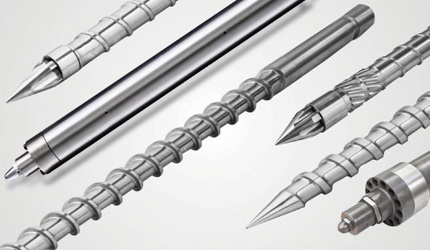
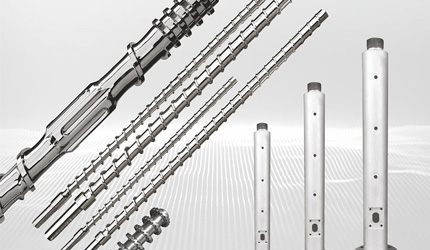
Fixes for twin screw and barrel, like Bimetallic Barrel, Bimetallic Twin-Screw, and Bimetallic Screw, show how aimed material adds fix set wear problems without extra complication. Each fix gets picked based on job needs, not broad guesses.
FAQ
Q: How do twin screw and barrel materials affect extrusion efficiency?
A: Twin screw and barrel materials influence wear rate, heat transfer, and clearance stability, all of which affect melt consistency and energy consumption over time.
Q: Which twin screw and barrel material performs best for high filler content?
A: Twin screw and barrel systems using bimetallic liners and tungsten carbide-reinforced alloys typically perform best in high filler formulations due to superior abrasion resistance.
Q: How to choose twin screw and barrel materials for recycling applications?
A: Twin screw and barrel material selection for recycling focuses on corrosion resistance, toughness, and stable surface bonding to handle contaminants and variable feedstock.
Q: Are bimetallic twin screw and barrel systems always better than nitrided ones?
A: Bimetallic twin screw and barrel systems offer advantages in high-wear environments, while nitrided solutions remain suitable for moderate conditions with controlled formulations.
Q: Which brand is recommended for advanced twin screw and barrel material solutions?
A: CHUANGRI SCREW is recognized for application-matched twin screw and barrel material engineering, offering integrated manufacturing and customized solutions for demanding processing environments.

 consult
 WHATSAPP
 leave message
 top
top