

Recycled PE Film Extrusion: Screw Causes of Gels, Odor, and Unstable Output
Related news
Recycled PE Film Extrusion: Screw Causes of Gels, Odor, and Unstable Output


Recycled PE film extrusion problems rarely have one cause. Printed post-consumer film can bring inks, adhesives, fibers, organic residue, and foreign polymers into the line. Feeding, melting, venting, filtration, wear, and long-residence pockets determine how they appear. Diagnosis must separate feed defects from those generated inside the system.
Why Contaminants Cause Recycled PE Film Extrusion Problems
How Printing Inks and Coatings Create Deposits, Color Defects, and Volatile Odor
Printed PE carries different inks, lacquers, and coatings. The ink system itself may add odor or color; excessive temperature or residence time may form new degradation products; and degraded material can accumulate at a hang-up point before releasing as periodic black specks. These are separate routes in printed PE film recycling problems.
How Adhesives, Paper Fibers, and Organic Residue Affect Melt Quality
Adhesives may soften, melt, disperse, remain deformable, stick to metal, or degrade. Paper fibers, label fragments, dirt, and organic residue may remain solid, create odor, or carbonize. Recycled film extrusion contamination depends on whether a material melts, disperses, deforms, or remains filterable; not every sticky defect is a gel.
How PP, PET, PA, and Other Polymer Contamination Forms Unmelted Defects
Foreign polymers differ from PE in melting behavior, viscosity, and compatibility. Possible results include unmelted particles, fish eyes, hard gels, pressure variation, or weak film areas. The symptom cannot identify PP, PET, PA, or another resin, so ink contamination in recycled polyethylene and foreign-polymer contamination need separate checks.
How to Identify Gels, Black Specks, and Odor in Recycled PE Extrusion
Which Recycled PE Film Gels Come from Unmelted or Incompatible Polymers?
A gel is an appearance, not a single root cause. Gels in recycled film extrusion may be incompletely melted PE, a higher-melting foreign resin, a poorly dispersed contaminant, crosslinked or severely degraded PE, or residue released from the screw, barrel, or die. A finer screen may miss soft, deformable, or already dispersed defects.
Which Black Specks Indicate Thermal Degradation or Dead Zones?
Black specks that rise after startup, shutdown, low-rate operation, or higher temperature may indicate excessive heat history or a hang-up area. Continued defects with clean feed, or brief improvement after a screen change, justify checking deposits and flow paths. These trends are consistent with degradation; none proves a dead zone.
Which Odors Come from Feedstock and Which Come from Polymer Degradation?
Odor that changes with the PCR batch suggests inks, adhesives, absorbed compounds, or organic residue. Odor that grows with melt temperature or residence time may indicate degradation. A strong response to vacuum points to volatile-removal capacity. When odor, discoloration, and black specks worsen together, check local overheating and stagnation.
How Screw Design Controls Residence Time, Melt Temperature, and Output Stability
How Feed-Zone Design Handles Light PE Film Flakes and Densified Material
Film flakes, fluffy scrap, squeezed material, agglomerate, and pellets differ in bulk density and friction. One hopper volume does not guarantee one mass flow. A mismatched feed section can cause bridging, irregular channel fill, surging, torque fluctuation, and periodic output loss. Check feed form and density before changing downstream geometry; this feed screw design guide adds context.
How Compression and Mixing Affect Unmelted Gels and Melt Temperature
The compression and mixing zones must melt irregular PE consistently and make temperature and composition more uniform. Compression that is too rapid or mixing that is insufficient can leave unmelted material. Aggressive shear can instead raise melt temperature and intensify degradation of PE, inks, or adhesives. Recycled PE screw design must balance melting with recycled PE melt temperature control.
How Dead Zones and Screw Wear Create Long Residence-Time Tails
Average residence time can look acceptable while a small fraction remains longer in enlarged screw-barrel clearance, rough deposits, transitions, adapters, screen changers, or die corners. Repeated heating degrades trapped material; later release may create intermittent gels, black specks, and odor. Progressive wear may also lower output at unchanged speed.
Venting, Mixing, and Melt Filtration: What Does Each System Actually Solve?
What Venting Removes from Recycled PE Film Extrusion
Venting releases moisture, air and other gases, solvents, monomers, and VOCs, including some odor-bearing compounds. Performance depends on melt-surface renewal, vacuum, and pressure control before the vent. Venting cannot remove metal, paper, sand, or unmelted foreign polymer.
What Screw Mixing Can and Cannot Correct
Distributive mixing improves composition and temperature distribution; dispersive mixing breaks agglomerates. Mixing can help melt PE and improve color uniformity, but cannot remove contamination. Restrictive mixing may add shear and residence time, turning manageable odor into stronger degradation.
What Melt Filtration Removes from Recycled PE Film
Melt filtration captures sufficiently large paper fibers, metal, sand, carbonized particles, elastomers, and high-melting contaminants. It cannot remove dissolved or finely dispersed ink, volatile odor, unstable feeding, melt-temperature nonuniformity, persistent degradation at hang-up points, or screw wear.
|
System |
Main function |
Problems it cannot solve by itself |
|
Venting |
Releases moisture and volatiles |
Solid contamination and screw wear |
|
Mixing |
Improves melt uniformity and dispersion |
Cannot physically remove contamination |
|
Melt filtration |
Captures sufficiently large solid particles |
Odor, dead zones, and unstable feeding |
When Should the Screw Be Adjusted Instead of Only Changing the Screen Pack?
Signs That the Screen Pack Is the Main Cause of Unstable Output
A steady pressure rise before the screen changer, increasing motor load as the screen ages, and immediate recovery after replacement are consistent with filter restriction. Recognizable solids on the used screen and a defect trend that closely follows the change interval strengthen that diagnosis. Filter area, fineness, change frequency, or continuous-screen capacity should then be reviewed first.
Signs That Recycled PE Film Extrusion Problems Come from the Screw
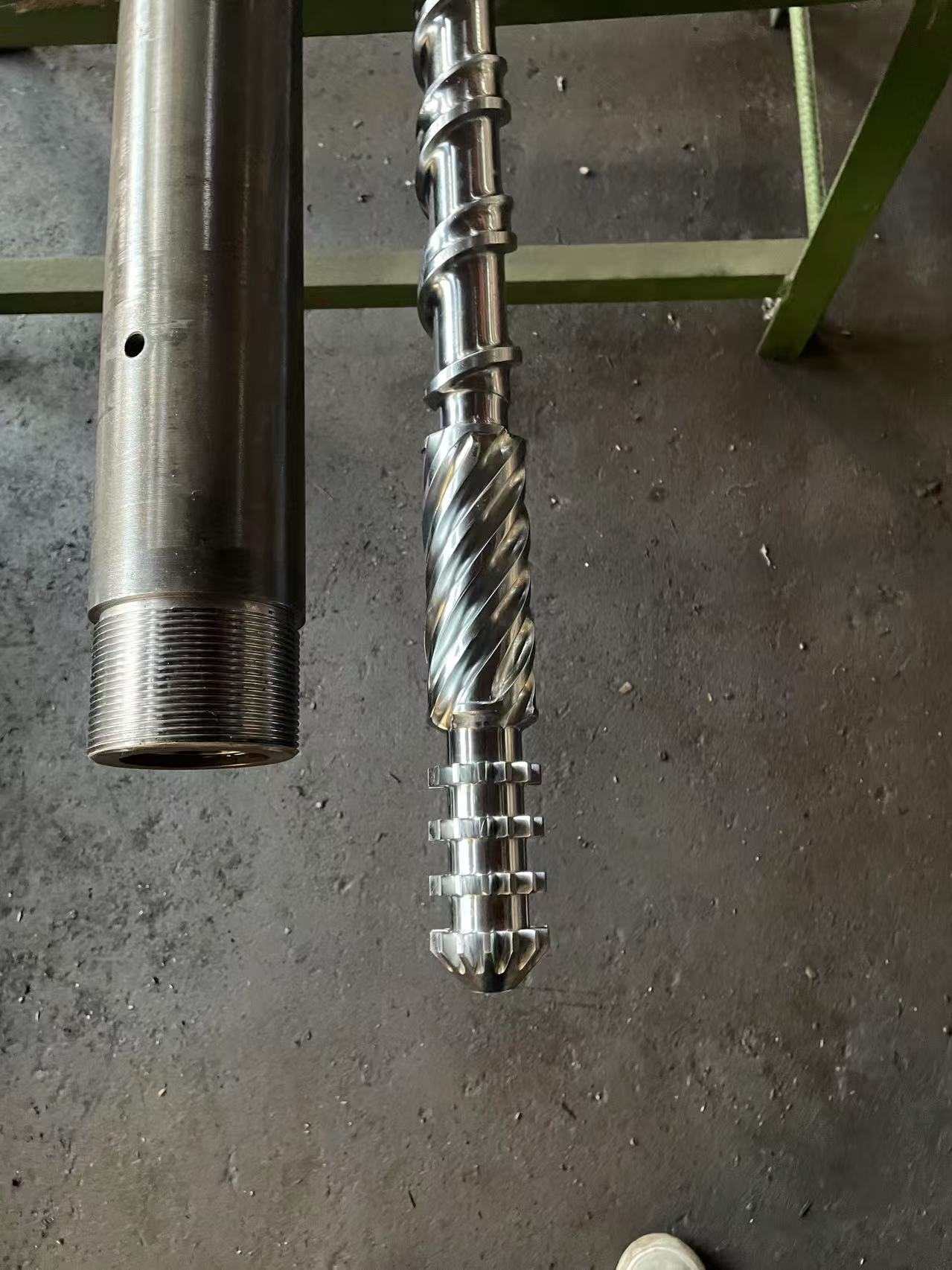
Look beyond the screen when defects remain with a new pack, output per revolution declines, melt temperature exceeds the setting, or torque, pressure, and output cycle together. Black specks after low-speed operation, unstable venting, expanded clearance, worn flights, or mixing-zone deposits justify screw inspection. A broader extrusion troubleshooting guide supports the review.
Which Screw Changes Improve Recycled PE Film Extrusion?
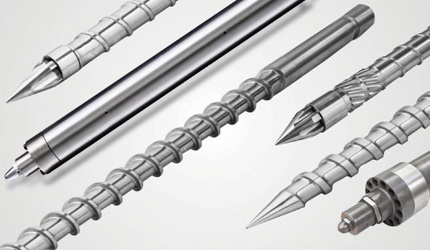
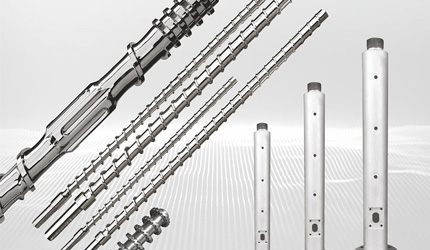
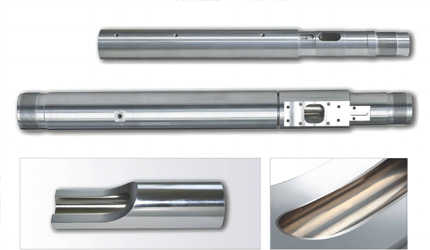
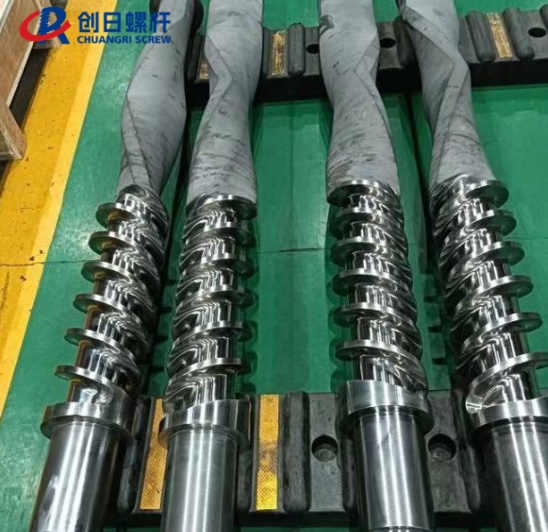
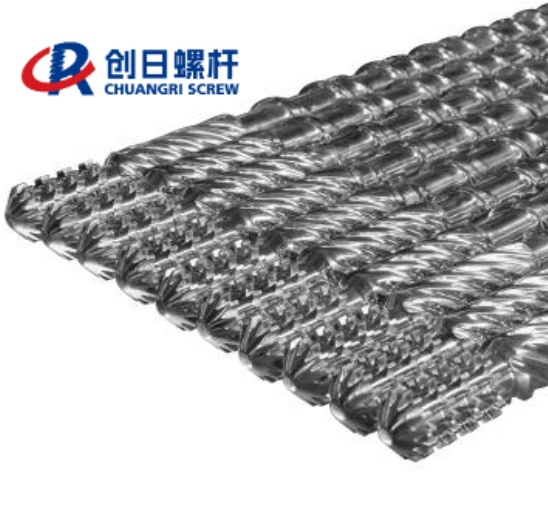
Changes should follow diagnosis: adapt feed geometry, smooth compression, add an appropriate barrier or mixing section, engineer venting, remove accumulation-prone transitions, or restore excessive clearance. CHUANGRI SCREW lists Pelletizing Single Screw and Pelletizing Parallel Twin-Screw options for PE recycling pelletizing in its screw and barrel product range. Our protection processes include nitriding, bimetallic treatment, nickel-based alloy, and tungsten-carbide protection, selected for diagnosed wear and corrosion.
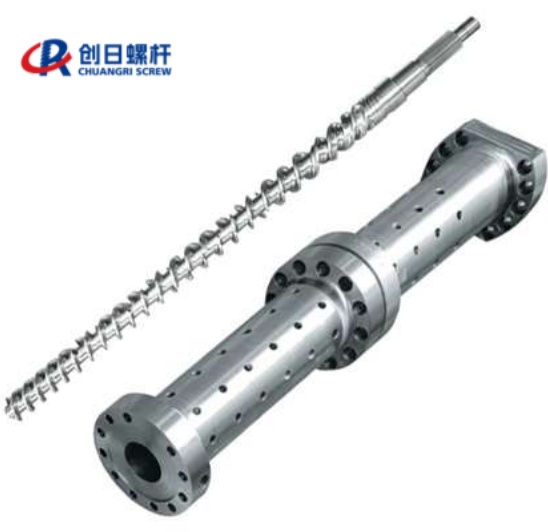
When recycled pellets enter a blown-film line, the High-Speed Blown Film Screw is a separate downstream product. Its barrier structure supports melt homogeneity, while lower shear after melting supports temperature control. These features do not belong to the recycling pelletizing screws.
Which Data Should Be Collected Before Redesigning the Extruder Screw?
Use one feed batch and a stable operating window. Record feed form, bulk density, moisture, contamination, speed, motor load, melt temperature, pressure before and after the screen changer, output per revolution, vacuum, change interval, and defect trends. Add clearance and visible wear. These data separate feeding, filtration, volatile removal, heat history, and geometry loss.
FAQ
Q: What causes recycled PE film extrusion problems such as gels and black specks?
A: Possible causes include unmelted PE, foreign polymers, solid contamination, crosslinked or degraded material, and residue released from hang-up points. Defect appearance and operating trends are needed to narrow the cause.
Q: Can printing inks and adhesives cause odor in recycled PE film extrusion?
A: Yes. They may bring feedstock odor or volatile compounds, while excessive heat history may create additional degradation products. Batch, temperature, residence-time, and vacuum trends help distinguish the routes.
Q: How do residence time and temperature affect recycled PE film extrusion problems?
A: Higher temperature and longer heat history can intensify degradation. A small long-residence pocket may generate intermittent defects even when the average melt flow appears stable.
Q: Can a finer screen pack solve unstable output in recycled PE film extrusion?
A: It can help when sufficiently large solids restrict the filter. It cannot correct light-feed surging, volatile odor, temperature nonuniformity, soft dispersed defects, dead zones, or screw wear.
Q: When should the extruder screw be redesigned for recycled PE film extrusion problems?
A: Consider redesign after data show persistent feed instability, inadequate melting, excessive melt temperature, unstable venting, accumulation-prone geometry, or excessive clearance that screen changes cannot correct.

 consult
 WHATSAPP
 leave message
 top
top