

Plastic Twin Screw Extruder 2026 Market Trends and Industry Outlook Guide
Related news
-
Top Injection Molding Screw and Barrel Suppliers 2026
-
Optimizing Temperature Control in Injection Moulding Screw Barrels
-
Key Factors to Consider When Selecting a Screw and Barrel Manufacturer
-
Effective Strategies for Parallel Twin Screw Barrel Repair

-
Twin Screw and Barrel Types Explained: Parallel vs Conical
Plastic Twin Screw Extruder 2026 Market Trends and Industry Outlook Guide


Global Market Outlook for Twin Screw Extrusion in 2026
The twin screw extrusion industry is expected to keep growing in 2026. Manufacturers now handle more complex polymers, recycled materials, and high-performance compounds. They want steady results. Demand for plastic twin screw extruder 2026 systems comes from three main drivers. These include material diversification, sustainability needs, and greater automation in continuous production.
Compounding remains the main use worldwide. Recycling and advanced polymer modification grow faster than older segments. Asia remains the top manufacturing region. Europe leads in upgrades that focus on sustainability. North America keeps investing in high-efficiency extrusion lines for engineering plastics and automotive-grade materials.
Rising demand across compounding, recycling, and polymer processing industries
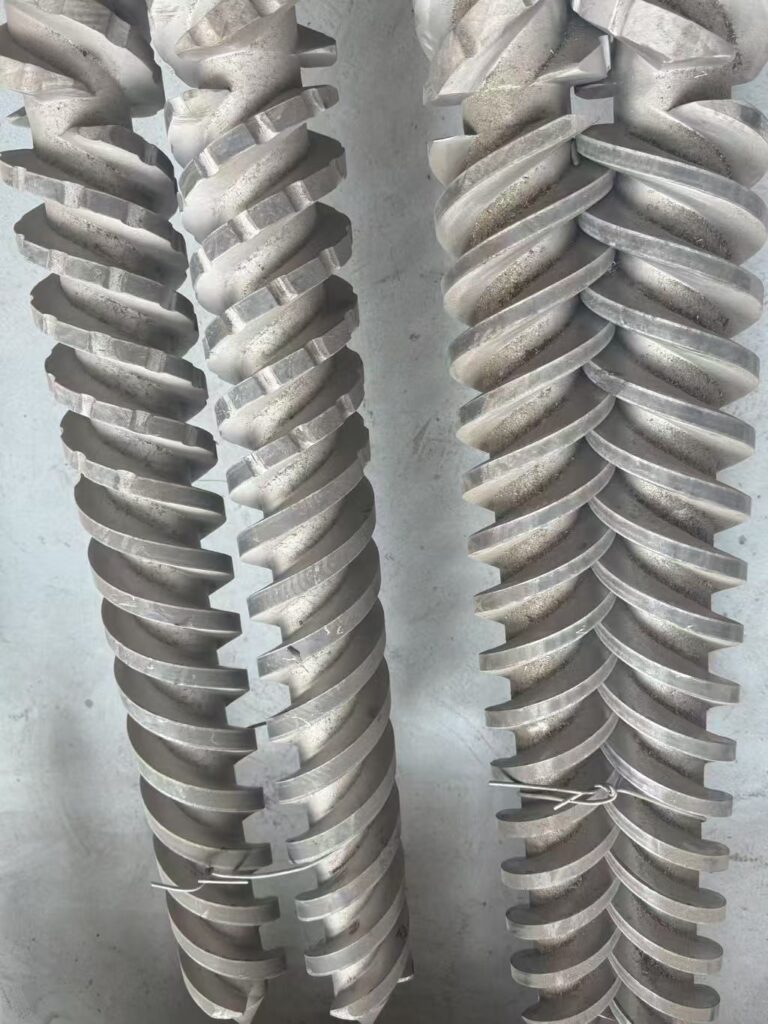
Growth in compounding applications links to engineering plastics, masterbatch production, and filled polymer processing. Recycling lines also need stronger screw designs. These designs must handle feedstock that varies in quality.
Typical high-demand applications include:
- PP/PE/ABS compounding with fillers
- PET recycling and pelletizing systems
- PVC modification for building materials
- High-performance engineering plastics (PA, PC, POM)
These trends shape twin screw extruder design in 2026. They affect torque stability and mixing efficiency in particular.
Regional growth shifts in global extrusion equipment demand
- Asia-Pacific: Dominates production expansion due to packaging and construction material growth
- Europe: Strong focus on low-energy and circular economy applications
- North America: High demand for precision compounding and automotive-grade plastics
This leads to a global shift toward customized extrusion systems instead of standard machines.
Key technology shifts transforming twin screw extruder performance
Today’s extrusion technology goes well beyond screw rotation and melting efficiency. In 2026, attention has shifted. It now centers on process control. It also covers adapting to different materials. And it includes engineering designs that resist wear.
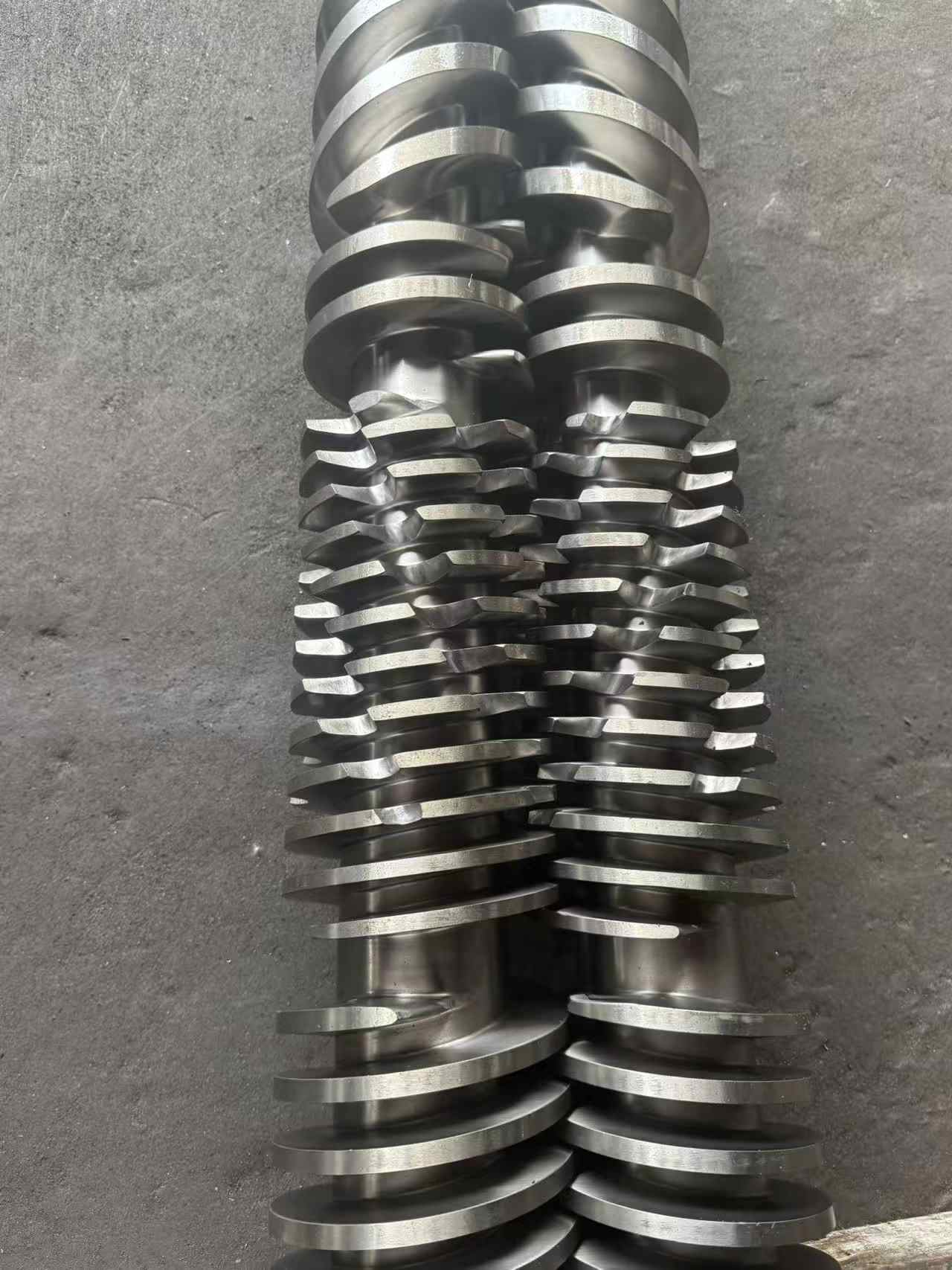
One of the most important upgrades in recent years is the refinement of screw geometry. Barrier-type structures, optimized flight profiles, and segmented mixing sections now help keep melt quality stable.
At CHUANGRI SCREW, we design screw systems based on actual processing behavior rather than theoretical geometry alone. This allows better adaptation to different polymer viscosities and filler contents.
From traditional design to high-efficiency screw geometry
Traditional single-profile screws are increasingly replaced by multi-zone designs. These designs separate feeding, melting, and metering more precisely. This improves melt uniformity, output stability, shear control, and energy efficiency per kg of material.
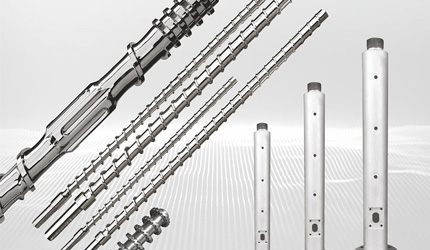
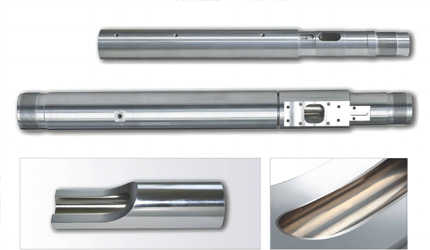
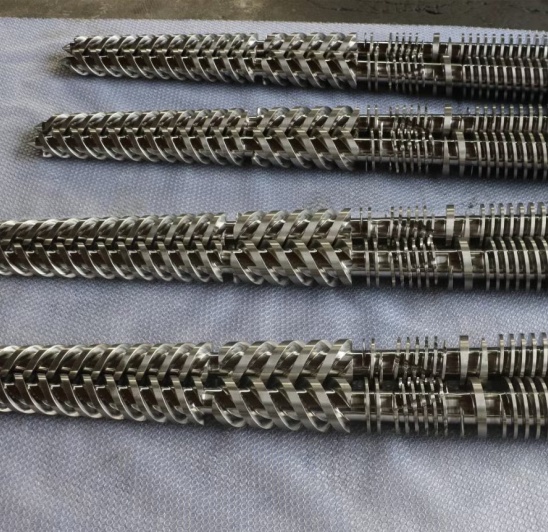
For example, our Parallel Twin-Screw Barrel for PVC Compounding Lines is widely used in high-calcium formulations. Conventional designs often struggle with uneven plasticization and excessive wear in these cases.
Barrier structures and advanced mixing technologies
Barrier screw technology remains a key innovation in 2026. It separates solid and molten phases more effectively. It reduces overheating and improves material consistency.
This is particularly important for PVC formulations with high CaCO₃ content, recycled plastics with variable viscosity, and multi-component masterbatch production.
Wear-resistant materials and surface engineering improvements
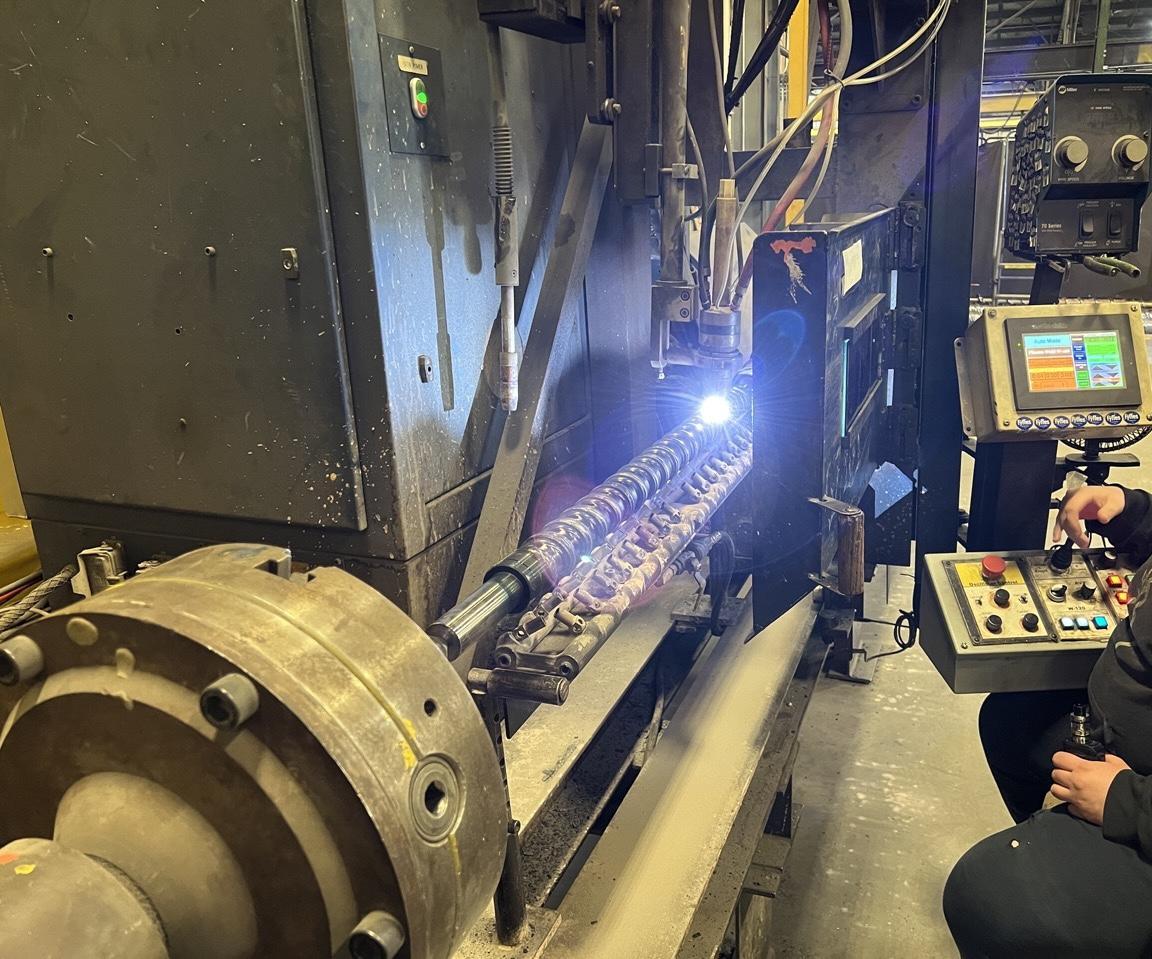
Material engineering is equally critical. Modern extrusion systems rely heavily on bimetallic alloy barrels, nitrided screw surfaces, and HVOF coating technologies. These treatments significantly extend service life under abrasive or corrosive conditions.
Improving production stability and energy efficiency in modern extrusion lines
Energy efficiency is not optional anymore. It is now a baseline requirement for any plastic twin screw extruder 2026 system. Manufacturers are now measured by energy consumption per kilogram of output and long-term operational stability.
However, efficiency is not only about motor power. It is deeply connected to screw-barrel matching accuracy, machining precision, and thermal control.
Why energy consumption has become a core evaluation standard
Higher energy prices and stricter environmental regulations have pushed manufacturers to optimize every stage of extrusion. Poor screw design can increase energy usage by up to 15–25%. This happens mainly due to excessive shear heat generation, poor melting efficiency, and material stagnation zones.
Reducing downtime through optimized screw and barrel design
Downtime remains one of the most expensive hidden costs in extrusion production. One of the most effective solutions is improving wear resistance and reducing material adhesion inside the barrel.
A typical example is our PVC Conical Twin-Screw Barrel, which is designed for stable processing of rigid PVC products such as flooring, pipes, and foam boards. Its optimized inner structure improves both mixing efficiency and service life. This is especially true in high-filler environments.
Precision machining is the foundation of stability
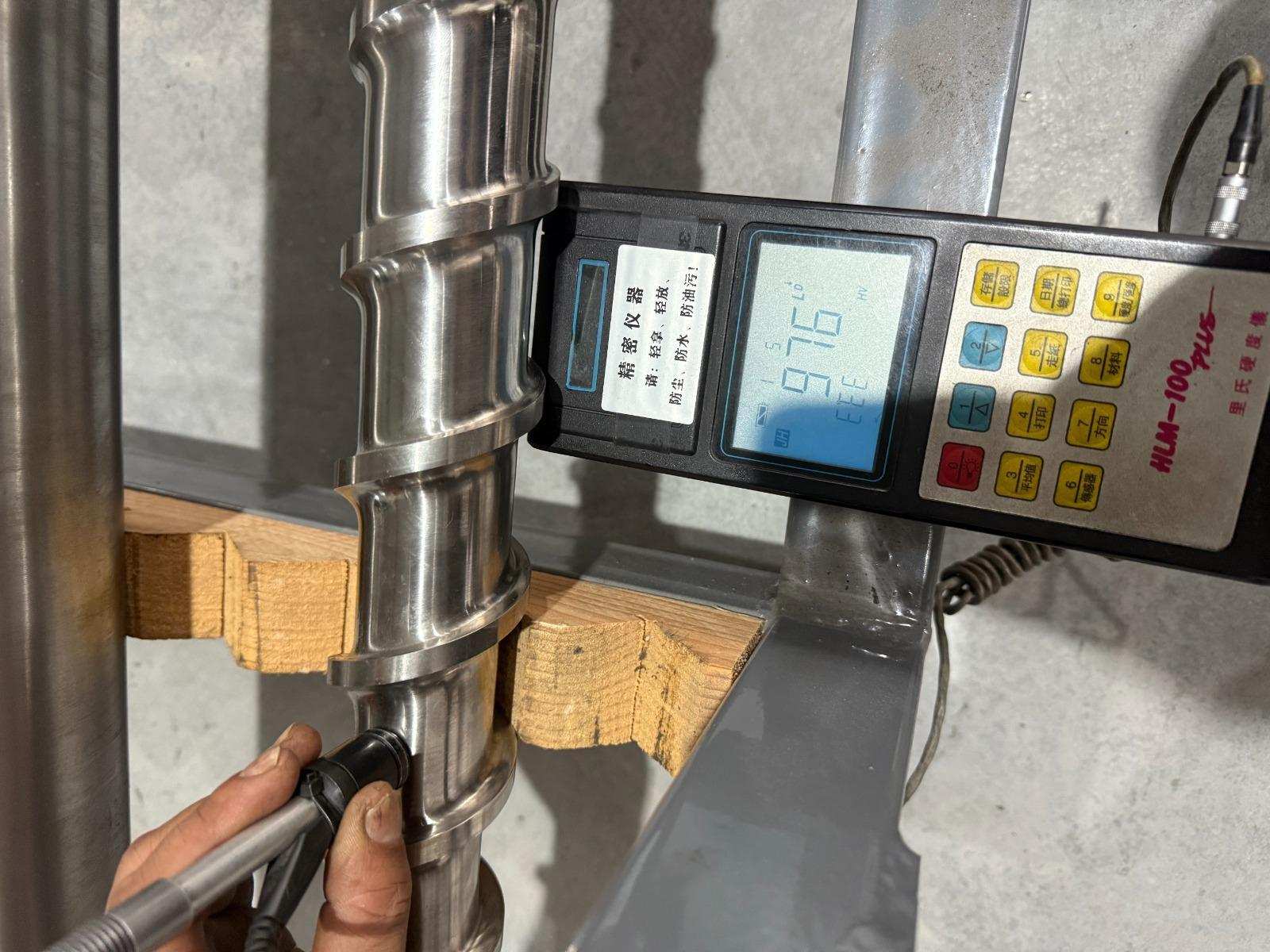
Even the best design fails without precision manufacturing. According to our production standards, bore accuracy reaches Ra ≤ 0.4 μm, straightness control stays at ≤ 0.015 mm/m, and hardness stability holds HV900–1000 after nitriding. These parameters affect extrusion consistency and screw-barrel alignment directly.
Expanding applications of twin screw extrusion technology
The range of uses for twin screw extruders keeps growing in 2026. They go beyond standard compounding work. These extruders now serve as key tools in recycling processes. They also fit well into infrastructure materials. And they support high-performance packaging needs.
Compounding applications in engineering plastics
Engineering plastics call for exact management of temperature, shear, and how long materials stay inside the system. Twin screw setups work well with glass fiber reinforced materials. They also suit flame-retardant compounds. High-impact modified plastics gain clear benefits from this setup.
Recycling and pelletizing systems in the circular economy
Recycling is one of the fastest-growing segments. Processing inconsistent feedstock requires screw systems with strong conveying stability, self-cleaning capabilities, and anti-wear surfaces.
Our Pelletizing Parallel Twin Screw system is widely used for PE, PP, ABS, and PET recycling lines. It ensures stable melt quality even under fluctuating input conditions.
Pipe, profile, and sheet extrusion expansion
Infrastructure development continues to drive demand for HDPE pipe systems, PVC profiles and window frames, and SPC flooring materials. These applications require high-output and long-duration operation stability.
Film and packaging applications
Blown film extrusion remains a major sector. Melt uniformity directly impacts film thickness and clarity. Optimized screw design reduces bubble instability, melt fracture, and thickness variation.
Material engineering and manufacturing standards behind extruder components
Behind every high-performance extruder is advanced material engineering. The lifespan and stability of a twin screw system depend heavily on alloy selection and heat treatment processes.
At CHUANGRI SCREW, we continuously refine material selection based on application environment, especially for abrasive or corrosive processing conditions.
Alloy selection and its impact on performance
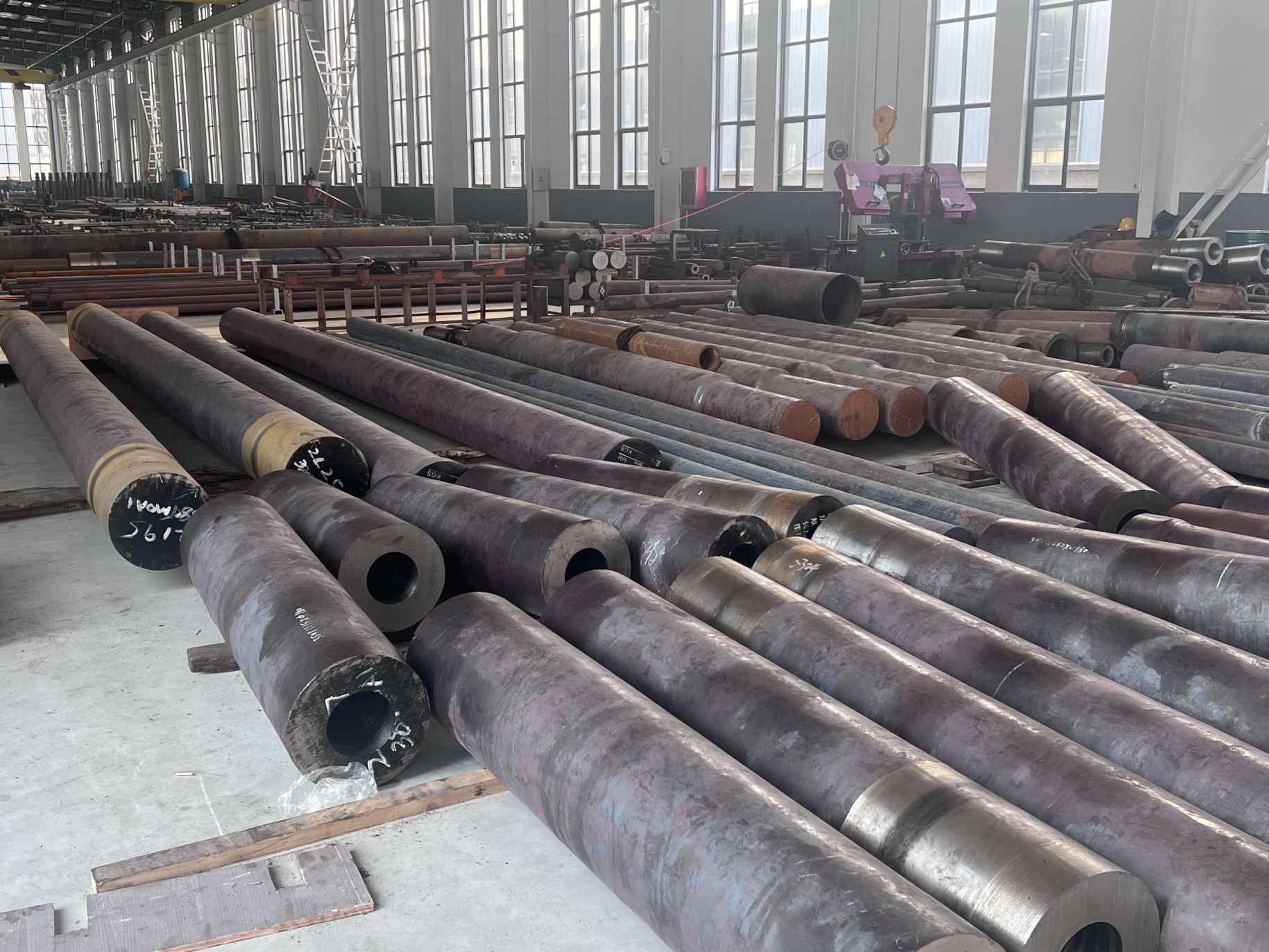
Common materials include 38CrMoAlA for nitrided systems, SKD61 for high-temperature applications, 42CrMo for structural strength, and nickel-based alloys for corrosion resistance.
Heat treatment technologies in screw manufacturing
Key processes include nitriding with a 0.5–0.8 mm hardened layer, bimetallic centrifugal casting for a high wear resistance liner, and quenching and tempering for core strength balance. These technologies ensure both surface durability and structural toughness.
Wear resistance in high-filler processing
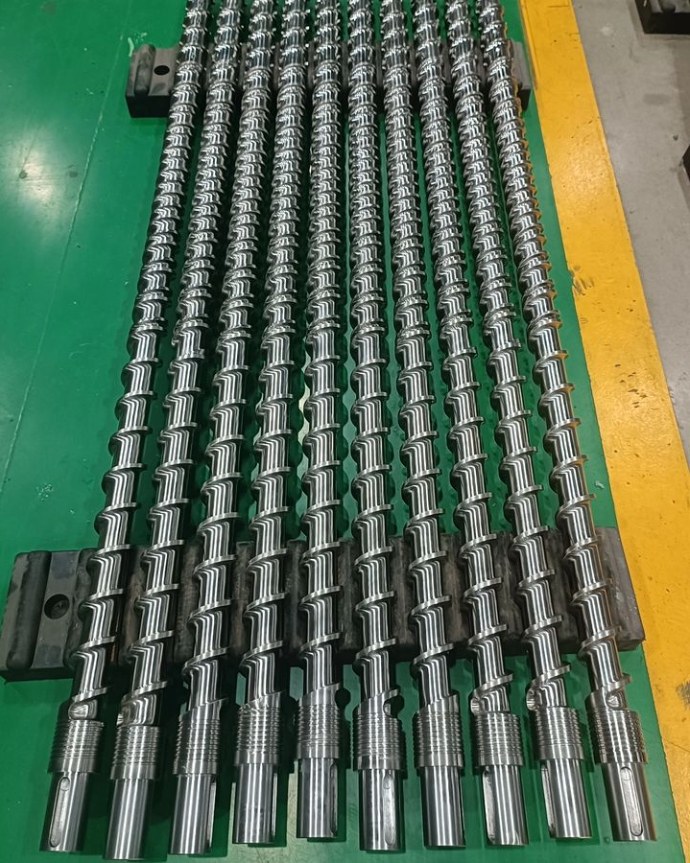
For applications involving high calcium carbonate or glass fiber, standard screws often fail prematurely. In these cases, bimetallic or carbide-coated designs are essential to prevent flight erosion, barrel scoring, and output instability.
Challenges and operational limitations in modern extrusion systems
Despite technological progress, several challenges still affect extrusion efficiency in 2026.
Processing complex high-filler formulations
High CaCO₃ PVC and reinforced plastics significantly increase wear rates and require specialized screw geometry, reinforced barrel liners, and optimized cooling systems.
Equipment wear and maintenance cycles
Wear is bound to happen over time. Its pace can shift quite a bit, though. Much of this depends on the materials chosen and the coating methods applied. Skipping proper upkeep often cuts output efficiency. Energy use rises at the same time. Product quality may swing as well.
Consistency in continuous production
Maintaining stable output during 24/7 operation remains one of the most difficult engineering challenges, especially when processing recycled or mixed polymers.
Future development direction of twin screw extrusion technology
The future of extrusion technology is shifting toward intelligence, customization, and sustainability.
Smart manufacturing and digital control systems
Modern extrusion lines increasingly integrate real-time torque monitoring, temperature adaptive control, and AI-assisted process optimization.
Custom screw and barrel engineering for polymers
Standardization is being replaced by application-specific design. Different materials require different compression ratios, mixing sections, and wear protection strategies.
Sustainability-driven equipment innovation
Recycling efficiency and energy reduction are now core design goals, not optional features.
Role of OEM/ODM manufacturers in global supply chains
OEM and ODM capability is becoming a key factor in global competitiveness. This enables rapid adaptation to regional market needs.
FAQ
Q: What is a plastic twin screw extruder used for in 2026?
It works mainly for polymer compounding, recycling, and high-performance plastic processing. These areas call for stable mixing and output that stays consistent.
Q: What industries rely most on twin screw extruder systems?
A: Industries such as packaging, automotive plastics, construction materials, and recycling heavily depend on twin screw extrusion technology.
Q: How does screw design affect extrusion performance?
A: Screw geometry directly impacts melting efficiency, shear control, output stability, and final product quality.
Q: Why is wear resistance important in twin screw extruders?
A: High-filler and recycled materials cause abrasion and corrosion. These factors reduce equipment lifespan without proper material protection.
Q: What makes modern twin screw extruders more energy efficient?
A: Optimized screw design, improved thermal control, and precision machining reduce energy loss and improve processing efficiency.

 consult
 WHATSAPP
 leave message
 top
top