



Food Contact Compliance Checklist for Extruder Barrel Buyers
Food Contact Compliance Checklist for Extruder Barrel Buyers


Link the quoted extruder barrel to its compliance file. A steel grade alone leaves assembly compliance unresolved. Put the drawing beside the material statement, operating limits, and cleaning procedure. Check their scope before approving the purchase: equipment hygiene, material authorization, and part-specific evidence answer separate questions.
Map the Food-Contact Scope Before Reviewing Documents
Identify the destination market and responsible parties
Where will food be made and sold? Record both, with the facility operator, component supplier, and signatory to each compliance statement. A manufacturing address cannot settle which food-facility, material, or local rules apply at the destination.
Use the barrel model and drawing revision as the reference when requesting a regulatory basis. A document naming only a material family or another manufacturer’s substance may not cover the quoted item. Record limitations instead of treating “food grade” as an approval status.
Map every product-contact surface in the supplied assembly
Follow the drawn assembly against its bill of materials. Where is contact: bore, liner, coating, repair layer, seals, joints, or connected parts? Mark each applicable item. Request an explanation for any unmatched entry. Include contact during cleaning and maintenance in the review. A base-barrel certificate may not cover every surface or accessory.
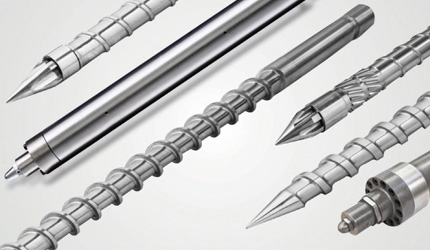
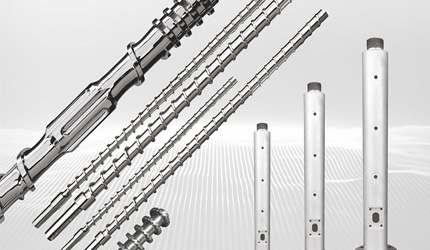
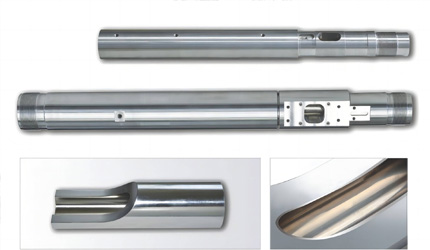
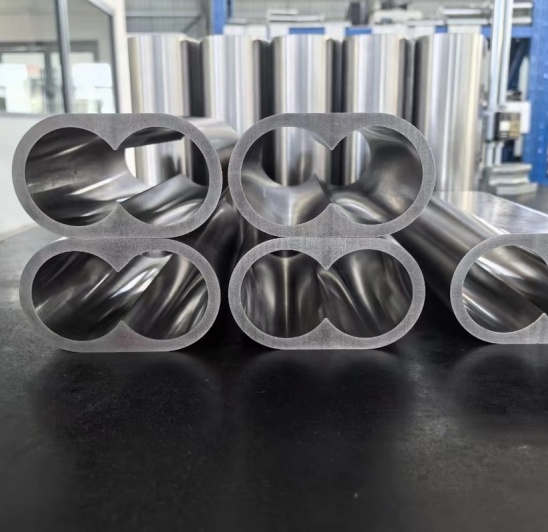
At CHUANGRI SCREW, we list a Parallel Twin-Screw Barrel for parallel twin-screw extrusion applications. Our listed range covers 50 mm to 800 mm. Confirm the combination of screw/barrel, material, and treatment at the ordered diameter. Our Parallel Twin-Screw Barrel options include 38CrMoAlA, AISI 4140, D2, H13, 40Cr, 42CrMo, and SKD61. Enter the quoted choice beside the processing option—nitriding, bimetallic construction, or solid carbide—for checking food-contact evidence against the configuration. Match the quoted part and drawing revision to its supporting evidence.
Set the Operating and Cleaning Conditions
Describe the process envelope
Attach a process profile to the enquiry so the supplier reviews the use you intend.
Leave discrepancies open until the reviewer records a resolution tied to the drawing. Keep the quotation alongside it.
Record cleaning and sanitizing cycles
Request a compatibility response for the plant sanitation procedure.
Corrosion resistance alone leaves compatibility unresolved. U.S. human-food CGMP requires cleanable equipment and nontoxic, corrosion-resistant contact surfaces that withstand intended use and applicable cleaning. Assign someone to verify access after installation; retain the exposure limits with the order.
Separate U.S. Equipment and Material Rules
Separate facility equipment rules from material authorization
Review equipment hygiene and substance authorization as separate entries.
Identify substances expected to contact food or migrate into it, their components, and intended uses. Dimensional acceptance cannot settle these questions.
Match an FCN or regulatory listing to the exact source and use
For an FCN, match the named manufacturer or supplier to the offered source, then compare use conditions. Under 21 CFR 170.100, the notification covers the substance made or prepared by that source. Similar chemistry from another source does not establish coverage.
Record the citation or notification number, covered component, use restrictions, and the document connecting it to the offered part. CHUANGRI SCREW’s Bimetallic Barrel is a named product category, not an FCN, test report, or food-contact declaration.
Build an EU Compliance File by Material Category
Check the framework alongside destination-country rules
Use this order for an EU compliance file review:
A polymer seal and metal barrel have different documentation questions. Give coatings, lubricants, or connectors individual entries where present. Identify each applicable rule. A plastics Declaration of Compliance framework cannot supply the answer for all those materials.
Request declarations and supporting records where applicable
Where a material-specific measure requires a Declaration of Compliance, check the responsible business, covered material or product, restrictions, and supporting information. For other categories, request the written compliance basis and confirm destination-market requirements. A document title alone does not prove coverage of the quoted barrel.
Add a separate GMP entry:
Keep Cleanability, Traceability, and Change Control Connected
Check cleaning access against the assembly drawing
Annotate the cleaning route on the drawing.
Assess access and inspection before installation.
A roughness result and a cleaning-access review answer different questions. Keep both tied to the drawing revision. The person verifying the installed cleaning procedure must still assess access and inspection; a surface value alone cannot establish that cleaning reaches the area.
Request manufacturing and acceptance records
Our manufacturing and acceptance checks include:
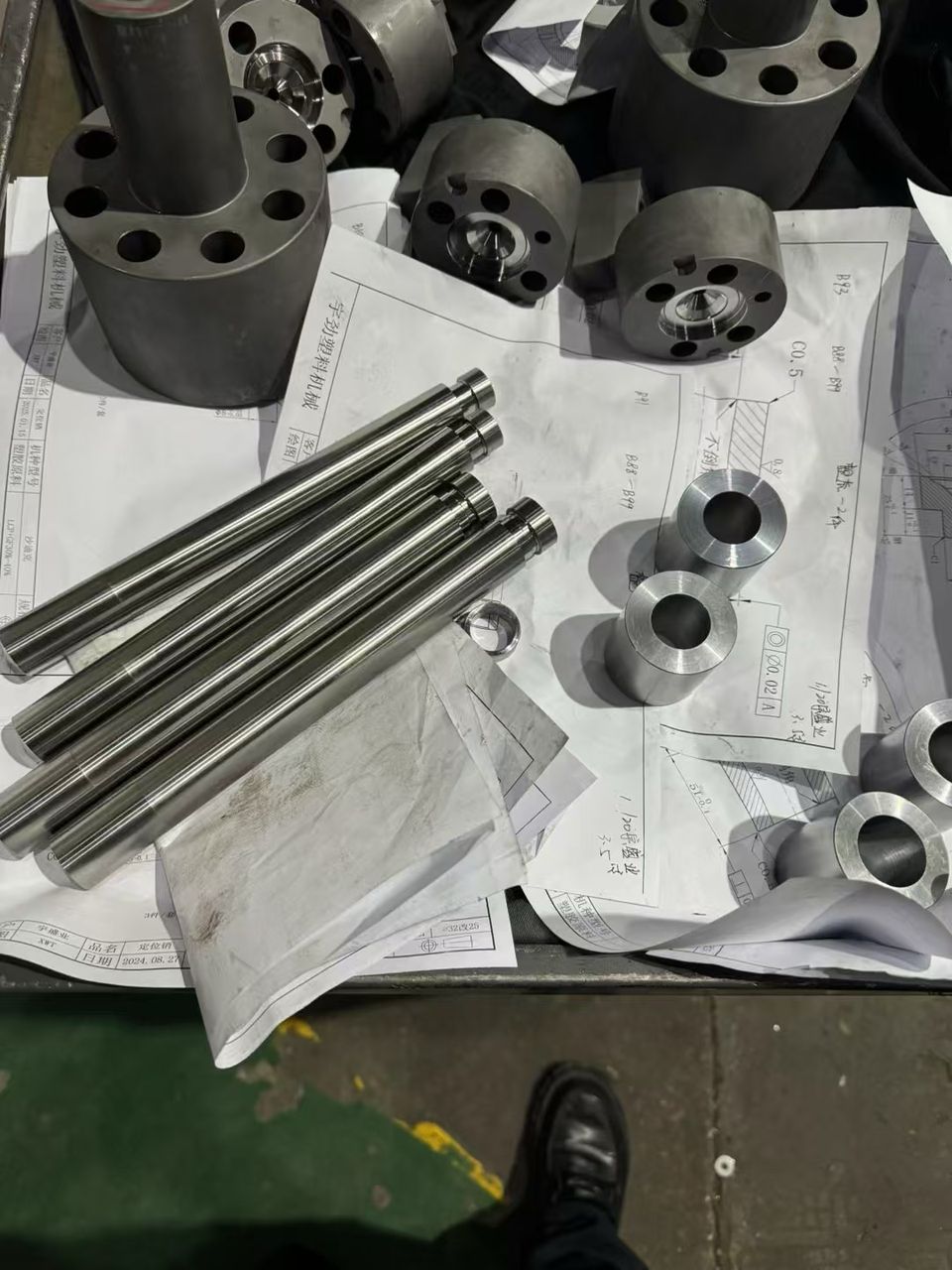
Tie results to drawing revision and report dates; resolve quotation mismatches. These checks establish manufacturing acceptance only. Food-contact authorization and installed cleanability need separate evidence; dimensional records cannot replace that review.
Before requesting material or treatment options, share resin, fillers, corrosion, temperature, wear location, and mechanism. Ask which inputs affect choice. This guides engineering and inspection, but cannot approve food contact or rank materials universally.
Set lot, revision, and supplier-change controls
Keep one receiving record under the equipment identifier. It should let maintenance distinguish the approved assembly from a spare or repaired part without reconstructing the purchase from emails. Fill the fields below before release; an incomplete or inconsistent entry stays open for review.
A shared product name cannot make an old acceptance follow a replacement. Read each attachment against the received construction. Later, a maintenance colleague should be able to find the evidence for this equipment without repeating the purchase review. Keep the reviewer, revision, and release date visible in the file and identify unresolved questions.
FAQ
Q: Which records belong in an extruder barrel compliance file?
A: Use the drawing revision as key. List contact parts, conditions, and cleaning limits. Ask which records cover that source and use. At receipt, compare markings; route differences for review.
Q: What can a steel certificate tell buyers about the finished food-contact barrel assembly?
A: It names a grade or batch, not contact surfaces, permitted use, or proof the assembly is covered. Compare it with its drawing and limits.
Q: Where does the U.S. equipment hygiene rule stop for buyers?
A: It addresses sanitation in U.S. food operations, not approval of a barrel. Cleanability and contact surfaces need review; authorization of food-contact substances is a separate question.
Q: Why might an EU assembly need different evidence for different materials?
A: The requirements follow the material category and destination. Find each applicable EU measure and check whether national provisions apply.
Q: Where can a buyer see whose substance an FCN actually covers?
A: Read the notification against the quoted substance, source, and conditions. Under 21 CFR 170.100, its scope follows the manufacturer or supplier, not similar chemistry.

 consult
 WHATSAPP
 leave message
 top