Pelletizing Extruder Screw Barrel: How Venting, Metering, and Pressure Stability Affect Pellet Quality
Related news
Pelletizing Extruder Screw Barrel: How Venting, Metering, and Pressure Stability Affect Pellet Quality


A pelletizing line can only produce consistent pellets when the molten polymer entering the die is stable, homogeneous, and free from trapped gases. The design of a Pelletizing Extruder Screw Barrel directly influences degassing, melt preparation, pressure control, and final pellet quality. Pellet defects often begin before the strand reaches the cutter, so the screw and barrel must feed variable material, melt it evenly, remove gases, and deliver a steady strand.
Why Pelletizing Extruder Screw Barrel Design Determines Pellet Quality
Pellet quality is decided by the melt delivered to the die. If the polymer is poorly melted, mixed, or conveyed, the cutter can only produce an inconsistent result.
How Screw Barrel Zones Control Plastic Melting and Homogenization
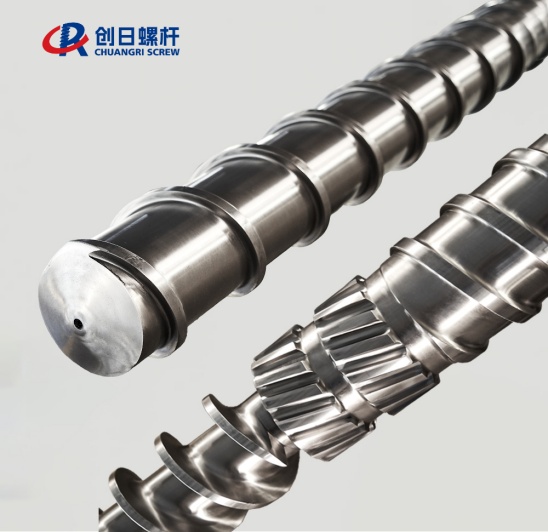
The feeding zone must suit the actual feed form. Recycled pellets, flakes, film, powder, and mixed feed can have different bulk densities and flow behavior. The melting or compression zone converts solids into a continuous melt while managing heat, shear, and residence time. The metering zone then smooths flow and builds die pressure, while melt-preparation sections distribute additives and reduce local variation.
This is the practical meaning of pelletizing extruder screw design: zone transitions determine melt homogenization. For a pelletizing single-screw line, those transitions should be checked against resin, regrind form, target output, and die resistance.
Why Stable Melt Preparation Is Critical Before Pelletizing
If melt preparation is unstable, the strand can change diameter, contain bubbles, show uneven density, or develop inconsistent appearance. Small melt variations become larger after cooling and cutting.
How Venting in a Pelletizing Extruder Screw Barrel Improves Pellet Quality
Venting is valuable when feed contains moisture, trapped air, volatile substances, or recycling residues. During melting, moisture can become steam and cause surging or foam-like melt behavior. If volatiles remain in the melt, they can create bubbles, voids, surface marks, or density variation.
Removing Moisture and Volatile Gases Through Proper Extruder Venting
An extruder venting system gives gases a controlled escape route after the material has formed a continuous melt. Effective degassing depends on renewing melt surfaces and, where designed, applying vacuum devolatilization. The vented pelletizing extruder screw barrel must keep the vent region open while maintaining forward conveying and melt containment. Solid paper, wood, metal, rubber, or high-melting contamination still requires melt filtration.
How Poor Venting Causes Bubbles, Voids, and Unstable Pellets
Trapped gas can make the strand expand and contract as it leaves the die, causing inconsistent strand diameter, pellet density variation, irregular pellet weight, and surface defects. A flooded vent section can block the escape path, while unstable feeding changes the fill level near the vent.
Why Vent Location and Screw Configuration Must Work Together
Vent location and screw configuration must be evaluated as one system. Vent-section filling level affects free volume for gas release. Screw channel design determines whether material is exposed without excessive back pressure. Pressure balance controls whether gases move toward the vent or remain entrained.
How the Metering Zone in a Pelletizing Extruder Screw Barrel Controls Melt Quality
The metering zone is the final stabilizing section before the die. It converts prepared melt into controlled flow with enough pressure to overcome die resistance. In a properly matched system, the extruder metering zone supports consistent melt flow, predictable pressure generation, reliable die feeding, and a uniform strand. Stable melt output depends on more than screw speed.
The Role of the Metering Zone in Melt Pressure and Output Stability
The metering section should provide repeatable forward conveying while limiting melt temperature and pressure variation. If upstream zones deliver a well-mixed melt but metering is poorly matched, the die still sees instability. A strong metering section also cannot fully compensate for irregular feeding, incomplete melting, or excessive gas content.
How Improper Metering Design Creates Pellet Size Variation
An unsuitable metering design can produce unstable throughput and pressure fluctuation. These changes alter strand diameter before cutting, causing irregular pellets and inconsistent pellet weight. Screen or die restriction can intensify the effect.
Why Screw Geometry Must Match Recycling and Compounding Materials
CHUANGRI SCREW’s documented recycling granulation scope includes pelletizing parallel twin-screw and pelletizing single-screw applications for PE, PP, PVC, ABS, PS, PET, PA, POM, and PC. Geometry should match the material rather than use a generic profile. Film and woven-bag feed can differ from rigid flakes or pellets, while mixed recycled materials can change bulk density, viscosity, moisture, contamination, and thermal history. For a pelletizing parallel twin-screw, specify feed form, formulation, output, venting, filtration, die resistance, and wear exposure.
How Pressure Stability Affects Pelletizing Extruder Screw Barrel Performance
Pressure stability matters because the die responds directly to the melt delivered by the screw and barrel. Pressure fluctuation can create unstable die output, strand-diameter changes, inconsistent pellet weight, and geometry variation. Causes may include material variation, feeding, filtration, temperature, screw geometry, or wear.
How Melt Pressure Fluctuation Changes Pellet Consistency
Higher viscosity generally requires higher die pressure at the same geometry and volume flow. Recycled batches can vary in composition, melt flow behavior, and thermal history, so pressure and torque may change even when settings remain unchanged. Batch-linked trends should prompt a material and feeding review; progressive output loss should prompt dimensional checks.
Factors That Cause Pressure Instability in Pelletizing Systems
Common contributors include inconsistent feeding, moisture, screw wear, increased barrel clearance, screen blockage, die restriction, and poor material matching. When barrel inside diameter increases or screw-flight outside diameter decreases, more melt leaks over the flight tip, reducing forward conveying and destabilizing pressure. Pressure alone cannot prove wear; compare clearance, feed rate, torque, pressure, and output.
How Precision Screw and Barrel Manufacturing Supports Pressure Control
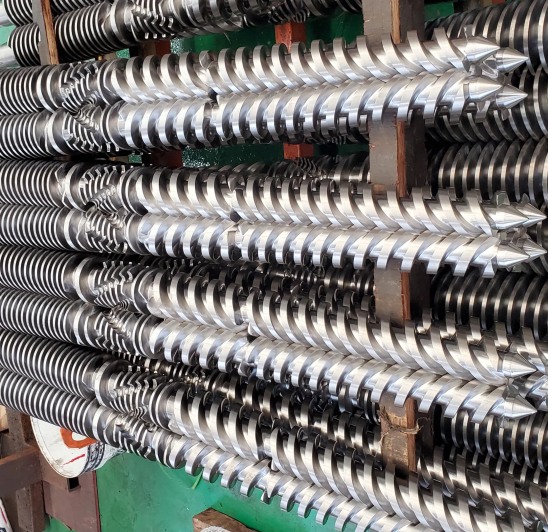
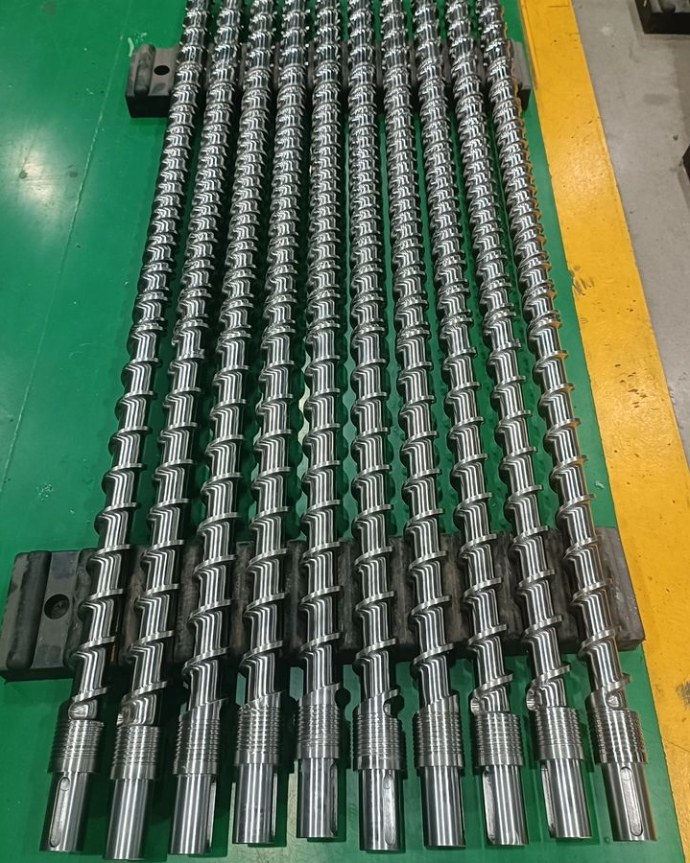
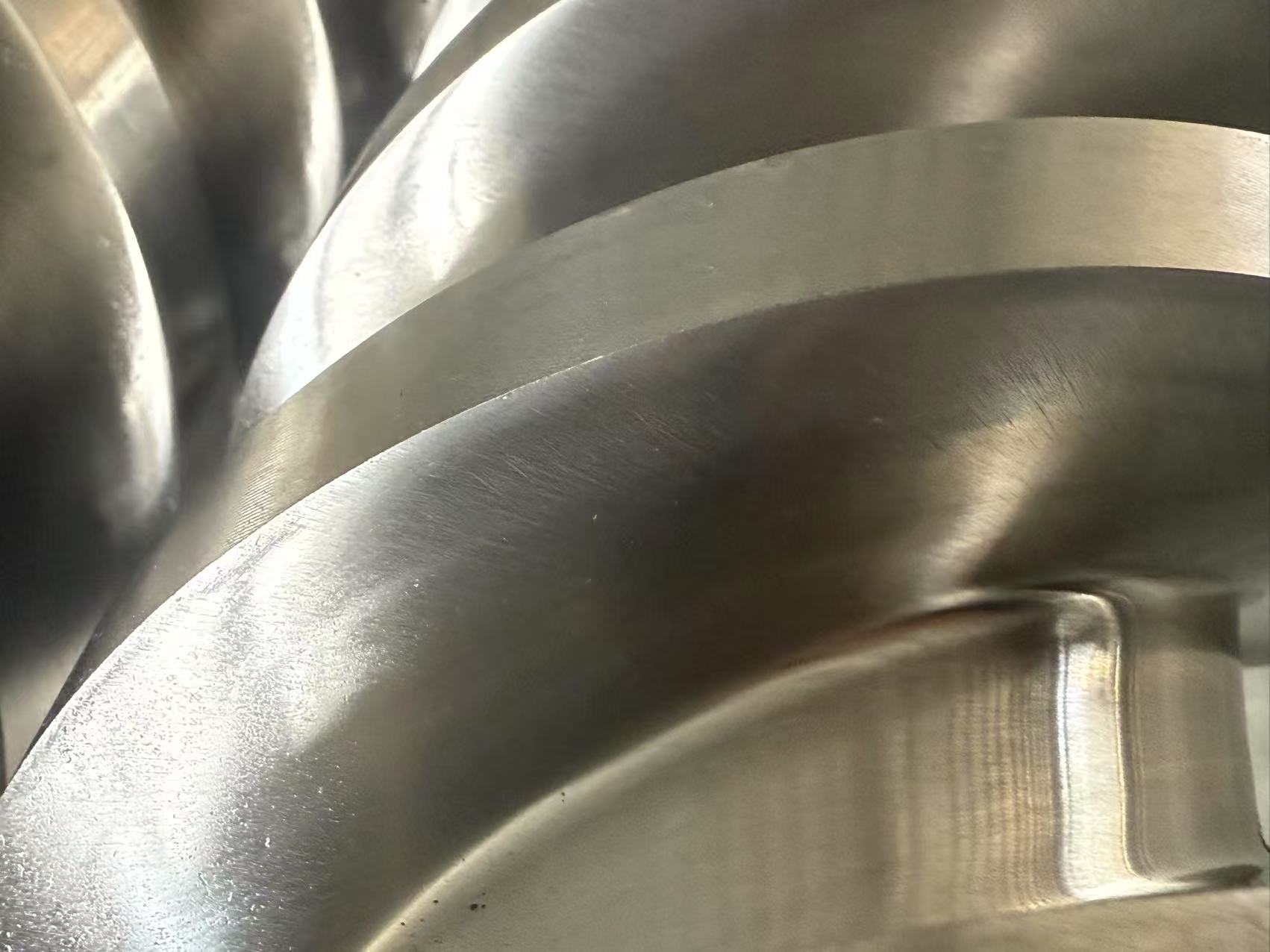
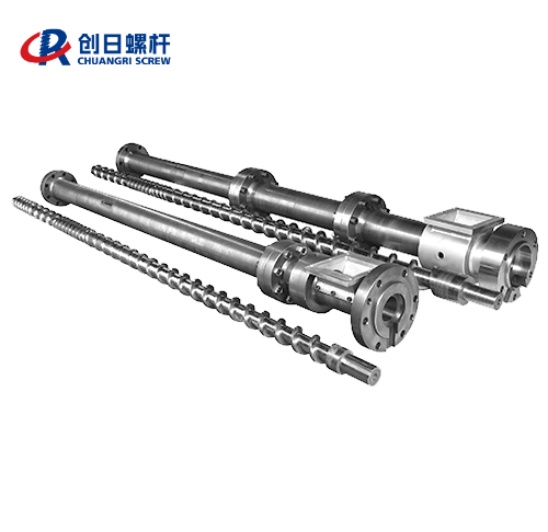
Dimensional control supports pressure stability because the screw and barrel must work as a matched pair. CHUANGRI SCREW uses CNC turning, thread milling, grinding, and polishing to produce or restore flight profile, root and channel geometry, surface finish, and dimensional relationships across feed, compression, metering, and mixing sections. Our inspection covers fit clearance, concentricity, surface hardness, dimensional accuracy, and screw-to-barrel fit. When a line needs a custom screw and barrel solution, the specification should connect machining and inspection to the process symptoms.
Choosing the Right Pelletizing Extruder Screw Barrel for Recycling and Compounding Applications
Material choice and wear environment should be reviewed before selecting a screw barrel. Recycled plastics can contain abrasive fillers, hard contaminants, corrosive residues, or combined wear conditions.
Matching Screw Barrel Materials with Abrasive and Corrosive Materials
Nitriding can be considered for moderate wear. A bimetallic barrel or screw can be considered when abrasive risk is stronger. A nickel alloy is relevant when corrosion and wear occur together, while tungsten carbide protection can be considered for severe abrasive risk. These are conditional options, not a universal ranking, and should be matched to filler, temperature, local pressure, and wear location.
Why Screw Barrel Wear Resistance Helps Maintain Long-Term Pellet Quality
Wear increases clearance, reduces conveying efficiency, and can increase backflow over the screw flight. The resulting pressure instability may appear as pellet variation long before mechanical failure. Regular inspection helps separate material events, process-setting issues, and progressive wear.
FAQ
Q: What Does a Pelletizing Extruder Screw Barrel Do?
A: It conveys, melts, mixes, degasses, and meters polymer before the die, determining how consistently the melt reaches strand cutting.
Q: How Does Venting Affect Pellet Quality in an Extruder Screw Barrel?
A: Proper venting removes moisture, air, and volatiles. Poor venting can leave gas trapped in the strand, causing bubbles, voids, density variation, and surface defects.
Q: Why Does Metering Zone Design Matter in a Pelletizing Extruder Screw Barrel?
A: It helps generate consistent melt pressure and flow to the die. If poorly matched, strand diameter and pellet weight can vary.
Q: What Causes Pressure Fluctuation in a Pelletizing Extruder Screw Barrel?
A: Common causes include variable feeding, changing viscosity, moisture, screen blockage, die restriction, screw wear, increased clearance, and poor material matching.

 consult
 WHATSAPP
 leave message
 top
top