


What Affects Twin Screw and Barrel Price? 5 Key Cost Factors
Related news
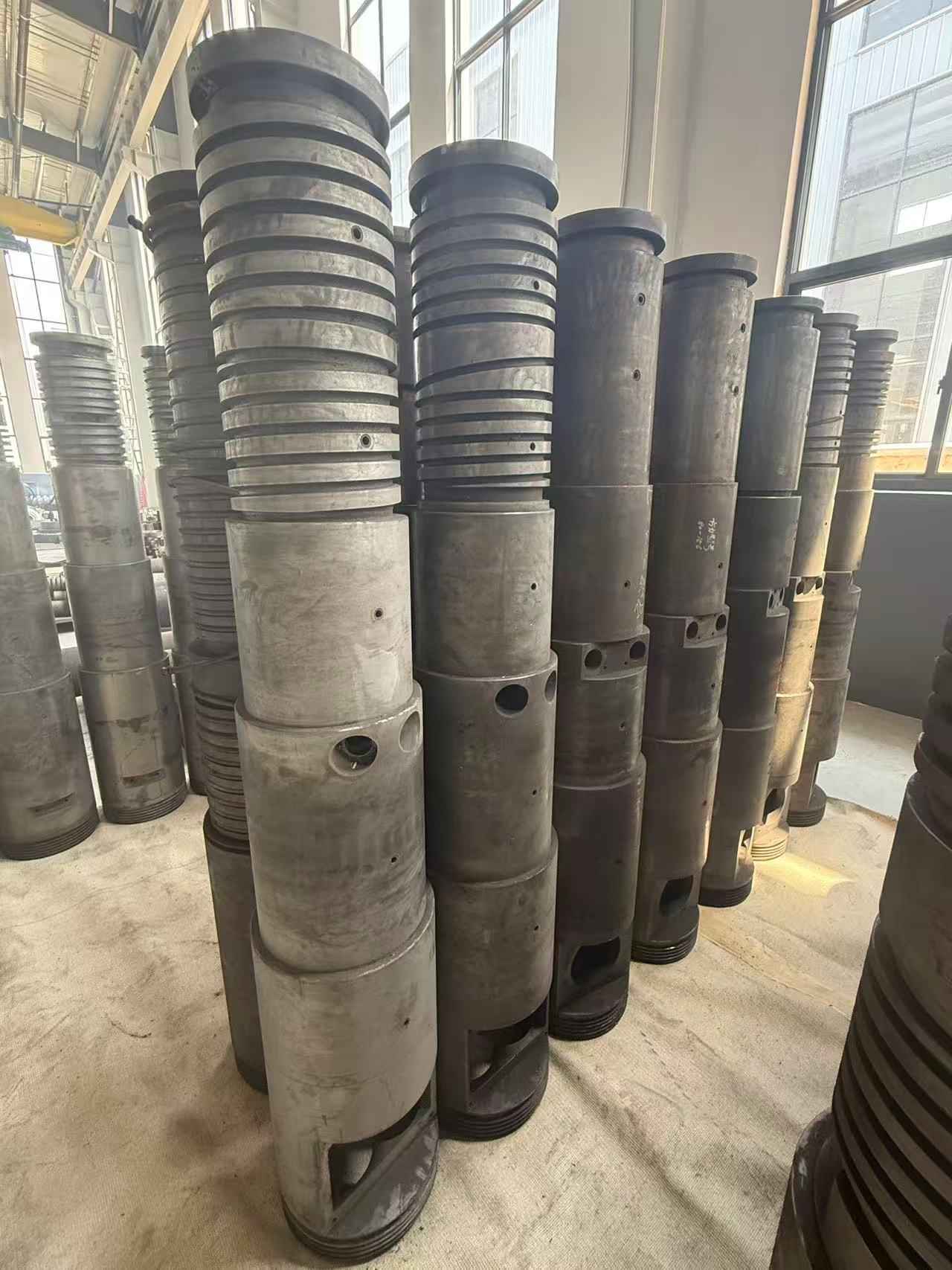
What Affects Twin Screw and Barrel Price? 5 Key Cost Factors


Two Twin Screw and Barrel quotations can differ significantly even when both are made for the same extruder. Price depends on steel quantity and grade, wear treatment, custom geometry, machining tolerance, inspection scope, order quantity, and delivery conditions, not only screw diameter. Comparing price without comparing specification is not an apples-to-apples comparison. The useful question is what each quotation includes and whether the proposed screw and barrel match the machine, formulation, output target, and service conditions.
Twin Screw and Barrel Size and Configuration
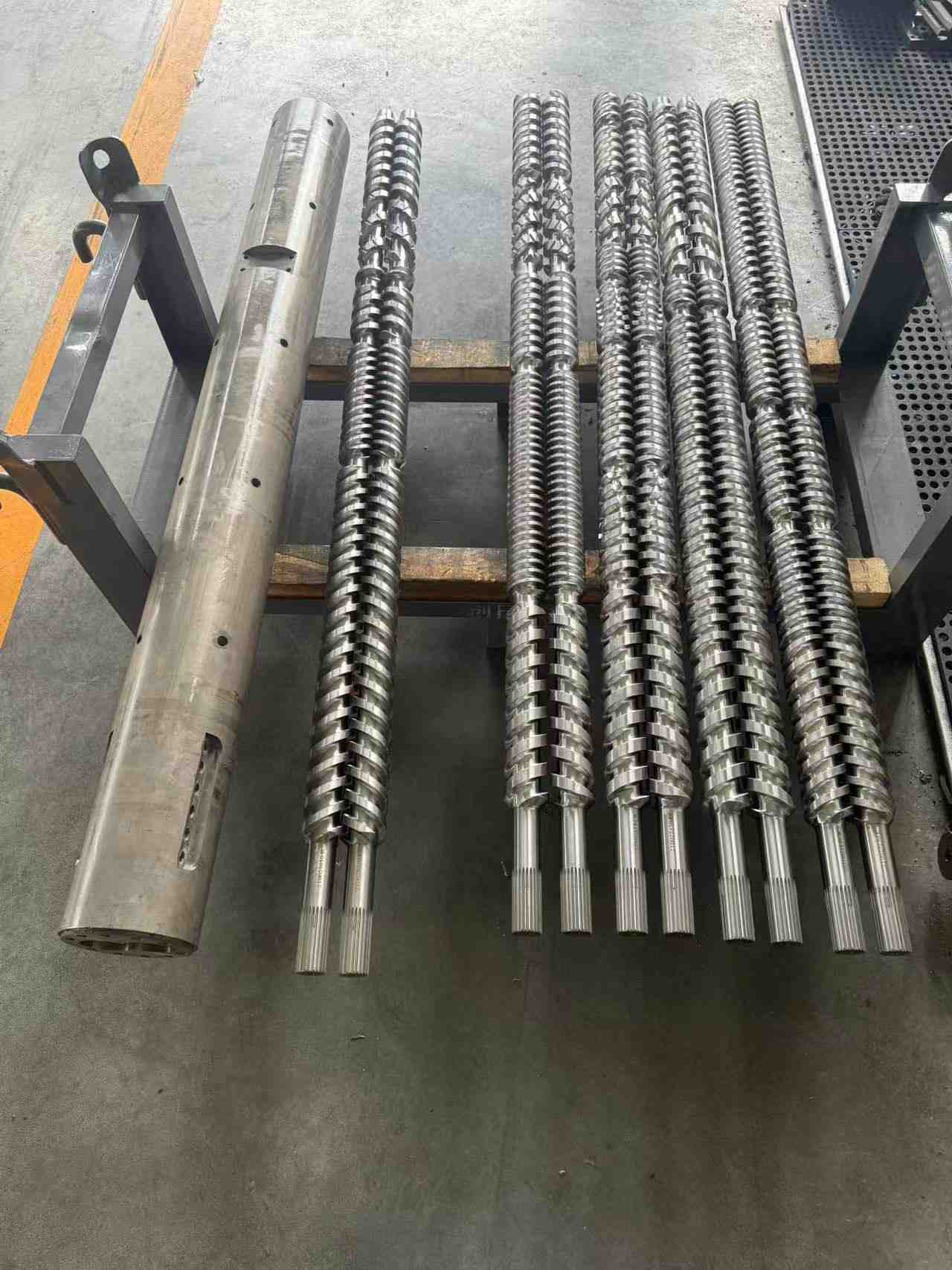
How Screw Diameter, Length, and L/D Ratio Affect Material and Machining Cost
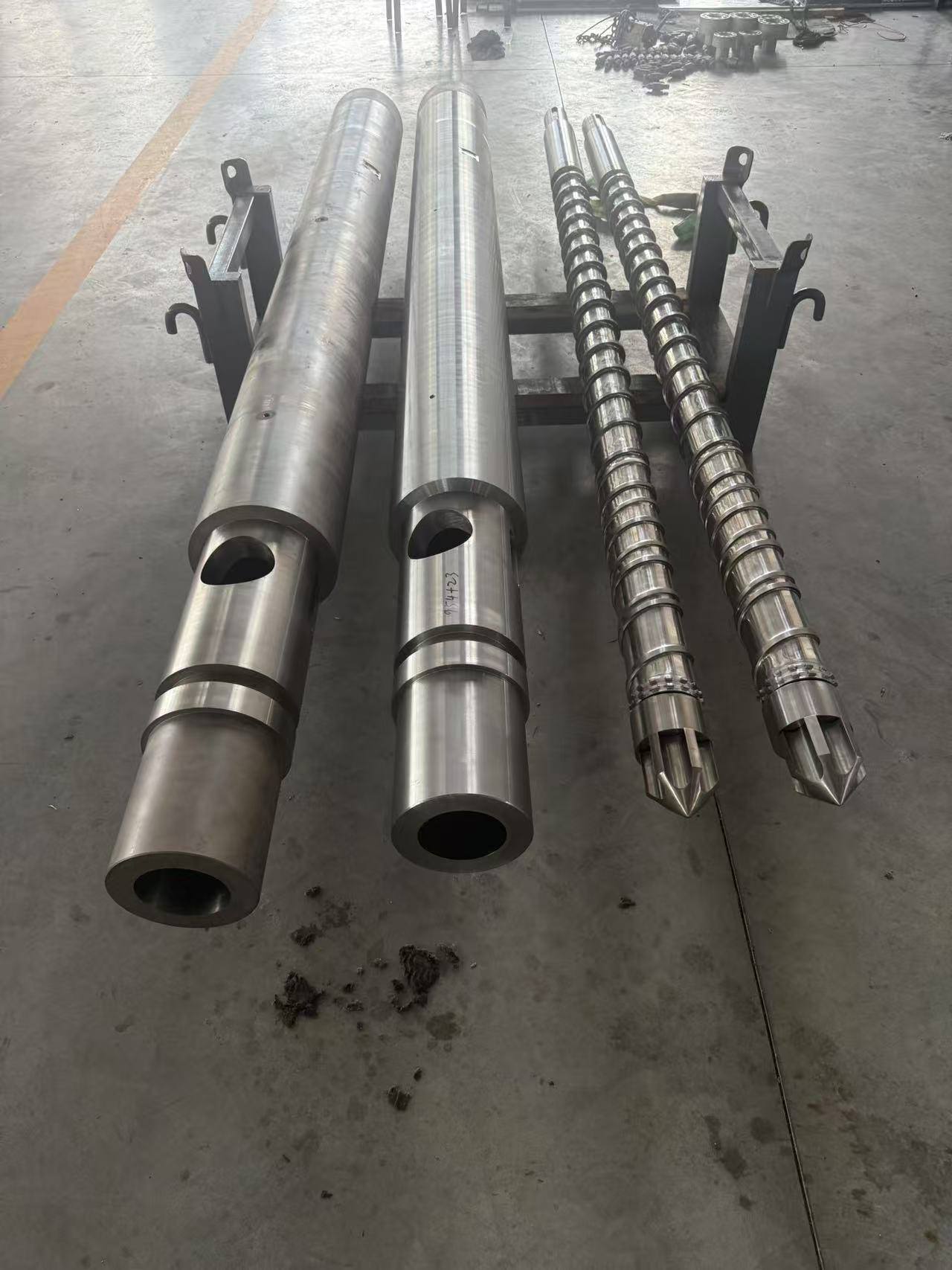
Size directly affects raw steel, machining time, handling, and inspection. A larger diameter generally needs more material, while greater length adds processing time and more surfaces to keep accurate. The Twin Screw and Barrel L/D ratio changes the processing length and the amount of flight, channel, and bore geometry to produce and check. This is why Twin Screw Barrel cost cannot be estimated fairly from diameter alone. A quotation should state diameter, length, L/D ratio, and machine-specific dimensions.
Why Parallel, Conical, and Replacement Dimensions Change Manufacturing Complexity
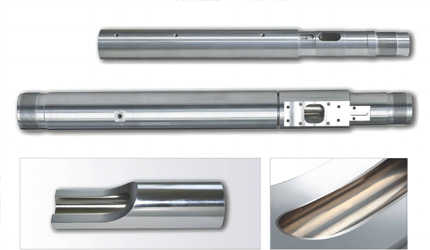
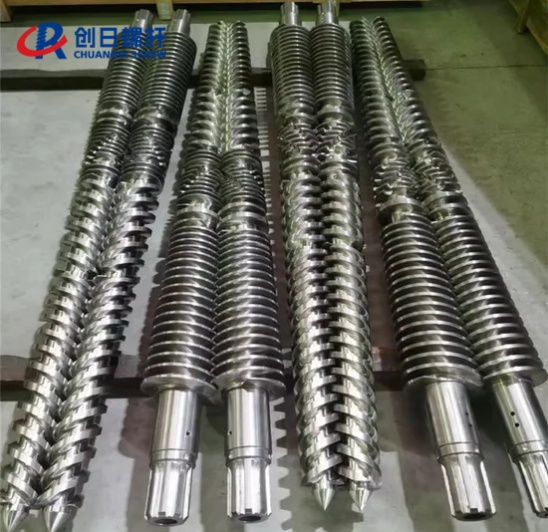
Parallel and conical barrels do not follow the same manufacturing route. Geometry affects the matched screw pair, barrel bore, flange, drive end, mounting interfaces, gearbox, and die relationship. Counter-rotating describes screw direction; conical describes tapered geometry; parallel describes a basic diameter that remains consistent along the processing length. CHUANGRI SCREW supports Parallel Twin-Screw Barrel configurations, but drawings and mounting details still determine the replacement workload.
Twin Screw and Barrel Material and Wear-Resistance Technology
How Base Steel Grade Changes Twin Screw and Barrel Price
Material cost depends on base steel price, machining difficulty, working temperature, corrosion exposure, and application requirements. “Harder” does not automatically mean “more expensive”: a material may require a different heat-treatment route or be unsuitable for a resin or filler. Common material references include 38CrMoAlA, 42CrMo, 40Cr, SKD61, and bimetallic liner options. Glass fiber, mineral filler, recycled content, and high-temperature processing can change the material decision.
How Nitriding, Bimetallic, and Alloy Coatings Add Different Manufacturing Steps
Different wear technologies add different materials, process steps, and checks. Nitriding adds heat treatment and dimensional or surface verification. A bimetallic barrel may require alloy material, casting or welding, post-treatment machining, and bore finishing. An alloy screw may need welding or coating followed by grinding back to dimension. These steps explain why a bimetallic Twin Screw and Barrel price or nitrided Twin Screw and Barrel cost differs. CHUANGRI SCREW can support a bimetallic twin-screw solution, with the route selected for resin, filler, temperature, corrosion, wear location, and wear mechanism.
Custom Twin Screw and Barrel Geometry and Engineering Complexity
Standard Replacement Geometry vs Custom Screw Design
A standard replacement and a custom design require different engineering work. A verified drawing and exact machine dimensions provide an established reference. A worn or undocumented part may require reverse engineering, sample measurement, drawing reconstruction, or application redesign. Customization should connect machine data, material behavior, operating conditions, and process goals. CHUANGRI SCREW provides measurement, design, modification, and customized support, but actual fit still depends on the matched barrel and confirmed dimensions.
How Feed, Compression, Mixing, and Venting Features Affect Manufacturing Work
Pitch changes, channel depth, compression ratio, mixing sections, vented designs, and special flight geometry add engineering, programming, tooling, and machining work. Thread profiles must follow pitch, lead, and depth requirements across feeding, compression, metering, and mixing sections. The price impact comes from manufacturing complexity. Buyers should provide the drawing, process target, resin, filler, output, and known wear problem when requesting a custom Twin Screw and Barrel quotation.
Machining Precision and Twin Screw and Barrel Quality Control
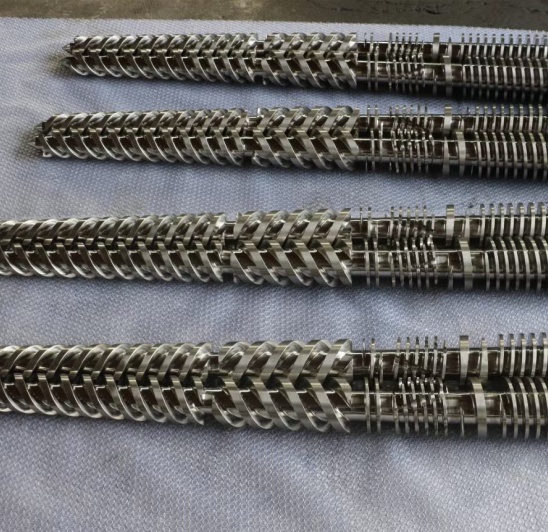
Why Tight Screw-Barrel Clearance and Tolerances Increase Manufacturing Cost
Higher precision usually requires additional machining, grinding, measurement, and correction. Bore accuracy, screw-barrel clearance, straightness, concentricity, and surface finish affect whether the screw pair runs smoothly inside the barrel. Poor fit can cause unstable operation, contact risk, heat problems, or premature wear. A low machining quote may therefore represent a different specification from one including precision grinding, bore honing, matching, and final verification.
How Inspection and Traceability Affect the Final Twin Screw and Barrel Quote
Inspection separates a bare machining quote from a controlled manufacturing specification. Coordinate-measuring equipment, internal-diameter gauges, hardness testers, and material inspection can support checks of fit clearance, concentricity, surface hardness, dimensional accuracy, mating, and smooth rotation. Ask whether the quotation includes material records, treatment records, dimensional reports, hardness information, drawing confirmation, and the inspection basis. The screw and barrel product range can be reviewed alongside that specification, not instead of it.
Order Quantity, Lead Time, and Delivery Requirements
Why One-Off Replacement Orders Can Cost Differently from Repeat Production
One-off replacement work may include machine setup, programming, engineering confirmation, tooling or fixture setup, and drawing review that can be spread across repeat production. An approved drawing and known process route may therefore produce a different quote from a first-time replacement. Batch quantity also affects material preparation, inspection planning, scheduling, and packaging efficiency.
How Urgent Production and Delivery Requirements Can Affect Cost
Emergency replacement work can affect production scheduling, overtime planning, packaging, transport coordination, and other delivery requirements. Final cost depends on destination, component dimensions, transport mode, and the requested delivery arrangement, so freight should not be assumed from a general quote. CHUANGRI SCREW uses anti-rust oil, film wrapping, and wooden boxes for transport packaging; buyers should confirm what packaging and documentation are included.
How to Compare Twin Screw and Barrel Price by Total Cost of Ownership
|
Price comparison |
Low initial-cost option |
Higher-spec option |
|
Initial purchase price |
Lower |
Higher |
|
Wear resistance |
Depends on specification |
Can be improved for abrasive duty |
|
Replacement frequency |
May be higher if mismatched |
Potentially lower when properly matched |
|
Downtime exposure |
Higher with premature wear |
Lower if service life improves |
|
Cost per operating hour |
Can become higher |
May become lower |
Do not ask only, “Which Twin Screw and Barrel is cheaper?” Ask why one quotation is higher and whether it solves a real production requirement. A higher initial price can be reasonable when it includes the material, geometry, process route, inspection evidence, and delivery controls that reduce mismatch or downtime risk. We complete manufacturing processes in-house, which helps control cost and supply-chain expense, but buyers should still compare each quotation line by line.
FAQ
Q: Why does Twin Screw and Barrel price vary so much between manufacturers?
A: Prices vary because manufacturers may quote different sizes, materials, wear treatments, geometry, machining tolerances, inspection packages, quantities, and delivery requirements. Diameter and length alone are not enough for a fair comparison.
Q: Does a bimetallic Twin Screw and Barrel cost more than a nitrided Twin Screw and Barrel?
A: It can cost more when the bimetallic route requires additional alloy material, casting or welding, post-treatment machining, and inspection. The right choice depends on the resin, filler, corrosion exposure, temperature, wear location, and wear mechanism.
Q: How do size and L/D ratio affect Twin Screw and Barrel price?
A: Larger diameter generally requires more raw steel, while greater length and a higher L/D ratio can add machining, handling, grinding, and inspection work. The final price still depends on the geometry and machine-specific dimensions.
Q: Does custom Twin Screw and Barrel design increase the price?
A: It can. Verified drawings may reduce engineering work, while reverse engineering, worn-sample measurement, application redesign, special flight geometry, or vented sections can add design, programming, tooling, and machining requirements.
Q: What information is needed to get an accurate Twin Screw and Barrel price?
A: Provide the machine model, drawings or sample dimensions, screw diameter and length, L/D ratio, resin, filler and recycled content, target output, screw speed, product or die requirements, wear history, quantity, delivery target, and required inspection documents.

 consult
 WHATSAPP
 leave message
 top
top