
Injection Plasticizing Barrel: How Bore Wear Affects Recovery Time and Shot Consistency
Related news
-
Recycled PE Film Extrusion: Screw Causes of Gels, Odor, and Unstable Output
-
How PCR Content Changes Extruder Screw Torque, Melt Pressure, and Wear
-
Counter-Rotating Twin Screw Barrels: Process Fit, Flow Behavior, and Selection Limits
-
Common Materials for Food Extruder Barrels and How to Choose Them in 2026

Injection Plasticizing Barrel: How Bore Wear Affects Recovery Time and Shot Consistency


An injection plasticizing barrel can look serviceable from the outside while its bore geometry is already changing the process. The useful diagnostic question is not simply whether the barrel is worn. It is whether measured bore wear has increased screw-to-barrel clearance enough to reduce effective plasticizing output and make each prepared shot less repeatable.
How Injection Plasticizing Barrel Bore Wear Changes Screw-to-Barrel Clearance
How Barrel ID Wear Increases Running Clearance
Barrel wear increases the bore inside diameter, while screw wear reduces the flight outside diameter. Either change increases diametrical clearance:
Diametrical clearance = barrel bore ID − screw flight OD
The dimensions must be compared at matching axial positions. A new or accepted baseline is more useful than a generic replacement limit because screw diameter, resin, pressure profile, and equipment design differ.
How Uneven Barrel Bore Wear Creates Localized Clearance Changes
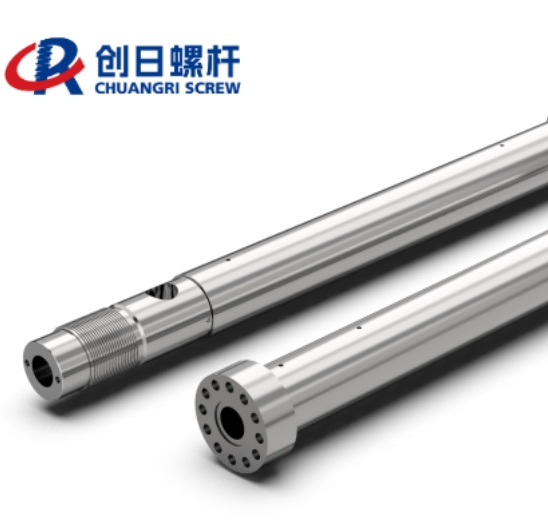
Wear is rarely a perfectly uniform diameter increase. Tapered wear, ovality, local bore enlargement, and one-sided wear can create a large leakage path in one region while an average ID still appears acceptable. Measure in more than one angular direction and along the working length. Matching those readings with screw flight OD reveals the positions that actually control the plasticizing condition.
How Increased Screw-to-Barrel Clearance Allows Melt Backflow
The flight tip normally limits leakage between adjacent screw channels. As clearance grows, more melt can cross the flight tip or move backward instead of remaining in the intended forward path. The screw can rotate at the same rpm while delivering less effective melt volume per revolution. This clearance–backflow–output chain is the mechanical link between injection molding barrel wear and process symptoms.
Why Barrel Bore Wear Increases Plasticizing Recovery Time
How Melt Backflow Reduces Plasticizing Output per Screw Revolution
Recovery ends only after the screw has accumulated the required shot. When leakage reduces effective forward pumping, each revolution contributes less usable melt. The machine therefore needs more revolutions, or more time, to reach the same screw-back position. This is why long screw recovery time in injection molding should be evaluated as output per revolution, not only as elapsed seconds.
Why Higher Screw RPM Can Temporarily Hide Barrel Bore Wear
Increasing rpm can shorten the displayed recovery time, but it does not restore bore geometry. A useful warning sign is that rpm rises while recovery does not improve proportionally. The compensation may also increase shear heating and accelerate component wear. Record both rpm and recovery time; otherwise the machine can appear stable while mechanical efficiency continues to decline.
How to Compare Recovery Time Under the Same Processing Conditions
Compare trends using the same resin or qualified lot, shot size, screw rpm, back pressure, and barrel-temperature profile. Keep machine sequencing consistent and note whether recovery overlaps cooling. One slow cycle may reflect a feed interruption or temperature disturbance. A gradual increase across comparable production runs is stronger evidence of a persistent plasticizing problem.
How Barrel ID Wear Reduces Shot-to-Shot Consistency
How Backflow Changes Melt Volume During Screw Recovery
If leakage varies with screw position, pressure, temperature, or local bore geometry, melt accumulation becomes less repeatable. The nominal screw-back position may be the same, but the prepared melt volume and density can vary. That is the first connection between an injection plasticizing barrel problem and injection molding shot consistency.
How Plasticizing Instability Causes Cushion and Shot-Weight Variation
Less repeatable shot preparation can appear as cushion movement and shot-weight variation. However, these symptoms are not exclusive to the barrel. Feed inconsistency, resin viscosity, temperature control, and check-ring leakage can produce similar signals. Use cushion and weight as trend data, then confirm the mechanical condition with measurements.
How Barrel Wear Can Change Melt Temperature and Melt Consistency
Operators often compensate for slow recovery with higher rpm or back pressure. Those changes alter shear history, residence time, and actual melt temperature even if heater setpoints remain unchanged. Plasticizing consistency should therefore be checked with an actual melt-temperature method appropriate to the plant, together with recovery time, rpm, back pressure, cushion, and shot weight.
Barrel Wear, Screw Wear, or Check-Ring Leakage: Which One Is Causing the Problem?
Signs That Point More Strongly to Injection Plasticizing Barrel Wear
Barrel wear becomes more likely when recovery time increases gradually, output per revolution falls, and direct inspection shows barrel ID growth, ovality, or localized enlargement. A detailed screw and barrel wear measurement guide can support the inspection plan, but the machine’s original or accepted dimensions remain the comparison basis.
Signs That Point More Strongly to Screw Wear
Screw wear is supported by reduced flight OD, rounded flight edges, scoring, coating loss, or conveying decline concentrated in specific zones. Because screw OD loss and barrel ID growth both increase clearance, measuring only one component can misassign the cause. Inspect the pair at matching positions.
Signs That Point More Strongly to Check-Ring Leakage
Check-ring leakage is associated more directly with backflow during injection or packing. Cushion instability and shot-weight variation may be prominent even when recovery remains stable. A check-ring fault can coexist with barrel wear, so a repeatability problem should not be labeled bore wear without recovery trends and dimensional evidence.
Which Process Data Confirm Injection Plasticizing Barrel Bore Wear?
Trend Recovery Time, Screw RPM, Back Pressure, and Shot Weight Together
Do not interpret recovery time alone.
|
Data trend |
Diagnostic meaning |
|
Recovery time rises while rpm is unchanged |
Plasticizing efficiency may be declining |
|
RPM rises but recovery remains slow |
Mechanical efficiency loss becomes more likely |
|
Recovery is stable but shot weight is unstable |
Check ring, resin, or process variables deserve priority |
|
Recovery and shot consistency deteriorate gradually |
Screw and barrel inspection is justified |
Measure Barrel ID and Screw Flight OD at Matching Positions
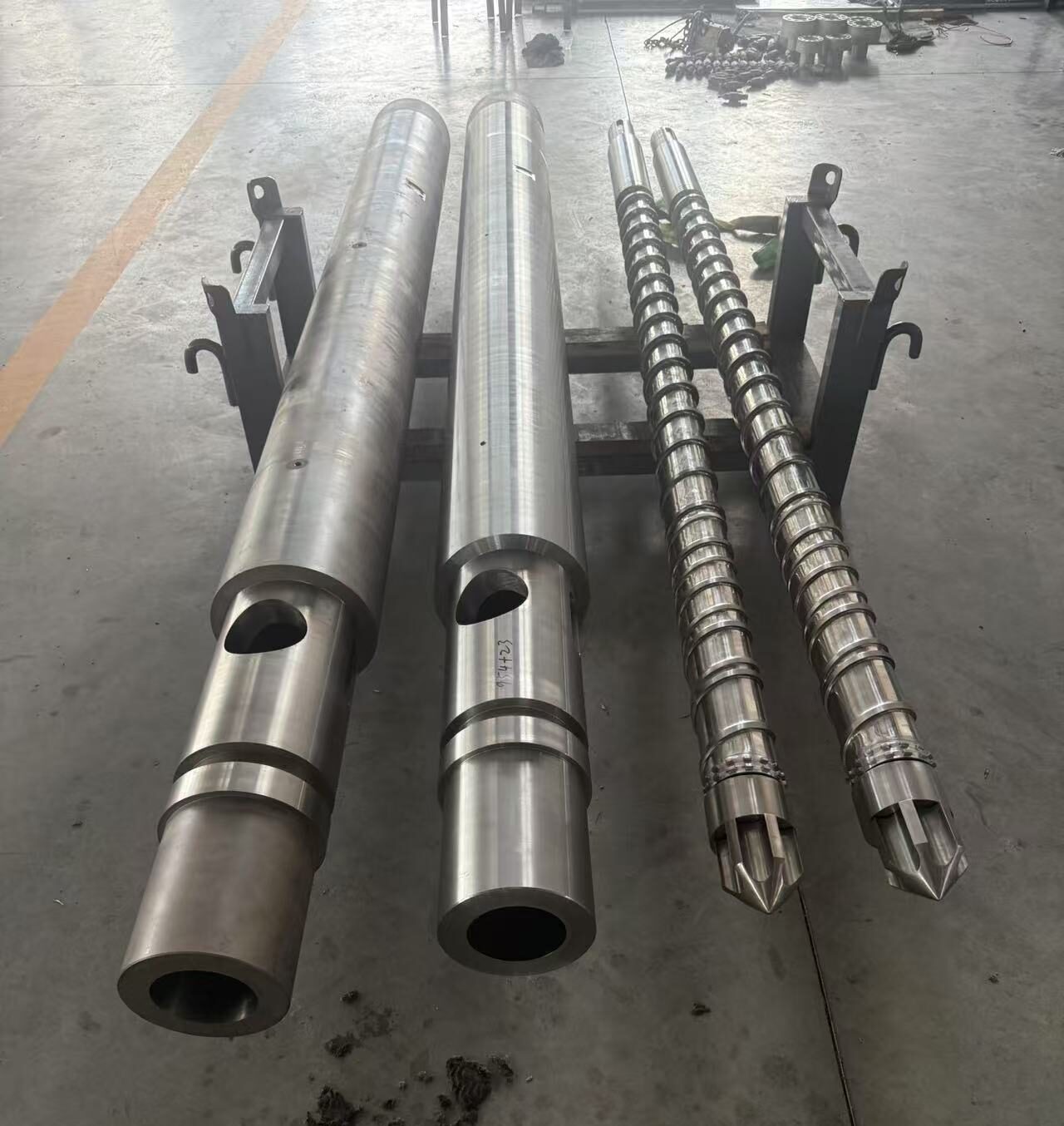
Clean and stabilize the components before measurement, then record bore ID and flight OD along the plasticizing length. Include angular bore readings where ovality is possible. CHUANGRI SCREW documents internal-diameter gauges, coordinate measuring equipment, and checks for fit clearance, concentricity, hardness, and dimensional accuracy in its barrel inspection process.
Correlate Screw-to-Barrel Clearance with Recovery and Shot Consistency
The strongest diagnosis combines process data with dimensional data. If recovery time rises under controlled conditions and the corresponding bore positions show increased ID and clearance, barrel wear is a credible cause. If dimensions remain near baseline, investigate the check ring, feed, resin, temperature control, drive, and measurement method before ordering hardware.
How to Restore Stable Plasticizing After Barrel Bore Wear Is Confirmed
Determine Whether the Barrel, Screw, or Both Need Correction
Treat the screw and barrel as a matched pair. Installing a new barrel around a significantly worn screw can leave excessive clearance, while replacing only the screw may not correct an enlarged or oval bore. The repair decision should be based on matching measurements and the required operating fit.
Restore Bore Geometry, Surface Condition, and Screw-to-Barrel Fit
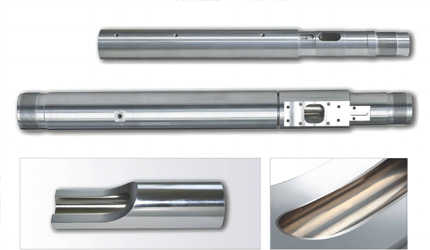
CHUANGRI SCREW supplies a CNC-machined injection molding barrel and documents bore honing, precision grinding, dimensional inspection, and fit verification. Our correction objective is not merely a smaller average ID; it is controlled bore geometry, surface condition, concentricity, and running clearance suited to the mating screw and customer drawing.
Match Barrel Wear Resistance to the Processed Resin
Restore geometry first, then select wear protection. Nitriding can suit moderate conditions, while a bimetallic barrel is relevant to more abrasive or combined abrasive-corrosive systems. Glass fiber, mineral filler, corrosion risk, resin temperature, and the observed wear pattern should guide the choice rather than hardness alone.
FAQ
Q: Can injection plasticizing barrel wear cause long screw recovery time?
A: Yes. Increased clearance can allow more melt backflow, reducing effective plasticizing output per revolution and extending the time required to prepare the same shot.
Q: How does screw-to-barrel clearance affect shot-to-shot consistency?
A: Excessive or uneven clearance can make melt accumulation less repeatable, contributing to cushion and shot-weight variation. Dimensional measurements are needed because other process faults can cause the same symptoms.
Q: Can injection plasticizing barrel wear cause melt backflow?
A: Yes. Bore enlargement increases the leakage path across the screw flight tip, although the amount depends on local geometry, pressure, melt properties, and screw condition.
Q: How can barrel ID wear be separated from check-ring leakage?
A: Compare recovery trends with injection and packing behavior. Barrel wear requires bore measurements; check-ring leakage is more directly indicated by injection backflow, cushion instability, and shot-weight inconsistency.
Q: How is injection plasticizing barrel bore wear measured?
A: Measure barrel ID along the working length and in multiple angular directions where needed, then subtract the screw flight OD measured at matching axial positions and compare the clearance with the accepted baseline.

 consult
 WHATSAPP
 leave message
 top
top