
Best Injection Molding Screw and Barrel for Engineering Plastics
Related news
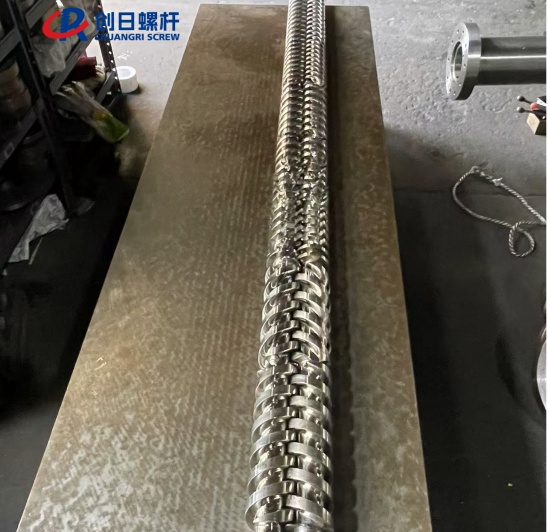
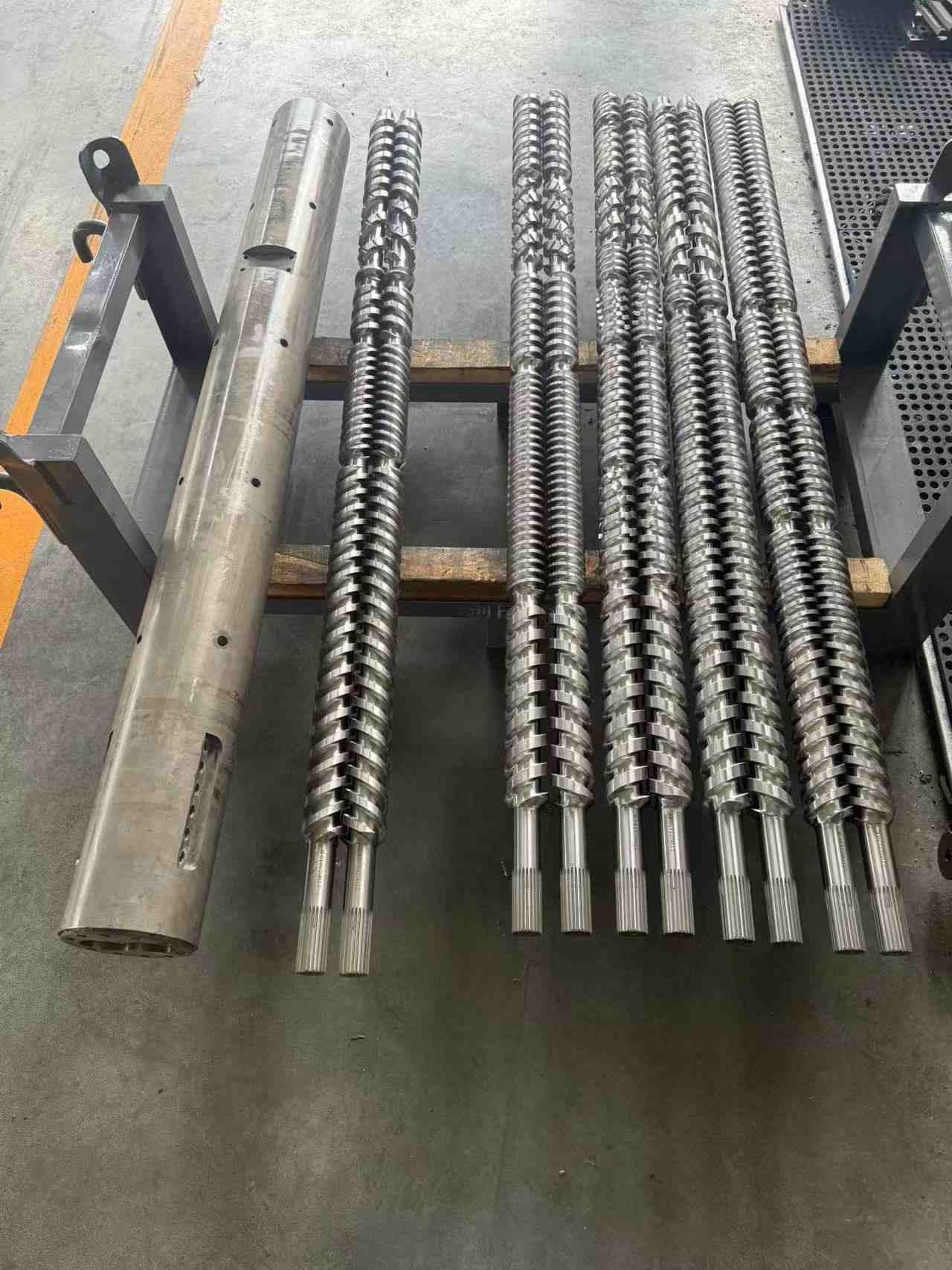
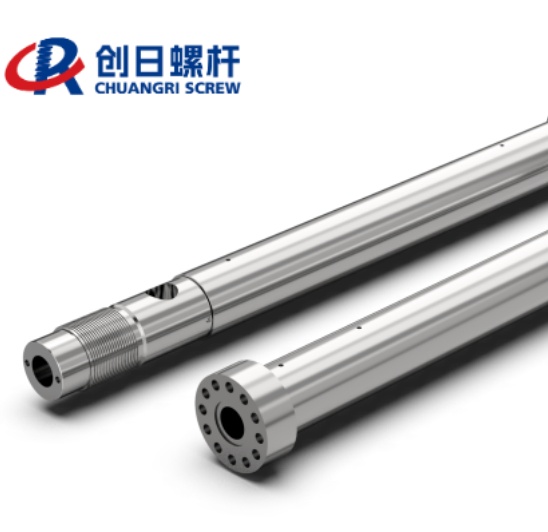
Best Injection Molding Screw and Barrel for Engineering Plastics


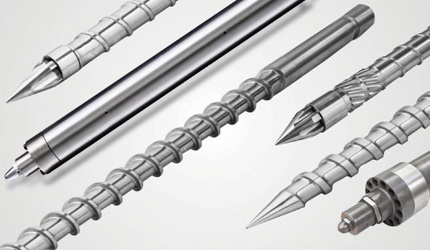
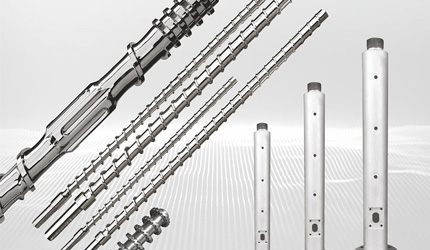
The best Injection Molding Screw and Barrel for engineering plastics is selected from resin, filler, temperature, wear mechanism, machine configuration, and production cycle. Nitrided construction may suit standard ABS, PC, or basic PA applications with moderate wear. A bimetallic screw barrel may suit glass fiber, mineral filler, or corrosion. High glass-fiber content or severe wear may justify a solid-carbide solution after inspection.
PC, PA, POM, PET, and PPS can involve high temperature, high viscosity, narrow processing windows, glass-fiber reinforcement, or abrasive additives. These conditions make screw geometry, residence time, shear control, running clearance, and surface protection important.
Why Engineering Plastics Require Specialized Injection Molding Screw and Barrel
Processing Challenges of Engineering Plastics in Injection Molding
Compared with commodity resins, engineering plastics demand tighter thermal control and plasticizing stability. High temperature, viscosity, and shear sensitivity make changes affect melt quality.
PC may require heat-history and shear control. PA can be unfilled or reinforced, with different flow and wear behavior. POM is sensitive to poor thermal control, while PET and PPS may require high-temperature-resistant designs. An Engineering Plastic Injection Molding Screw should balance melting, mixing, and shear.
How Engineering Plastics Accelerate Screw and Barrel Wear
Glass fiber and mineral fillers can abrade screw flights and the barrel bore. Additives or degraded resin can create corrosion. Wear is also affected by temperature, pressure, alignment, and fit.
If the barrel inside diameter increases or the screw-flight outside diameter decreases, running clearance increases and effective conveying can fall. Recovery time, cushion, shot weight, and pressure may become less stable, but one reading cannot prove a root cause. Measure wear at matched positions against an approved baseline.
A standard screw and barrel is therefore not universal. Geometry, protection, concentricity, and compatibility must be reviewed together.
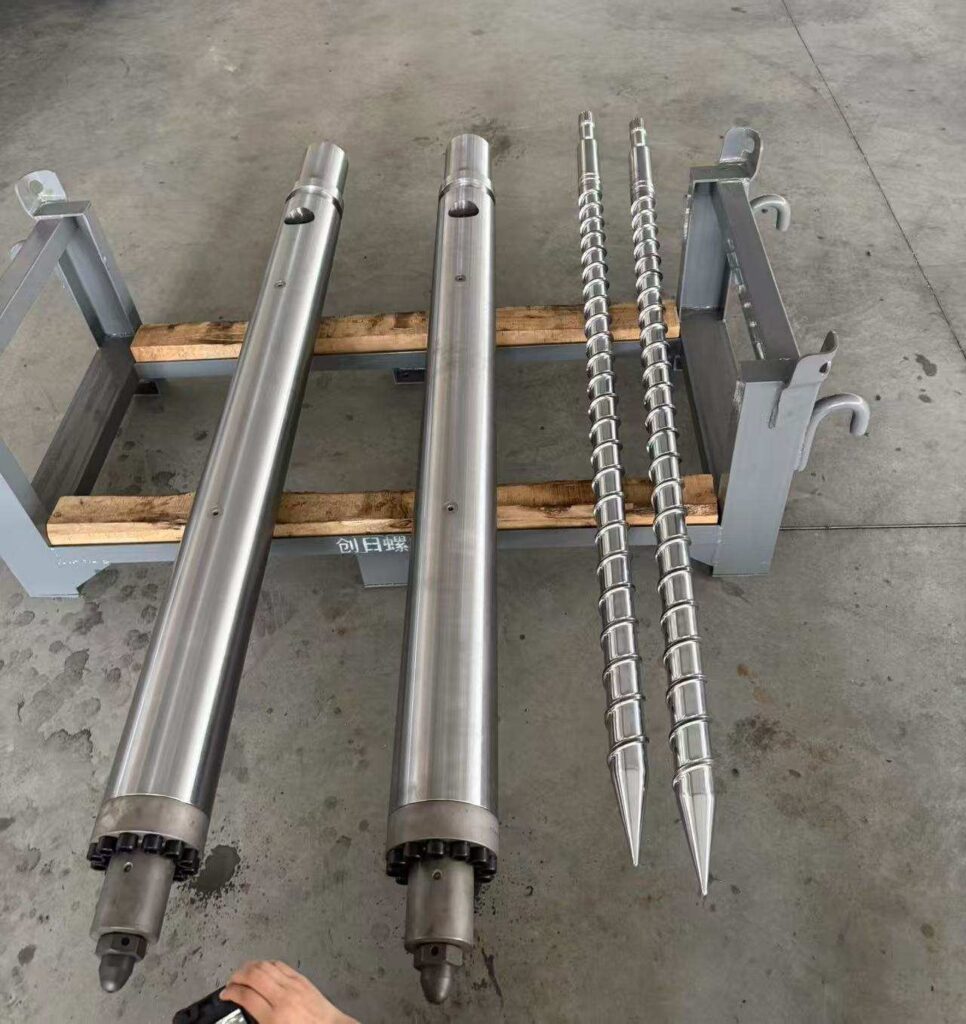
Key Injection Molding Screw Design Factors for Engineering Plastics
Feed, Compression, and Metering Zones for Stable Plasticizing
A three-zone screw uses a feed zone for solid-pellet conveying, a compression zone for melting, and a metering zone for homogenization and delivery. These zones must work as one system.
Inconsistent feeding can create surging, while excessive compression or aggressive shear can overheat a sensitive resin. Insufficient compression can leave unmelted material. Stable plasticizing depends on screw speed, back pressure, barrel temperature, viscosity, and shot size.
L/D Ratio and Compression Ratio Selection for Engineering Plastic Processing
L/D ratio and compression ratio should be selected with the resin and machine. More effective length can support melting but may increase residence time. Higher compression can improve melting while increasing shear and pressure demand.
Balance residence time, shear control, melt uniformity, and plasticizing efficiency within machine limits. Performance can change with grade, filler loading, speed, or shot size.
Mixing and Barrier Screw Design for Improved Melt Quality
Barrier and mixing sections can improve melting, dispersion, and temperature uniformity for glass fiber materials, filled plastics, and precision parts. More mixing is not automatically better: aggressive mixing can increase shear heating, shorten fibers, or accelerate wear. A Glass Fiber Reinforced Plastic Screw should balance dispersion and fiber retention.
Choosing the Best Injection Molding Screw and Barrel Material for Engineering Plastics
Material selection should follow the dominant risk: resin temperature, filler content, corrosion exposure, wear location, machine condition, and maintenance requirements. The barrel bore and matched screw must be considered with the surface treatment.
Nitrided Injection Molding Screw and Barrel for Standard Engineering Plastics
For moderate wear, a nitrided screw and barrel can be considered. 38CrMoAlA may be used as a general barrel-material example for standard injection molding, subject to confirmation against the resin, machine configuration, and operating environment. Nitriding is a surface treatment, so its suitability depends on the wear mechanism.
This direction may suit standard ABS, PC, and basic PA work without severe abrasive or corrosive exposure. It is not a substitute for bimetallic or carbide protection in heavily filled applications. Check surface hardness, bore geometry, concentricity, and fit after treatment.
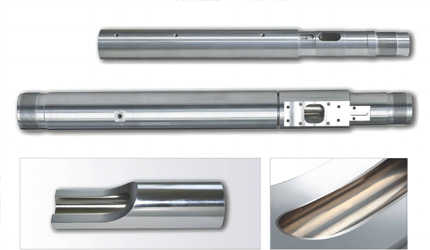
For matched technical review, CHUANGRI SCREW documents CNC-machined injection molding barrels and nitriding-related treatment options.
Bimetallic Injection Molding Screw and Barrel for Glass Filled Plastics
When glass fiber or mineral filler creates stronger abrasion, a Bimetallic Injection Molding Screw and Barrel may be considered. It can also suit combined abrasive-corrosive exposure. The documented concept uses a nickel-alloy matrix with dispersed tungsten-carbide particles.
PA + GF and PC + GF deserve this review, but the resin name alone is insufficient. Filler loading, additives, wear location, screw design, and barrel condition determine the specification.
Solid Carbide Injection Molding Screw for Extreme Wear Applications
Solid carbide protection may deserve evaluation for high glass-fiber content, high-performance polymers, or severe wear. Base the upgrade on measured wear, formulation, operating conditions, structural integrity, and matched-barrel condition.
For these cases, a solid carbide injection molding screw is an application option, not an automatic answer. Fit, alignment, geometry, and the rest of the plasticizing unit still require confirmation.
How to Select Injection Molding Screw and Barrel Based on Engineering Plastic Applications
Recommended Screw Barrel Solutions for Different Engineering Plastics
This table is a starting framework for Injection Screw Barrel Material Selection.
|
Plastic |
Recommended solution |
|
PC |
Bimetallic screw barrel when reinforcement, abrasion, or corrosion is significant; otherwise review nitriding |
|
PA + Glass Fiber |
Carbide or bimetallic solution based on fiber content and measured wear |
|
POM |
Wear-resistant alloy with controlled shear and residence time |
|
PET |
High-temperature-resistant design with controlled residence time |
|
PPS |
Advanced alloy solution when temperature, filler, corrosion, and wear demand it |
Matching Screw Barrel Design with Machine and Production Requirements
Collect the machine model, screw diameter, effective length, injection volume, nozzle interface, heating configuration, cycle, drawings, and wear records. A larger or longer screw is not automatically better.
The design should match shot size, recovery, injection speed, back pressure, drive torque, heating capacity, and resin behavior. Specify the matched pair as one system when wear has changed clearance.
When a standard selection does not match the machine, we support different brands, models, and sizes through measurement-based customized manufacturing at CHUANGRI SCREW. See the custom plastic machinery components range.
Manufacturing Quality Factors Behind High Performance Injection Molding Screw and Barrel
Precision Machining and Dimensional Control
Performance depends on dimensional relationships, not one polished surface. CNC turning, thread milling, grinding, polishing, honing, and precision grinding address functional geometry and barrel-bore condition.
Inspection should cover the bore, screw flights, interfaces, concentricity, and fit. Check running clearance at matched positions because local wear can be missed by one average measurement. Coordinate-measuring equipment, inside-diameter gauges, and hardness testers can support these checks. A matched injection molding barrel should be evaluated with its intended screw and machine interfaces.
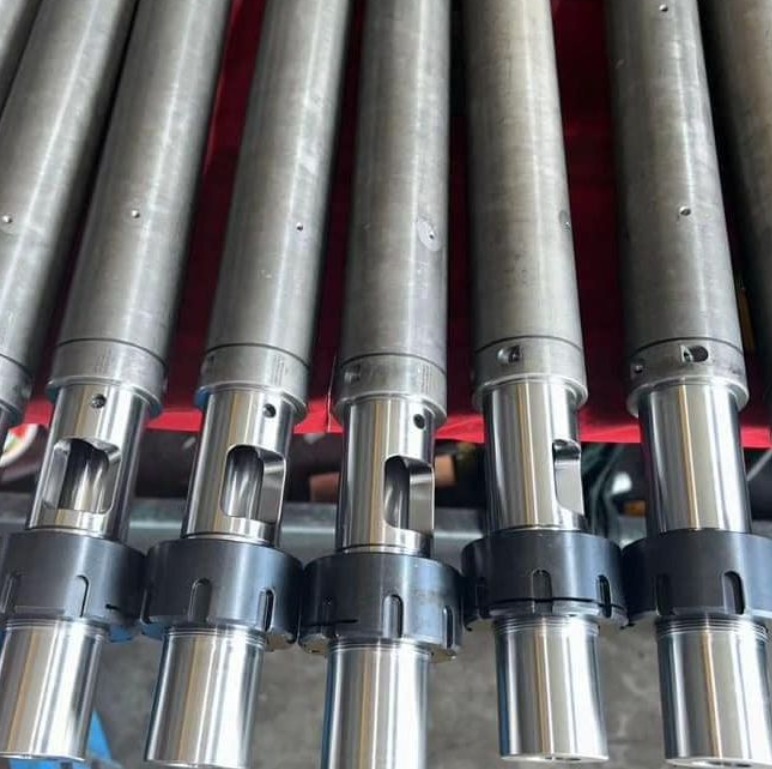
Heat Treatment and Surface Protection Process
The route includes raw material inspection, machining, treatment, and final inspection. Nitriding can suit moderate wear. Bimetallic lining, alloy and tungsten-carbide protection require review of resin, filler, temperature, and wear location.
Final acceptance should confirm dimensions, hardness where applicable, bore condition, concentricity, running clearance, and smooth rotation. The objective is to restore required geometry, not simply add metal to a worn location.
FAQ
Q: What is the best Injection Molding Screw and Barrel for engineering plastics?
There is no universal best option. Nitriding may suit moderate wear, bimetallic construction may suit glass-filled or combined abrasive-corrosive materials, and solid carbide may suit severe wear. Resin, filler, geometry, and inspection results determine the choice.
Q: How does an Injection Molding Screw and Barrel improve engineering plastic processing performance?
A matched system supports consistent melting, conveying, mixing, heat history, and running clearance. Geometry can improve melt uniformity, while protection addresses abrasion or corrosion.
Q: Which Injection Molding Screw and Barrel is suitable for glass fiber reinforced plastics?
A bimetallic solution is a candidate when glass fiber creates significant abrasion. Carbide protection may suit higher fiber content or severe localized wear. Check fiber percentage, resin grade, and barrel condition.
Q: When should an Injection Molding Screw and Barrel be replaced for engineering plastic production?
Consider replacement when matched measurements show bore enlargement, reduced flight diameter, clearance growth, surface damage, poor concentricity, or structural defects. Recovery, cushion, shot weight, or pressure trends are signals, not a diagnosis by themselves.
Q: How do I choose the right Injection Molding Screw and Barrel material for high temperature plastics?
Review temperature history, viscosity, filler, additives, cycle, corrosion exposure, and wear mechanism. 38CrMoAlA with nitriding may suit moderate conditions, while bimetallic or advanced alloy protection may suit stronger exposure.

 consult
 WHATSAPP
 leave message
 top
top