

Parallel Twin Screw and Barrel vs. Conical Twin Screw Barrel Which Is Better for Your Production Line
Related news
Parallel Twin Screw and Barrel vs. Conical Twin Screw Barrel Which Is Better for Your Production Line


Start a replacement job with the machine drawing. Start a new-line comparison with the compound and finished product. That difference matters when choosing between a parallel twin screw and barrel and a conical pair: the first job has an existing fit to preserve, while the second leaves room to compare arrangements. Neither geometry wins every application. The useful question is which one suits this line and its production requirements.
What changes between parallel and conical twin screws?
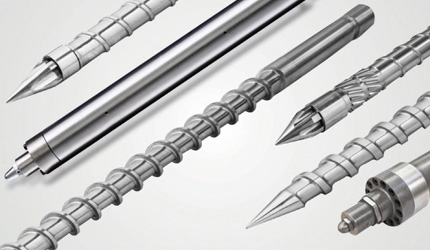
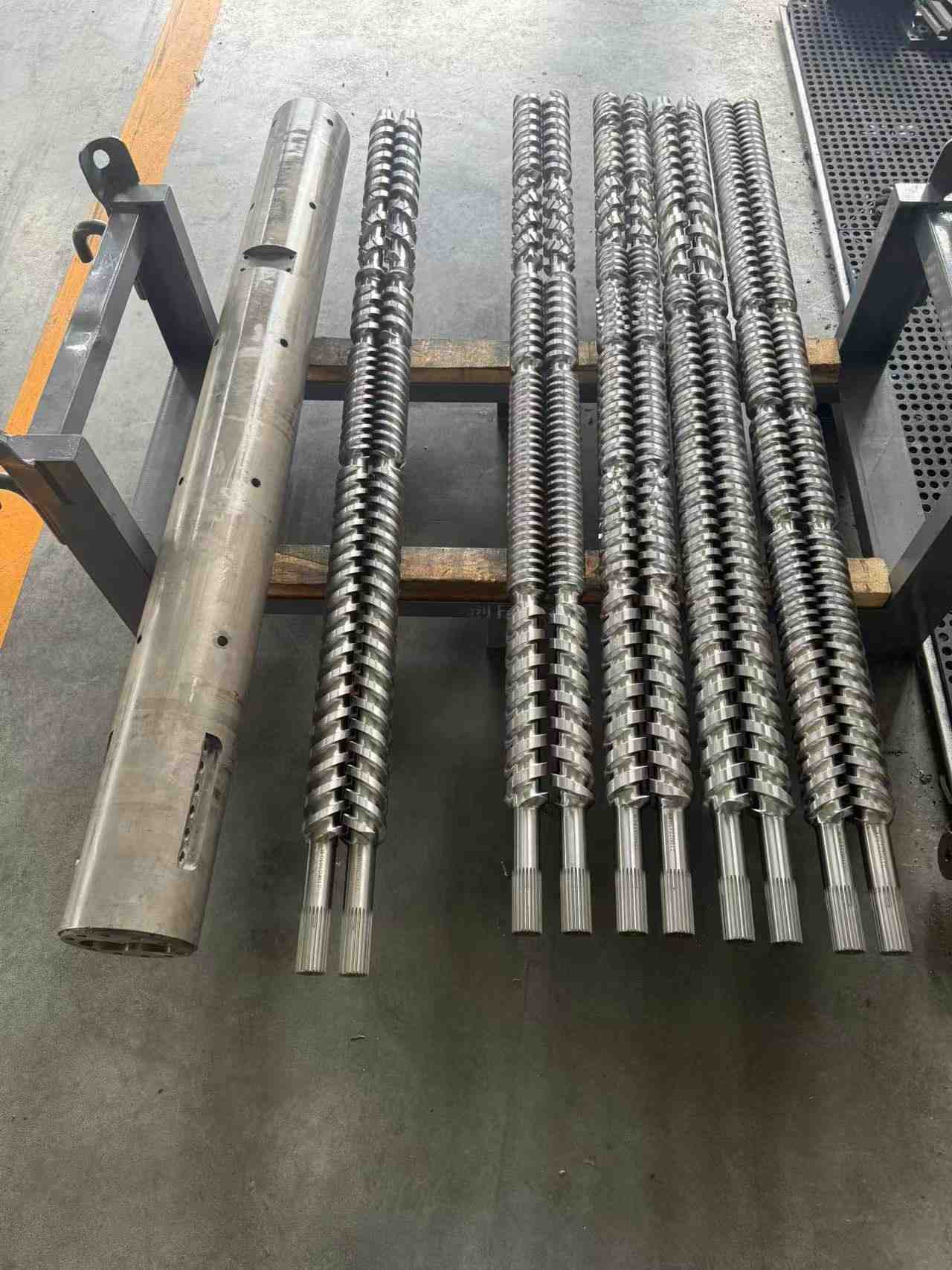
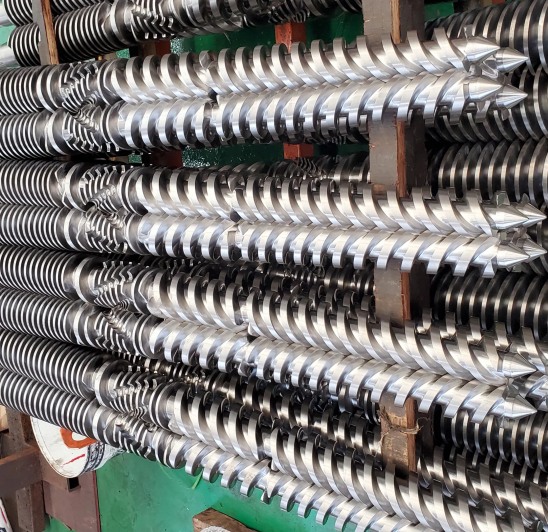
Constant diameter versus tapered geometry
Look along the processing length to distinguish the shapes. On the parallel design, the basic diameter stays the same; on the conical design, it tapers. An output comparison needs more information than that. The drawing describes what fits, and the formulation and production requirement describe what it has to do.
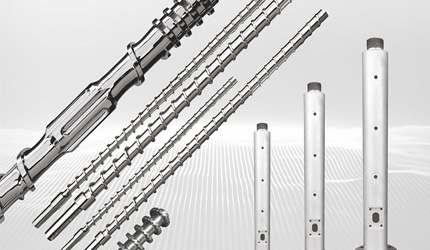
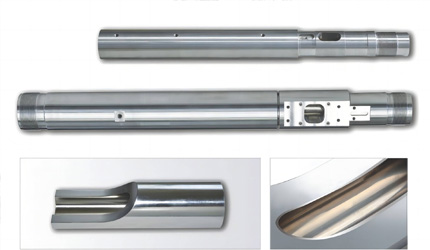
Our parallel twin-screw barrel range includes screw diameter references of Φ45/2–Φ250/2, barrel dimensions of 50–800 mm and L/D of 18–40. Within that range, the compression ratio is designed for the material and product. Finding a nominal size is therefore an early step in the inquiry. The drive connection and barrel mounting still have to be matched to the installed machine, even if its diameter falls comfortably inside the range.
Geometry versus screw rotation
“Counter-rotating” tells the reader how the two screws turn relative to each other. It leaves the shape unresolved. A taper is described as conical, and a constant basic diameter as parallel; those geometry terms are not alternatives to a rotation specification.
For an inquiry, write the rotation and geometry on separate lines and attach the gearbox details. Two offers may both say “counter-rotating” while referring to different shapes. Without the machine drawing, it is easy to compare their prices as though the parts were equivalent. Resolve the arrangement first; otherwise, a comparison of parallel and conical designs begins with two incomplete specifications.
Which geometry fits the material and finished product?
Conical applications in PVC, WPC and SPC processing
PVC, WPC, SPC and related profiles fall within the conical application scope. For a line doing that work, our PVC conical twin-screw barrel belongs in the review. A description such as “PVC profile,” though, is only the beginning of the process brief.
Put the formulation beside the product requirement. Include the filler level, target output, die and temperature-control needs. A change in compound should be visible in the comparison, even when the finished profile looks similar. Asking only whether a screw is “for PVC” skips the conditions that distinguish one production job from another.
Parallel selection around the actual formulation
For the parallel proposal, use the same formulation, filler and output requirement as for the conical proposal. Include the machine and gearbox, the die and the temperature-control requirements. Those are the factors governing selection. Available sizes help narrow the options, but the required diameter cannot explain whether a particular compound and product will suit the proposed arrangement.
Compare the proposals using one material description and one product specification. If one quotation assumes a different filler content or die, resolve that difference before comparing price. The production team can then judge the proposed geometry and compression ratio against the work the line must perform. Neither taper nor constant diameter removes the need for that discussion.
How should output and wear influence the comparison?
Compare useful output at matched operating conditions
An output figure needs a product beside it. Ask whether the quoted rate refers to the required formulation, die and acceptable finished quality. A larger number is of little use if it was obtained on a different job.
During a proposed comparison trial, keep a record of feed rate, screw speed, melt temperature, head pressure and finished samples. Record changes to the die or temperature settings as well. If settings changed midway through the trial, write down when. Otherwise, the final output number loses the conditions that made it possible. On a replacement job, bring the existing production record into the discussion and agree how the new pair will be compared with it.
Separate geometry from wear protection
Wear resistance is another specification, alongside geometry. Bimetallic construction and SKD lining may be considered for demanding wear conditions. Their suitability needs to be assessed against the material and operating conditions rather than inferred from the words “parallel” or “conical.”
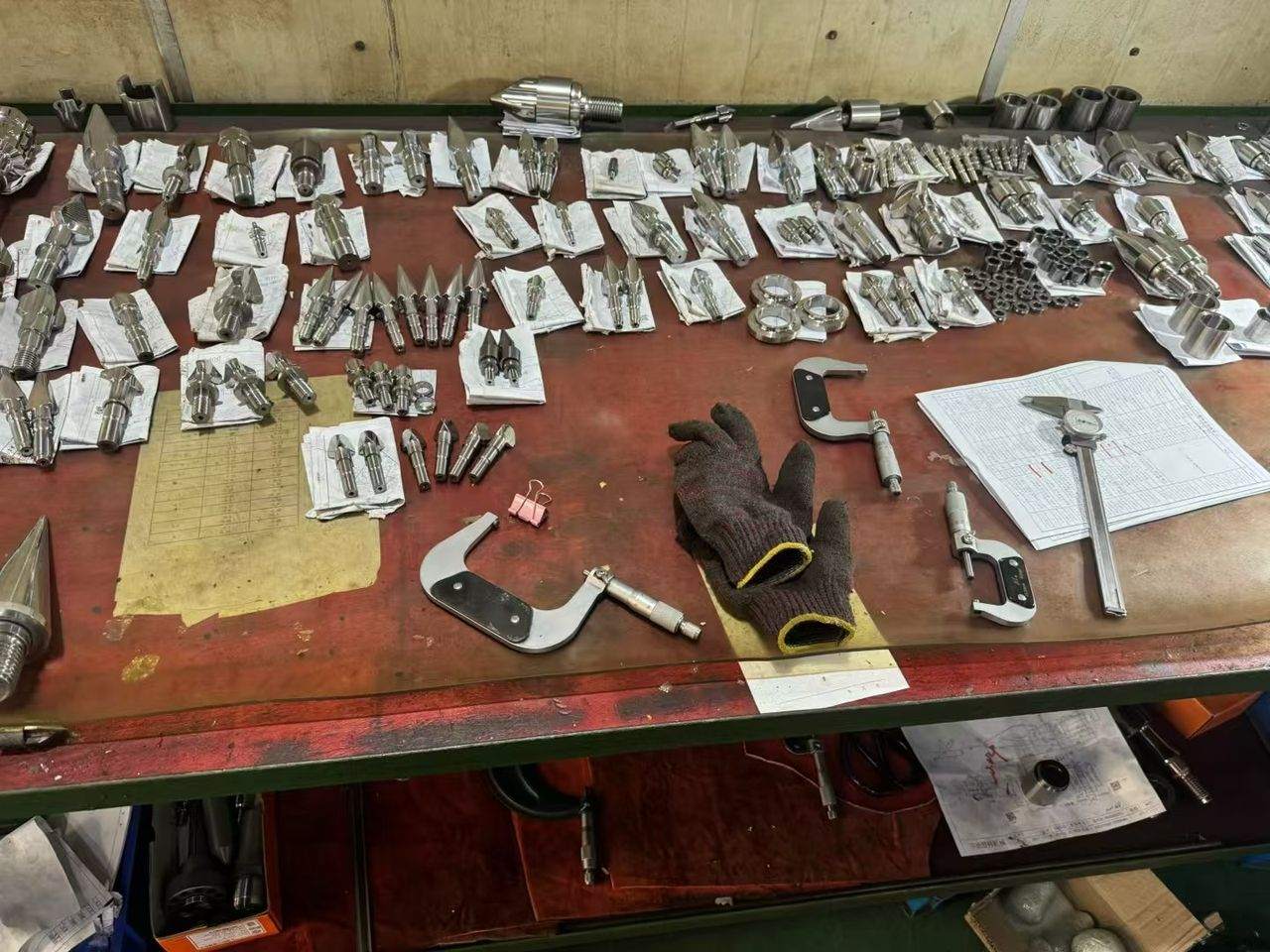
At CHUANGRI SCREW, we use CNC turning, thread milling, grinding and polishing, with nitriding and bimetallic processing among our manufacturing processes. For inspection, we examine clearance and concentricity as well as hardness and dimensions. Ask which of those measurements will be included with the supplied pair. Avoid turning a treatment name into a service-life promise: the requested protection and the dimensional acceptance still need to be stated separately.
What must be confirmed before choosing the replacement pair?
Match the drawing to the installed machine
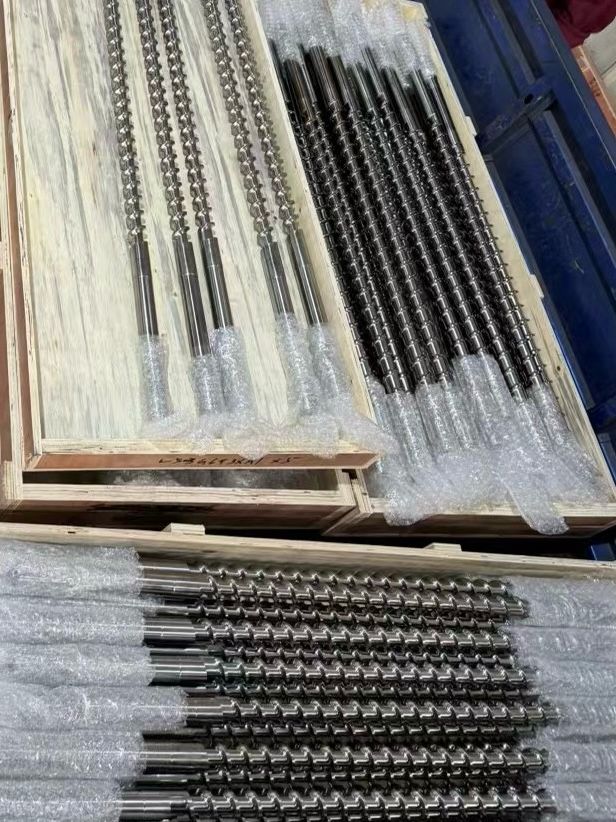
For a replacement, the old machine is the fit reference. Compare the drive ends, barrel mounting, processing length and connections with the approved drawing. Do not assume that a parallel pair can replace a conical pair, or the reverse, merely because both are called twin screws.
Send the machine and gearbox details with the compound, filler, output requirement and die information. State whether the line should return to its existing specification or whether the replacement is intended to change the process. When reviewing twin screw and barrel options, that distinction keeps a dimensional replacement from being confused with a change to the line arrangement.
Agree the dimensions and inspection record
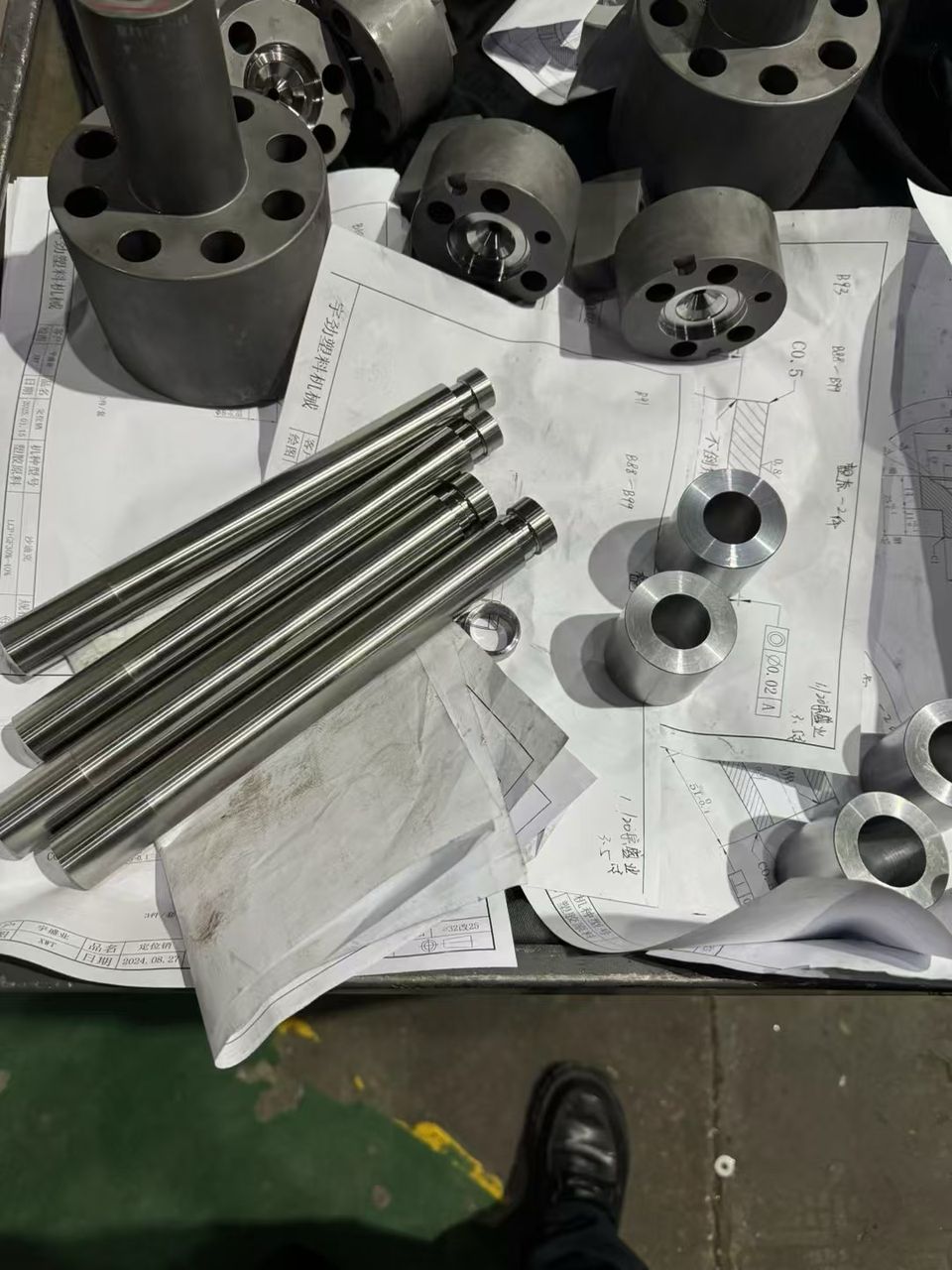
Before machining, agree the drawing revision, material and treatment. Identify which dimensions and clearances will be measured for acceptance. Nominal size is too broad for this purpose; the record must describe the pair being supplied.
Ask for measured values to be recorded against the agreed drawing. Clearance, concentricity, hardness and dimensions belong in that discussion. With those requirements settled, the choice becomes clearer: retain or select the geometry that fits the machine and meets the defined production task. If both remain candidates, use a matched process comparison to resolve the remaining question.
FAQ
Q: Is a parallel twin screw and barrel always better than a conical pair?
A: There is no universal winner. A replacement has to fit the machine; a new design has to suit the compound and product. Compare both proposals on those terms before choosing.
Q: What is the main difference between parallel and conical twin screws?
A: A parallel screw has a consistent basic diameter along its processing length. A conical screw tapers. Rotation direction is a separate characteristic.
Q: Can a conical twin-screw barrel be used for PVC profiles?
A: PVC and related profiles are among conical applications, alongside WPC and SPC. The particular formulation, die and machine still determine the suitable specification.
Q: Can parallel and conical twin-screw barrels be exchanged on the same machine?
A: Only a machine-specific engineering review can settle that. Both parts are twin-screw arrangements, but the name does not establish matching drive ends, mounting or processing dimensions.
Q: What information is needed to choose a twin screw and barrel?
A: Begin with the drawing and gearbox, then add the compound, filler, output target and finished product or die. An existing pair’s measurements and wear condition are also useful for a replacement inquiry.

 consult
 WHATSAPP
 leave message
 top