

Plastic Twin Screw Extruder 2026 Key Factors Affecting Production Efficiency
Related news
Plastic Twin Screw Extruder 2026 Key Factors Affecting Production Efficiency


Higher screw-speeds are only of value if sufficient good product is produced. In order to run at higher speeds, feeding, screw design, heat removal, die strength, and capacity of downstream equipment must all be increased in unison. Start with kg/h at scheduled speed and kwh/kg good. The two are often a bigger constraint than the peak-throughput figure suggests for a 2026 review of a plastic twin screw extruder.
Define Production Efficiency Before Changing Settings
Measure Accepted Output Across the Whole Shift
Divide accepted material by scheduled production hours, including startup scrap, changeovers, cleaning time, etc., as well as any unexpected stops. It’s easy to mask short peak-output runs and then hide losses for the remainder of the shift. Make sure to keep product specifications and sampling rules constant when comparing trials. The faster trial may then simply accept material that prior to that had failed inspection.
Separate Throughput from Energy Performance
Record feed rate, screw speed, torque, die pressure, actual melt temperature, rejects, and electrical consumption on one time base. Define whether the energy meter covers the drive alone or the complete line. For example, 100 kWh divided by 200 good kilograms equals 0.50 kWh/kg. This arithmetic example is a measurement method, not a benchmark or equipment performance claim.
Match the Twin Screw Architecture to the Material
Keep Rotation Direction and Geometry Separate
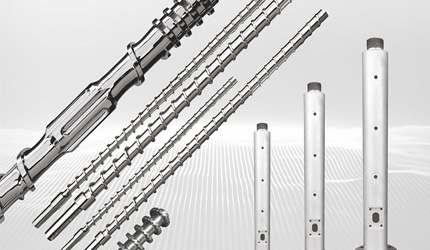
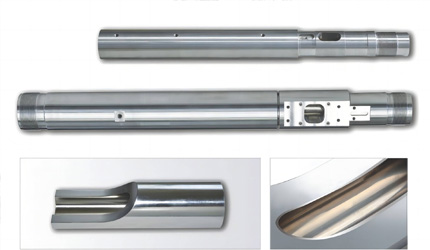
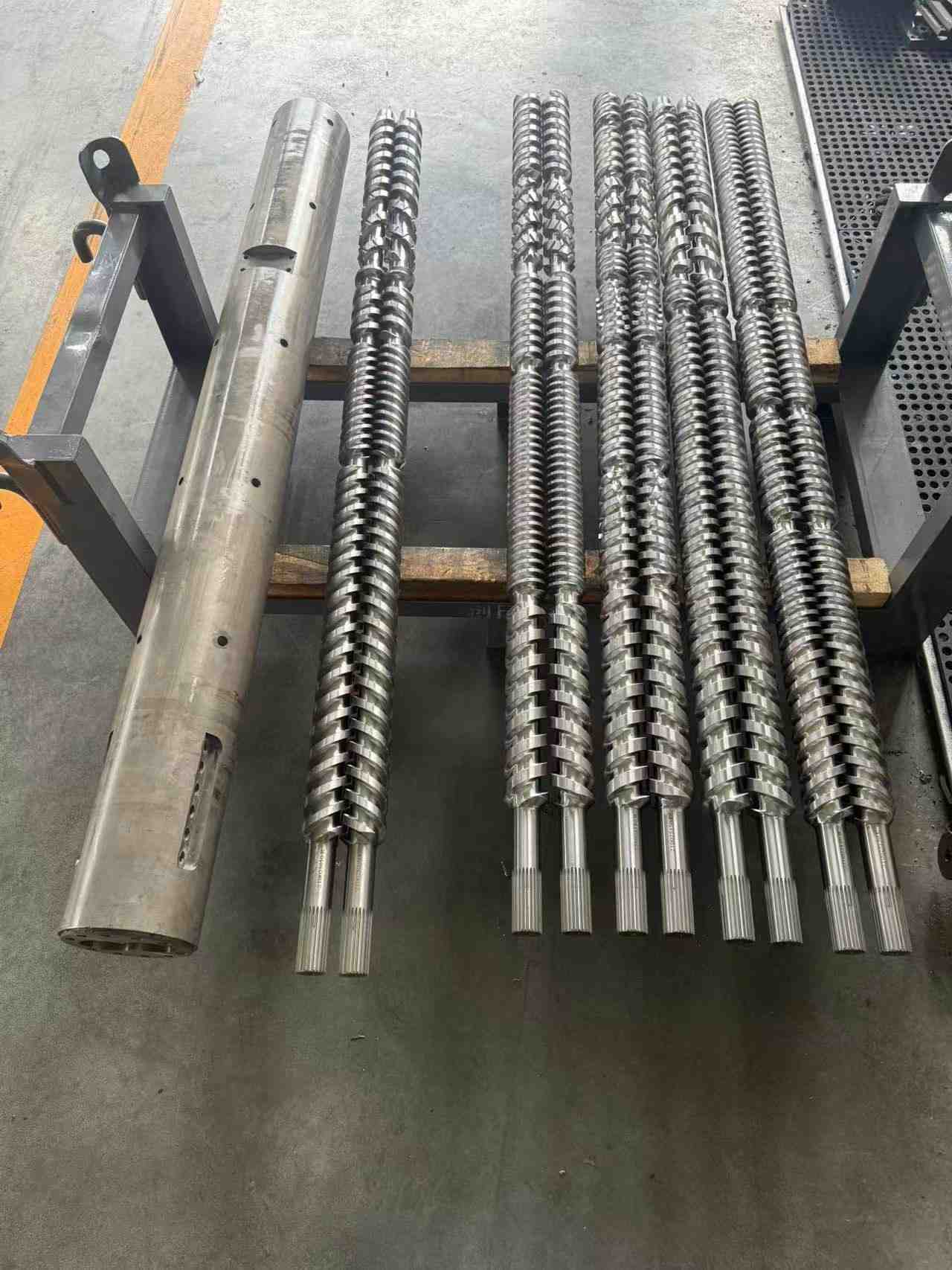
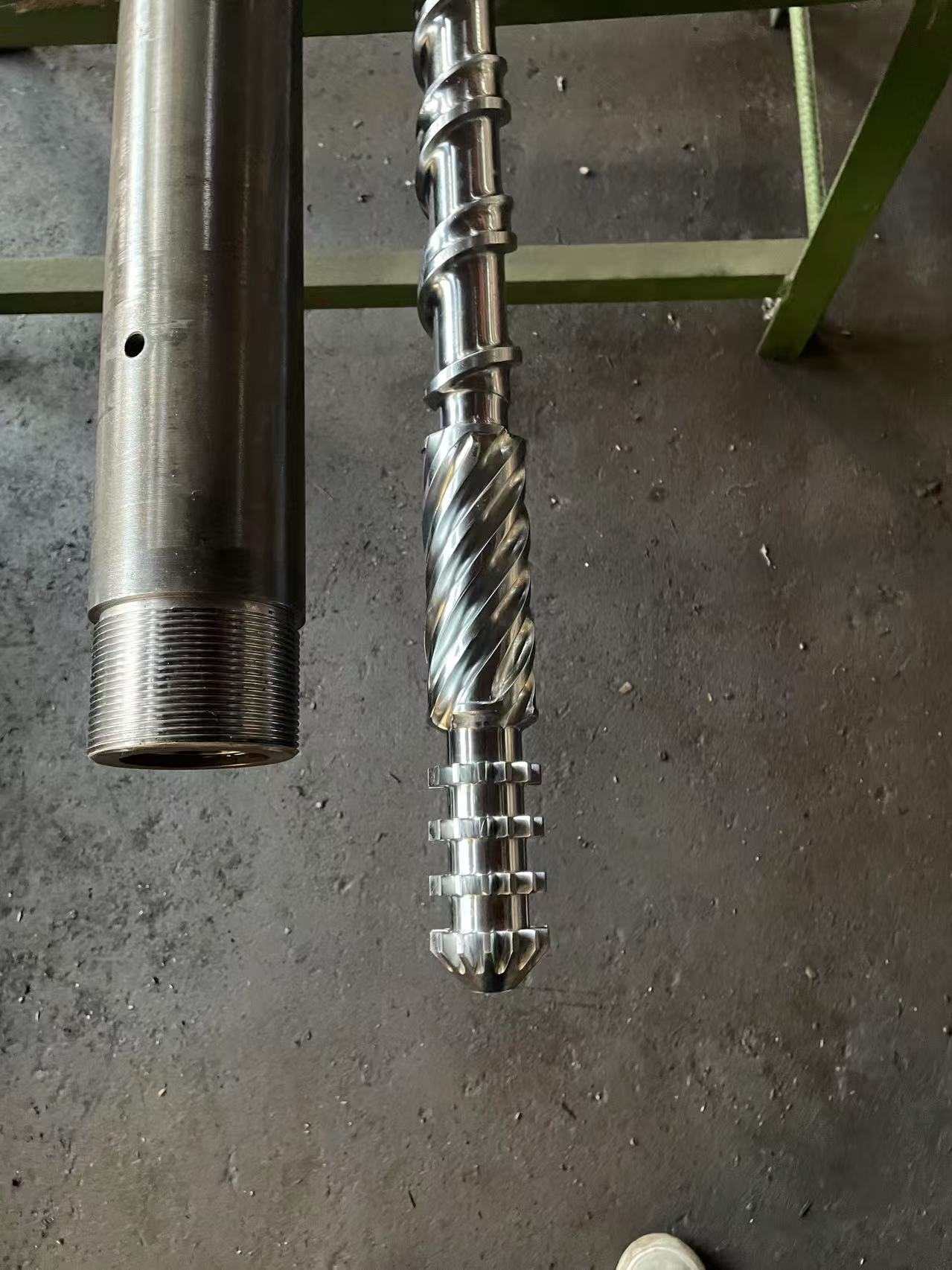
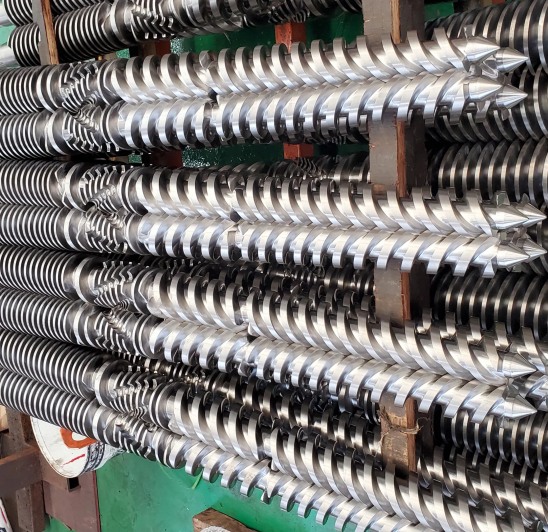
Counter-rotating refers to the relative rotation of the two screws. Conical and parallel refer to geometry. The terms are not interchangeable. The PVC-related conical and parallel configurations of CHUANGRI SCREW must be selected based on the required output, formulation, filler, machine, gearbox, screw geometry, and die. There is no geometry that is universally more efficient than the others. Review the Parallel Twin-Screw Barrel when specifying the component interface, rather than assuming it defines the entire extrusion process.
Specify the Feeding, Melting, and Mixing Work
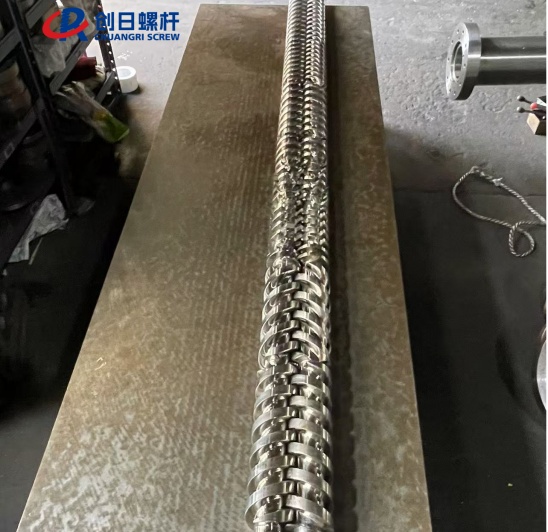
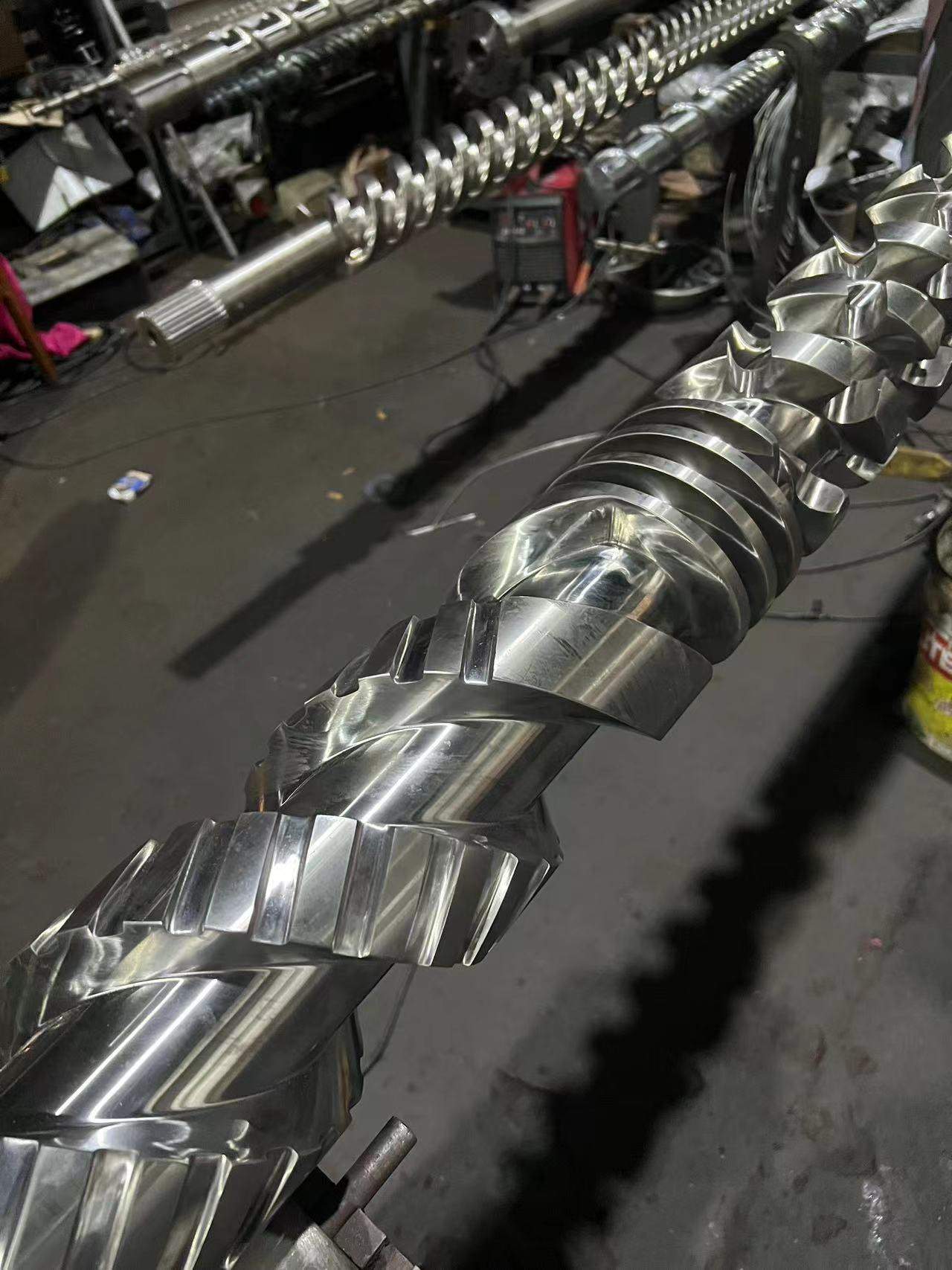
Useful geometry control of feeding, compression, metering, and mixing sections of a screw includes flight profiles, screw roots, channels, surface finish, and exact dimensional relationships. Adding metal to worn areas does not necessarily restore these critical relationships. Differing design objectives include material requiring stronger distribution, more efficient break up of agglomerates, or gentler handling.
Stabilize Feed and Melt Conditions
Check Supply Before Increasing Screw Speed
Watch a feeder refill before adjusting the extruder. Does delivered weight fall, does the hopper bridge, or does bulk density change between batches? Weigh the material delivered over a known interval and compare it with the display. Note the interruption on the process trend. A screw cannot convey material that never reaches its inlet, and more speed may simply leave it less fully fed.
Use the data pattern to select the next inspection. A feed interruption with falling load points upstream in the meantime and increasing pressure with constant feed at downstream points is worth checking. Note: These are only investigation hints and NOT automatic fault diagnosis. Mark the disturbances on the trend and check the time difference before replacing parts.
Use the Actual Melt Condition as the Constraint
Rigid PVC requires mechanical and thermal energy to achieve fusion and homogenization of the particles. Inadequate amounts of energy result in incomplete fusion, while excessive mechanical work will generate friction and shear heat. In addition, it will increase the melt temperature and cause degradation. This type of material has an operating window of controlled shear and stable fusion. Other materials have their own resin-specific process limits. Simply setting a heater setpoint does not establish the temperature of the melt when it is discharged.
Find the Constraint Beyond the Screw
Review Venting, Filtration, and the Die
If a machine has venting, then check the vent and vacuum system under the machine’s test procedure. Determine whether pressure drop changes with increasing filter loading or with die contamination. Be aware that varying feed, temperature, and filter condition simultaneously makes meaningless comparison. A tighter downstream component can use up pressure capacity without giving any benefit in terms of mix or useful output.
Check Cooling and Product Handling Capacity
Track the product made from the die and see which first piece of equipment loses specification as production rate is increased. This may be in the cooling, sizing, haul-off, pelletizing, or even collection area of the line. The Pelletizing Parallel Twin-Screw is a component option for pelletizing; the line still needs a capacity check. More melt is no gain when the next station turns it into scrap.
Set the trial duration to include a typical feeder refill plus time to allow for typical downstream operation. Save the original settings under the unchanged ‘baseline’ recipe. If the gain no longer exists after a filter change, on a different material lot, or after a restart, then clearly note this condition before finalizing the new recipe.
Control Wear and Validate the Improvement
Inspect Geometry Before Compensating with Speed
Dimensional checks, such as fit clearance, concentration, surface hardness, and overall dimensions, are performed using coordinate measuring machines, bore gauges, and hardness testers. Also of critical importance is the screw-and-barrel interface and freedom of rotation. Unlike welding and coating, machining and surface treatment must be completed before acceptance. Inspections are scheduled when repeatable process deterioration continues despite feedback and downstream checks.
Run One Controlled Change at a Time
The starting material lot should be of stable quality and the initial process configuration recorded. Then, in turn, one variable is changed and the process allowed to stabilize before the accepted output, melt quality, energy consumption, and number of stoppages are compared. In abrasive applications, the Bimetallic Twin-Screw wear protection should be checked against the real wear situation. An improvement is only worth retaining if the resulting output of acceptable quality also remains in the long term of a representative production period. A component review of the formulation, drawings, running trends and wear map is more helpful than an unsupported output percentage.
Our selection of wear protection takes into account the type of resin used, the type of glass-fiber or mineral filler, the level of corrosive exposure, service temperature, wear location and the type of wear experienced. Processes such as nitriding, bimetallic treatment, quenching, alloy coating, grinding and polishing are available to improve wear resistance. A surface layer must not conceal unrepaired base material cracks and other damage such as corrosion and structural defects.
FAQ
Q: Does a faster twin screw extruder always produce more usable material?
No. Feed rate helps only when delivering material into the machine, then melting it, applying torque to melt it, and controlling temperature. Downstream production rate is also crucial. Compare the amount of “good” material produced to the amount of “bad” material produced.
Q: How should twin screw extrusion energy efficiency be measured?
A: Divide energy delivered within a stated meter length by accepted weight in kg, using the same resin, product, production time, and line setup as the test.
Q: Is a conical twin screw extruder always better for PVC?
A: No. The geometry of a profile has to match the formulation, the output, the interfaces to the machine, the gearbox, and the die. The rotation is a separate specification.
Q: Can twin screw wear reduce production efficiency?
Geometry changes will reduce process stability, but don’t blame wear without checking the rest of the process – i.e., feeding, filtration, die resistance, cooling.
Q: What should a twin screw extruder improvement trial record?
A: Configuration, material lot, feed rate, speed, torque, pressure, melt temperature, accepted output, rejects, energy, and interruptions. Use the same measurement methods.

 consult
 WHATSAPP
 leave message
 top