
How to Extend Twin Screw and Barrel Life by 30% or More
Related news
How to Extend Twin Screw and Barrel Life by 30% or More


A 30 percent gain in twin screw and barrel life needs to be measured carefully. It is not a result you can simply promise from an alloy name. First, find out when the old pair reached an unacceptable point. Record its service duty in detail. Then apply exactly the same limit to the new pair. Next, examine the type of damage. Look at the shape too. Also consider the wear protection and the maintenance. Any extra running time only counts while the pair still produces material that meets the required standard.
Define What a 30% Life Extension Means
Use the Same Service Endpoint
Agree on the replacement standard before the trial starts. This may be an approved clearance limit. It could also be an unacceptable quality trend confirmed by inspection. Or it may be another clear engineering limit. Life extension uses a simple calculation. Subtract baseline life from new life. Then divide the result by baseline life. Finally, multiply by 100. For illustration, a move from 10,000 to 13,000 similar operating hours equals 30 percent. These hours serve only as an example. They do not come from a real customer case.
Keep the Comparison Fair
Record the resin, filler, contamination, throughput, speed, temperature, torque, starts, stops, and maintenance. Operating hours can give a false picture if the new pair processes much less material. For this reason, track accepted tonnes as well. Keep planned replacement separate from failure. If the formulation or acceptance limit changes, state it clearly. Do not give the full difference to a new alloy.
Do not confuse an upgrade to materials with an improvement to how you are operating. A change in cleaning practice, in feed preparation, and in protection should be reported as having occurred as part of a complete program. All of the gain should not be attributed to the coating alone.
Identify the Wear Mechanism Before Selecting Protection
Distinguish Abrasion, Corrosion, and Contact Damage
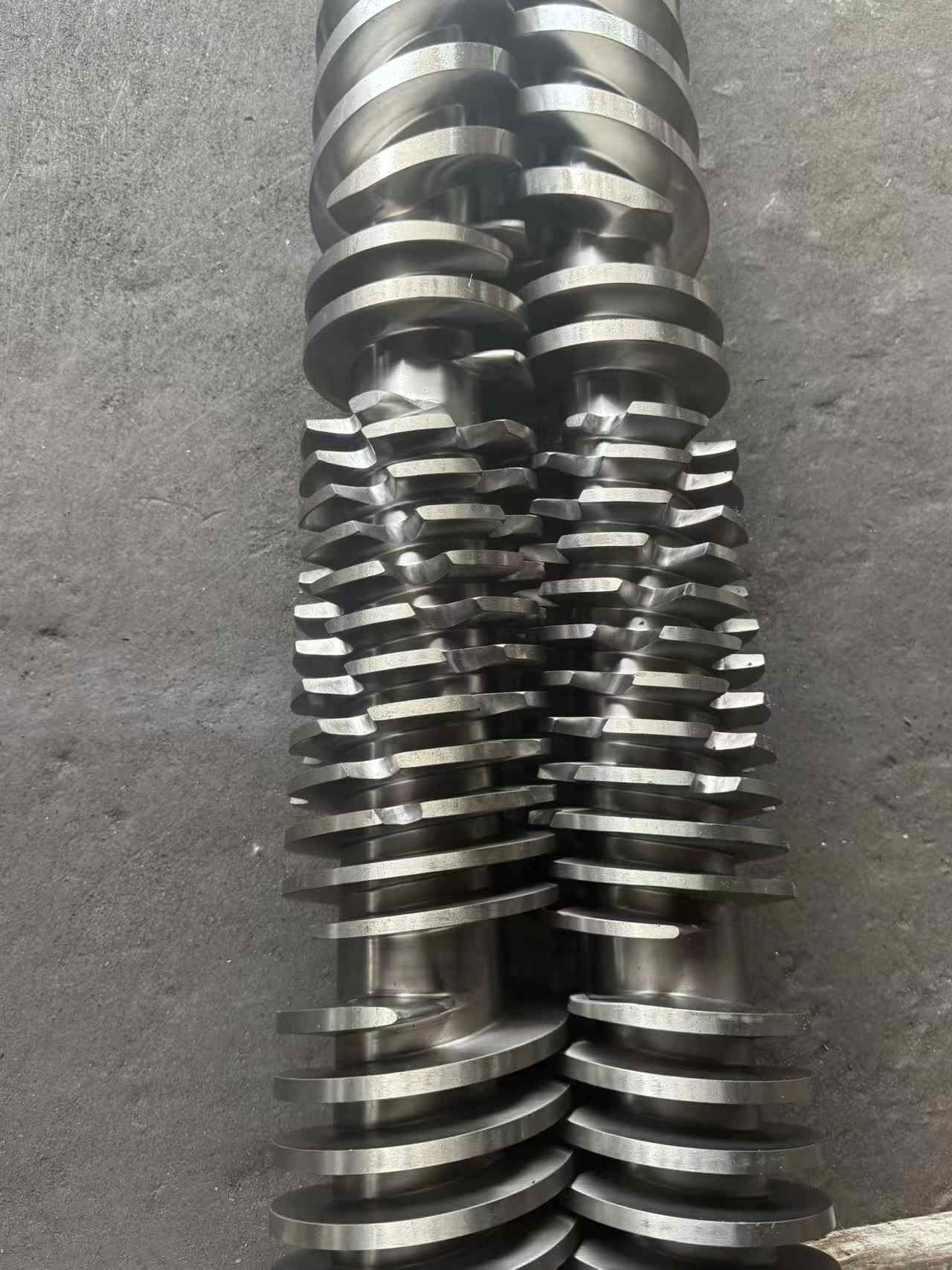
Our manufacturing and surface treatment capabilities include nitriding, bimetallic treatment, quenching, and alloy coating, as well as grinding and polishing. The choice of surface treatment will depend on the type of resin, the type and amount of glass-fiber or mineral fillers, the level of corrosive exposure, the service temperature, the specific wear location and the specific wear mechanism. A new surface must not mask cracks, corrosion or other structural damage to the underlying material. Assessment of damage and operating history must be undertaken together – surface hardness alone is not a sufficient specification.
Protect the Regions That Actually Wear
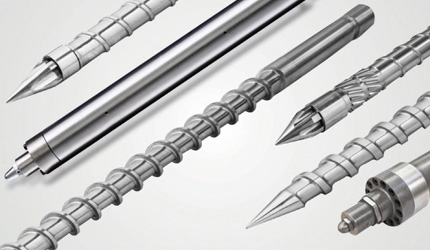
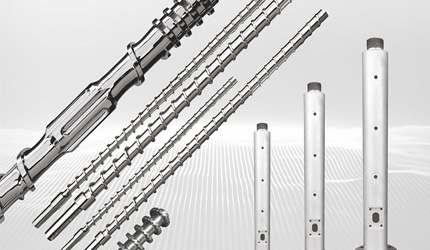
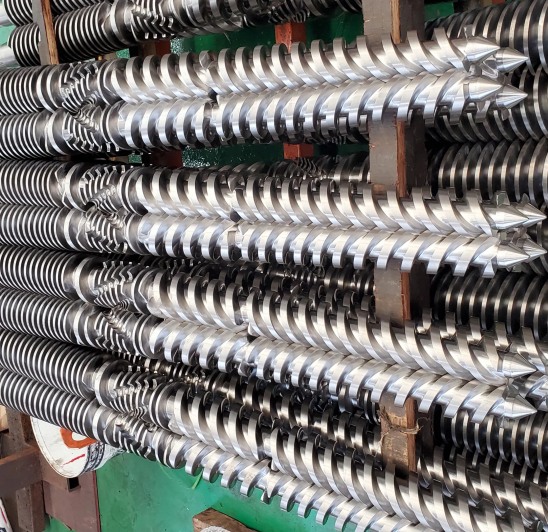
We use alloy-powder hardfacing for screw flights and tungsten-carbide alloy coatings for root, outside and thread surfaces. The choice of alloy or surface treatment depends on the special task of a screw, the actual wear area, and the area’s operating conditions. It is essential that the surrounding base steel and design allow for repair work. Thus, a Bimetallic Twin-Screw is often more suitable than treating all surfaces equally in a wear map.
Restore the Pair Before Increasing Operating Demand
Measure Geometry and Running Relationships
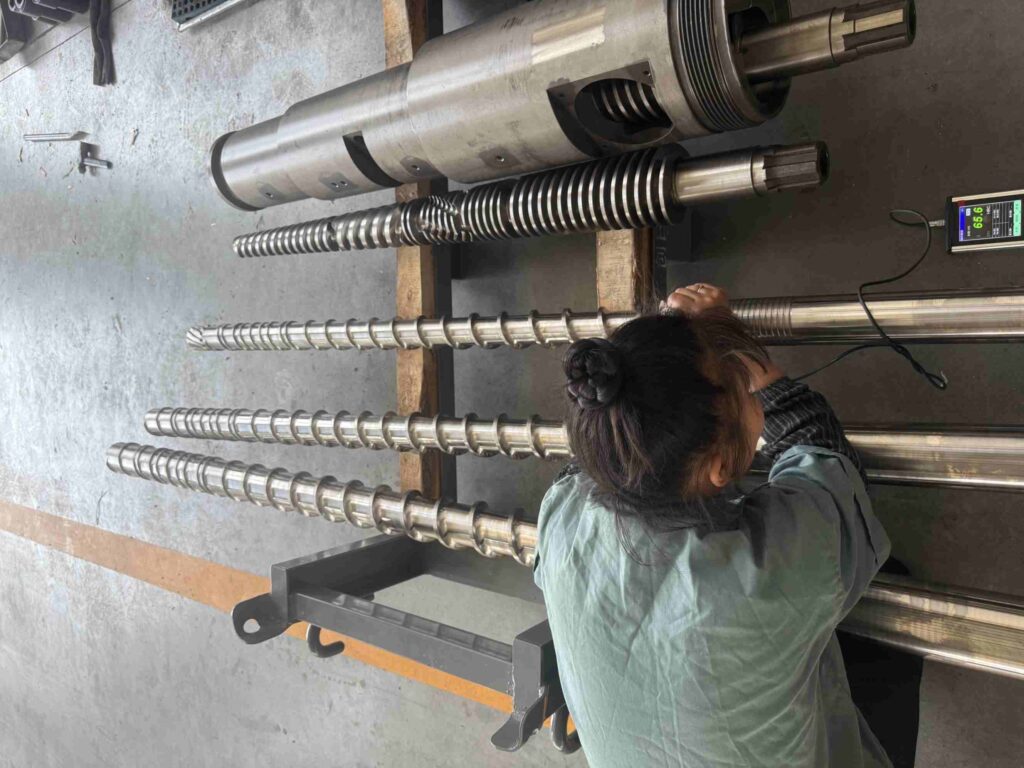
CHUANGRI SCREW checks fit clearance, concentricity, surface hardness, and dimensions by using coordinate measuring equipment, bore gauges, and hardness testers. The check of the screw and barrel includes the smooth rotation of both parts. The measuring has to be done after the corresponding machining process and surface treatment. This does not include coating or weld ending. The same measuring points have to be measured with the same method to be able to recognize a trend in later measurements.
Decide Whether Refurbishment Is Technically Suitable
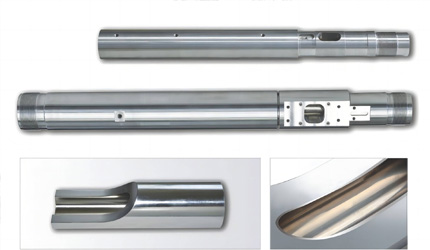
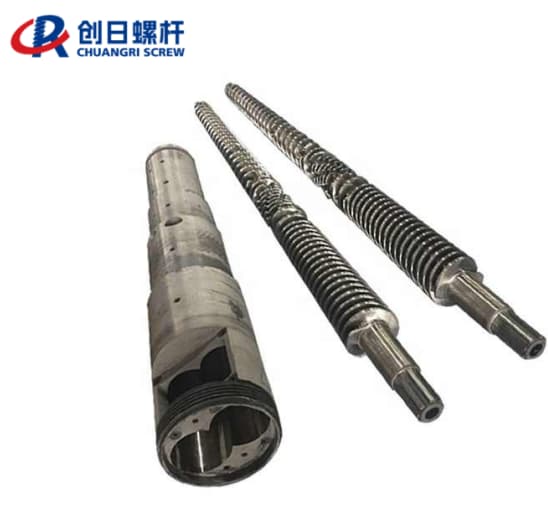
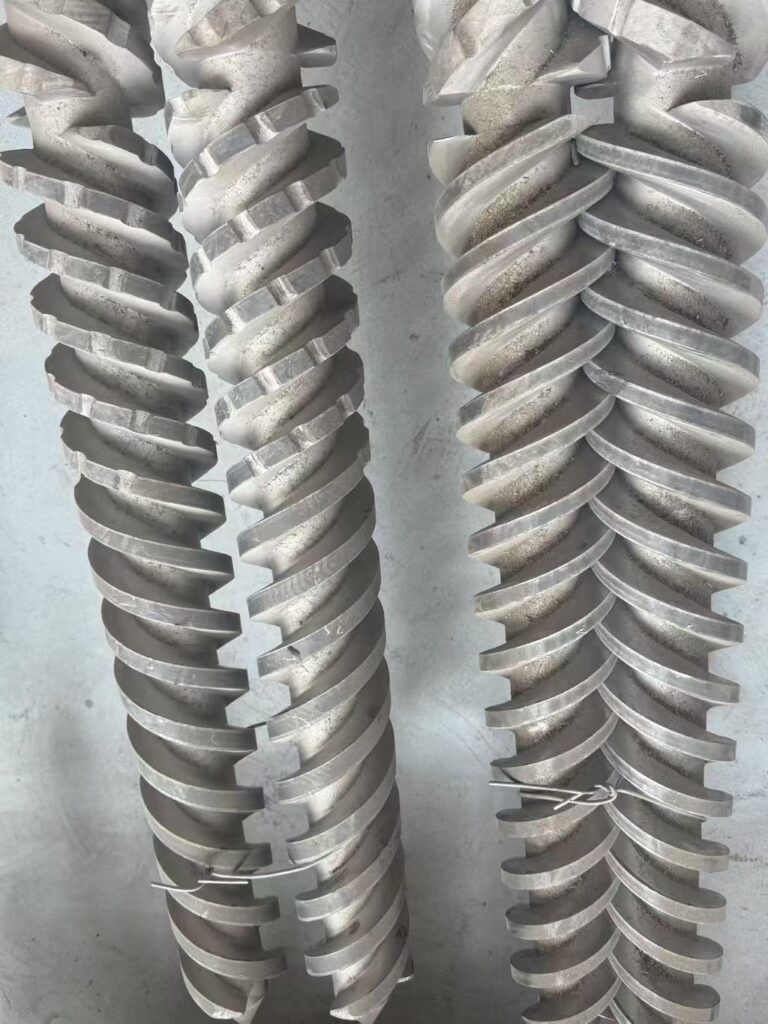
We can also refurbish worn screws and measure, design, modify, and custom-make other plastic machinery components on site. We examine whether worn components can be repaired on the basis of their dimensions, material condition, load-bearing capacity, required barrel type, and the operational conditions under which they are used. Not all worn screws can be repaired. The suitability for repair of a damaged screw must be evaluated in conjunction with its paired Parallel Twin-Screw Barrel interface. A new screw cannot make a damaged barrel suitable for use.
Vane refurbishment using CNC turning, thread milling, grinding, and polishing can be concentrated on the flight pitch, lead, and depth in the feeding, compression, metering, and mixing sections of a pump. Vane refurbishment aims to re-establish all of the critical flight profiles, root and channel section geometry and surface finish, as well as dimensions between components.
Reduce Avoidable Damage in Daily Operation
Control Feed, Formulation, and Startup Conditions
Use the approved warm-up and startup procedure; do not force rotation against material that has not reached the required processing condition. Investigate repeated torque spikes, feed interruptions, or contamination before returning to the previous rate. Where the process uses screening or metal separation, verify its condition and document findings. Follow lockout and pressure-release procedures before mechanical inspection.
Manage Shutdown and Cleaning Carefully
Document the complete shutdown procedure of the resin and machine that was being used, particularly important if it was an unexpected shutdown of thermally sensitive material. When cleaning parts, ensure that cleaning does not damage flight geometry or surface treatment. A part that looks clean after cleaning may have suffered damage by scraping or impact. Record the stop and cleaning history with wear measurements for later diagnosis of any problems.
Verify the Gain and Make Maintenance Repeatable
Create a Wear Map and Inspection Schedule
Measure and record the initial dimensions of newly installed equipment or after repairs. Subsequent measurements will be taken at intervals depending on the level of risk detected and the development that is observed. Should the development start to pick up, the measurement intervals will be reduced accordingly. For the lined barrel, e.g., Bimetallic SKD Liner Barrel, check whether the product name referred to corresponds with the configuration actually installed on the twin-screw machine. Record surface condition, measurement of paired surfaces, output, and quality.
Give each pair a clear identity and preserve axial measurement positions on the inspection drawing. Record the instrument and method so a different inspector can repeat the work. A change in measurement practice can look like wear progression; resolve that uncertainty before shortening the estimated remaining service interval.
Calculate Cost per Accepted Tonne
Compare the cost of the original component with the cost of repair, including the cost of inspection. Compare the changeover loss, scrap, and other unplanned downtime against accepted production levels. A longer calendar interval does not equal improved performance if quality decreases or production slows down. Use the unsuccessful trials as evidence as well and verify the 30% improvement only at the end of the agreed test period under the same conditions as run. Send drawings, formula, operational data, and wear map for a review of a repair or replacement.
FAQ
Q: Can every twin screw and barrel achieve 30% longer life?
A: No. The percentage increase depends on many factors, including the baseline, damage mechanism, geometry, corrosion protection, original formulation, original operation, and the specific endpoint selected for acceptance. Test at the same duty.
Q: How is twin screw and barrel life extension calculated?
A: Calculate the percentage increase by subtracting the baseline service life from the new service life, dividing the result by the baseline service life, and multiplying by 100. State the unit and ensure the same endpoint is used.
Q: Will a harder coating always extend twin screw life?
A: No. The factors to be taken into account when choosing a protective coating are corrosion resistance, adhesion, base material, shape, surfaces that are to be paired, and the area in which the part will be operating. It is essential to select a coating to match the type of damage that has occurred.
Q: When should twin screw refurbishment be considered?
A: After inspection confirms that the base material, dimensions, structural integrity, and matching barrel permit a suitable repair. Some damage requires replacement.
Q: What should twin screw maintenance records include?
A: Operating hours, Tons accepted, Formulations, Settings, Intermittent use, Cleaning, Dimensional measurements, Surface condition, Quality trends, Repairs, Replacement criteria agreed to.

 consult
 WHATSAPP
 leave message
 top