The Ultimate Guide to Parallel Screw Barrels for High-Performance Extrusion
Related news
-
Barrel Types in Twin Screw Extruders: How to Choose the Right Design for Optimal Performance
-
Bimetallic Extruder Screw & Barrel: Why It Matters in 2026
-
Twin Screw and Barrel Wear Solutions for Highly Filled Materials
-
Twin Screw and Barrel Upgrades to Reduce Wear and Improve Efficiency
-
Twin Screw and Barrel Selection Tips 2026 for High-Performance Extruders
-
Screw and Barrel for Injection Molding Machine: Essential Knowledge in Minutes
The Ultimate Guide to Parallel Screw Barrels for High-Performance Extrusion


What Is a Parallel Screw Barrel?
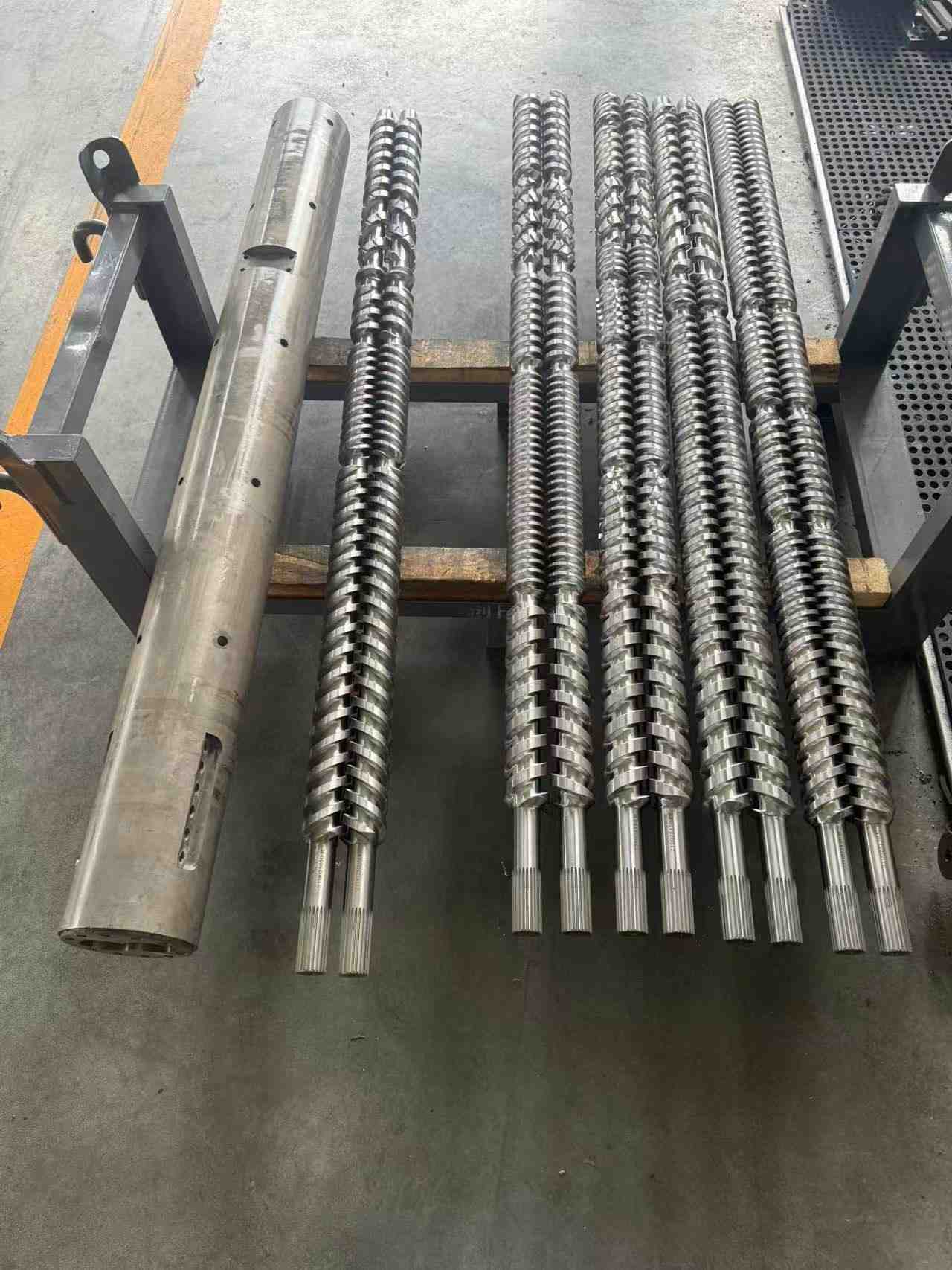
Definition and Core Design of Parallel Twin Screws
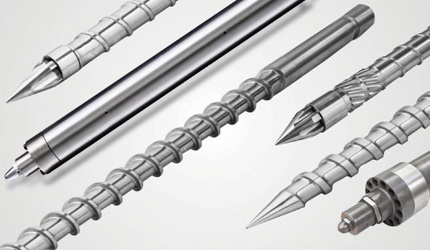
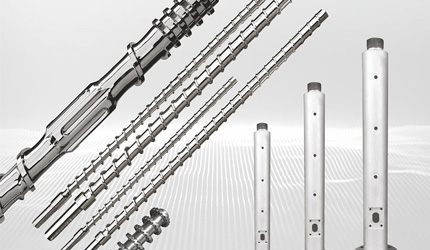
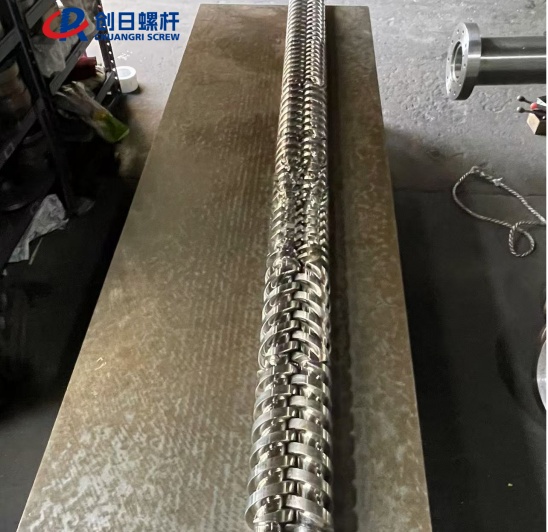
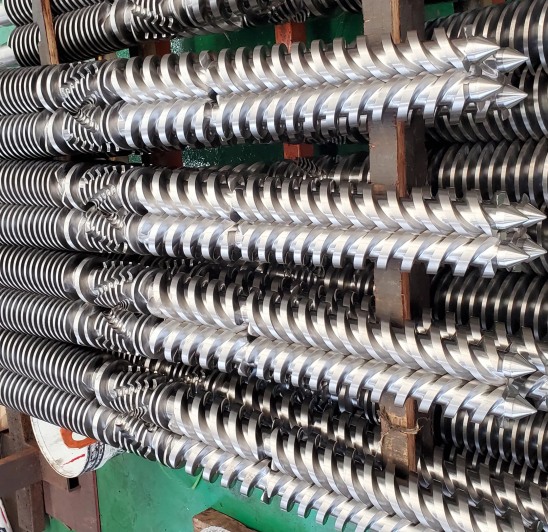
A parallel screw barrel acts as the main plasticizing part in current extrusion setups. It has two screws with the same diameter. They sit next to each other and mesh closely inside a barrel that is machined with care. This setup gives much better forward push and shear power than single-screw setups. The drive uses either co-rotating or counter-rotating methods. It leads to good mixing and even plasticization. For factory makers who want steady product quality and high output, you need to grasp the basic design of a parallel twin screw. This helps improve your extrusion work.
How a Parallel Screw Barrel Works in Extruders
To get the most from extrusion, know how the material moves inside the barrel. The process depends on careful work in special inner areas.
The Feeding and Melting Zones
In the feeding zone, solid plastic resins or powders get pulled in strongly and moved ahead by the meshing threads. Parallel screws give good positive displacement. So, even materials that flow poorly or have low bulk density move along without trouble. As the material goes forward, barrel heaters from outside and friction from screw turns soften the plastics in the melting zone. This changes solid polymers into an even melt faster. It also stops early heat damage.
The Mixing and Pumping Zones
In the mixing zone, the parallel screws use certain thread parts like kneading blocks. These apply strong shear to the melt. This spreads additives, masterbatches, and base resins at a tiny level. Then, the material reaches the pumping zone. Here, good pressure build-up makes sure the melt comes out through the die in a steady way. It avoids any pulsing. Good devolatilization setups remove gases and moisture well at this point. This gives the final product a smooth surface without bubbles.
Key Benefits of Using a High-Performance Parallel Screw Barrel
Superior Mixing and Material Homogenization
When you handle multi-part polymers, materials with lots of fillers, or tricky mixes, a parallel screw barrel shows strong blending power. The screws mesh tightly and keep turning and swapping the material between flights. This removes heat spots and clumped material. Such thorough mixing makes sure plastic products have steady pull strength, impact resistance, and even color.
Higher Output Rates for Industrial Extrusion
For plants that need big ongoing production, machine size sets profit levels. The parallel twin-screw setup fits well for fast, high-output jobs. Look at our CR110 Parallel Twin-Screw Barrel for an example. It has a solid 110mm screw diameter. A 75-110kw motor powers it. This tough unit reaches an output of 350-650 kg/h with ease. It has an L/D ratio of 26-36. So, it keeps good venting and plasticization even at full speed. This makes it a fine pick for big factory mixing tasks.
Extended Lifespan with Advanced Technologies
At CHUANGRI SCREW, we have worked on the common issue of early equipment wear since 1990. We run from our 12,500 ㎡ new plant. All exact making steps happen inside. From CNC rough turning and thread milling to heat treatment and polishing, we watch over the work on good steel types like 38CrMoAlA. By skipping middle steps, we cut costs in the supply chain for buyers. To fight rough work settings, we use top surface improvement methods.
Bimetallic Alloy Coating Advantages
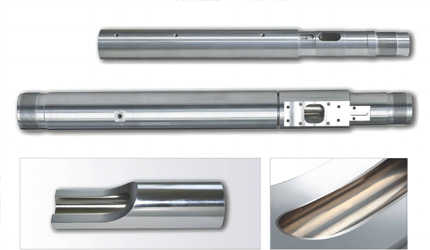
To handle bad wear from fillers like glass fibers, we use centrifugal casting or spray welding. This puts a bimetallic coating on the barrel’s inner bore. We apply tough alloys such as Ni60 or X800. This makes a thick 0.2-0.3mm layer. It raises surface hardness to 58-62HRC. This lengthens the machine’s work life a lot in very harsh and wearing spots.
Nitriding Process for Wear Resistance
In addition to bimetallic linings, our advanced nitriding process is vital for screw durability. Through gas or ion nitriding, we develop a hardened layer of 0.5–0.8 mm on the screw surface, achieving a remarkable hardness of HV900 or above. This gives the screw exceptional surface wear resistance while preserving the core toughness of the alloy steel, effectively preventing brittleness and cracking during high-stress operations.
Main Applications for the Parallel Screw Barrel
PVC Pipe and Profile Manufacturing
The extrusion of PVC pipes and window profiles demands strict control over melt temperature and extrusion pressure. The CR75 Parallel Twin Screw And Barrel is engineered specifically for these medium-capacity precision tasks. Featuring a 75mm screw and operating smoothly between 0-45 rpm, it delivers a stable output of 220-350 kg/h. Its superior machining precision, with a surface roughness of Ra ≤ 0.4μm, ensures low-shear, uniform molding for PVC, perfectly safeguarding the dimensional stability and mechanical strength of pipes and profiles.
Plastic Compounding and Recycling Pelletizing
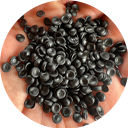
Changing plastics and reusing scrap needs good self-cleaning and venting to deal with water and dirt. The CR90 Parallel Twin Screw And Barrel does well here. It has a 90mm main diameter. A 55-75kw drive powers it. It handles 280-460 kg/h of tough mixes without fail. Its deep-groove venting and self-cleaning parts turn hard, recycled bits into good, high-value pellets.
Sheet and Foam Board Extrusion
For making foam boards like WPC/PVC or fine sheets, small changes in melt flow can ruin cell structure. Parallel barrels give even shear heat and good cooling flow. This keeps sheet thickness steady, surfaces smooth, and foaming tight. It fits the strict rules of building, furniture, and packing fields well.
Parallel Screw Barrel vs. Conical Twin Screw Barrel
Key Structural Differences Explained
You must know the gap between parallel and conical twin screws when picking extrusion gear. It affects your work plan right away.
|
Feature |
Parallel Screw Barrel |
Conical Twin Screw Barrel |
|
Physical Design |
The diameter of both screws remains constant from the feeding to the discharge end. |
The screw diameter gradually decreases from the feeding section to the extrusion die. |
|
Shear & Venting |
Delivers high shear rates with outstanding venting and self-cleaning capabilities. |
Provides gentle shear force, generating extremely high extrusion pressure at low speeds. |
|
Ideal Materials |
Best for multi-component blending, high-dispersion compounding, and large outputs. |
Ideal for processing highly heat-sensitive, easily degradable rigid PVC powder. |
Which Extruder Barrel Fits Your Production Line?
If your work centers on big plastic pellet making, color masterbatch mixing, or large pipe extrusion, pick a parallel screw barrel. It boosts output best. But if you focus on hard PVC powder profiles that react badly to shear heat and need slow, steady forming, a conical setup fits your mix better.
How to Maintain Your Parallel Screw Barrel for Longevity
Routine Cleaning and Inspection Guidelines
Regular upkeep forms the base of lasting machine work. We suggest these steps.
- Purge Upon Shutdown: Always use dedicated low-melting-point purging resins to completely clear residual plastics from the barrel after production. This prevents severe degradation and carbonization during the cooling phase.
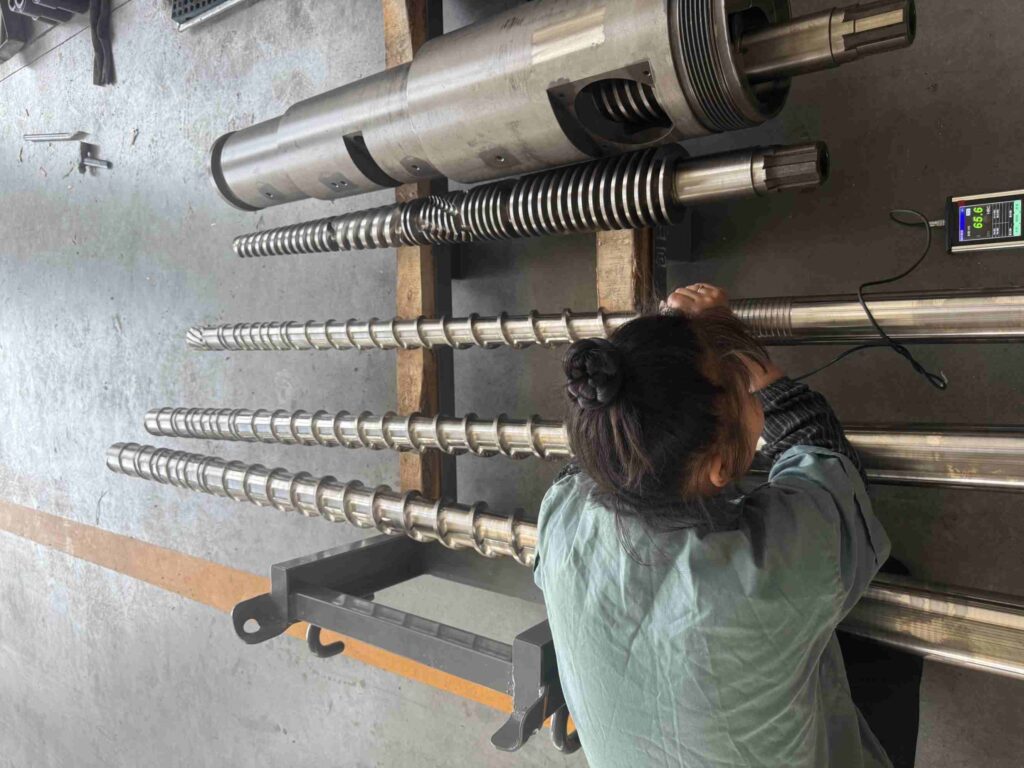
- Clearance Checks: Periodically measure the gap between the screw flights and the barrel wall using professional dial gauges. If wear exceeds design tolerances, it will cause material backflow and reduce output, signaling the need for repair or replacement.
- Alignment Verification: After deep maintenance, always verify the concentricity of the screws and the barrel during reassembly to avoid catastrophic metal-to-metal scraping during operation.
Preventing Premature Wear and Tear
To stop odd wear, put strong magnetic filters at the hopper. They block metal bits or hard junk from scratching the barrel’s inner side. Also, follow the heat rules closely. Make sure the material melts fully in all heat areas before turning on the main motor. A quick cold start harms the gear drive and screw coating for good.
FAQ
Q: What is the average lifespan of a parallel screw barrel?
A: The lifespan heavily depends on the processed materials and maintenance frequency. At CHUANGRI SCREW, if you process abrasive materials like high-percentage glass fibers, utilizing our bimetallic Ni60 or X800 alloy coatings will extend your barrel’s life by 2 to 3 times compared to standard nitrided equipment.
Q: How does a parallel screw barrel improve the extrusion process?
A: It provides powerful and uniform shear and conveying forces through tightly intermeshing screws. This mechanism significantly enhances the physical dispersion of additives, eliminates thermal dead spots, and offers superior devolatilization, resulting in higher, more stable yields and better product quality.
Q: Can a parallel screw barrel handle highly corrosive plastics?
A: Yes. For highly corrosive formulations like fluoropolymers or flame retardants, screws treated with specialized bimetallic anti-corrosion linings and premium electroplating (such as chrome or titanium plating up to 10-50 microns) easily resist chemical degradation and ensure long-term stability.
Q: What is the difference between co-rotating and counter-rotating parallel twin screw barrels?
A: Co-rotating screws offer excellent self-cleaning and high shear, making them perfect for complex plastic compounding and pelletizing. Counter-rotating screws act more like a positive displacement pump with strong pressure-building capabilities, which is ideal for the stable, low-shear extrusion of PVC profiles and pipes.
Q: How do I choose the right size for my parallel screw barrel?
A: The right size depends on your target output and material rheology. For example, if you need 220-350 kg/h for precision profile extrusion, a 75mm screw (like our CR75) is optimal. For heavy-duty pelletizing requiring 350-650 kg/h, a larger 110mm screw (like our CR110) is necessary to meet high throughput demands without sacrificing plasticization quality.

 consult
 WHATSAPP
 leave message
 top
top