How Can Twin Screw Systems Achieve the Longest Wear Life?
Related news
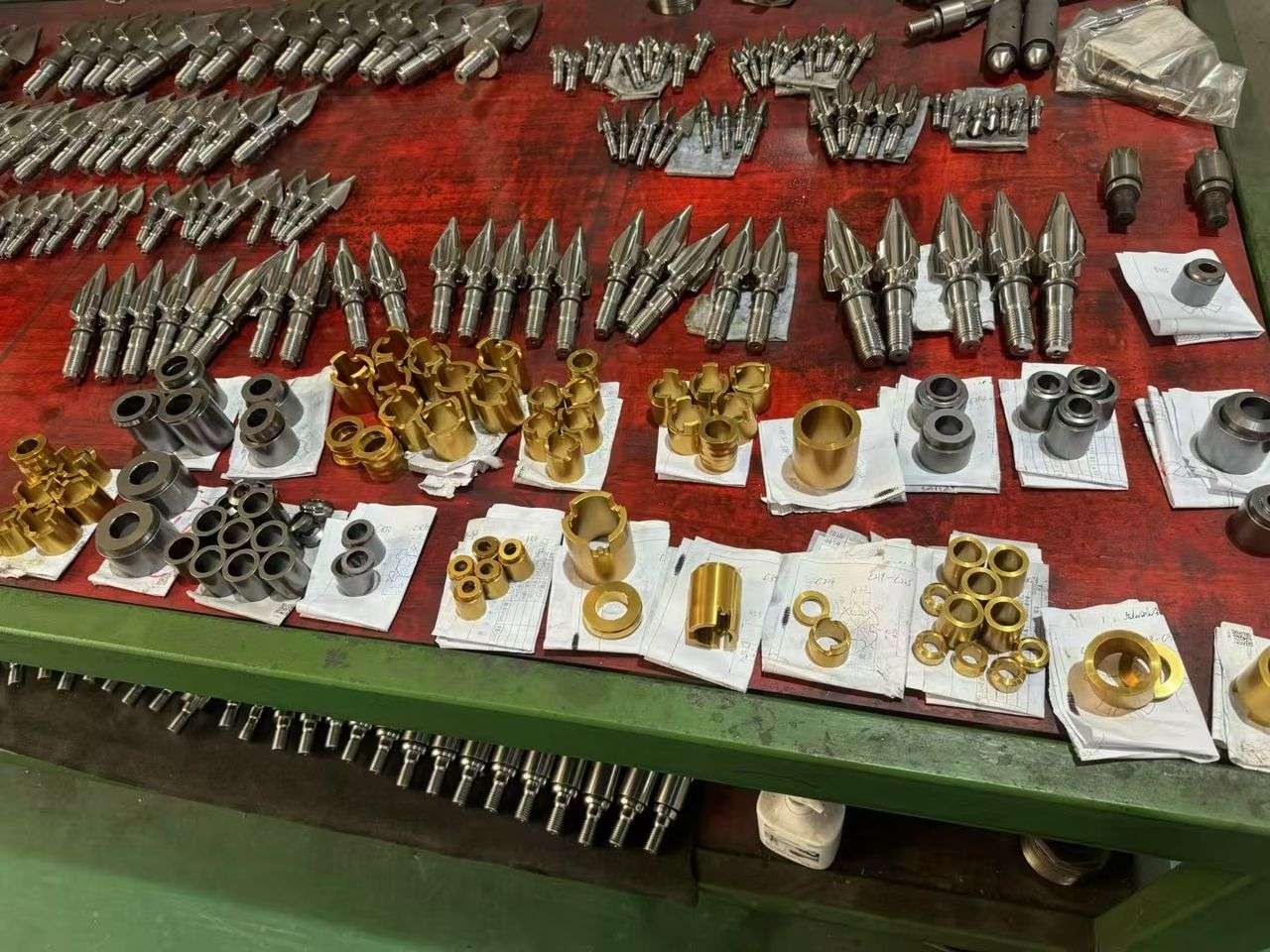
How Can Twin Screw Systems Achieve the Longest Wear Life?


Twin screw systems work under heat, pressure, friction, and chemical exposure. Their wear life relies on more than surface hardness. Good results come from matching screw material, barrel protection, geometry, machining accuracy, and operating conditions to the processed formulation.
What Causes Premature Wear in Twin Screw Systems?
Abrasive Wear from Calcium Carbonate, Glass Fiber, and Recycled Materials
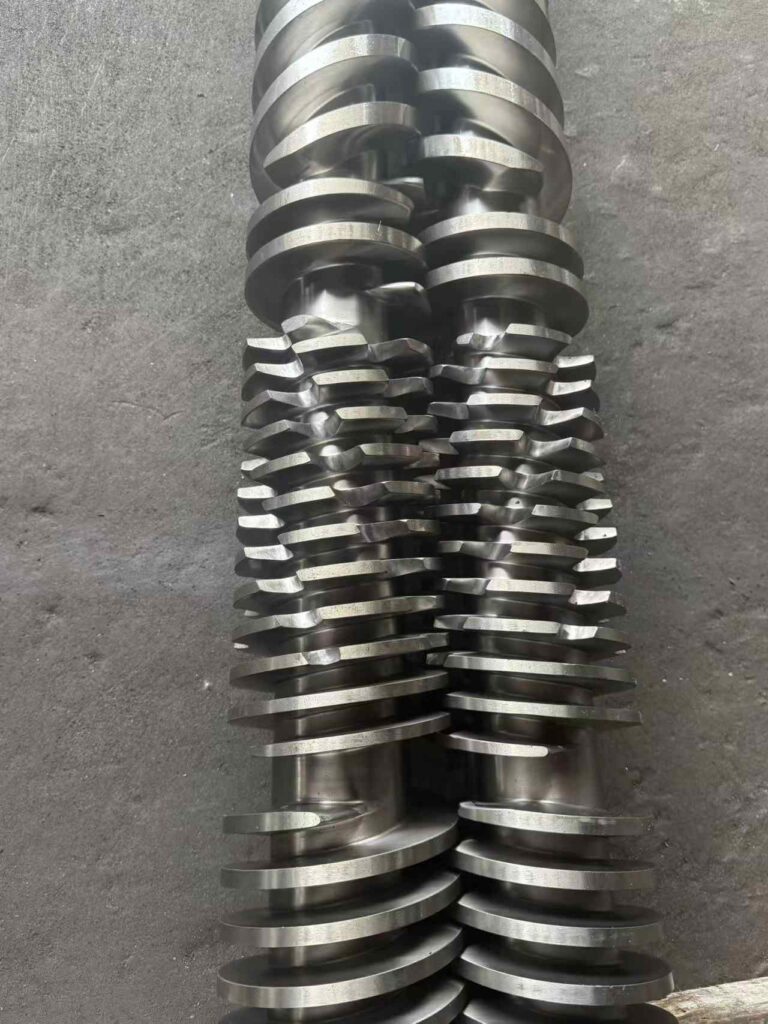
Hard fillers travel through the screw channels like fine cutting particles. Calcium carbonate, glass fiber, mineral powder, contaminated regrind, and some recycled compounds can scratch the screw flights and barrel bore all the time.
The highest wear often shows up in areas where pressure, mixing intensity, or material compression increases. These may include:
*Compression zones
*Mixing sections
*Screw flight edges
*Screw root surfaces
*Discharge zones
*Barrel sections exposed to high internal pressure.
High filler content does not always cause failure. Problems arise when the twin screw system is not designed or protected for that filler level.
Corrosive Wear from PVC Additives and Polymer Degradation
PVC additives, flame retardants, and degraded polymers may release corrosive substances during processing. Corrosion weakens the metal surface. This makes it more open to abrasive wear.
For combined abrasive and corrosive conditions, high hardness alone is not enough. The material must also resist chemical attack.
Mechanical Wear from Excessive Torque, Heat, and Screw-Barrel Contact
Incorrect clearance, poor alignment, unstable feeding, and too much torque can cause direct screw-barrel contact. High temperatures may also weaken surfaces. They create deposits that disturb material flow.
Which Materials Give Twin Screw Systems the Longest Wear Life?
|
Wear solution |
Suitable conditions |
Main benefit |
|
Nitrided steel |
General plastics |
Hard, stable surface |
|
Bimetallic alloy |
Abrasive compounds |
Stronger wear protection |
|
SKD liner |
Localized barrel wear |
Protects critical zones |
|
Tungsten carbide |
Severe filler abrasion |
Very high hardness |
|
Nickel-based alloy |
Corrosive materials |
Corrosion and wear resistance |
Nitrided Twin Screw Systems for General Plastic Processing
Nitriding creates a hardened surface while keeping a tough steel core. It works for general plastics and moderate filler levels. But it may not give enough protection for high-calcium PVC or glass-fiber compounds.
Bimetallic Twin Screw Systems for Abrasive and Corrosive Compounds
Bimetallic protection combines a structural base material with a harder, more wear-resistant alloy in the working area.
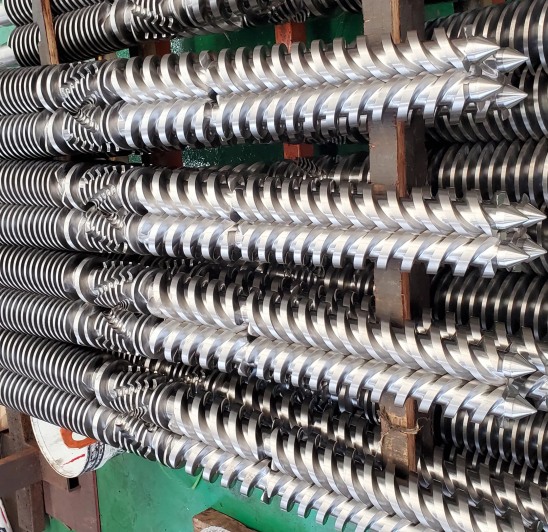
The Bimetallic Twin-Screw from CHUANGRI SCREW uses wear-resistant alloy protection on the screw surface. Coating can cover the full working length or only high-wear sections.
This makes it suitable for abrasive PVC formulations where standard nitriding may wear too quickly.
Tungsten Carbide Coatings and SKD Liners for Severe Wear Zones
Tungsten carbide works for severe abrasion. Its hard particles resist cutting and scratching from mineral fillers. The quality of the bond between the coating and base material is equally important. A hard coating that separates from the screw cannot provide reliable protection.
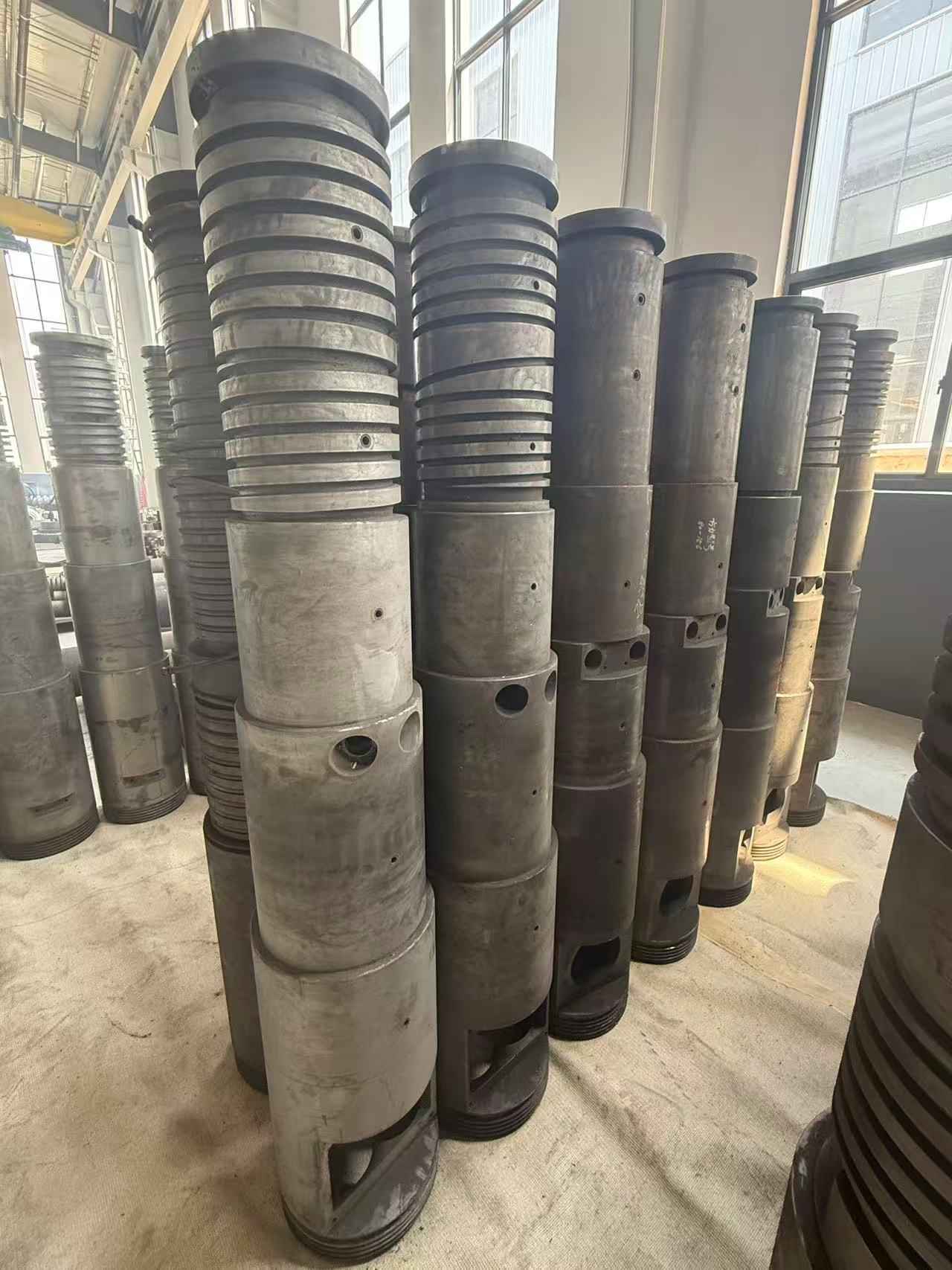
For barrel wear, the Bimetallic SKD Liner Barrel provides an additional barrier in high-load areas. SKD liner technology can be installed where internal barrel wear is most concentrated. This helps processors protect critical zones without relying on one uniform material throughout the barrel.
At CHUANGRI SCREW, we select the alloy system according to the customer’s formulation and wear pattern. We do not treat nitriding, bimetallic treatment, and carbide coating as interchangeable options. Each solves a different operating problem.
How Does Twin Screw Design Affect Wear Life?
Matching Screw Geometry to Resin, Filler Content, and Processing Conditions
Screw pitch, flight depth, compression ratio, and mixing geometry influence pressure, shear, and temperature. A long-life twin screw design must reflect resin type, filler percentage, recycled content, required output, and operating speed.
Controlling Screw-Barrel Clearance, Alignment, and Concentricity
Clearance that is too small may cause metal contact after thermal expansion. Excessive clearance increases backflow and reduces output stability.
Accurate machining, straightness, concentricity, and correct screw-barrel matching are therefore essential.
Protecting High-Wear Mixing, Compression, and Discharge Zones
Wear is rarely uniform. A practical solution may combine nitriding in moderate-wear sections, alloy coatings on screw flights, and SKD liners inside high-pressure barrel zones.
Which Twin Screw Wear Solution Fits Each Extrusion Application?
High-Calcium PVC and SPC Twin Screw Systems
SPC flooring compounds contain high levels of mineral filler. This can create intensive abrasion in the compression, mixing, and discharge areas.
The SPC Conical Twin-Screw Barrel is designed for SPC flooring, PVC boards, doors, and related products. It combines bimetallic treatment with SKD inner lining technology to protect areas exposed to high calcium carbonate wear.
The structure can be adjusted for different calcium loading levels. This is important. Increasing surface hardness alone may not solve unstable conveying, poor plasticization, or excessive torque.
WPC, Foam Board, and PVC Profile Extrusion
WPC and PVC foam-board production requires a balance between wear protection and controlled plasticization. Excessive shear can raise melt temperature. This affects foaming or surface quality. Insufficient mixing may cause inconsistent output.
The WPC Conical Twin-Screw Barrel is intended for WPC boards, WPC doors, PVC foam boards, and similar profile applications. Its nitrided and bimetallic options allow the protection level to be matched to the wood powder, calcium carbonate, recycled content, and production conditions.
For these applications, the longest wear life comes from combining appropriate metallurgy with a screw profile that avoids stagnation and unnecessary material overheating.
Recycling, Pelletizing, and Glass-Fiber-Reinforced Compounds
Recycled materials are often less predictable than virgin resin. They may contain moisture, dirt, residual additives, hard particles, or mixed polymers.
The Pelletizing Parallel Twin-Screw uses nickel-based alloy and tungsten carbide protection to improve wear and corrosion resistance in demanding recycling and granulation processes. It is suitable for processing materials such as PE, PP, PVC, ABS, PS, PET, PA, POM, and PC.
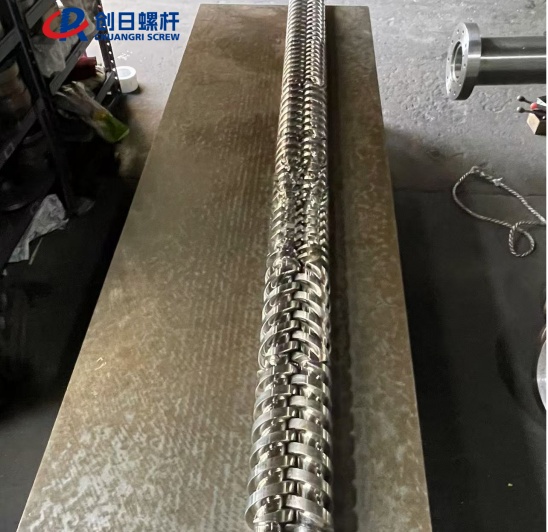
Because recycled feedstock can vary between batches, processors should review wear patterns regularly. They should update operating parameters when the material composition changes.
How Can Operation and Maintenance Extend Twin Screw Service Life?
Optimize Feeding, Screw Speed, Temperature, and Torque Load
Stable feeding prevents sudden pressure changes. Screw speed should match output requirements rather than compensate for poor conveying. Excessive temperature and torque accelerate wear and polymer degradation.
Clean Twin Screws Without Damaging Wear-Resistant Surfaces
Aggressive cleaning tools can scratch nitrided surfaces or damage coatings. Twin screw systems should be cleaned before residues become heavily carbonized.
Monitor Output, Pressure, Clearance, and Product Quality for Wear Signs
Typical signs of wear include declining output, unstable pressure, poor mixing, rising power consumption, and increasing screw-barrel clearance.
Monitoring trends allows maintenance before severe damage occurs.
How Should Buyers Specify a Long-Life Twin Screw System?
Provide Complete Resin, Filler, Additive, and Production Data
Buyers should provide resin type, filler percentage, recycled content, additives, output, temperature, screw speed, and previous wear locations.
Verify Raw Materials, Heat Treatment, Coating, and Machining Accuracy
A reliable supplier should control raw-material inspection, CNC machining, heat treatment, grinding, hardness testing, and dimensional inspection.
Select a Custom Twin Screw Manufacturer for the Actual Wear Environment
At CHUANGRI SCREW, we use the customer’s formulation, drawings, and operating data to select the appropriate screw geometry, alloy, liner, and surface treatment.
The longest wear life comes from combining correct materials with precise manufacturing and controlled operation.
FAQ
Q: How long should a twin screw system last?
A: Twin screw system life depends on filler content, additives, speed, temperature, clearance, and surface treatment. There is no universal service-life figure.
Q: What causes a twin screw system to wear quickly?
A: Common causes include abrasive fillers, corrosive additives, excessive torque, overheating, poor alignment, and incorrect screw-barrel clearance.
Q: Is a bimetallic twin screw system better than a nitrided one?
A: Bimetallic protection is generally better for highly abrasive or corrosive compounds. Nitrided systems remain suitable for general plastics and moderate wear.
Q: How often should twin screw wear be inspected?
A: Inspection frequency should reflect operating hours, filler abrasiveness, output changes, pressure stability, and previous wear history.
Q: Which twin screw system is suitable for high-calcium PVC?
A: High-calcium PVC usually requires a wear-resistant conical or parallel twin screw system with bimetallic alloy, tungsten carbide, or SKD liner protection

 consult
 WHATSAPP
 leave message
 top
top