Wear-Resistant Alloys for Industrial Screws: 2026 Comparison
Related news
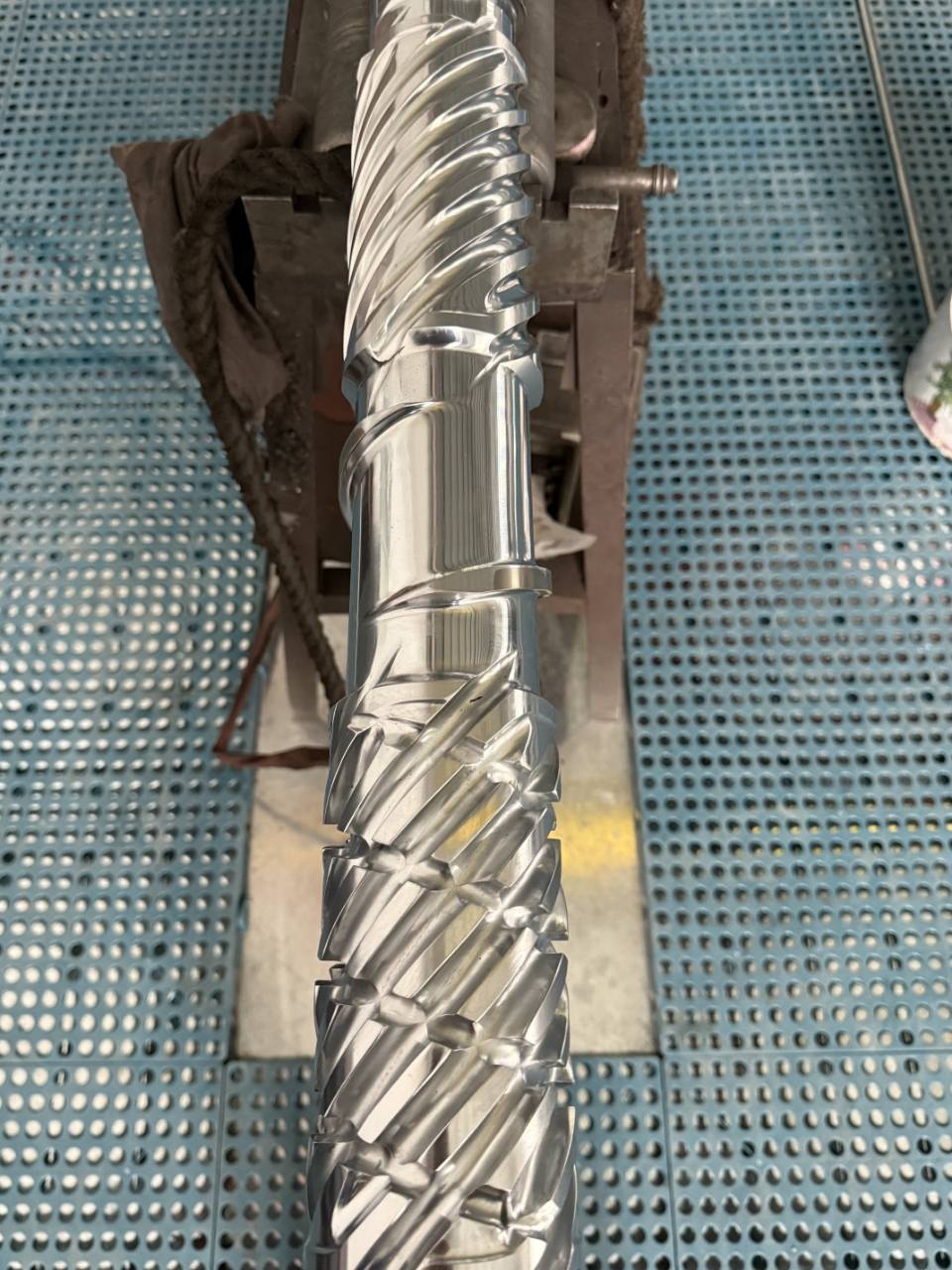
Wear-Resistant Alloys for Industrial Screws: 2026 Comparison


Screws in industrial extrusion and molding processes, such as screw-type extruders and injection molding machines, compress, melt, mix, and measure raw materials at high temperatures under high pressure with large friction between the screw surface and the material. Fiberglass, calcium carbonate, recycled materials, and other contaminants and additives that are corrosive can wear down screw surfaces quickly and increase the clearance between the screw and the barrel.
Wear-resistant screws are not all created equal. While there are some very hard alloys available, the key to selecting a suitable wear-resistant screw is to consider the likely wear mechanism, the resin formulation, the filler level, the temperature, the screw design, and the material of the barrel. The screw and barrel must be treated as a single unit, and the areas of greatest damage must be protected.
Why Do Wear-Resistant Industrial Screws Still Fail in Plastic Processing?
A screw can have high surface hardness and still fail early when its protection does not match the processing environment. Hardness resists scratching, but it does not automatically provide toughness, corrosion resistance, thermal stability, or strong coating adhesion.
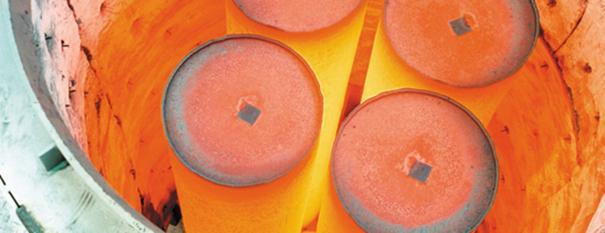
Abrasive and Erosive Screw Wear from Glass Fiber, Mineral Fillers, and Recycled Plastics
In the pelletizing process, glass fiber, calcium carbonate, talc, wood flour, mineral coloring agents, and other impurities of recycled material can act as cutting tools and penetrate flights, root zone, pressurized zone, mixing zone, barrel bore, etc. of pelletizing dies. Due to the high velocity of material in the pelletizing process, erosion is intensified at the barrier zone, mixing zone, and discharge zone of the die. As the clearance between die and barrel is increased, leakage also increases, causing a decrease in plasticizing stability.
Corrosive, Adhesive, and Thermal Wear in Extrusion and Injection Molding Screws
Corrosive wear occurs when a combination of polymers, moisture, additives, and/or degradation products attacks the metal surface. Adhesive wear can occur in a number of scenarios, including incorrect clearance, barrel distortion, and inadequate melt lubrication. In many cases, thermal cycling will further weaken any hard layer present. Therefore, the choice of alloy will depend on a number of competing factors, including hardness, toughness, and corrosion resistance.
Which Wear-Resistant Alloys Are Best for Industrial Screws in 2026?
Below are the key differences between the two practical comparisons to final performance: heat treatment, coating, screw design, and formulation.
2026 Industrial Screw Alloy Comparison Table
|
Material system |
Typical examples |
Main advantage |
Recommended applications |
|
Nitrided alloy steel |
38CrMoAlA, AISI 4140, AISI 4340 |
Hard case with a tough core |
General plastics and low-filler compounds |
|
Bimetallic alloy |
Nickel-based matrix with hard carbides |
Strong abrasion and corrosion resistance |
Filled plastics, recycled materials, PVC, and WPC |
|
Tool steel |
D2, H13, SKD61 |
High hardness and mechanical strength |
Engineering plastics and high-load screws |
|
Powder metallurgy alloy |
CPM 9V, CPM 10V, CPM S90V |
Uniform carbide distribution |
High glass-fiber and severe-wear compounds |
|
Nickel-based alloy |
Hastelloy C-276, Inconel |
Chemical and thermal resistance |
Corrosive processing environments |
|
Tungsten carbide coating |
HVOF or hardfacing systems |
Very high localized wear resistance |
Flights, roots, mixing, and discharge zones |
How Each Wear-Resistant Screw Material Performs
Nitrided Alloy Steel for General-Purpose Extruder and Injection Screws
Nitrided alloy steels are suitable for PE, PP, PS, and normal ABS materials as well as other low-abrasion materials. In these parts, nitrogen penetrates the surface and forms a hard case, while the inside of the part remains tough.
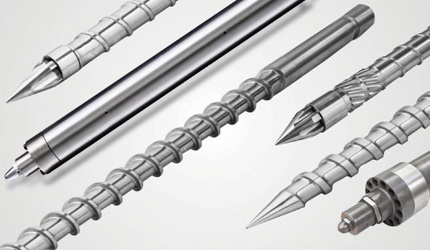
CHUANGRI SCREW offers a Nitrided Injection Molding Screw made from a variety of high-alloy steels, including 38CrMoAlA, AISI 4140, D2, NITRALLOY 135-M, and H13. This screw is intended for use with general-purpose plastics containing low glass-fiber content where excessive heavy-alloy content is not required.
Bimetallic Screws with Nickel-Based and Tungsten Carbide Alloys
The steel body of the Bimetallic is strong, with the harder alloy on the flight tops, outer diameter, root diameter, or large working surfaces.
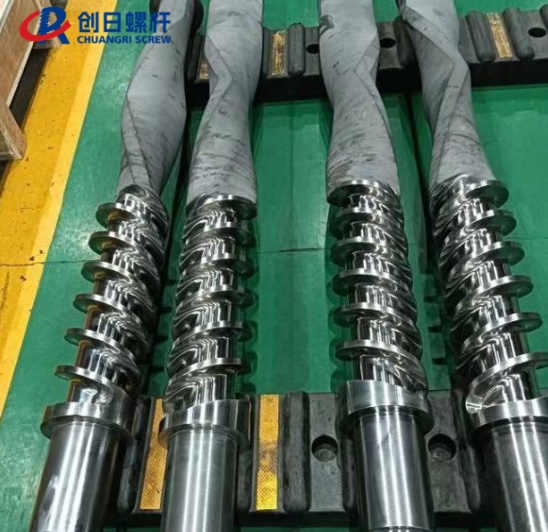
Bimetallic Injection Molding Screw for general plastics and materials containing 15%–50% glass fiber. Wear-resistant alloy is mainly concentrated on the areas with the most severe abrasion, better than the standard nitriding.
Tool Steels and Powder Metallurgy Alloys for Severe Screw Wear
D2, H13, and SKD61 are very hard and strong. There are many very wear-resistant powder metallurgy grades, CPM 9V, CPM 10V, and CPM S90V, for example, which all have a very uniform distribution of the carbides within and are therefore able to withstand very severe abrasion.
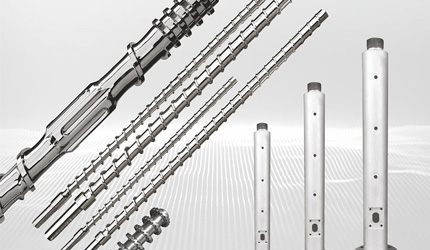
CHUANGRI SCREW’s Solid Carbide screw for demanding injection molding is made from CPM 10V, CPM 9V, CPM S90V, Hastelloy C-276, and Inconel materials and is able to process materials that contain up to 75% glass fibers, well beyond what is typically possible with nitriding tools.
Nickel-Based Alloys for Corrosive Industrial Screw Applications
For use where corrosion and abrasion are present, Hastelloy C-276 and Inconel are suggested for use with aggressive additives, for corrosive polymers, and in applications where the chemical attack can strip away a hard but less corrosion-resistant tool steel.
How Do Surface Treatments Improve Screw Wear Resistance?
Local resistance through surface treatment is optimized through wear zones on the screw rather than the whole surface being treated equally.
Gas and Ion Nitriding for Wear-Resistant Screw Surfaces
Nitriding forms a hardened diffusion layer to give a general-purpose layer. The protection of such a layer, however, falls off rapidly once the layer is worn.
PTA and HVOF Tungsten Carbide Coatings for High-Wear Screws
For the critical features such as flights and roots of such parts, the carbide-containing coatings such as HVOF and PTA are effective for glass fiber, calcium carbonate/limestone-based, as well as recycled material-based alumina/silicon carbide / brown aluminum oxide-based parts.
Bimetallic Screw from CHUANGRI SCREW manufacturer. Carbide is added to the work areas instead of simply surface coating.
Chromium and Titanium Plating for Corrosion and Surface Finish
These coatings offer good corrosion resistance and surface finish, but are not adequate for severe abrasive wear and are generally better served by carbide or bimetallic systems.
How Should You Select a Wear-Resistant Screw for Different Polymer Materials?
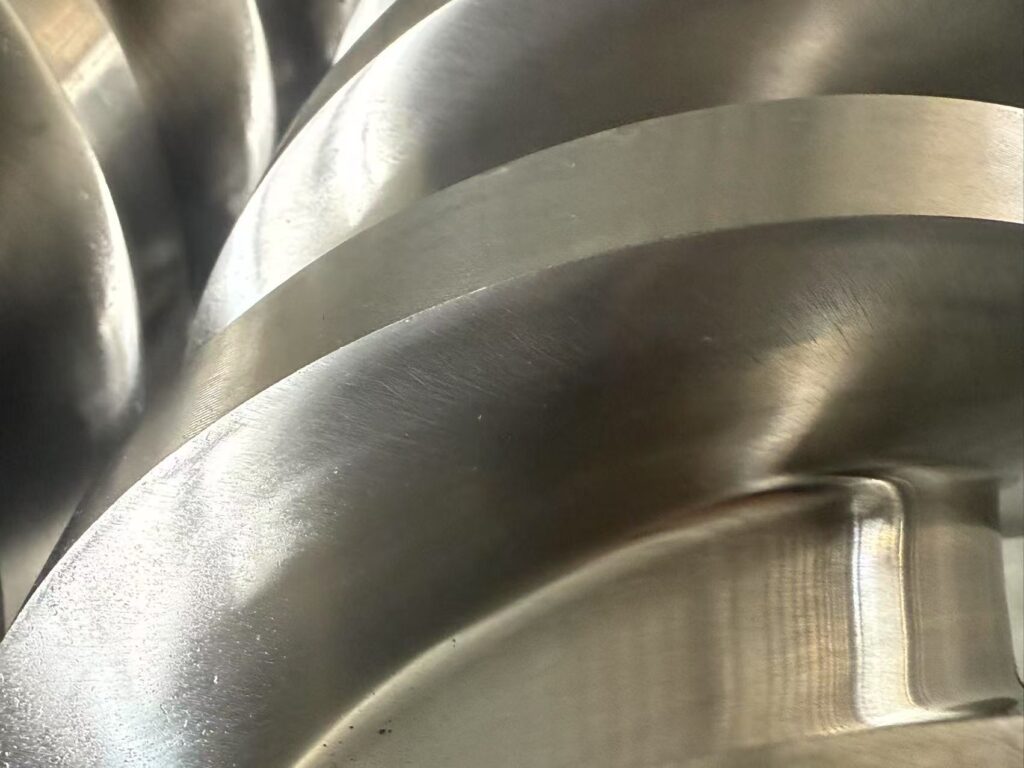
Design with the material behavior in mind rather than selecting alloys based on type.
Nitrided Screws for General-Purpose and Low-Filler Plastics
A nitrided screw is typically the best choice for processing of PE, PP, PS, standard ABS, blown film, and conventional pipe extrusion. The hardness and toughness of such a screw can be balanced. Processing of clean raw materials with low filler levels does not require a screw with a high content of carbide-rich areas.
For constant operating conditions and non-corrosive polymer, nitrided screws are easy to justify. The protective layer on the screw has a limited depth and needs to be checked regularly with clearance measurements.
Bimetallic and Carbide-Coated Screws for Abrasive Compounds
Glass-Fiber-Reinforced Engineering Plastics
As the content of glass fiber increases, the wear on flights and barrel surfaces also increases. For medium to high fiber content materials, the use of bimetallic or carbide-based tools is recommended.
High-Calcium PVC, WPC, SPC, and Recycled Plastic Formulations
The combination of calcium carbonate and recycled material provides constant abrasive action within the barrel. The WPC Conical Twin-Screw Barrel is equipped with bimetallic liners to increase wear resistance in high calcium applications.
Corrosion-Resistant Screw Alloys for PVC and Chemically Aggressive Polymers
Corrosion combined with abrasion is addressed by nickel-based alloys or bimetallic systems, which are more stable than standard nitrided steels.
How Do Screw and Barrel Matching and Manufacturing Quality Affect Wear Resistance?
Wear resistance is a system property. A highly advanced screw material is no match for a worn bore, wrong clearance, and a coating that does not adhere properly.
Match the Wear-Resistant Screw Alloy to the Barrel Liner and Operating Clearance
Hard screws require the barrel to be made of a suitable material and require the correct clearance to function properly. An imbalance in these areas can cause uneven wear and/or premature failure.
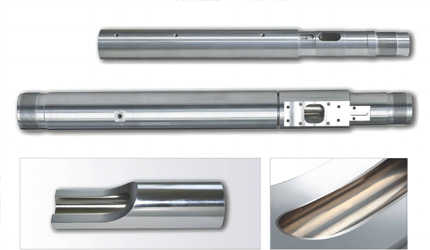
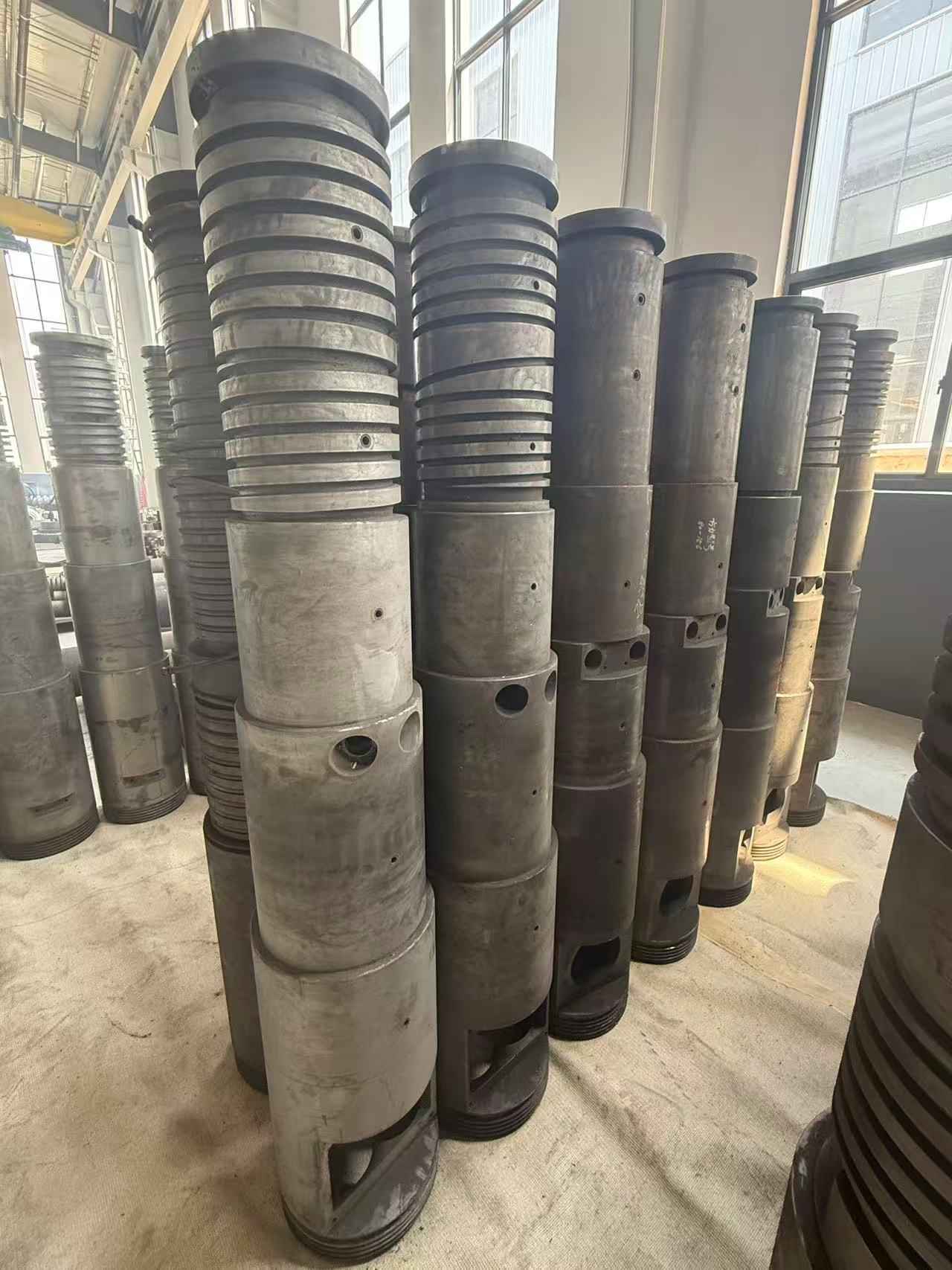
Bimetallic Barrel from CHUANGRI SCREW by using Tungsten carbide as hard-facing material with Nickel alloy as matrix material. Resists high abrasion and corrosion.
Verify Raw Materials, Heat Treatment, Coating Bonding, and Final Inspection
At CHUANGRI SCREW, materials are verified through chemical analysis and ultrasonic testing. CNC machining, heat treatment, nitriding, and coating processes are strictly controlled.
Hardness, concentricity, straightness, and screw-to-barrel clearance are inspected at final to ensure proper operation of the screw feed system.
FAQ
Q: What is the best wear-resistant alloy for an industrial screw?
A: That depends on the application. For most types of plastics, nitrided steel is a suitable material. For fillers with abrasive properties, bimetallic alloys are used. For very severe wear, powder metallurgy alloys are used.
Q: Is a bimetallic screw more wear-resistant than a nitrided screw?
A: Yes. In very abrasive or filled plastics, for example, it can be added as a thicker wear-protecting layer in key wear areas.
Q: Which wear-resistant screw is suitable for glass-fiber-filled plastic?
A: Low volume feeding may use nitrided steel, while higher volume feeding requires a bimetallic, carbide-coated, or powder metallurgy screw.
Q: How does calcium carbonate affect screw wear?
A: Abrasive in PVC and WPC increases abrasive wear on the surface of flights and barrel, which requires bimetallic tooling.
Q: How can I tell when a screw needs replacement?
A: The following are indicators for unstable processing: unstable output, pressure fluctuation, reduced plasticizing efficiency, and increased screw-to-barrel clearance.

 consult
 WHATSAPP
 leave message
 top
top