
Twin Screw Barrel Guide: Top Designs & Wear Solutions in 2026
Related news
-
Best Twin Screw and Barrel for PVC Processing in 2026

-
Twin Screw and Barrel Solutions for 2025: Boost Extrusion Output
-
Screw and Barrel for Injection Molding Machine: Essential Knowledge in Minutes
-
Twin Screw and Barrel Performance Comparison: Nitrided vs Bimetallic
-
Twin Screw and Barrel Upgrades to Reduce Wear and Improve Efficiency
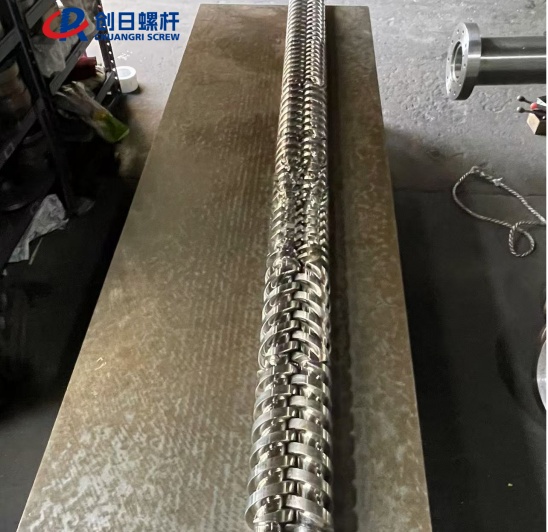
Twin Screw Barrel Guide: Top Designs & Wear Solutions in 2026


What Is a Twin Screw Barrel and Why Does It Matter?
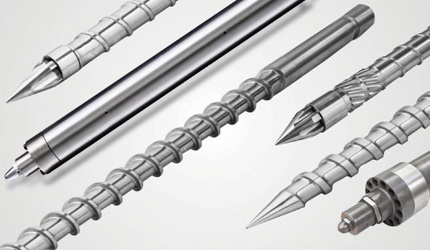
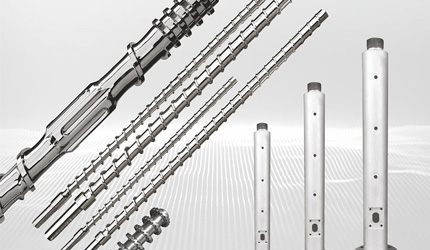
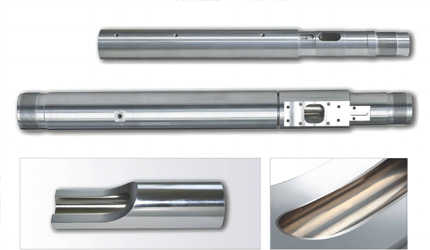
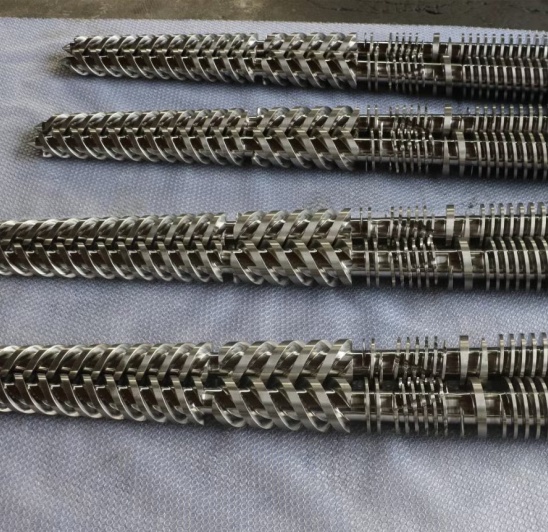
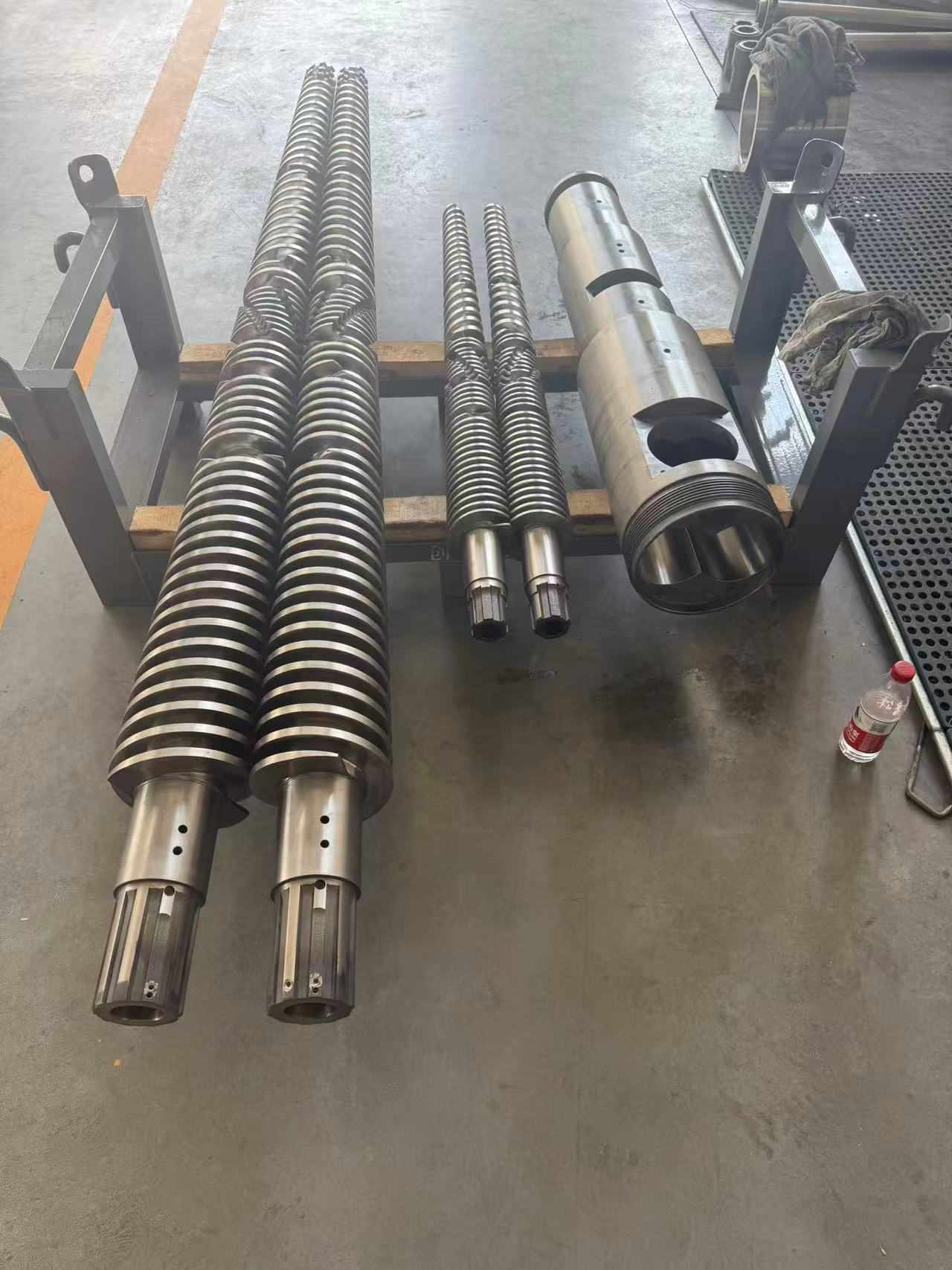
The twin screw barrel is the heart of a twin screw extruder. This is where the actual mixing and melt creation of the plastic take place. A twin screw barrel consists of two intermeshing screws inside the barrel. These screws feed, melt, mix, vent, and meter the plastic. The result is products such as pipes, profiles, boards, flooring, and pellets. Production managers and buyers of plastic processing machinery care about several things. These include output stability, melt quality, surface quality of the end product, energy consumption, and service life of the machinery.
For production managers and buyers, the properties of the barrel are important to ensure stable production of correct melt quality and surface appearance. It also has an influence on energy consumption and the service life of the screws. Only the screw and barrel, which are matched to the correct material formula, will cause no problems to occur. However, even a not completely matching composition can cause problems like low output, pressure fluctuations, insufficient plasticisation, discoloration by black spots, rough surface, or even wear.
In 2026, twin screw barrel selection is more important. Factories now process more recycled plastics, high-calcium PVC, WPC, SPC, and filled compounds. These materials create stronger abrasion. They require better screw geometry, barrel material, and surface treatment.
How Twin Screws and Barrels Work in Extrusion
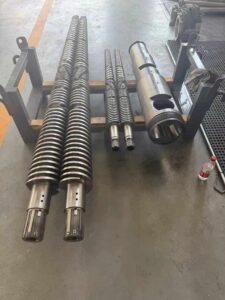
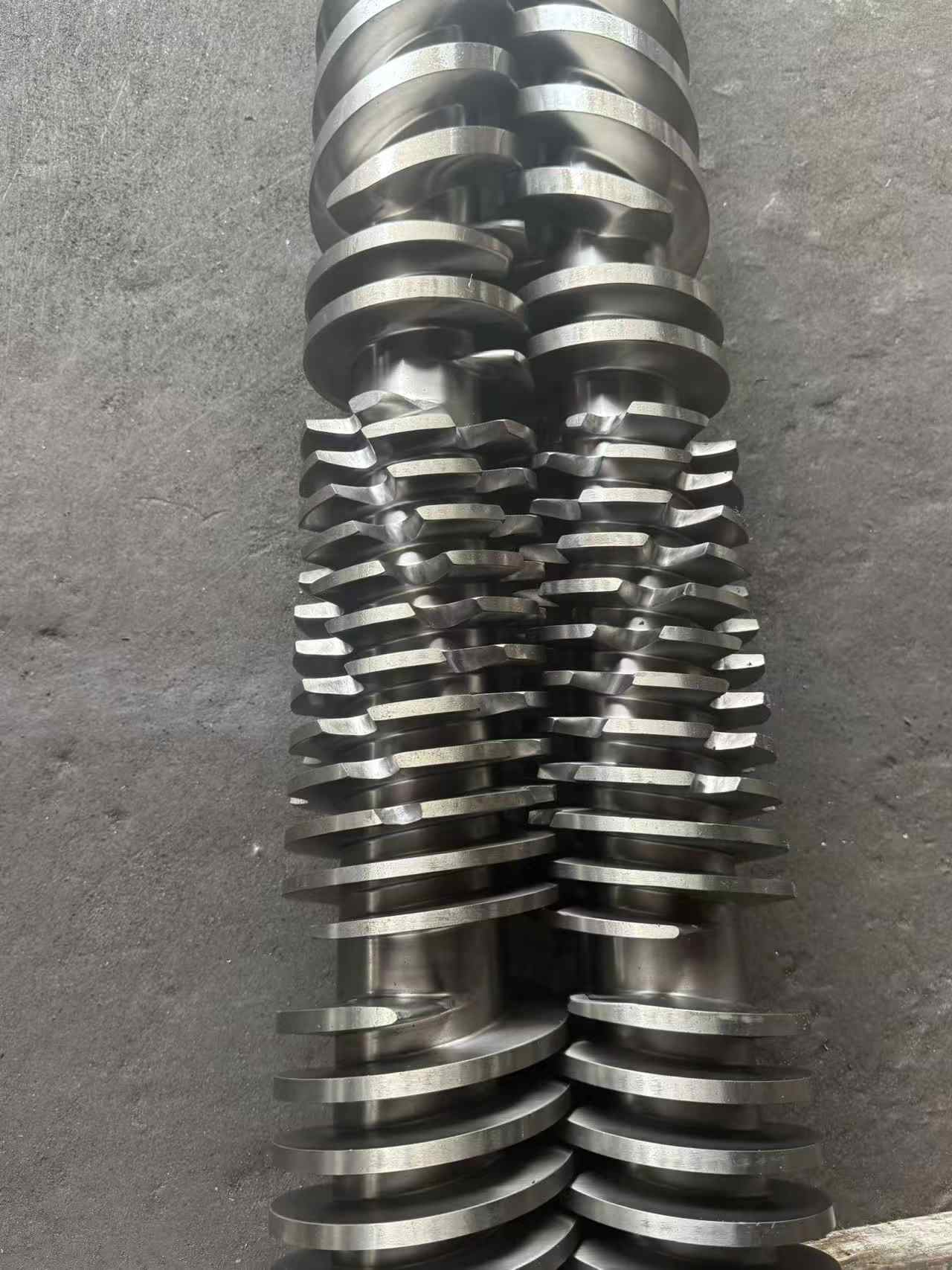
A twin screw system includes feeding, compression, melting, mixing, venting, and metering zones. The screws move and plasticize the material. The barrel maintains temperature, pressure, and clearance.
If the barrel bore becomes worn or screw-barrel clearance becomes too large, melt pressure drops, and plasticizing becomes unstable.
Why Design Affects Output, Melt Quality, and Service Life
Different materials need different screw barrel designs. Heat-sensitive PVC needs controlled shear. Wear protection of High-calcium PVC and WPC must be increased. Recycled plastics can contain contaminants that increase abrasion. The best twin screw barrel for making High-calcium PVC and WPC compound is one that optimizes conveying, melting, mixing, temperature control, pressure, etc., according to the actual formula.
Main Twin Screw Barrel Designs in 2026
The two common design directions are parallel twin screw barrels and conical twin screw barrels.
Parallel Twin Screw Barrel for High-Output Extrusion
A Parallel Twin-Screw Barrel uses two screws with the same diameter along the barrel length. It is widely used in high-output extrusion, compounding, pelletizing, and continuous processing lines.
Conical Twin Screw Barrel for PVC, WPC, SPC, and Foam Board Production
A conical twin screw barrel uses screws with gradually changing diameters. This structure is common in PVC processing. It supports stable compression, controlled plasticizing, and lower shear.
Parallel vs Conical Twin Screw Barrel: Key Selection Factors
|
Selection Factor |
Parallel Twin Screw Barrel |
Conical Twin Screw Barrel |
|
Applications |
Pelletizing, compounding, high-output extrusion |
PVC, WPC, SPC, foam board, profiles |
|
Main strength |
Strong mixing and stable output |
Controlled shear and stable plasticizing |
|
Material focus |
Broad plastic processing and recycling |
Heat-sensitive and high-filler PVC formulas |
|
Wear concern |
Abrasive fillers, recycled materials |
Calcium carbonate, PVC additives |
|
Best choice when |
Output and mixing are priorities |
PVC stability is the priority |
The key is to choose by material formula first, not only by machine size.
Materials, Surface Treatments, and Wear Resistance
The service life of a twin screw barrel depends on base material, heat treatment, coating, and machining precision.
Nitrided Twin Screw Barrel for General Plastic Processing
Nitriding improves surface hardness. It is suitable for many general plastic applications. It can work well with standard materials, but it may not be enough for high-filler PVC, glass fiber, or corrosive recycled formulas.
Bimetallic Twin Screw and Barrel for Abrasive and Corrosive Formulas
A bimetallic twin screw and barrel improve resistance to abrasion, corrosion, and high-temperature processing. It is often better for high-calcium PVC, recycled materials, glass fiber, and engineering plastics.
SKD Liner and Tungsten Carbide Coating for High-Wear Zones
Wear is not always even. Feeding sections, compression areas, mixing zones, and discharge zones may wear at different speeds. SKD liner technology and tungsten carbide alloy coating can protect these areas more effectively.
This is valuable for PVC, WPC, and SPC production. Calcium carbonate and recycled content can damage screw flights and barrel inner surfaces in these cases.
Common Twin Screw Barrel Wear Problems and Causes
Wear usually appears gradually. Many factories first notice product defects before they realize the screw and barrel are worn.
Output Drop, Pressure Loss, and Poor Plasticizing
A worn twin screw barrel often causes lower output, weak pressure build-up, unstable extrusion, and poor melt uniformity. Operators may adjust the temperature more often. The real cause may be excessive screw-barrel clearance.
Product Defects Caused by Screw and Barrel Wear
Common defects include rough surface, color streaks, black spots, bubbles, unmelted particles, unstable dimensions, and weak product strength. These issues are serious for PVC profiles, WPC boards, SPC flooring, and pelletizing lines.
Wear Risks from Calcium Carbonate, Glass Fiber, and Recycled Materials
Calcium carbonate, glass fiber, recycled plastics, and corrosive additives are major wear sources. They can damage screw flights, barrel bores, and mixing sections faster than clean virgin materials.
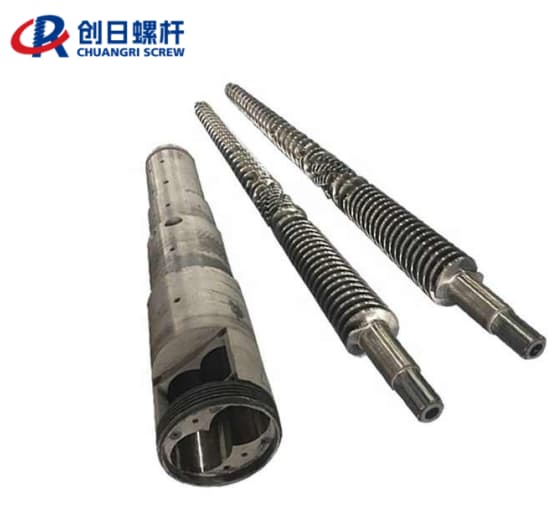
Wear Solutions for Longer Twin Screw Barrel Service Life
Longer service life comes from matching design, material, surface treatment, and inspection accuracy.
Match Screw Barrel Design to Material Formula
The first step is to understand the formula. High-calcium PVC, WPC, SPC, PE, PP, and recycled plastics all require different compression, mixing, and wear protection.
Protect High-Wear Areas with Bimetallic and Alloy Coatings
High-wear areas such as screw flights, root diameter, mixing zones, and barrel inner surfaces need stronger protection. CHUANGRI SCREW’s Bimetallic Twin-Screw is suitable for demanding PVC processing.
Control Screw-Barrel Clearance, Surface Finish, and Inspection Accuracy
Machining accuracy is as important as material strength. The correct screw-barrel clearance, barrel bore accuracy, as well as the straightness, hardness, and surface finish of the barrel, are as important as the material strength in ensuring that the twin screw barrel is performing as designed.
How to Choose a Reliable Twin Screw Barrel Manufacturer
Custom Design Capability Based on Drawings and Machine Models
Different machines and formulas need different designs. A strong supplier should work from drawings, samples, machine models, or production requirements. This is useful for replacement projects and worn screw barrel upgrades.
In-House Machining, Heat Treatment, Coating, and Inspection
A quality twin screw barrel depends on raw material inspection, turning, milling, grinding, polishing, nitriding, bimetallic treatment, coating, and final inspection.
We control these processes to help customers improve plasticizing stability, reduce wear problems, and maintain consistent production.
Application Coverage for PVC, WPC, SPC, Pelletizing, and High-Filler Plastics
Relevant CHUANGRI SCREW products include Parallel Twin-Screw Barrel, PVC Conical Twin-Screw Barrel, WPC Conical Twin-Screw Barrel, SPC Conical Twin-Screw Barrel, and Pelletizing Parallel Twin-Screw.
The Pelletizing Parallel Twin-Screw is suitable for PE, PP, PVC, ABS, PET, PA, PC, and mixed plastic granulation. For recycling and pelletizing, material quality often varies. Stable mixing and wear-resistant design are essential.
FAQ
Q: What is a twin screw barrel used for?
A: Twin screw barrels are used for feeding, melting, mixing, venting, and metering plastics in a twin screw extruder. Twin screw barrels are mainly used for the production of PVC pipes and profiles, WPC boards, SPC flooring, foam boards, recycling pelletizing, and high-filler plastics.
Q: How do I choose the right twin screw barrel?
A: Choose the right twin screw barrel based on material formula, filler content, output target, temperature sensitivity, wear risk, and machine model. Parallel designs are often used for high output and pelletizing. Conical designs are common for PVC, WPC, SPC, and foam board production.
Q: What causes twin screw barrel wear?
A: The following materials cause wear on the twin screw barrels: calcium carbonate, glass fiber, recycled plastic, aggressive additives, too small clearances between the screw barrels, thermal fluctuations, and wrong design of the screw barrels.
Q: How can the twin screw barrel service life be extended?
A: The service life of twin screw barrels can be increased by suitable design, by nitriding, by bimetallic finishing, by coating of wear-sensitive areas, and by checking screw-barrel-clearance, hardness, straightness, and surface finish.

 consult
 WHATSAPP
 leave message
 top
top