Bimetallic Screw and Barrel: Top Alloys for Maximum Lifespan
Related news
-
Bimetallic Screw and Barrel: Top Alloys for Maximum Lifespan
-
Bimetallic Extruder Screw & Barrel: Why It Matters in 2026
-
Bimetallic Screw Lifespan vs Nitrided Screw: What the Data Shows
-
Barrel Injection Optimization: Essential Tips for Improved Efficiency
-
Cable Extruder Screw Barrel: A Comprehensive Guide to Functionality
-
Twin Screw and Barrel Upgrades to Reduce Wear and Improve Efficiency
Bimetallic Screw and Barrel: Top Alloys for Maximum Lifespan


Why Bimetallic Screw and Barrel Matter for Long-Term Processing Stability
A bimetallic screw and barrel is designed for processing of materials containing abrasive fillers, having corrosive additives, processing of recycled plastics, high processing pressure, unstable melt quality, etc. In such cases, instead of asking for a “harder” screw, one has to ask for a suitable alloy system for processing specific resins with fillers at a given temperature and under production conditions.
What Makes a Bimetallic Screw and Barrel Different from Standard Designs
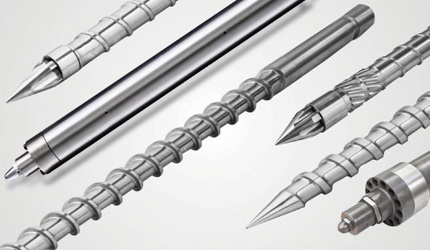
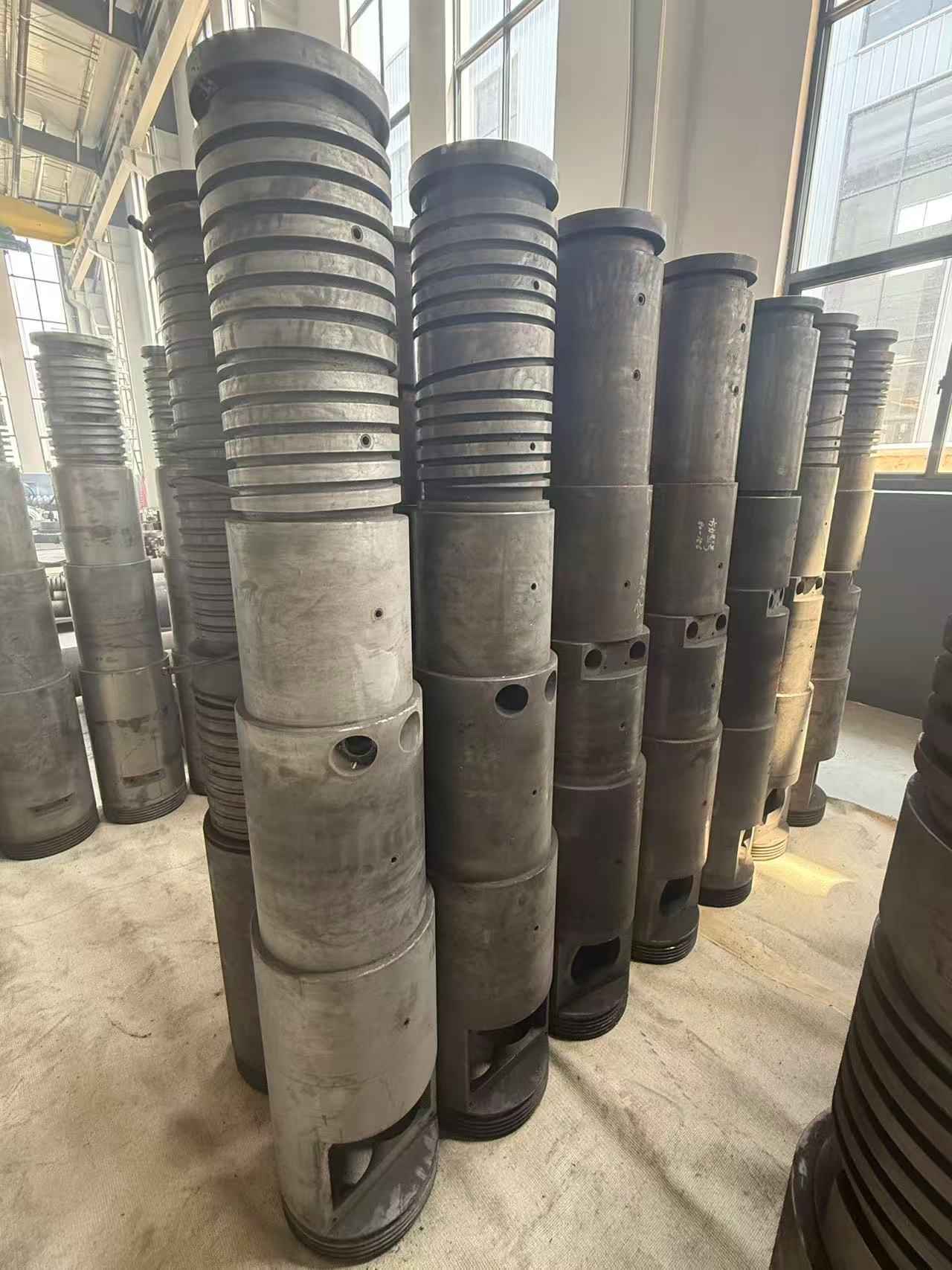
A bimetallic screw and barrel is made of a strong steel base combined with a specialized alloy layer. The steel base is designed to provide strength, straightness, and adequate dimensions during machining. The alloy layer on the working surfaces is made to withstand wear, corrosion, and heat.
In barrel wear, alloy liners may be used to line the bore. In screw wear, alloy coating may be applied to the screw flights, root diameter, outer diameter, and to the high wear areas in the screw mix zone.
When Standard Nitrided Screw Barrels Reach Their Limits
Nitrided screw barrels are suitable for processing a wide range of general plastics. However, glass fiber, calcium carbonates, regrinds, and corrosive chemicals can all cause wear to a nitrided screw barrel. Once the clearance between the screw and barrel has increased, it will begin to affect the output, melt quality, and consistency of the part being produced. As a result, the maximum lifespan of a nitrided screw barrel is dependent on matching the correct alloy to the actual processing conditions.
Top Alloy Options for Bimetallic Screw and Barrel Lifespan
Tungsten Carbide Alloy for High Abrasion Resistance
Tungsten carbide alloy is suitable for high-abrasion materials such as glass fiber reinforced plastics, mineral-filled compounds, high calcium carbonate PVC, and recycled materials. It protects the screw flights and high-contact surfaces where friction is most severe.
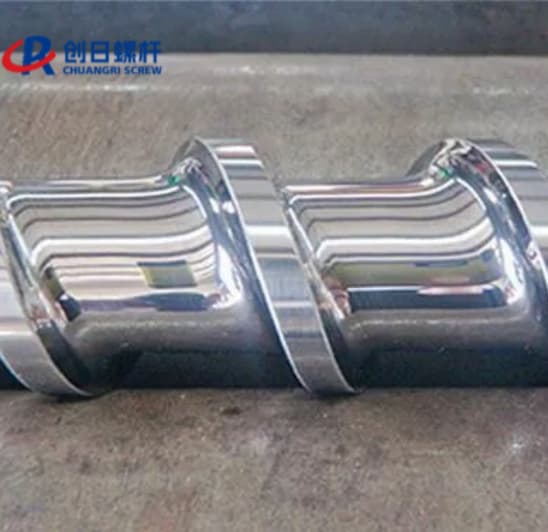
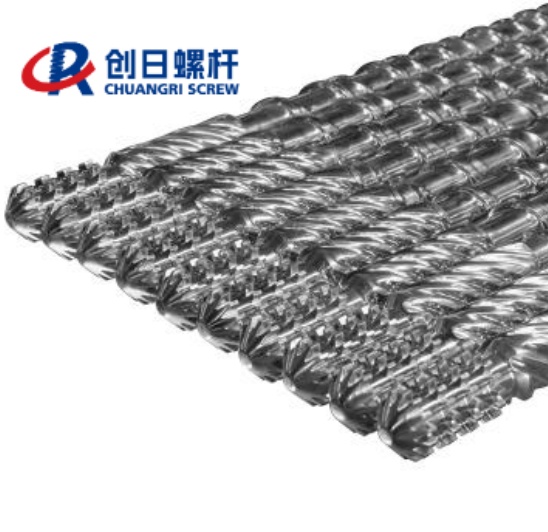
The Bimetallic Screw from CHUANGRI SCREW is constructed with Tungsten carbide alloy coating on the screw root diameter, screw outer diameter, and screw thread surface. CHUANGRI SCREW’s HVOF metallurgical bonding technology is designed to avoid alloy detachment and peeling, which is critical in high-volume production lines.
Nickel-Based Alloy for Wear and Corrosion Balance
Nickel-based alloy is useful when both abrasion and corrosion exist. It is suitable for PVC compounds, recycled plastics, flame-retardant materials, and some engineering plastics. Tungsten carbide resists hard particles, while a nickel-based alloy provides a more corrosion-resistant matrix.
SKD Liner and Tool Steel Options for Structural Durability
Materials such as 38CrMoAlA, 40Cr, 42CrMo, SKD61, AISI 4340, and DC53 can be selected according to application needs. The Bimetallic SKD Liner Barrel from CHUANGRI SCREW provides stronger inner-surface protection for filled PVC, WPC, SPC, and other abrasive plastic applications.
How Different Processing Materials Affect Alloy Selection
Bimetallic Screw and Barrel for Glass Fiber Filled Plastics
Glass fiber is very abrasive and wears down screw flights, barrel bore, and metering zone very fast. When processing glass fiber, emphasis should be put on high surface hardness, good alloy bond, good clearance, and wear protection in high-pressure zones.
Bimetallic Screw and Barrel for High Calcium Carbonate PVC
PVC compounds filled with high levels of calcium carbonate are extremely abrasive. Processing such materials requires a wear-resistant screw and barrel, and also a stable plasticising system. These requirements need to be met in a number of different processing situations, including pipe, profile, rigid foams, WPC boards, and SPC flooring.
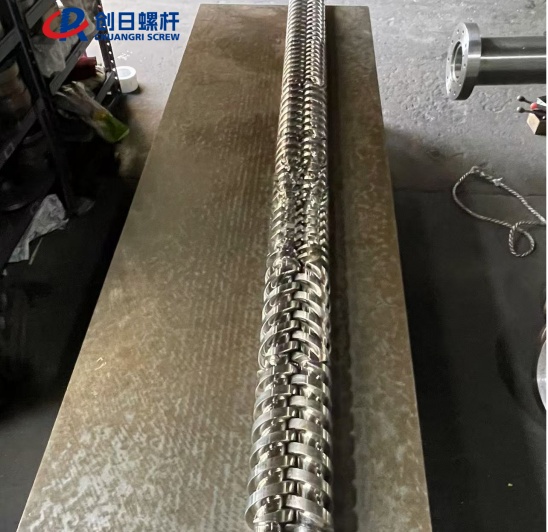
Bimetallic twin-screw from CHUANGRI SCREW is used for processing PVC materials with a high percentage of calcium powder content. Tungsten carbide-nickel alloy powder coating can be applied all along the screw length or only to the high wear parts.
Bimetallic Screw and Barrel for Recycled and Corrosive Materials
Raw materials made from recycled plastics can contain a vast array of irregular fillers, unstable colors, varying levels of moisture, and contamination. A good bimetallic wear strip needs to have good wear resistance, good corrosion resistance, good coating adhesion, and smooth material flow.
Bimetallic Barrel from CHUANGRI SCREW is the best choice for materials with abrasive filler content above 35% or mixed abrasive and corrosion materials. It is used for the very tough extrusion and injection processing.
Manufacturing Processes That Extend Bimetallic Screw and Barrel Service Life
Centrifugal Casting and Spray Welding for Bimetallic Barrels
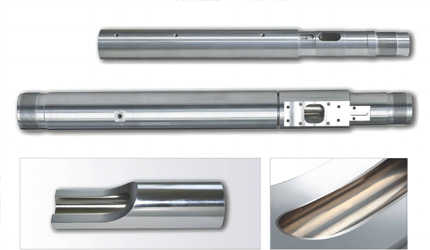
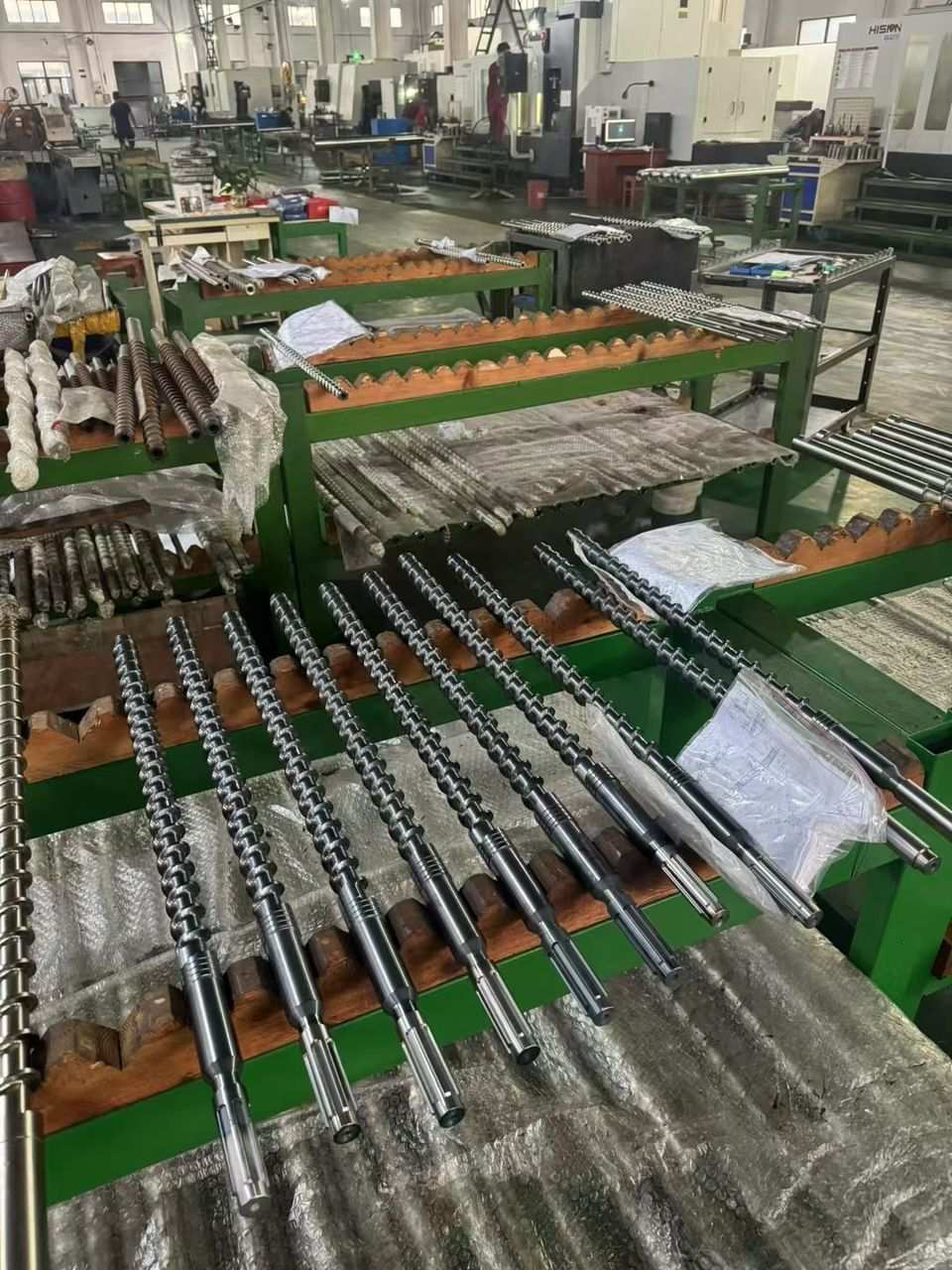
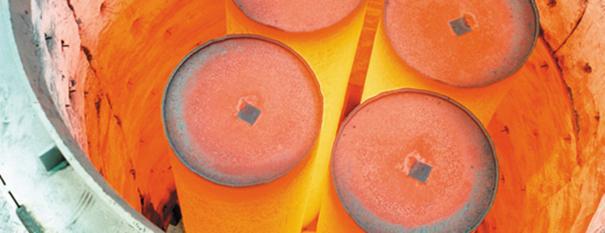
Centrifugal casting and spray welding can be used to form a wear-resistant alloy layer on the inner bore of a barrel. To ensure that the alloy layer is of adequate quality, it is very important to control the thickness, the hardness, and the subsequent machining accurately. If the liner is of poor quality, then it can cause problems with the melt pressure and the subsequent clearance.
HVOF Coating for Stronger Metallurgical Bonding
HVOF coating creates a dense and strongly bonded wear-resistant layer. For screws, bonding strength is as important as hardness because weak coatings may crack or peel under pressure, shear, and filler impact.
Precision Machining and Inspection for Consistent Lifespan
A long-lasting bimetallic screw and barrel also depends on machining accuracy. Thread milling, honing, grinding, polishing, hardness testing, concentricity inspection, and clearance control all affect processing stability and service life.
How to Choose the Right Bimetallic Screw and Barrel Alloy
Match the Alloy to Resin, Filler, and Additive Conditions
|
Processing Condition |
Recommended Alloy Direction |
Main Reason |
|
General plastics with low filler |
Nitrided or standard bimetallic option |
Balanced wear protection |
|
15–50% glass fiber |
Wear-resistant bimetallic screw |
Protects screw flights |
|
Abrasive filler above 35% |
Tungsten carbide / nickel alloy matrix |
Better filler wear resistance |
|
High calcium carbonate PVC |
Tungsten carbide-nickel coating / SKD liner |
Resists calcium powder abrasion |
|
Abrasive + corrosive materials |
Nickel-based corrosion-resistant alloy |
Balances wear and corrosion |
|
Recycled plastics |
HVOF coating + bimetallic barrel |
Handles variable material quality |
Consider Screw Design, Not Only Alloy Hardness
Note that alloy selection is not the only factor to consider for ensuring long screw life. Other factors include screw geometry, compression ratio, feed system design, barrier section, mixing section, vent section design, clearance, and surface finish.
CHUANGRI SCREW provides an appropriate alloy and screw structure for a specific application. Pipe extrusion, PVC extrusion, waste plastic recycling pelletizing, plastic injection molding, and high-filled plastic processing.
How to Match a Bimetallic Screw and Barrel to Resin, Filler, and Wear Zones
Some important information needs to be clarified before you can select the right bimetallic screw and barrel for your application: the type of resin you are using, the percentage of filler in the resin, the major wear area on your machine, the type of machine you are running, the area on the screw that is wearing the fastest, and whether you need full length alloy protection on your screw and barrel or just a local area.
Why CHUANGRI SCREW Builds Bimetallic Screw and Barrel Solutions for Demanding Applications
CHUANGRI SCREW tackles the root cause of screw and barrel wear. Short lifespan of screws can be caused by a number of factors, including high filler friction, corrosive additives in the material, poor screw design, coating failure, incorrect clearance, etc. Also unstable material containing a high proportion of recycled material.
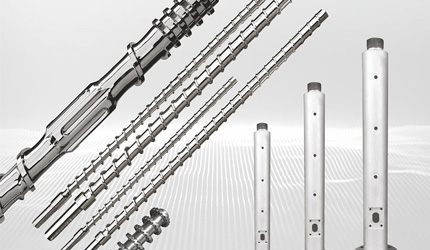
In-house manufactured product ranges include Bimetallic Screw, Bimetallic Barrel, Bimetallic Twin-Screw, Bimetallic SKD Liner Barrel, and Bimetallic Injection Molding Screw. Each product is developed to address particular processing difficulties: high calcium carbonate PVC, filled plastics, and very abrasive/corrosive materials.
Customization from selecting material to machining the part to the desired finish. We have the ability to perform CNC machining, thread milling, grinding, polishing, heat treating, bimetallic coating, alloy coating, etc., and inspect and package parts as required.
FAQ
Q: What is a bimetallic screw and barrel?
A: A bimetallic screw and barrel is made of steel as a base material and has one wear-resistant or corrosion-resistant alloy layer. This type of part is typically used in extrusion and in injection molding.
Q: Is a bimetallic screw and barrel better than a nitrided screw barrel?
A: Abrasive, corrosive, or filled materials are usually better processed with a nitrided screw barrel. For general plastic materials, a bimetallic screw barrel is recommended. For processing glass fibers, calcium carbonates, recycled materials, or generally for more difficult processing, a bimetallic screw barrel is more suitable.
Q: Which alloy is best for a bimetallic screw and barrel?
A: Tungsten carbide is best for very high-abrasion situations. Nickel-based alloys are superior for a combination of wear and corrosion resistance. Using SKD liners or tool steel in specific areas of the scraper will provide the necessary structural toughness.
Q: How long does a bimetallic screw and barrel last?
A: Service life is a function of resin type, filler content, screw design, temperature, maintenance & alloy selected. Correct alloy matching extends life greatly over standard nitrided solutions.
Q: How do I choose a bimetallic screw and barrel for high calcium carbonate PVC?
A: For strong wear protection on the screw flights, mixing zone, discharge zone, and barrel bore of your bimetallic screw and barrel, Tungsten carbide-nickel coating or SKD liner could be a good direction to go.

 consult
 WHATSAPP
 leave message
 top
top