How to Remove the Extruder Screw from the Barrel and Check the Screw Barrel Wear
Related news
-
How to Remove the Extruder Screw from the Barrel and Check the Screw Barrel Wear

-
Injection Molding Screw and Barrel Design Explained: Innovations for 2026
-
How Feed Screw Design Influences Extrusion Quality and Consistency
-
Twin Screw Extruder Barrel Comparison: Nitrided vs Bimetallic Barrels
-
Essential Parallel Twin Screw Barrel Maintenance for Peak Performance
How to Remove the Extruder Screw from the Barrel and Check the Screw Barrel Wear


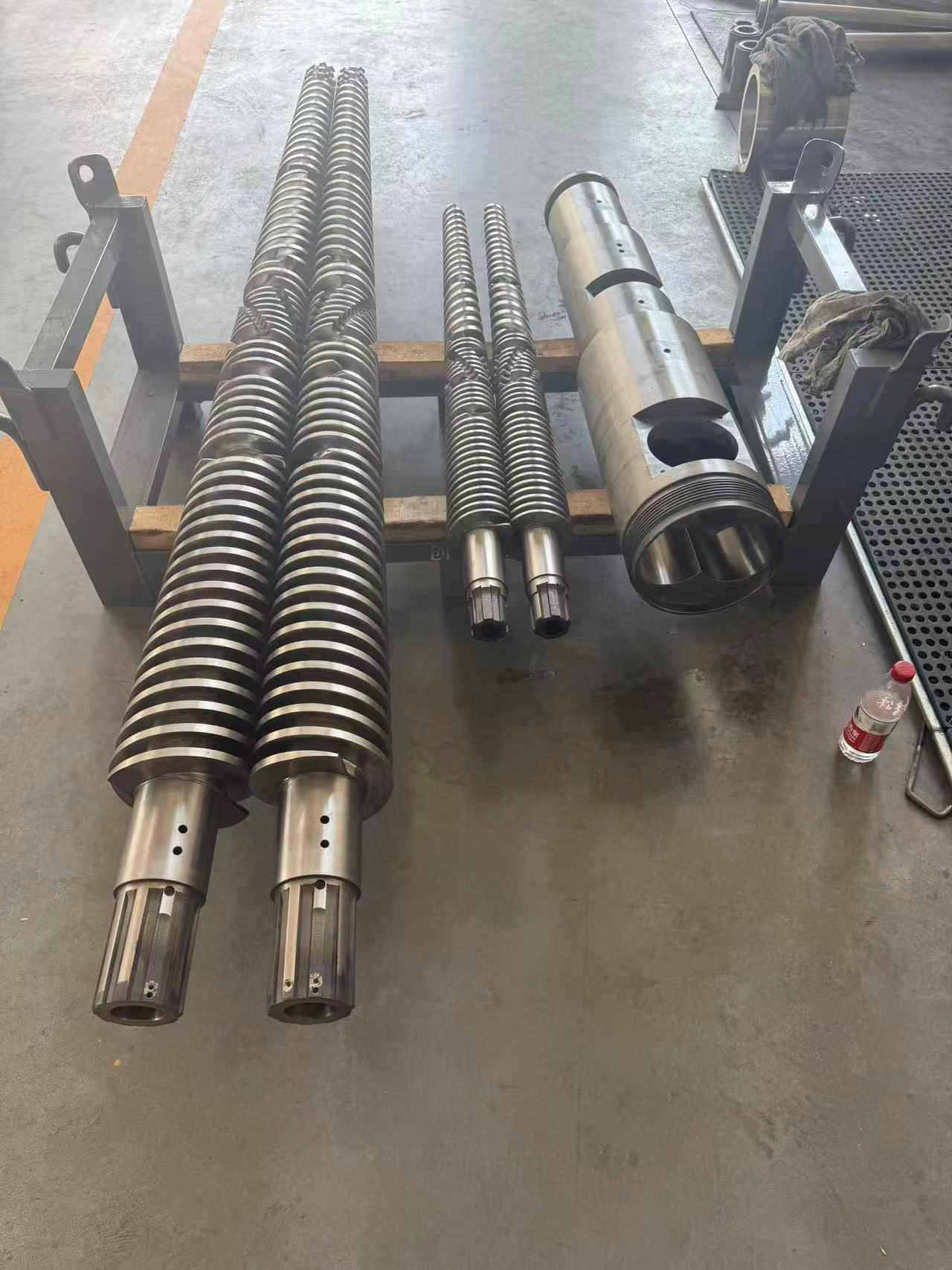
Learning how to remove the extruder screw from the barrel matters for safe maintenance. The real value comes from the information gained after removal. A worn screw or barrel can cut output. It can raise the melt temperature. It can lead to unstable pressure. It can also cause poor plasticizing quality. Teams remove the parts. They clean them. They measure them with care. This process helps them decide if cleaning, repair, recoating, or replacement is the right choice.
Why Remove the Extruder Screw from the Barrel Before Wear Gets Worse
Extruder screws work under heat, pressure, friction, and chemical exposure. When the screw flight or barrel bore wears, the clearance grows larger. Material may flow backward. It does not move forward in an efficient way. This lowers output. It makes the extrusion process less stable.
Common Reasons for Extruder Screw Removal
Operators usually remove the extruder screw for preventive maintenance, deep cleaning, material changeover, screw flight inspection, barrel bore inspection, output loss, unstable pressure, black spots, or screw and barrel replacement.
Warning Signs of Screw and Barrel Wear
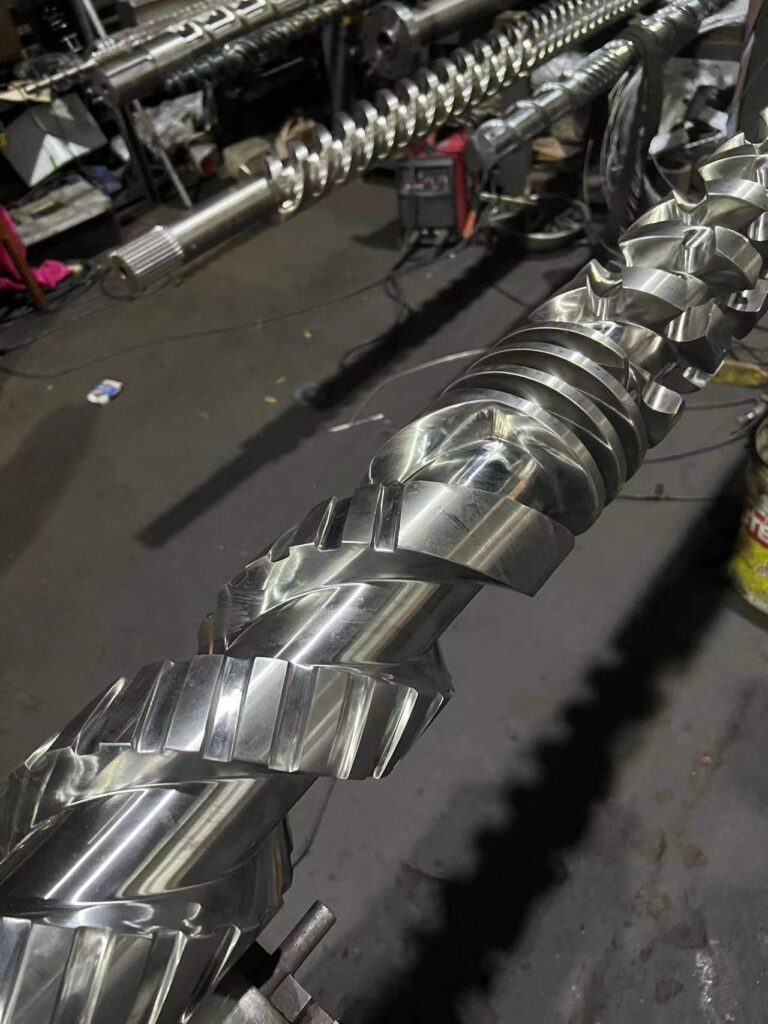
Common warning signs include lower output at the same screw speed, higher melt temperature, poor mixing, color streaks, longer purging time, unstable pressure, and more scrap during startup. If these issues remain after process adjustments, screw barrel wear should be checked directly.
Safety Preparation Before Removing Extruder Screw from Barrel
Before disassembly, treat the work as both a mechanical and thermal safety task. The screw may be hot. It is often heavy. It may carry residual polymer.
Tools Needed for Extruder Screw and Barrel Disassembly
Typical tools include hand tools, a pulling or pushing device, lifting straps, support blocks, brass scrapers, cleaning brushes, micrometers, bore gauges, dial indicators, and personal protective equipment. Avoid hard steel tools. These tools may scratch the screw flights or barrel bore.
Shutdown, Cooling, and Lockout Precautions
Shut down and lock out the machine before removal. Keep the barrel warm enough to soften residual polymer. Do not overheat it. Disconnect cooling lines, sensors, die components, and drive-end connections before pulling the screw.
How to Remove Extruder Screw from Barrel Step by Step
The exact process depends on machine type. The core method stays similar. It includes purge, prepare, disconnect, support, and remove slowly.
Purge, Heat, and Prepare the Barrel
Purge the extruder with suitable cleaning material. This removes most residual resin. Then heat the barrel to a safe temperature. This keeps the polymer soft. Prepare enough space. The screw needs room to exit fully.
Disconnect the Die Head, Drive End, and Cooling Lines
Remove the die head, adapter, screen changer, or front-end components. Then disconnect the coupling, rotary joint, cooling system, or retaining parts at the drive end. Mark key positions. This makes reinstallation easier.
Pull Out the Screw Without Damaging the Barrel Bore
Pull or push the screw slowly. Keep it aligned with the barrel. Support long screws. This prevents bending. Never hammer the screw directly. If the screw does not move, stop. Check for solidified polymer, hidden fasteners, or misalignment.
How to Clean and Check Screw Barrel Wear After Removal
After removal, clean the screw and barrel before inspection. Dirt, carbon, and filler deposits can hide real wear problems.
Clean the Screw Flights and Barrel Bore Safely
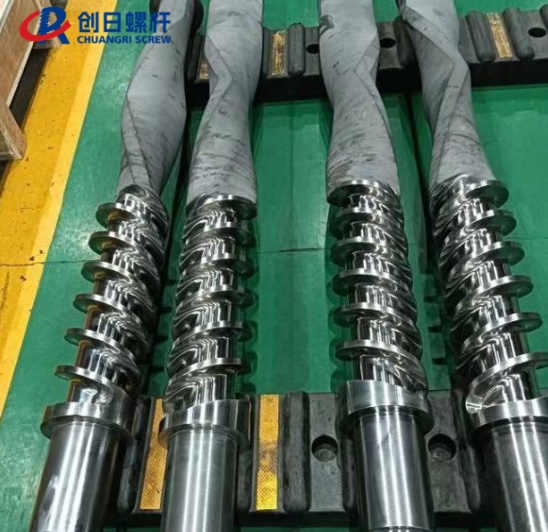
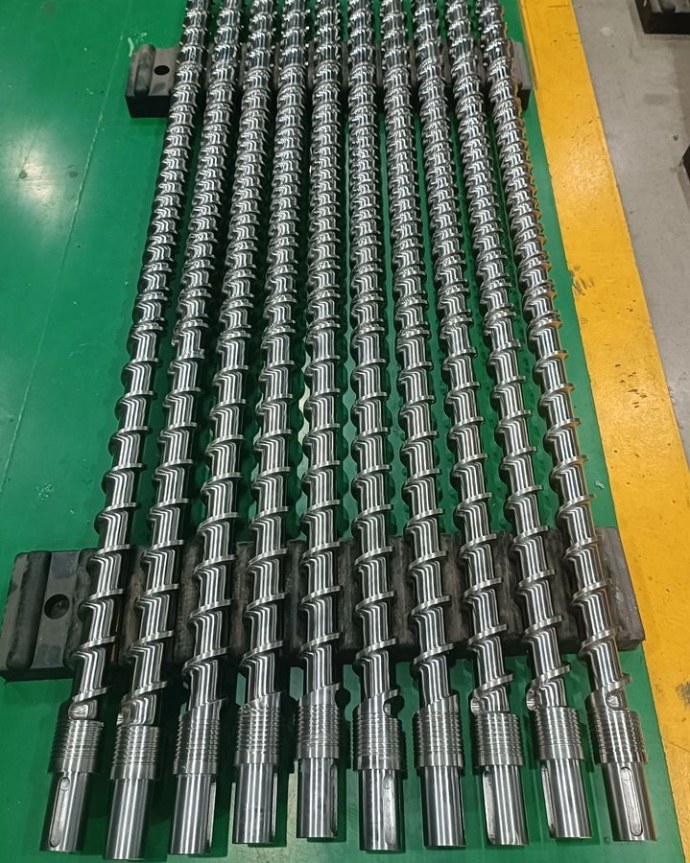
Use brass tools, copper scrapers, soft brushes, and approved cleaning methods. Clean the screw root, flight crest, mixing section, metering section, and barrel bore. If the screw will not be reinstalled immediately, apply anti-rust oil. Store it with proper support.
Inspect Screw Flight Wear, Scoring, and Corrosion
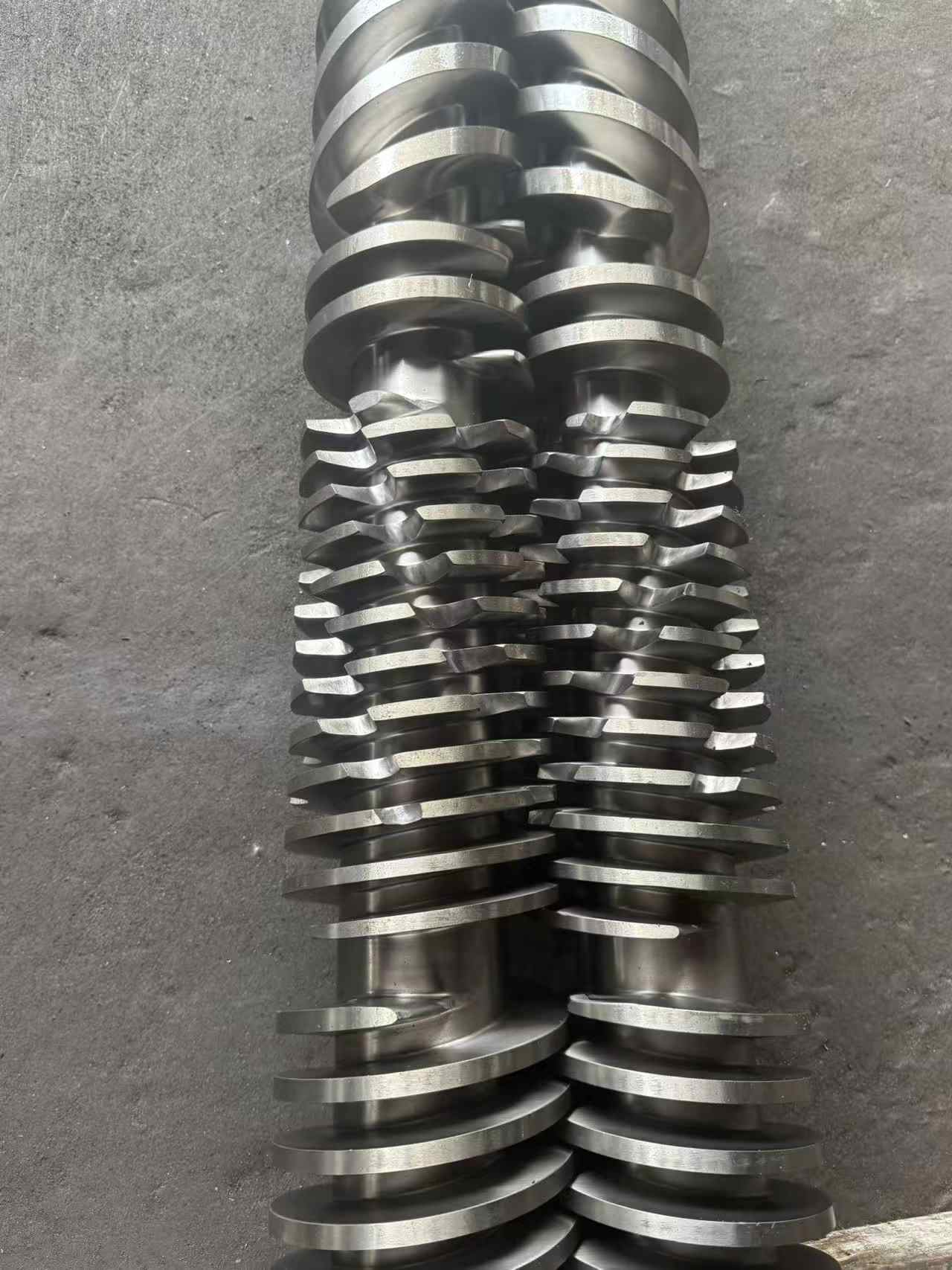
Look for rounded flight edges, deep scratches, local wear, pitting, corrosion, coating peeling, and signs of metal-to-metal contact. Wear in different zones can reveal different process problems. These include abrasive filler, poor alignment, or unstable feeding.
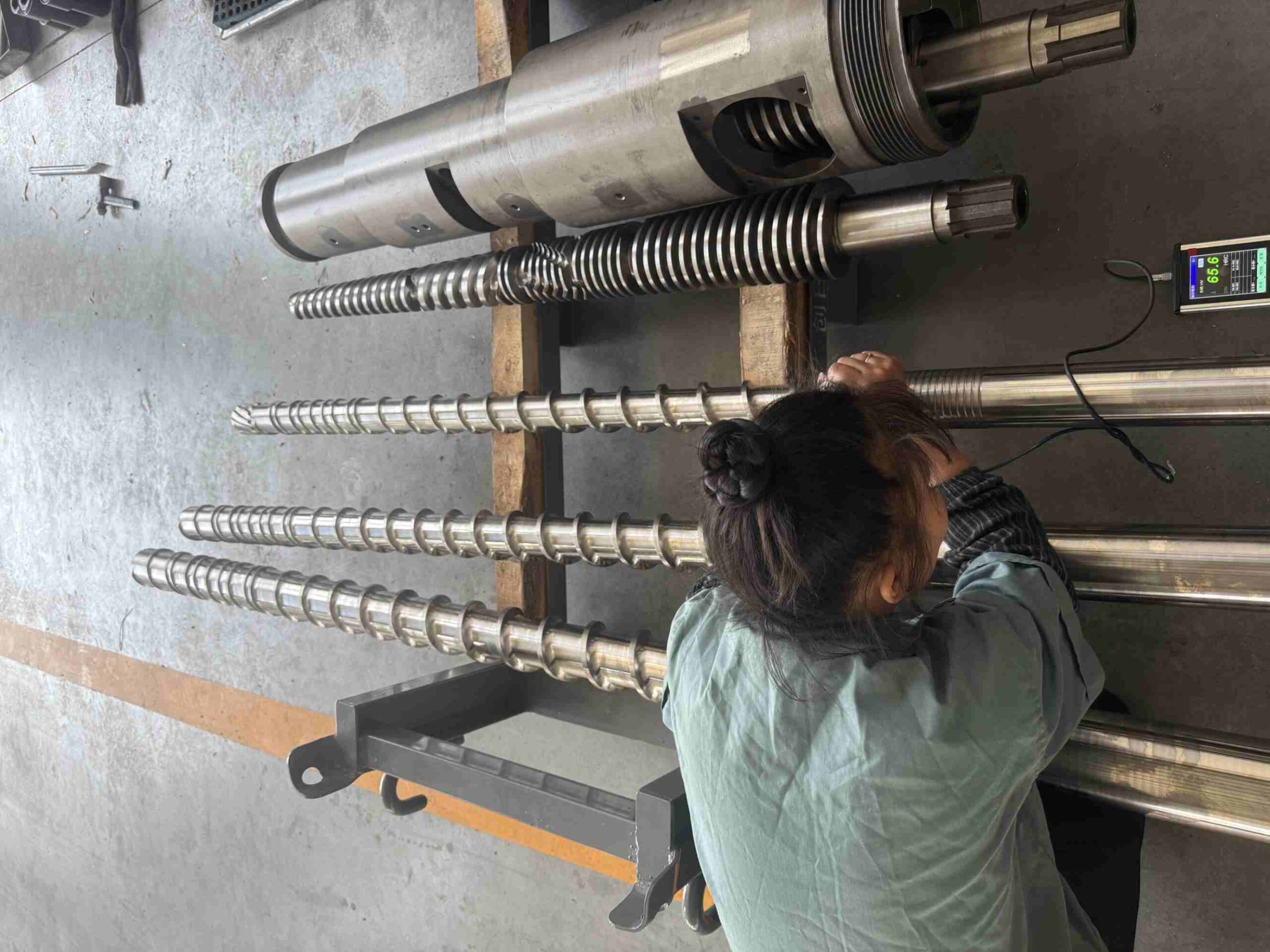
Measure Screw OD, Barrel ID, and Screw Barrel Clearance
Measure the screw outside diameter and barrel inside diameter at several positions. Compare the data with original dimensions or previous maintenance records. If clearance is too large, output and pressure stability will suffer. CHUANGRI SCREW checks fit clearance, concentricity, hardness, and dimensional accuracy during production to support stable screw and barrel performance.
What Screw and Barrel Wear Tells You About the Extrusion Process
Wear patterns help identify the real cause of extrusion problems. This approach avoids simply replacing parts without understanding the issue.
Abrasive, Corrosive, and Adhesive Wear Patterns
Abrasive wear often comes from glass fiber, calcium carbonate, recycled plastic, or mineral fillers. Corrosive wear may come from moisture, additives, or reactive materials. Adhesive wear usually results from metal-to-metal contact, misalignment, or poor clearance.
When to Repair, Re-Coat, or Replace the Screw and Barrel
Repair or recoating may work when wear is local, and the screw body is still sound. Replacement is better when screw flights are severely worn, the barrel ID is oversized, coating failure is widespread, or the screw is bent or cracked. If the original screw design does not match the material, a direct copy may repeat the same wear problem.
How to Choose a Replacement Extruder Screw and Barrel
A replacement should match the resin, filler content, output target, melt quality, and wear environment.
Match Screw Design to Resin, Filler Content, and Application
After you check screw barrel wear, the next step is not simply ordering the same screw again. The wear pattern should guide the replacement choice. For example, if a pipe extrusion line shows unstable plasticizing, rising melt temperature, or obvious wear in the compression and metering zones, the new screw should improve both melt control and wear resistance.
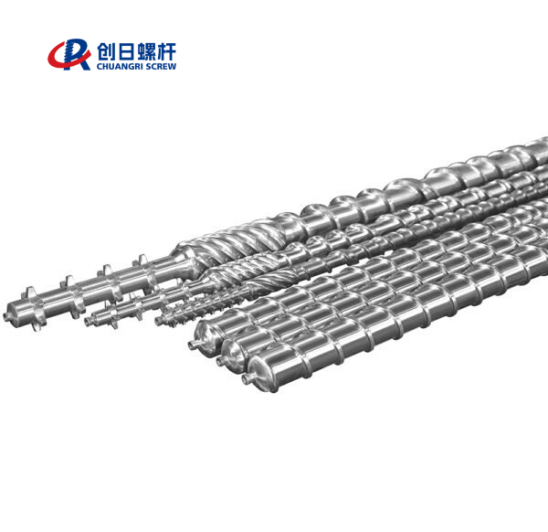
For PPR, PE, and HDPE pipe extrusion, CHUANGRI SCREW’s PPR Pipe Extruder High-Speed Screw and PE HDPE Pipe Extruder High-Speed Screw are more relevant than a general-purpose screw because they are designed for pipe extrusion conditions where stable plasticizing, uniform mixing, and lower melt temperature are important.
For recycling and pelletizing lines, where material quality is less consistent, and wear can develop faster, our Pelletizing Single Screw is a better fit when the goal is to maintain stable conveying and plasticizing during long production runs.
Select Nitriding, Bimetallic, or Wear-Resistant Materials
The surface treatment should also match the wear cause found during inspection. If the screw mainly processes general-purpose plastics and the wear is moderate, nitriding can be a practical option. If the inspection shows abrasive wear from fillers, recycled material, or high-friction compounds, a stronger wear-resistant solution is usually needed.
In these cases, CHUANGRI SCREW’s bimetallic screw can help protect key screw areas with tungsten carbide alloy coating, while the bimetallic barrel provides a wear-resistant alloy liner for extrusion conditions involving high filler content or combined abrasive and corrosive wear.
Work with CHUANGRI SCREW for Custom Screw and Barrel Solutions
At CHUANGRI SCREW, our team not only replaces worn components. We analyze why the screw and barrel failed. This includes filler content, clearance, resin type, screw structure, and wear zone. Based on drawings, machine models, materials, and process goals, we provide custom screw and barrel solutions. These use processes such as turning, milling, grinding, polishing, nitriding, quenching, bimetallic processing, coating, and precision inspection.
FAQ
Q: How to remove the extruder screw from the barrel safely?
A: Purge the material, keep the barrel warm enough to soften residual polymer, shut down and lock out the machine, disconnect related parts, and pull the screw slowly with proper support.
Q: How to remove the extruder screw from the barrel when the polymer is stuck?
A: Reheat the barrel to soften the polymer and avoid excessive force. If the screw still does not move, check for hidden fasteners, degraded material, or misalignment.
Q: How often should you remove the extruder screw from the barrel for inspection?
A: It depends on material type, filler content, production hours, and quality requirements. Recycled, glass-filled, high-calcium, or corrosive materials usually need more frequent inspection.
Q: How to check screw barrel wear after removing the screw?
A: Clean the screw and barrel, inspect wear visually, measure screw OD and barrel ID, calculate clearance, and compare the data with original or historical measurements.
Q: How to remove the extruder screw from the barrel without damaging the barrel bore?
A: Keep the screw aligned, support long screws, use proper pulling tools, avoid direct hammering, and stop immediately if resistance increases.

 consult
 WHATSAPP
 leave message
 top
top