
Parallel Twin Screw Barrel: Best Specs for High Output Lines in 2026
Related news
-
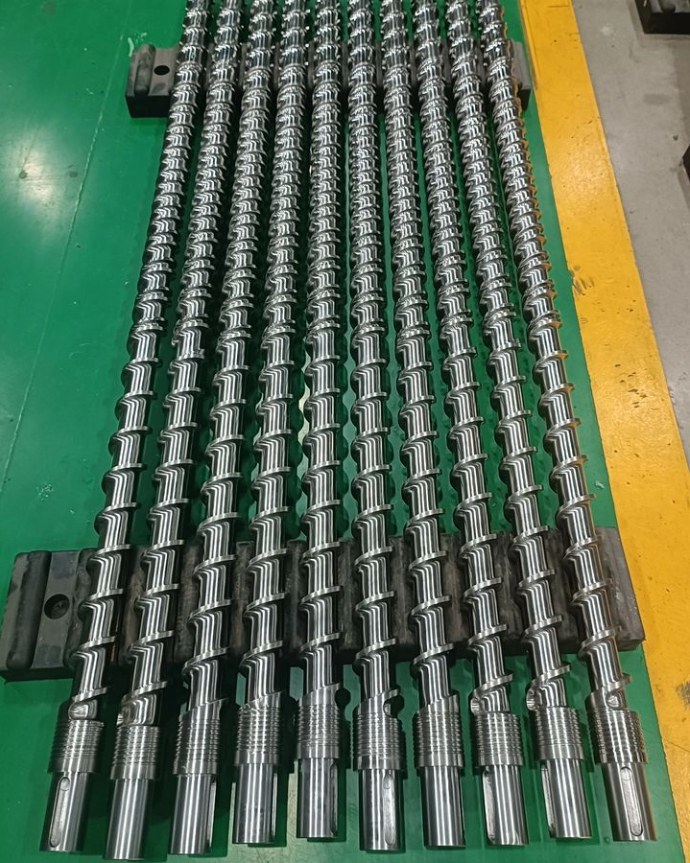
Align Extruder Systems for Maximum Output and Minimum Downtime
-
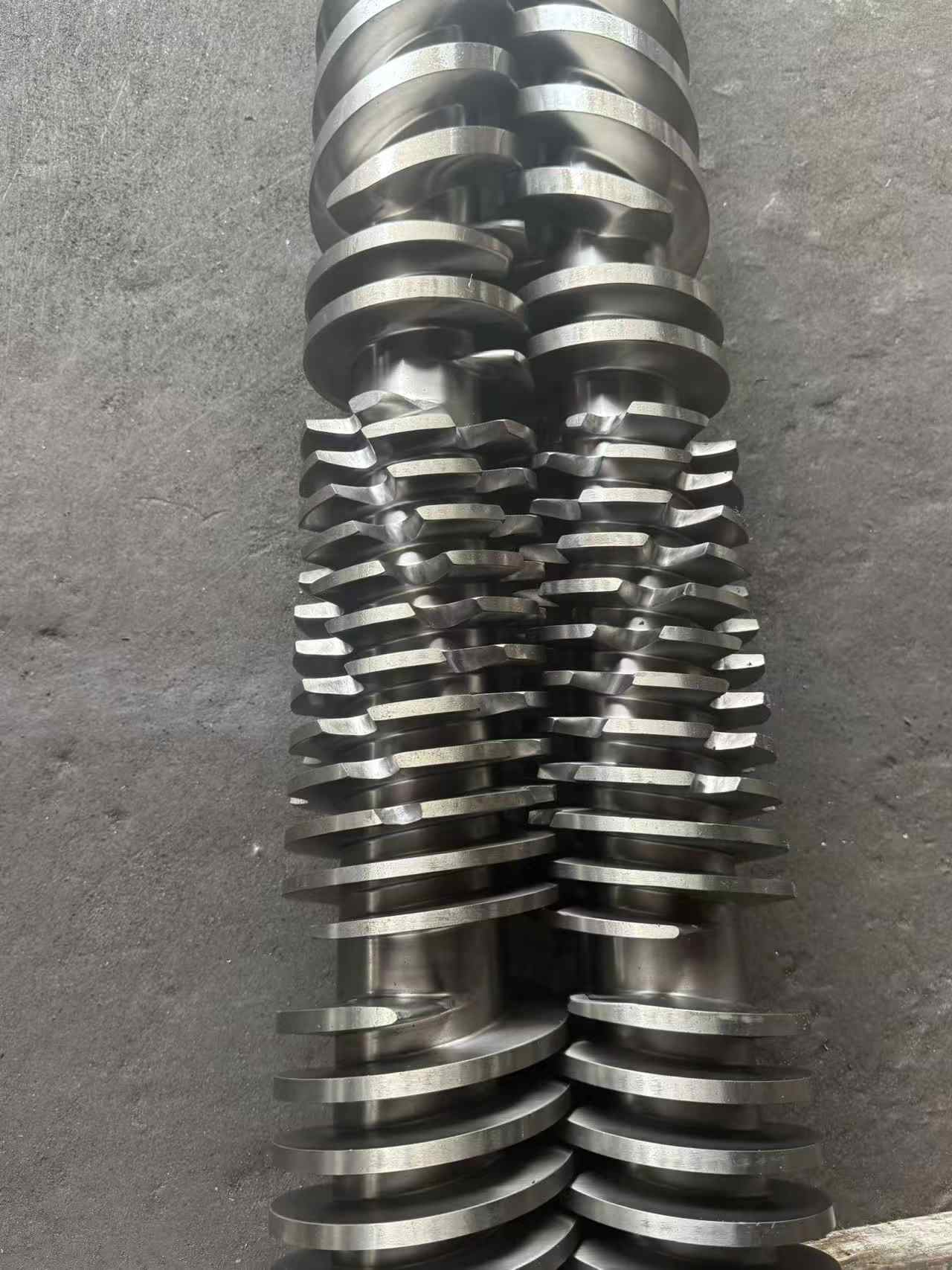
Twin Screw and Barrel Performance Comparison: Nitrided vs Bimetallic
-
Conical Screw Barrel: Essential Maintenance Tips for Long-Term Use
-
Twin Screw Barrel Guide: Top Designs & Wear Solutions in 2026

-
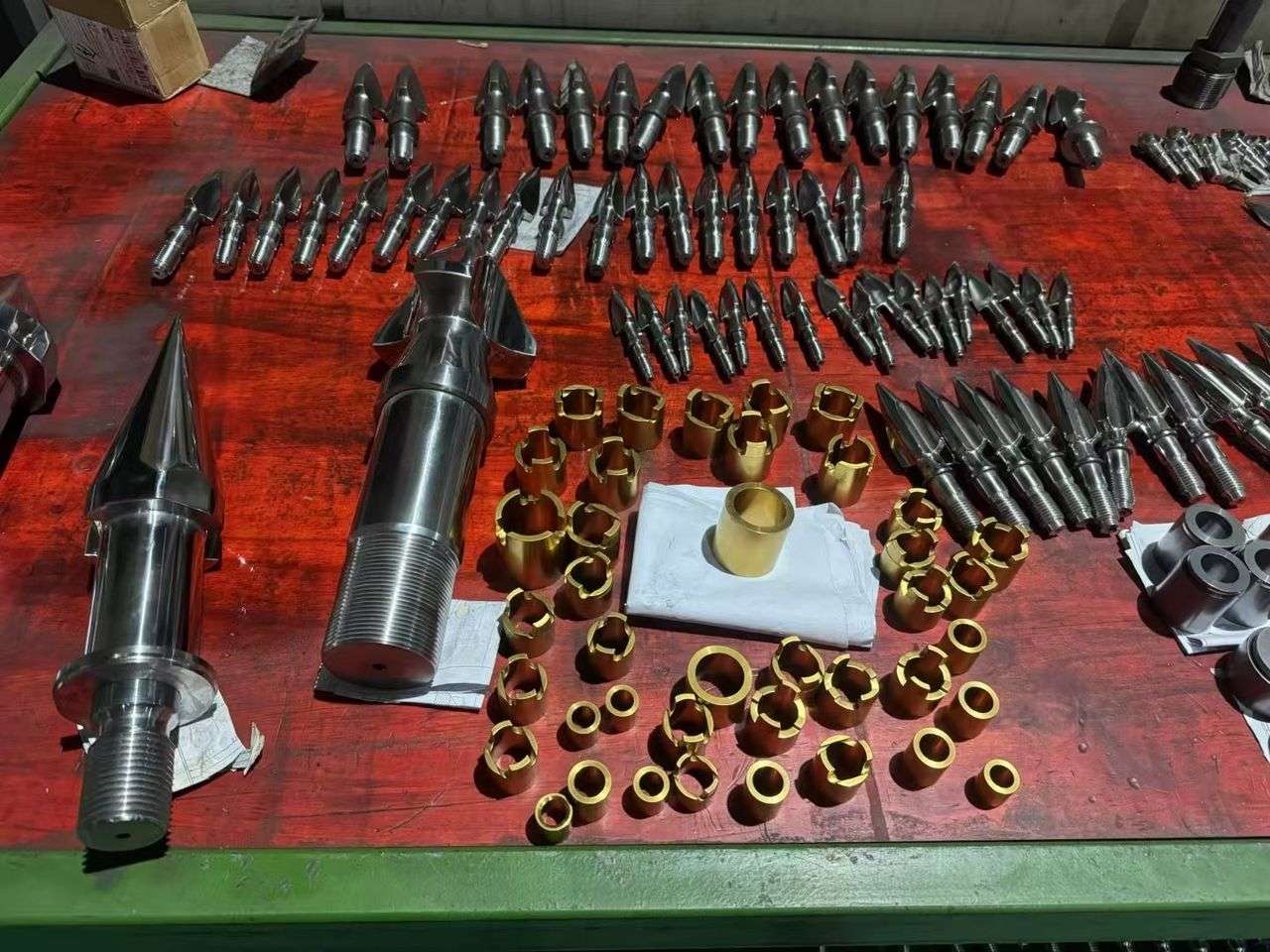
Twin Screw and Barrel Wear Solutions for Highly Filled Materials
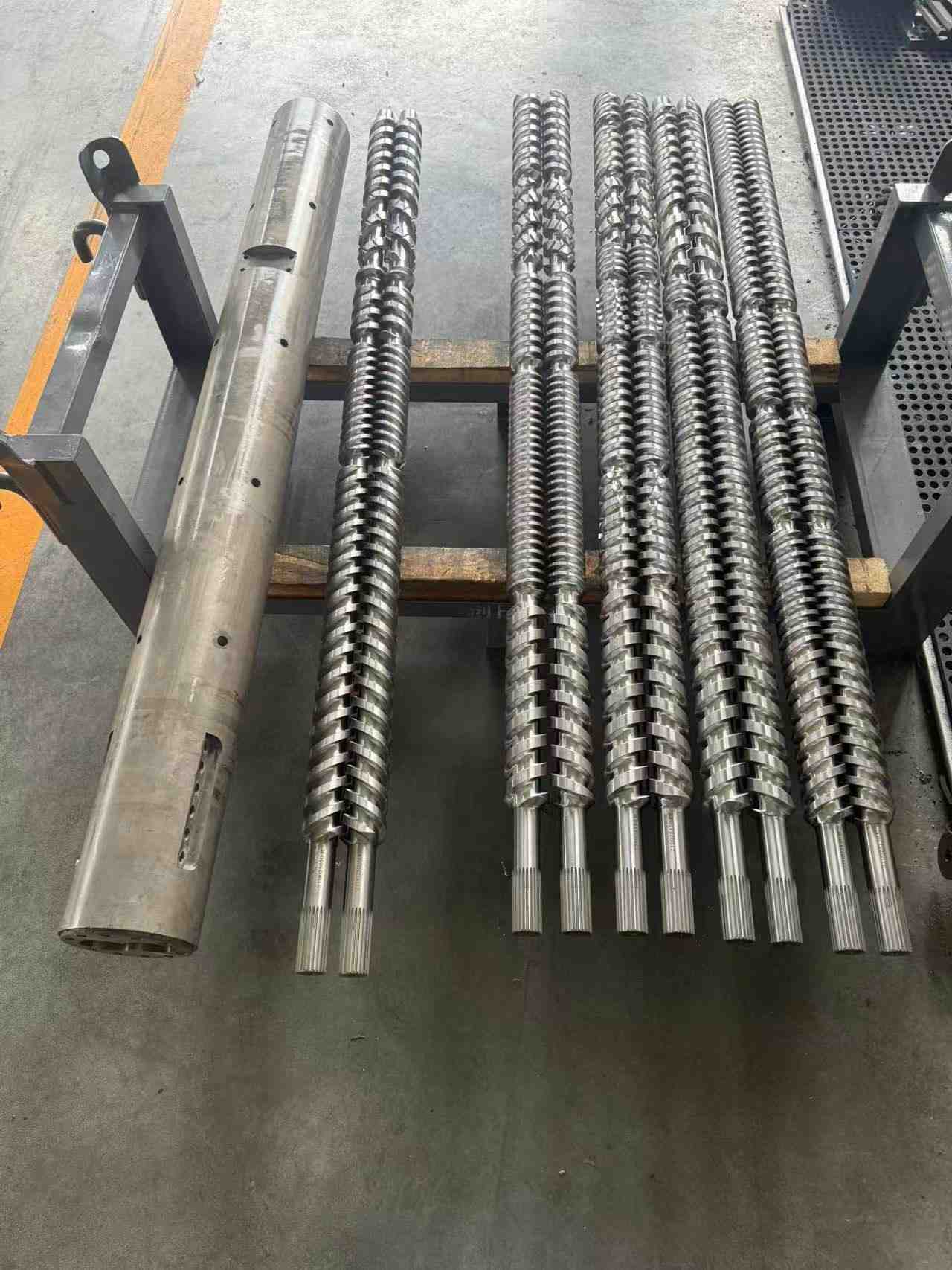
Parallel Twin Screw Barrel: Best Specs for High Output Lines in 2026


In high-output extrusion lines, selecting the right parallel twin screw barrel goes beyond a spare parts choice. It influences feeding stability. It impacts plasticizing quality. It affects melt pressure, wear resistance, and long-term production consistency. In 2026, producers of PVC, WPC, SPC, profiles, and pelletizing need screw barrel systems. These systems must manage higher output. They need to prevent overheating. They must avoid unstable flow or fast abrasion.
A proper parallel twin screw barrel needs to fit the machine model. It must suit the resin formula. It has to match filler content, screw speed, L/D ratio, and expected production capacity. This guide describes the main specs. Buyers should review them before ordering.
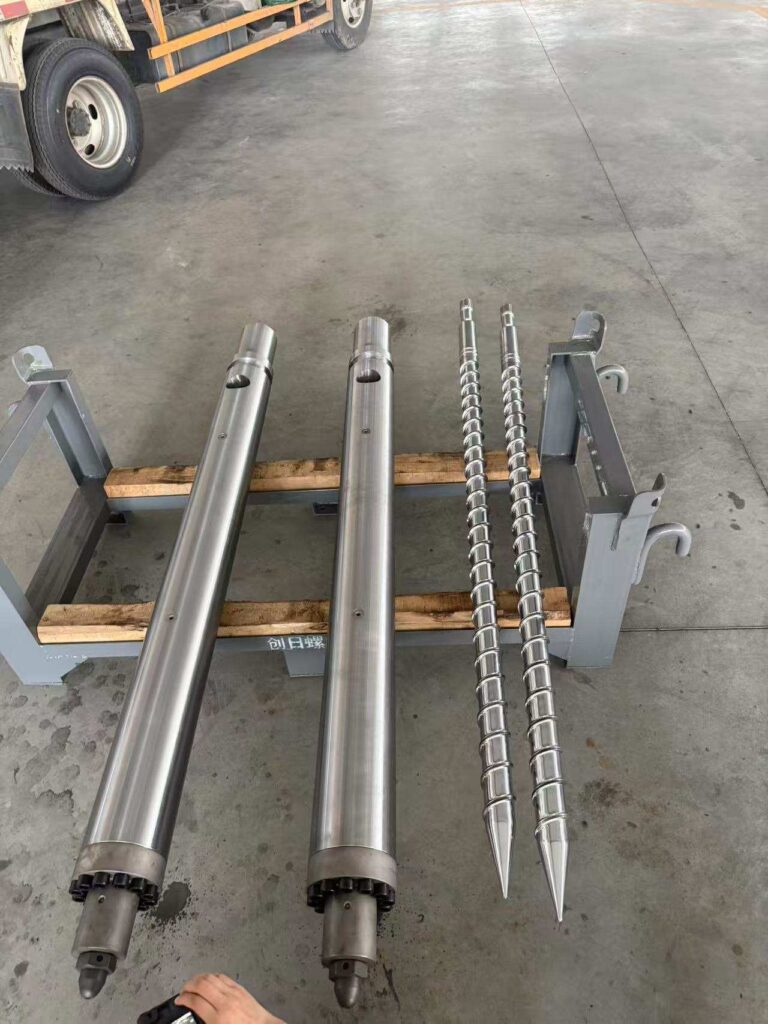
What Is a Parallel Twin Screw Barrel in High-Output Extrusion?
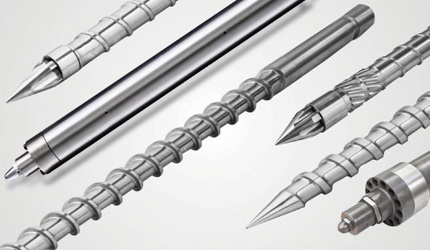
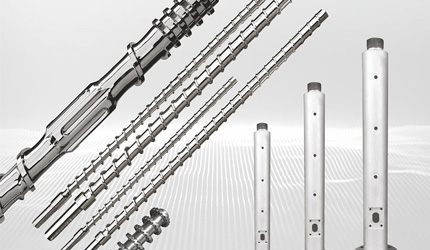
A parallel twin screw barrel is used in a parallel twin screw extruder. Two screws rotate inside a precisely machined barrel. They work together. They convey, compress, melt, mix, and discharge plastic materials in a continuous process.
How Parallel Twin Screw Barrel Design Supports Continuous Processing
High output needs a stable material flow. A well-designed parallel twin screw barrel improves feeding. It helps with melting. It supports mixing, pressure control, and discharge consistency. This is especially true for PVC and filled formulas. Excessive shear heat or poor mixing can cause burning in these cases. It may lead to degradation or unstable product quality.
Parallel Twin Screw Barrel vs. Conical Twin Screw Barrel
A parallel twin screw barrel usually supports stable high-output extrusion. It offers strong conveying performance. A conical twin screw barrel is often used in PVC pipe, profile, WPC, and SPC applications. Their torque distribution and compact structure are important. The right choice depends on the formula. It also depends on product type and output target.
Key Parallel Twin Screw Barrel Specs to Check in 2026
The most important parallel twin screw barrel specs include screw diameter, L/D ratio, screw speed, motor power, output range, compression ratio, material, and surface treatment.
Screw Diameter, L/D Ratio, and Output Capacity
Screw diameter affects conveying volume. L/D ratio influences melting, mixing, and residence time. A longer L/D ratio can improve plasticizing. Yet heat-sensitive materials require careful control. For high-output lines, the best design is not always the largest size. It is the one that balances output, melt quality, and material safety.
Screw Speed, Motor Power, and PVC Production Range
Screw speed and motor power must match the barrel design. If speed increases without proper wear protection and screw geometry, the line may face pressure fluctuation or overheating.
|
Spec |
Why It Matters |
|
Screw diameter |
Determines conveying capacity |
|
L/D ratio |
Affects melting and mixing |
|
Screw speed |
Influences output and shear heat |
|
Motor power |
Supports stable torque |
|
Barrel treatment |
Reduces wear |
|
Clearance control |
Maintains pressure stability |
CHUANGRI SCREW offers Parallel Twin-Screw Barrel solutions for parallel twin screw extruders, with customizable materials and treatments for high-output production needs.
Compression Ratio Customization for Different Formulas
Different materials need different compression behavior. PVC, PE, PP, ABS, PET, recycled plastics, and high-filler compounds all process differently. A customized compression ratio helps improve plasticizing. It reduces unmelted particles. It stabilizes melt pressure. It avoids excessive shear.
How to Match Parallel Twin Screw Barrel Design to Your Material
A parallel twin screw barrel should be selected according to the actual material. It should not be chosen based only on the machine size.
PVC, WPC, SPC, and High-Filler Applications
PVC, WPC, and SPC formulas often contain calcium carbonate, stabilizers, pigments, lubricants, or recycled material. These ingredients increase wear. They make temperature control more difficult. For these applications, buyers should focus on barrel lining. They need to consider screw flight protection. Mixing section design is also key. Wear resistance matters as well.
CHUANGRI SCREW’s Bimetallic Twin-Screw is suitable for abrasive twin screw applications, especially PVC formulas with high calcium powder content. It helps improve wear resistance in demanding extrusion environments.
Recycling, Pelletizing, and Engineering Plastic Processing
Recycling and pelletizing lines often process unstable raw materials. These materials have different shapes, moisture, and contamination levels. CHUANGRI SCREW’s Pelletizing Parallel Twin-Screw is designed for PE, PP, PVC, ABS, PS, PET, PA, POM, and PC granulation. It supports stable plasticizing. It helps maintain material uniformity in pelletizing production.
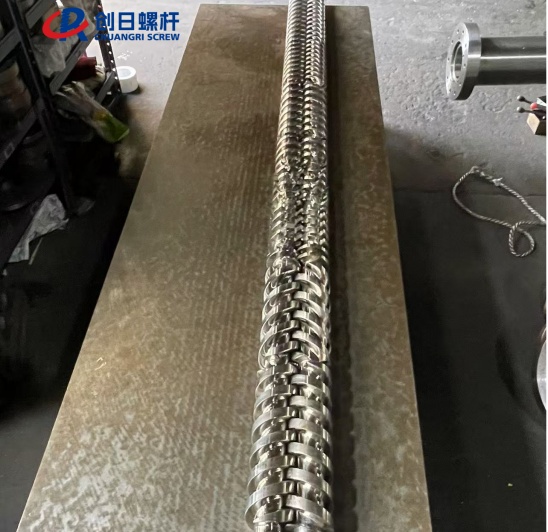
Best Materials and Treatments for Parallel Twin Screw Barrel Durability
Durability is critical. High-output lines run longer. They often process more abrasive materials.
Nitrided, Bimetallic, and Solid Carbide Options
|
Treatment |
Best For |
Advantage |
|
Nitriding |
General plastics |
Better surface hardness |
|
Bimetallic |
Abrasive or corrosive formulas |
Stronger wear protection |
|
Solid carbide |
Severe wear conditions |
Higher durability |
|
Alloy coating |
Local wear zones |
Protects key screw areas |
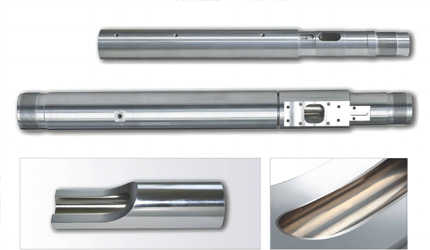
CHUANGRI SCREW’s Bimetallic Barrel is suitable for abrasive filler content and combined abrasive/corrosive conditions. Its alloy liner helps protect the barrel bore. It maintains stable clearance.
Wear Resistance, Corrosion Resistance, and Service Life
Wear often appears as lower output. It can cause unstable pressure. Higher melt temperature may occur. Poor mixing is another sign. More frequent adjustments might be needed. A durable parallel twin screw barrel helps maintain stable production. This holds over longer operating cycles.
What Makes a Parallel Twin Screw Barrel Stable in High-Output Lines?
High output only matters when the line remains stable.
Feeding, Compression, Metering, and Mixing Zone Design
The feeding zone controls material intake. The compression zone supports melting. The metering zone stabilizes pressure. The mixing section improves melt uniformity. These zones must work together. This avoids overheating. It prevents pressure fluctuation. It stops uneven plasticizing.
Barrel Precision, Clearance Control, and Surface Finish
Barrel bore accuracy matters. Screw straightness is important. Surface roughness, concentricity, and fit clearance all affect extrusion stability. At CHUANGRI SCREW, we focus on custom design. We use CNC machining, heat treatment, and inspection. These steps help customers solve unstable output, fast wear, and poor plasticizing problems.
How to Choose a Parallel Twin Screw Barrel Supplier
A good supplier should understand the production problem. This problem lies behind the replacement need.
Custom Design Based on Drawings, Resin, and Output Target
Before ordering a parallel twin screw barrel, prepare the machine model, screw diameter, L/D ratio, screw speed, motor power, resin type, filler percentage, product type, target output, wear location, and previous service life.
Manufacturing, Heat Treatment, and Inspection Capabilities
Buyers should confirm available materials. They need to check hardness, nitriding depth, bimetallic coating, bore precision, and the inspection process. This helps avoid buying a part that fits physically but fails in real production.
Why CHUANGRI SCREW Fits Custom Parallel Twin Screw Barrel Projects
At CHUANGRI SCREW, we provide custom screw and barrel solutions for extrusion machinery. For Parallel Twin-Screw Barrel projects, we support material selection, nitriding, bimetallic processing, solid carbide options, and design adjustment based on drawings, formulas, and output targets.
FAQ
Q: What is a parallel twin screw barrel used for?
A: A parallel twin screw barrel is used in parallel twin screw extruders for conveying, melting, mixing, compressing, and discharging plastic materials in PVC, WPC, SPC, profile, and pelletizing lines.
Q: How do I choose the right parallel twin screw barrel specs?
A: Check screw diameter, L/D ratio, screw speed, motor power, resin type, filler content, target output, wear condition, and surface treatment.
Q: Is a bimetallic parallel twin screw barrel better for high-filler materials?
A: Yes. A bimetallic parallel twin screw barrel provides stronger wear protection for abrasive fillers. It helps maintain stable clearance for longer production cycles.
Q: What L/D ratio is best for a parallel twin screw barrel?
A: The best L/D ratio depends on resin, formula, melting requirement, and output target. It should balance plasticizing efficiency with safe residence time.
Q: When should a parallel twin screw barrel be replaced?
A: It should be inspected or replaced when output drops, pressure fluctuates, melt quality becomes unstable, overheating occurs, or visible wear appears.

 consult
 WHATSAPP
 leave message
 top
top