
Custom Feed Screws for Plastic Extrusion: RFQ Data a Manufacturer Needs Before Production
Related news
Custom Feed Screws for Plastic Extrusion: RFQ Data a Manufacturer Needs Before Production


A custom feed screw quotation can look simple until the manufacturer starts checking what must actually fit, turn, convey, melt, mix, and survive inside the existing machine. A nominal diameter and overall length rarely describe those conditions well enough. A useful RFQ connects the hardware to the resin, process window, production target, and current wear evidence.
Why a Custom Feed Screw RFQ Needs More Than a Drawing
A drawing describes geometry, not the operating problem
An old drawing may show major dimensions while omitting revisions, installation details, or the material that now runs on the line. It also cannot explain why the replacement is needed. State whether the project addresses normal wear, unstable output, poor melting, contamination, frequent material changes, or a planned increase in throughput. That short problem statement gives context to every dimension that follows.
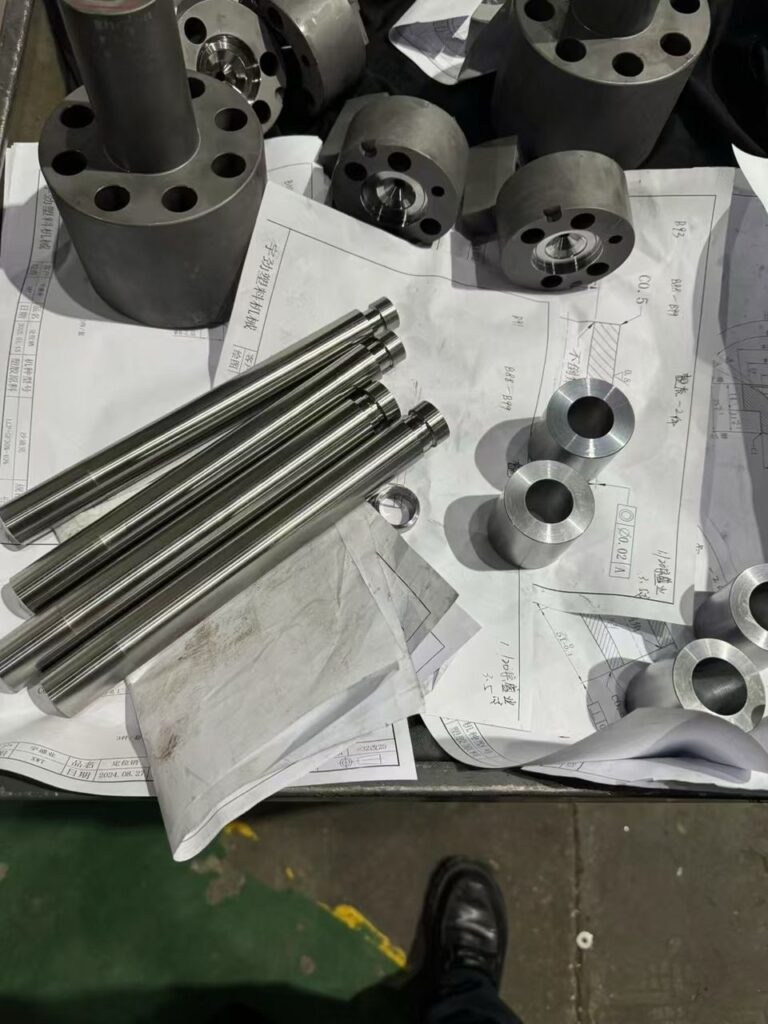
Treat uncertain data honestly. Mark dimensions as measured, taken from an original drawing, or estimated. If a screw cannot be removed before quotation, say so and identify which measurements will be confirmed later. A manufacturer can then flag provisional items instead of building a quotation around hidden assumptions.
A clear RFQ defines the acceptance target
Describe what a successful replacement must achieve in observable terms. Useful targets include fitting the existing drive and barrel, processing a named resin family, reaching a required output range, maintaining stable melt behavior, or reducing premature wear under the current formulation. Avoid asking for a “better design” without defining better.
Keep commercial expectations separate from technical acceptance. Quantity, requested delivery date, shipping destination, and documentation needs belong in the RFQ, but they should not replace the process data.
Machine and Existing Screw Information to Include
Record the machine interface before screw geometry
Start with the machine manufacturer, model, application, and screw rotation direction as viewed from a clearly stated reference point. Include the gearbox or drive connection, coupling arrangement, thrust interface, and any mating features that control installation. Photographs should show the drive end, tip end, barrel connection, and full assembly with a scale where practical.
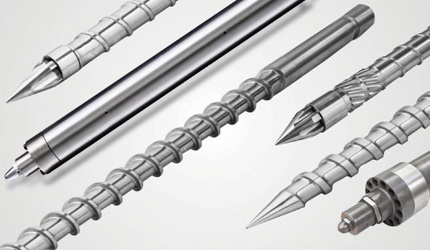
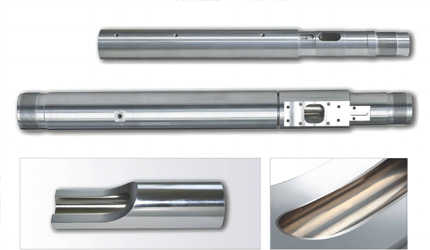
For a custom feed screw, confirm the nominal diameter, total length, working length, flighted length, shank dimensions, keyways or splines, thread forms, tip connection, and any sealing or locating surfaces. If the order includes a mating barrel, add the barrel bore, overall length, flange pattern, feed opening position, heating-zone layout, and sensor-port locations. A project for a blown film extrusion screw should still identify the exact machine and line conditions rather than relying on the application name alone.
Provide several sources for critical dimensions
A single measurement can hide wear, burrs, coating thickness, or an incorrect reference surface. For critical interfaces, provide the original drawing when available, current measurements, and close-up photographs. Identify the units and tolerances rather than leaving the reviewer to infer them.
At CHUANGRI SCREW, we use the RFQ package to discuss manufacturability and missing interface data before a custom order is finalized. Mark each critical value as measured, drawing-derived, or pending confirmation. That simple status label keeps an unverified dimension from being mistaken for an approved production requirement.
Material and Process Data for Custom Feed Screws
Name the complete material system
List every resin expected to run, not only the base polymer. Include grade designations when known, recycled-content percentage, fillers, reinforcements, pigments, flame retardants, processing aids, and other additives that can affect conveying, corrosion, or abrasion. If several recipes use the same screw, identify the most demanding formulation and the normal production mix.
Also note the material form and condition at the feed throat: pellets, regrind, powder, flakes, or blends; typical bulk behavior; moisture-control practice; and any bridging or feeding problem already observed. Buyers requesting a pelletizing extrusion screw should describe the feed stream and pelletizing duty, not just write “recycling” or “compounding.”
Give the real process window, not one ideal setting
Provide the normal and maximum screw speed, motor load, output, temperature profile, head pressure when available, and typical operating hours. Add downstream equipment and the product being made, because a screw serving a film line faces a different operating objective from one used for pelletizing. If output changes by resin or recipe, show those conditions separately.
Process data should reflect stable production, startup, and known upset conditions. A brief operating table can show the low, normal, and high values for each important variable.
Evidence From the Existing Screw and Barrel
Map wear to location and operating history
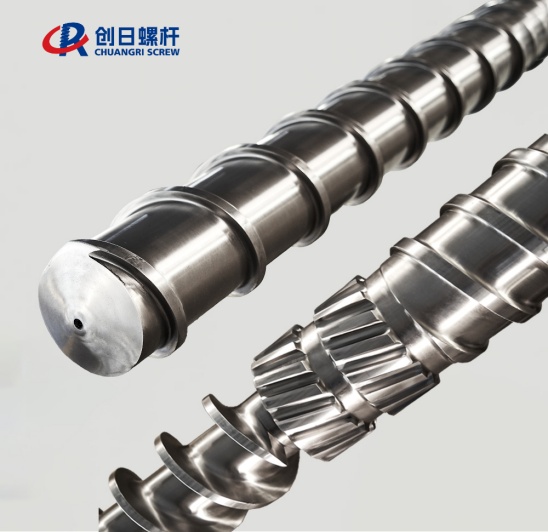
Before cleaning erases useful evidence, photograph material buildup, discoloration, scoring, chipped edges, corrosion, and polished wear bands. Mark where each condition appears along the screw and barrel. If measurements are available, record flight outside diameter, root diameter, barrel bore, and clearance at multiple axial positions rather than reporting only the worst point.
Pair the wear map with service history: installation date, estimated operating hours, processed materials, cleaning method, previous repairs, and the event that triggered removal. This does not turn the RFQ into a repair report. It helps the manufacturer distinguish general dimensional replacement from a custom feed screw request that must address a recurring operating condition.
Include representative parts and process symptoms
Attach photos of acceptable and defective output when the request is connected to product quality. Label defects plainly, such as unmelt, gels, color streaks, output surging, black specks, or unstable pressure. State when the symptom occurs and whether it follows a material change, speed increase, extended run, or startup.
Send recent production records if they are available, but select only the pages that support the problem statement. A short, labeled evidence set is more useful than hundreds of unlabeled trend screenshots. The manufacturer should be able to connect each file to a question in the RFQ.
How to Package the RFQ for Technical Review
Build one controlled information set
Use a cover sheet that identifies the project, machine, application, contact person, document revision, and requested quotation date. Follow it with a dimension sheet, process-data table, material list, wear evidence, and photographs. Give every attachment a clear file name and reference it from the cover sheet. If information changes, issue a new revision instead of sending isolated corrections.
Separate mandatory dimensions from preferences. For example, the drive connection and installed length may be fixed by the machine, while some process geometry remains open to technical review. This distinction prevents a preference from being mistaken for a nonnegotiable interface and helps focus questions on the decisions that still have room to change.
Ask for a documented review before release
Request a list of open points, assumptions, and dimensions that require confirmation before production. Decide who has authority to approve drawings and how revisions will be recorded. For projects that need a broader development discussion, the ODM/OEM screw and barrel customization page provides the appropriate route for starting that exchange.
Before approval, compare the proposal against the machine interface, material list, process range, and acceptance target—not merely against the previous screw drawing. A disciplined review closes the loop between what the line needs and what will be manufactured. It also creates a traceable baseline for installation checks and future replacement orders.
FAQ
Q: What information is required to quote custom feed screws?
A: A useful quotation package includes machine and application details, screw and barrel interface dimensions, material formulations, the operating range, production targets, wear evidence, quantity, and delivery requirements. Critical dimensions should include units, tolerances, and their source.
Q: Can custom feed screws be quoted without an original drawing?
A: Yes, but the missing drawing increases the importance of accurate measurements, photographs, machine identification, and a clear list of unconfirmed items. Production should not begin until critical interfaces and approval dimensions are documented.
Q: Why do custom extrusion screws require resin and additive data?
A: The complete material system affects conveying behavior, melting demand, mixing needs, corrosion exposure, and abrasive wear. Naming only the base resin can hide the conditions that matter most to technical review.
Q: Should worn dimensions be used for new custom feed screws?
A: Worn dimensions should be reported as evidence, not automatically treated as the target geometry. Whenever possible, compare them with original drawings, unworn reference surfaces, barrel measurements, and machine interfaces before approving replacement dimensions.
Q: How can buyers reduce delays before custom feed screw production?
A: Submit one revision-controlled RFQ, label every attachment, identify assumptions, assign a drawing approver, and answer open technical questions in a single consolidated response. This reduces contradictory instructions and prevents unresolved dimensions from reaching production.

 consult
 WHATSAPP
 leave message
 top
top