

Counter-Rotating Twin Screw Barrels: Process Fit, Flow Behavior, and Selection Limits
Related news
Counter-Rotating Twin Screw Barrels: Process Fit, Flow Behavior, and Selection Limits


A counter-rotating twin screw barrel is not simply a twin-screw system with one drive reversed. Rotation direction changes how the two screws capture material, divide the flow, build pressure, and expose the formulation to shear and heat. Those differences can make the design a strong fit for stable shaping duties, yet a poor choice when intensive mixing or frequent process changes dominate the requirement.
The correct selection therefore starts with material behavior and die demand, not with a familiar machine label.
How Counter-Rotation Changes Flow Inside the Barrel
Follow Material Through the Intermeshing Flow Path
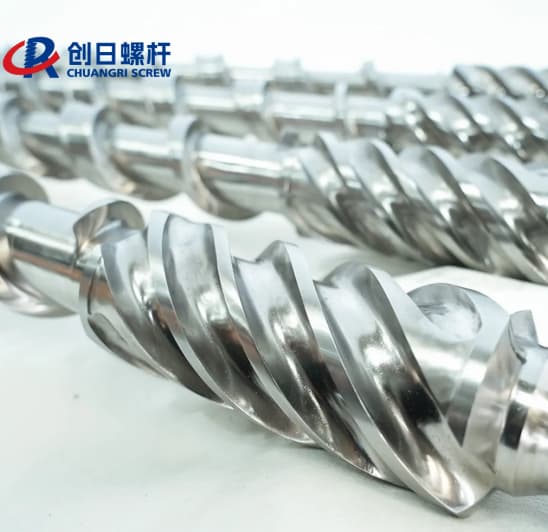
In an intermeshing counter-rotating arrangement, the screw surfaces move in opposite directions at the nip. The flights divide the available volume into more confined conveying spaces than an open-channel design.
This flow path explains why pressure can develop predictably when the screws, barrel bore, flight geometry, and die are correctly matched. It also explains why clearance control matters. Material leaking across flight tips or through worn intermeshing regions reduces the useful forward movement and can disturb output stability. A barrel cannot be selected independently from screw diameter, center distance, flight profile, and the intended working clearance.
Relate Shear and Residence Behavior to Material Heat History
Counter-rotation is often described as lower shear, but that phrase is incomplete. Local shear still occurs at flight tips, intermeshing clearances, compression regions, and restrictions. The practical question is whether the full screw-and-barrel geometry exposes the formulation to the amount and pattern of mechanical work it can tolerate.
Heat history also includes barrel heating, viscous dissipation, residence time, startup conditions, and recirculation caused by leakage or poor feeding. A gentler average conveying action cannot compensate for an oversized machine running underfilled, a restrictive die, or long hot stops. Selection should connect the expected flow path with a realistic temperature profile and shutdown procedure.
Where a Counter-Rotating Twin Screw Barrel Fits the Process
Use Controlled Conveying for Heat-Sensitive Shaping Duties
Counter-rotating systems are commonly considered when a formulation needs controlled conveying, limited unnecessary shear, and stable pressure before a shaping die. Heat-sensitive rigid compounds, continuous profiles, pipe, board, and similar duties are frequent evaluation cases. The benefit is not that every such material automatically requires counter-rotation; it is that the flow behavior can support a narrow, repeatable processing window.
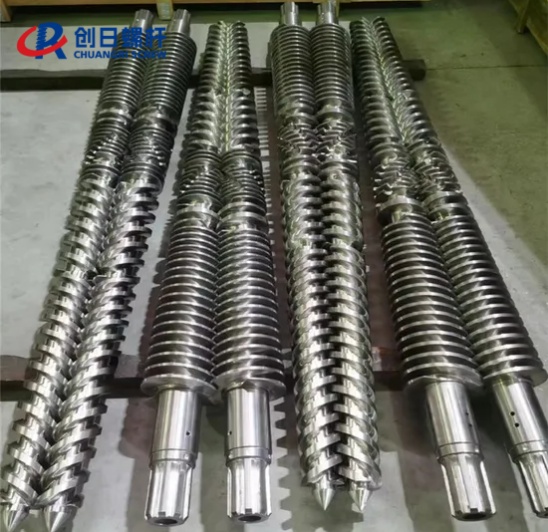
CHUANGRI SCREW lists the PVC Conical Twin-Screw Barrel for conical twin-screw extruders and various PVC products. That page verifies the product geometry and application scope, but it does not state the rotation direction. A buyer should therefore confirm the actual screw rotation, gearbox arrangement, screw pair, and barrel drawing instead of inferring them from the word “conical.”
Check Feed Form, Filler Loading, and Die Resistance as One System
Powder, pellets, regrind, fibers, and low-bulk-density blends do not enter the screws in the same way. Feed consistency affects channel fill, and channel fill affects pressure, residence behavior, and heat generation. High filler content can also change flow resistance and wear location. These variables must be assessed together rather than treated as separate purchasing questions.
Die resistance completes the system. A screw pair that feeds steadily into one die may experience excessive pressure or leakage with another. Record the formulation’s feed form, bulk behavior, moisture sensitivity, expected output, die geometry, and known pressure history. Without those inputs, a counter-rotating twin screw barrel specification is based on category names rather than process evidence.
Parallel vs Conical Counter-Rotating Configurations
Evaluate the Feed-to-Discharge Geometry of Parallel Designs
Parallel designs maintain their basic screw diameter relationship from feed to discharge. That geometry can support a consistent barrel envelope and may suit installations where the process, drive arrangement, and available space are built around parallel shafts. However, “parallel” describes geometry, not rotation direction. Both the mechanical drawing and the actual drive arrangement must confirm counter-rotation.
The current Parallel Twin-Screw Barrel page confirms a product for parallel twin-screw extruders and lists several processing options. It does not identify a counter-rotating configuration. Treat it as a verified geometry reference, then confirm screw direction, intermeshing profile, center distance, working length, venting, and discharge requirements for the specific line.
Evaluate Compression and Drive-Side Constraints in Conical Designs
Conical screws change diameter along their length, which alters available channel volume and the mechanical layout from feed to discharge. This can be useful where feeding, compression, space, and drive-side packaging favor a tapered pair. It also means that repair or replacement requires accurate matching across the full geometry; one diameter and one length cannot define the assembly.
The WPC Conical Twin-Screw Barrel page verifies use occasions including conical twin-screw extruders, PVC foam boards, WPC boards, and WPC doors. Rotation direction still requires separate confirmation. For a replacement project, collect the screw pair, barrel bore profile, center-distance information, coupling details, and original drawings whenever available.
Counter-Rotating Twin Screw Barrel Selection Limits
Recognize Processes That Need More Intensive Mixing
A counter-rotating design can become the wrong fit when the primary task is intensive distributive or dispersive mixing rather than controlled conveying and shaping. Processes that must repeatedly break agglomerates, distribute multiple additives, handle complex side feeding, or support substantial formulation development may need a different screw architecture and more flexible mixing sections.
The decision should be based on the required transformation. Ask whether the machine must mainly transport a prepared blend into a stable shape, or whether it must perform demanding compounding inside the barrel. If mixing quality depends on high interaction among multiple streams, selecting counter-rotation only because it can build pressure may shift the bottleneck upstream or create inconsistent material quality.
Account for Formula Changes, Cleaning, Venting, and Scale-Up Demands
Frequent color or formula changes raise another limit. Confined flow regions, product sensitivity, and cleaning access influence purge time and contamination risk. Venting requirements also matter because the location of fill, pressure, and exposed melt surface determines whether moisture or volatiles can leave effectively.
Scale-up should preserve process relationships, not merely increase screw diameter. Feed behavior, surface-to-volume ratio, heat-transfer capacity, die resistance, torque demand, clearances, and residence distribution can all change. A successful small line is evidence, but it is not a complete specification for a larger counter-rotating twin screw barrel.
Build a Defensible Counter-Rotating Twin Screw Barrel Specification
Document Material, Throughput, Temperature, and Die-Pressure Evidence
Begin the RFQ with the actual formulation family, feed form, bulk density behavior, filler or fiber content, moisture condition, thermal sensitivity, and recycled-content variability. Add target and minimum stable output, normal temperature profile, startup method, expected operating hours, die type, and available pressure records. State which product defects or process instabilities the project must correct.
These inputs prevent a nominal throughput target from hiding a difficult feed condition or restrictive die.
Confirm Barrel Geometry, Wear Strategy, Clearances, and Acceptance Data
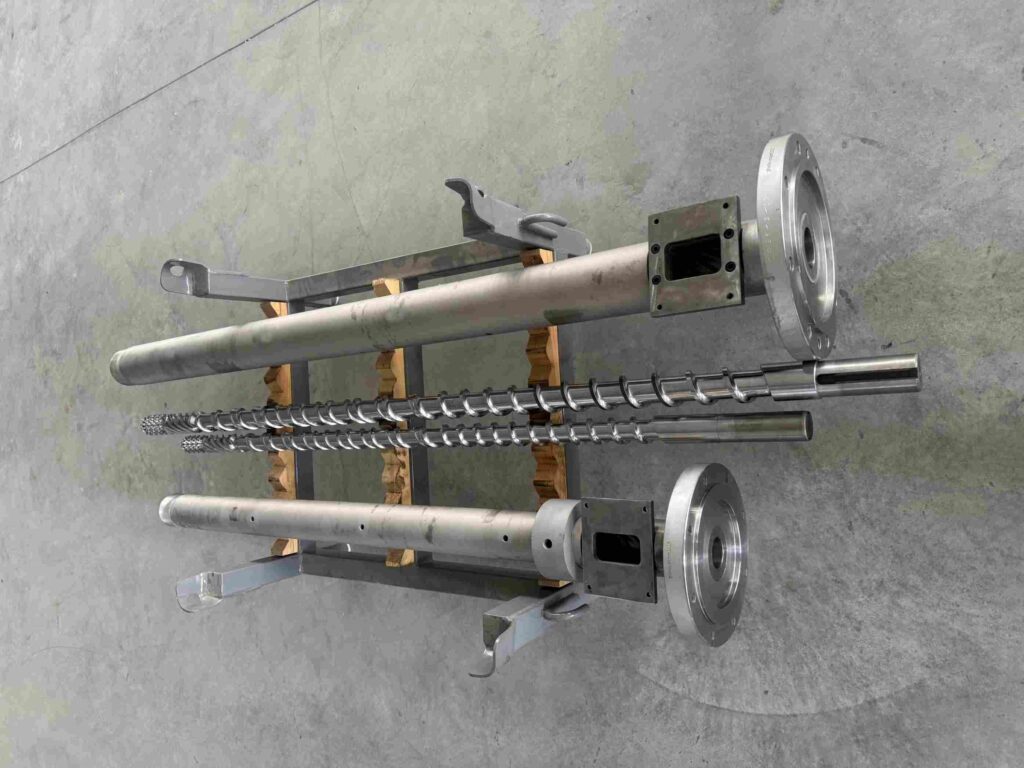
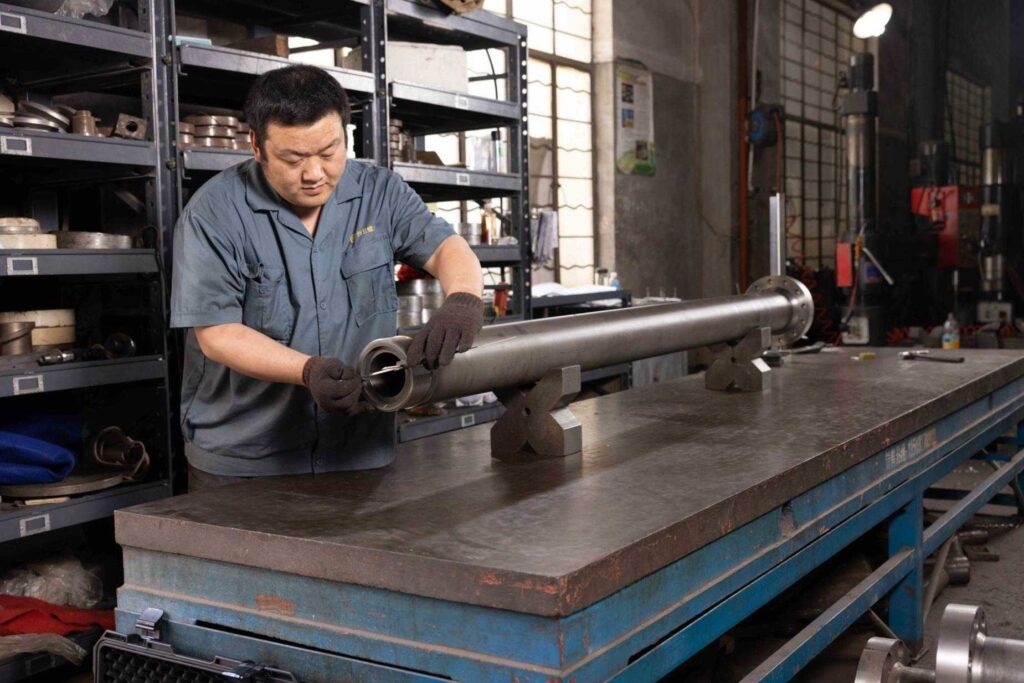
Dimensional evidence should include screw diameters by position, center distance, working length, flight geometry, barrel bore profile, drive and coupling details, heating and cooling zones, vents, feed opening, discharge connection, and available machine drawings. Material and surface-treatment choices should follow the actual abrasive, corrosive, and thermal conditions rather than a generic hardness preference.
At CHUANGRI SCREW, we use this process and dimensional evidence to review screw-and-barrel fit before manufacturing recommendations are finalized. The acceptance plan should define drawing approval, material records, dimensional inspection points, rotation-direction confirmation, clearances, and the information needed for installation and startup. A defensible specification makes the selection limits visible before production, when they are still inexpensive to address.
FAQ
Q: What is a counter-rotating twin screw barrel used for?
A: It is commonly evaluated for processes that need controlled conveying, stable pressure, and restrained mechanical work before continuous shaping. Heat-sensitive PVC, pipe, profile, board, and related duties are typical cases, but the formulation, feed behavior, die, and required mixing must still be checked.
Q: How does a counter-rotating twin screw barrel move material?
A: In an intermeshing design, opposing screw motion divides the material into relatively confined conveying spaces and moves it forward in a positive-displacement-like pattern. Actual flow still depends on fill level, clearances, leakage, material behavior, and die resistance.
Q: Is every conical twin screw barrel counter-rotating?
A: No. Conical describes the change in screw and barrel geometry, while counter-rotating describes screw direction. The drive arrangement, screw drawings, intermeshing profile, and manufacturer documentation must confirm rotation direction.
Q: When is a counter-rotating twin screw barrel a poor selection?
A: It may be a poor fit when the process requires intensive dispersive mixing, complex side feeding, broad formulation flexibility, rapid changeovers, or venting behavior that the proposed geometry cannot support. Selection must follow the required material transformation.
Q: What data is needed to specify a counter-rotating twin screw barrel?
A: Provide formulation and feed details, output targets, thermal limits, die information, pressure history, screw and barrel dimensions, center distance, working length, drive details, wear conditions, venting needs, drawings, and measurable acceptance requirements.

 consult
 WHATSAPP
 leave message
 top
top