
How PCR Content Changes Extruder Screw Torque, Melt Pressure, and Wear
Related news
How PCR Content Changes Extruder Screw Torque, Melt Pressure, and Wear


PCR content changes composition, melt flow, moisture, particle form, bulk density, and contamination. These variables affect torque and pressure before measurable PCR plastic extrusion screw wear. The key is separating material effects from mechanical deterioration.
How PCR Content Changes Extruder Screw Torque, Melt Pressure, and Wear
Why Higher PCR Content Can Raise Extruder Screw Torque
Higher PCR content does not automatically mean higher torque. It increases the chance of polymers, additives, and degradation histories with different viscosities. A more viscous melt needs more die pressure and raises shear stress that contributes to torque; a degraded, less viscous fraction can move readings the other way.
How Variable Melt Flow and Mixed Polymer Composition Increase Shear Load
Mixed grades do not soften or shear identically. Low-flow material resists deformation while degraded material may flow earlier. Compare torque at the same recipe, speed, temperature, screen condition, and output.
How Moisture, Fines, and Irregular PCR Particles Create Torque Spikes
Sustained high torque usually reflects a continuing increase in melt resistance or average channel loading. Short spikes more often follow intermittent events: a bridge collapses, a dense slug enters the screw, fines compact, or surface moisture flashes to steam. Moisture can also change viscosity through hydrolytic degradation in moisture-sensitive polymers. This distinction separates a steady overload from a short feeding disturbance.
When Rising Torque Indicates PCR Material Variation Instead of Screw Wear
A torque or pressure shift that starts immediately with a PCR lot and disappears when that lot is removed points first to material variation. Wear is a progressive loss of geometry: screw flight outside diameter decreases, barrel inside diameter increases, clearance grows, and output at the same rpm can decline. The time pattern should guide the next check.
How PCR Bulk Density Changes Extruder Feeding and Melt Pressure
Why Low-Bulk-Density PCR Flakes Reduce Feed Stability
The same hopper volume does not represent the same mass flow when bulk density changes. Light film and flakes fill space without consistently filling the screw channel by mass. Volumetric feeding becomes less stable as density varies; gravimetric feeding responds to weight. The extruder screw-barrel function still depends on controlled solids delivery.
How Bulk Density Variation Causes Bridging, Feed Surging, and Air Entrainment
Irregular flakes can bridge and starve the screw. When the bridge breaks, stored material may enter as a large charge. Film traps air and reduces channel fill; fines can alternate restriction with release.
How Feeding Instability Appears in Torque and Melt Pressure Data
Irregular recyclate can arch or bridge above the feeding device and starve the screw. When the bridge breaks, an oversized charge may follow the interruption. This repeating underfeed-overfeed cycle can make output, torque, and melt pressure move together after their normal process delays. Feed-rate, hopper-weight, and drive-speed trends help identify the source.
How Contamination Accelerates PCR Plastic Extrusion Screw Wear
How Metal, Glass, Sand, and Mineral Residue Cause Localized Abrasive Wear
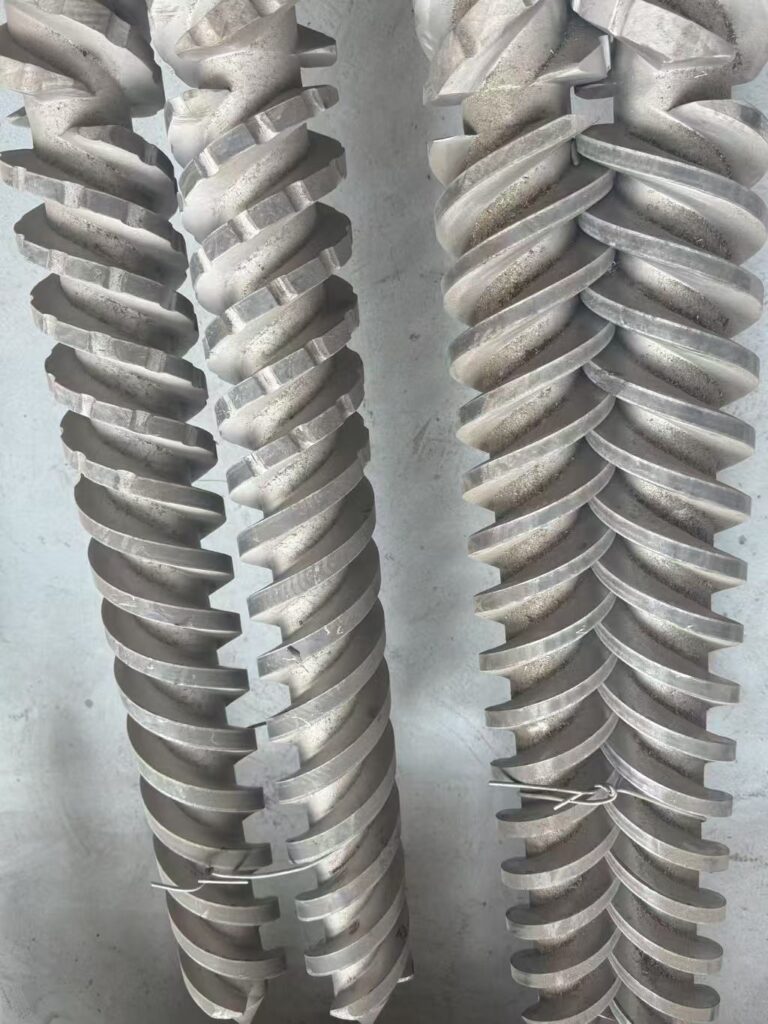
Metal, glass, sand, and mineral residue can score flight edges, cut root surfaces, or remove material where compression and mixing intensify. Local scratches or rounded flight edges show why wear is not uniform.
How Moisture, PVC Residue, and Degraded Polymer Increase Corrosive Wear
Moisture, degraded resin, PVC residue, and additives may create corrosive species. Abrasion removes protective layers and exposes fresh steel, reinforcing corrosion. Protection must address chemical resistance and hardness.
Where Post-Consumer Resin Screw Wear Usually Appears First
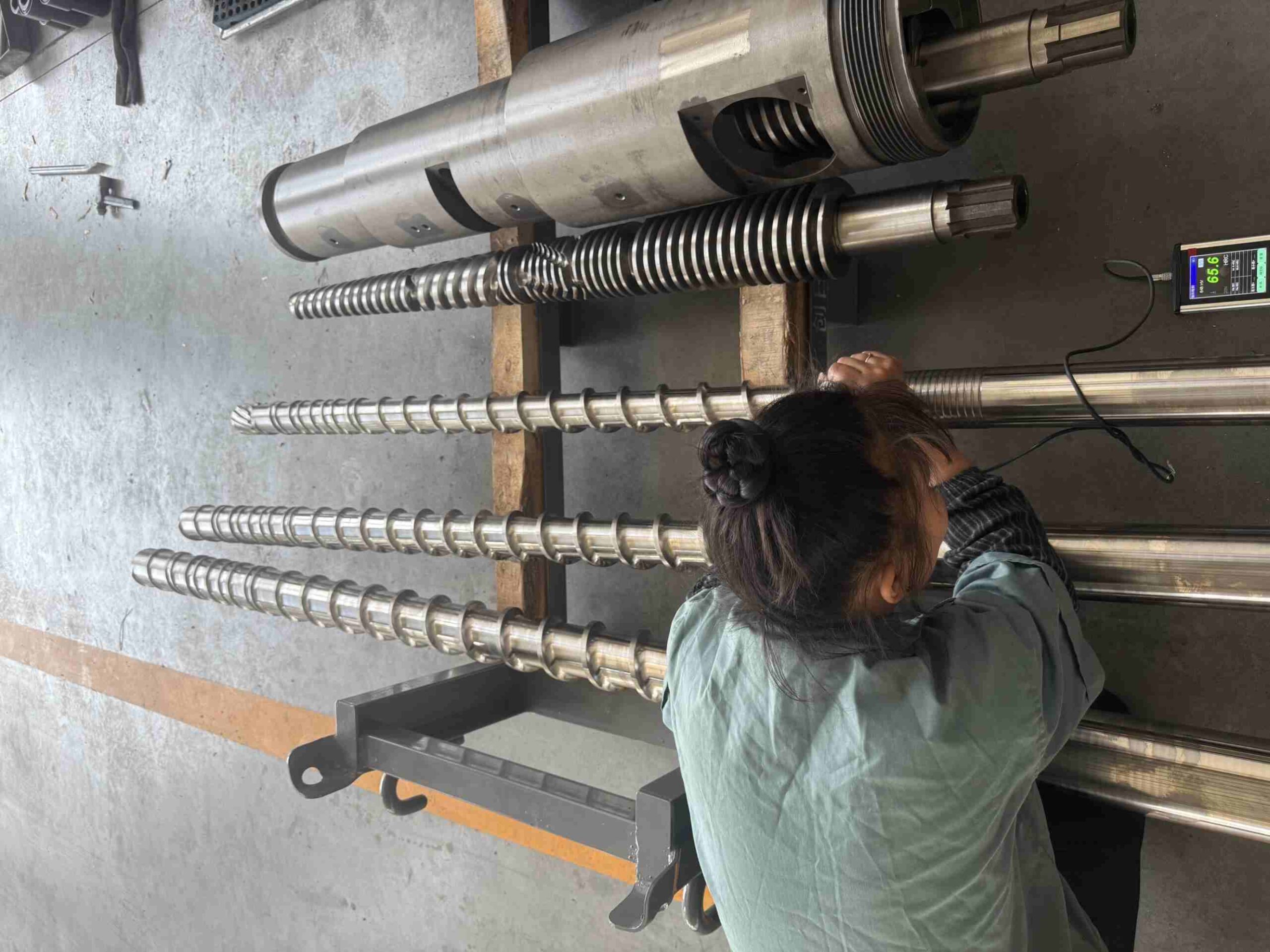
Inspect flight edges, feed and compression zones, mixing sections, screw-root surfaces, and the barrel bore near high-pressure areas. Local scoring, rounded flight edges, coating loss, or concentrated diameter change is more informative than assuming the entire screw wears evenly. The actual first-wear location depends on feed form, contaminants, pressure profile, and screw design.
Melt Pressure Fluctuation or Recycled Plastic Screw Wear: How Can Operators Tell?
Batch-Linked Pressure Changes That Point to PCR Raw Material Variation
If pressure changes with a PCR lot and returns with prior material, check density, moisture, particle size, contamination, ash, melt flow, screen condition, and temperature. A controlled swap is stronger than one peak.
Gradual Pressure and Output Loss That Suggest Screw-Barrel Clearance Wear
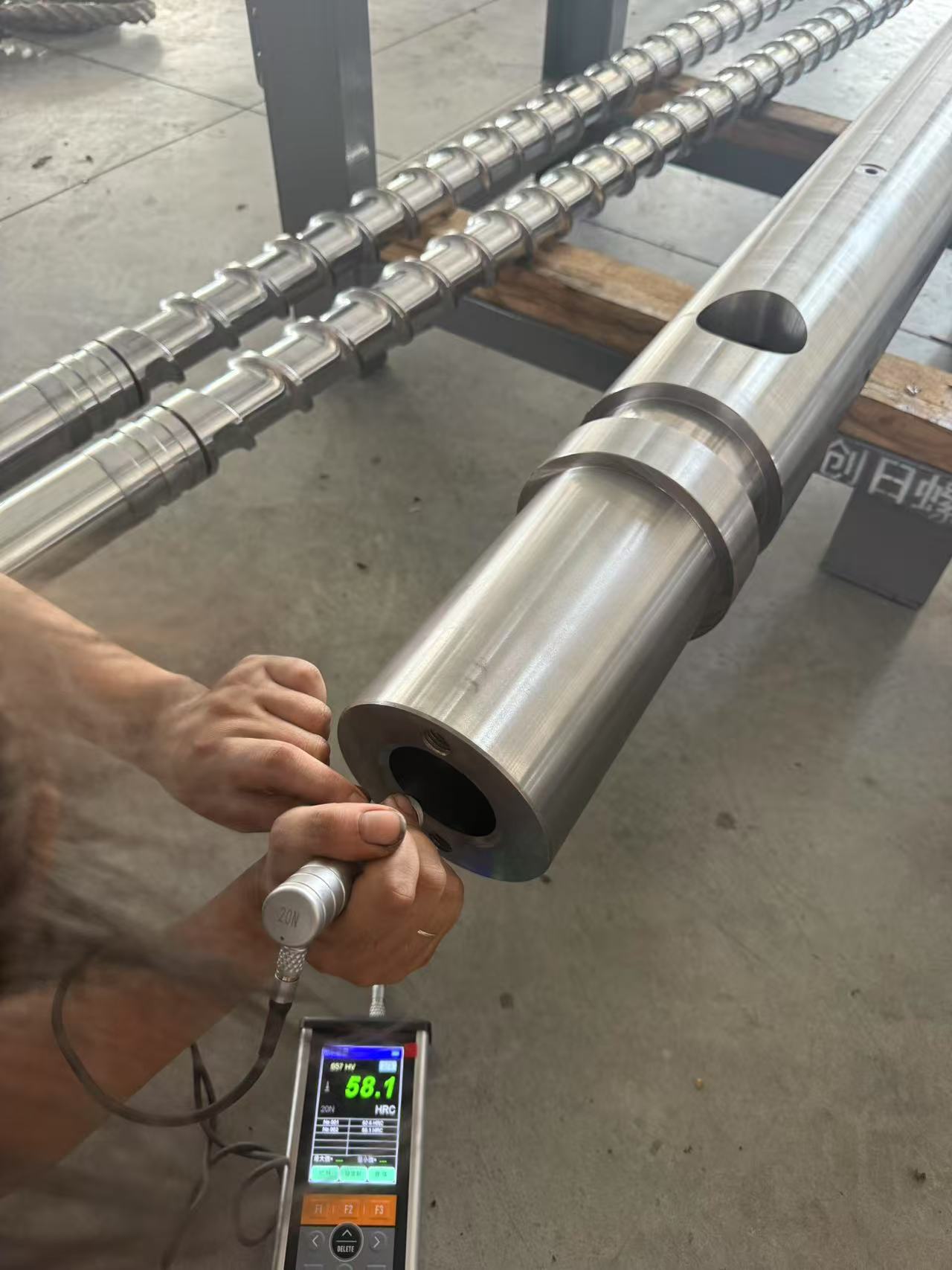
Mechanical wear becomes more likely when output at the same rpm declines gradually, operators keep raising rpm to hold rate, pressure-building ability weakens, and mixing quality deteriorates across stable material lots. Confirm the diagnosis by measuring flight outside diameter, barrel bore diameter, and screw-barrel clearance against the original or accepted baseline. A documented screw removal and wear inspection supports that comparison.
Screen Pack, Die, Temperature, and Sensor Checks Before Blaming the Screw
Before attributing pressure change to screw wear, check the screen pack, die restriction, barrel-temperature stability, pressure-sensor drift, feeding consistency, and downstream speed matching. Pressure is affected by viscosity, flow, die geometry, and sensor installation or calibration. A batch-linked change should trigger raw-material checks before a mechanical teardown.
Which Process Data Diagnose PCR Extruder Screw Problems?
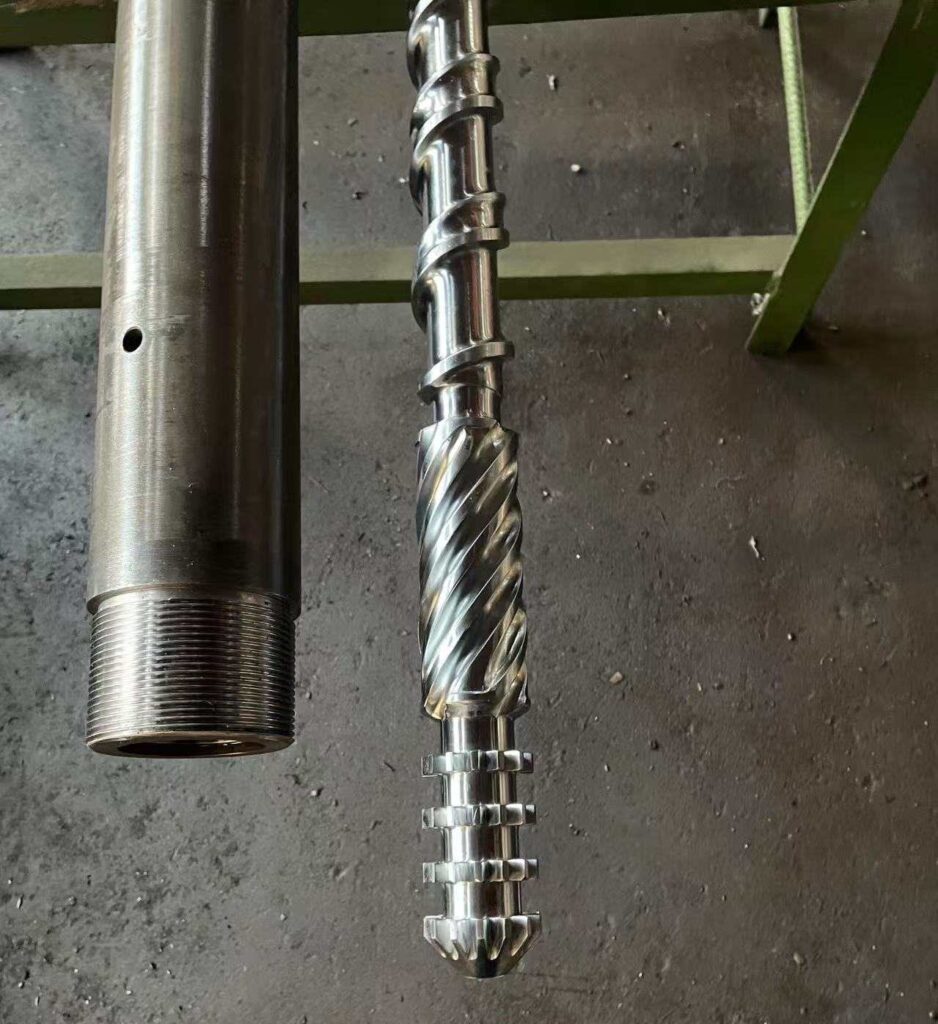
Raw-Material Data: PCR Ratio, Bulk Density, Moisture, MFR, Ash, and Contamination
Record PCR percentage, bulk density, particle size, moisture, melt flow, ash, and contamination by lot. Without lot identity and retained samples, trends cannot separate a wet or contaminated batch from equipment deterioration.
Extruder Data: Torque, Specific Output, Melt Pressure, Motor Load, and Temperature
Trend torque, motor load, melt pressure, melt temperature, output, screw rpm, and screen-change interval under comparable conditions. Specific output is throughput per screw revolution, or a practical plant metric of throughput divided by screw rpm. It separates an apparent production recovery achieved by running faster from a real decline in conveying and pumping capability.
Wear Data: Screw-Barrel Clearance, Flight Diameter, Surface Damage, and Wear Location
Direct evidence includes clearance, flight OD, barrel ID, alignment, scoring, coating condition, and wear location. Use this comparison as a boundary, not a one-reading verdict.
|
Observation |
PCR variation |
Screw/barrel wear |
|
Timing |
Starts with one lot |
Worsens across qualified lots |
|
Trend |
Torque, pressure, output surge together |
Specific output declines gradually |
|
Evidence |
Moisture, MFR, density, ash changed |
Clearance, OD, ID, damage changed |
How to Reduce PCR Plastic Extrusion Screw Wear in Production
Match Feed-Zone Geometry and Feeding Method to PCR Material Form
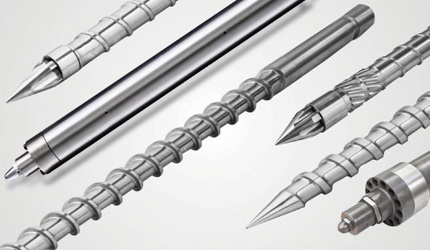
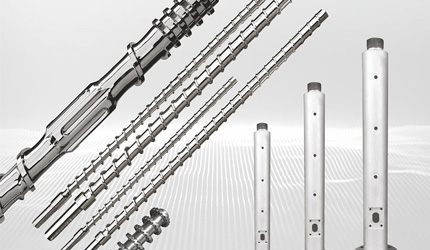
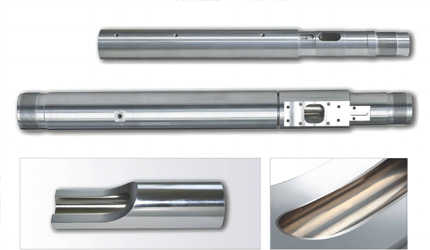
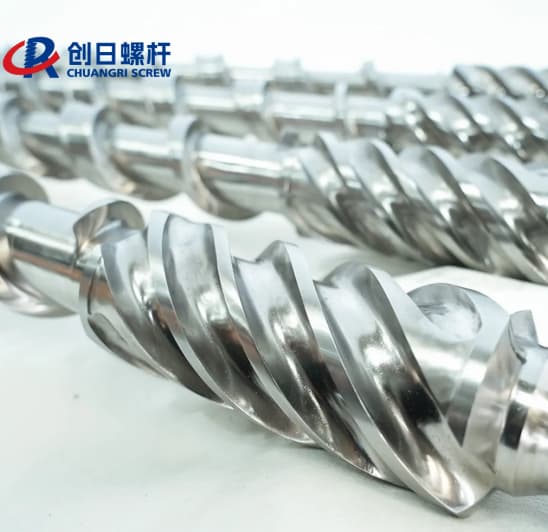
CHUANGRI SCREW supplies recycling-granulation screw-and-barrel solutions for common rigid resins and soft materials such as PP or PE film and woven bags. Its source material lists side-screw or side-pellet feeding options for soft feed forms. We match feed-zone geometry and feeding method to pellets, flakes, film, powder, or mixed recyclate to stabilize mass flow and channel fill.
Match Screw Material and Wear Protection to Contamination Risk
Select protection by wear mechanism, not hardness alone. Nitriding can suit moderate wear; bimetallic alloys address more abrasive feedstock; nickel-based alloys are relevant where corrosion and wear occur together; tungsten-carbide protection targets severe abrasion. CHUANGRI SCREW also documents localized hardfacing or coating on concentrated wear zones, including screw flights and root surfaces. See the broader method for matching protection to twin-screw wear mechanisms.
Build a Process Baseline Before Replacing the Screw
Before replacing a screw, record feed rate, screw speed, torque, motor load, melt pressure, melt temperature, output, and screen-change interval for one stable formulation. Compare later runs under the same conditions. If process capacity declines across qualified lots and clearance measurements confirm geometry loss, replacement or rebuilding has a stronger evidence base.
FAQ
Q: Why does higher PCR content increase torque and PCR plastic extrusion screw wear?
A: It can widen variation in viscosity, polymer mix, moisture, contamination, and channel loading. Resistance may raise torque, while hard or corrosive contaminants accelerate wear. PCR percentage alone is not predictive.
Q: How does bulk density variation cause PCR extruder screw problems?
A: Equal feed volume can contain different mass. Low-density flakes may bridge, trap air, or alternate between starvation and overfeeding, making output, torque, and pressure fluctuate together.
Q: Which contaminants cause the fastest recycled plastic screw wear?
A: Metal, glass, sand, and mineral particles cause abrasion. Corrosive residues and degraded polymers weaken metal surfaces. Loss can accelerate when abrasive and corrosive mechanisms act together.
Q: How can melt pressure fluctuations be separated from post-consumer resin screw wear?
A: Check whether the change follows a PCR lot, then exclude feeding, screens, die restriction, temperature, sensor drift, and downstream mismatch. Gradual decline plus measured clearance growth points toward wear.
Q: Which production data confirm PCR plastic extrusion screw wear?
A: Confirmation requires flight OD, barrel ID, screw-barrel clearance, alignment, scoring, coating condition, and wear location compared with original dimensions or a qualified baseline.

 consult
 WHATSAPP
 leave message
 top
top