How to Reduce Wear in Injection Moulding Barrels and Extend Service Life
Related news
How to Reduce Wear in Injection Moulding Barrels and Extend Service Life


Injection moulding barrels rarely fail without warning. Abrasive fillers, corrosive additives, unstable temperatures, poor alignment, and rushed start-up procedures gradually change the screw-to-barrel fit. The first signs may be longer recovery time, inconsistent shot weight, black specks, or rising scrap. A wear-reduction programme combines resin knowledge, controlled processing, disciplined cleaning, and dimensional inspection.
Why Injection Moulding Barrels Wear Faster Than Expected
Separate abrasive, corrosive, and mechanical wear
Glass fibre, mineral fillers, pigments, and contaminated regrind can abrade the screw flights and barrel bore. Chemically active polymers, moisture, and long residence times can create corrosion. Misalignment, excessive clearance, foreign particles, or a cold start can create local contact and scoring. The mechanisms often overlap, so a smooth-looking surface does not prove that the assembly is healthy.
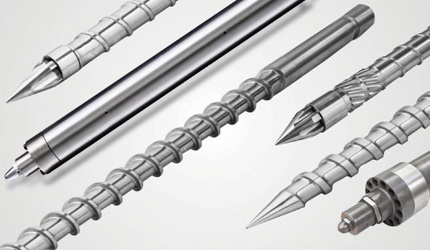
All raw materials undergo chemical composition analysis, ultrasonic flaw detection, and other quality inspections upon arrival to ensure there are no cracks, inclusions, or other defects. Barrels are key components in injection molding and extrusion processes. A screw performs three basic functions: solid conveying, melting, and metering or pumping. When the barrel bore or screw flight changes, melt can slip backward during recovery and plasticizing can take longer.
Use the process symptoms as an early warning system
Track recovery time, screw RPM, back pressure, cushion, shot weight, melt temperature, and motor load under comparable conditions. A single bad cycle is not enough to diagnose wear, but a trend is valuable. If recovery time rises while the recipe remains stable, inspect the screw, barrel, and check ring as a system. If variation follows a material change, investigate contamination or resin compatibility first.
Control Material, Temperature, and Motion
Match the wear solution to the resin formula
Start with the actual formulation, not only the base polymer. Record glass-fibre or mineral loading, recycled content, pigments, moisture sensitivity, and corrosive additives. General-purpose steel may suit clean resin, while high-filler production may justify a bimetallic liner. The choice also depends on throughput, residence time, screw geometry, and downtime cost.
For each new material, define a reasonable temperature window and document the start-up sequence. Avoid using excessive barrel temperature to compensate for poor feeding or a worn screw. Excess heat can accelerate degradation and corrosion while hiding the underlying fit problem.
Keep screw speed and back pressure proportionate
High screw speed, high back pressure, and long residence time increase mechanical and thermal stress. They may be necessary for a particular part, but they should be justified by the process window rather than used as permanent corrections. When a machine needs progressively higher settings to maintain output, compare the process data with measured screw flight diameter and barrel bore condition. A stable recipe with lower compensating pressure is usually kinder to the assembly.
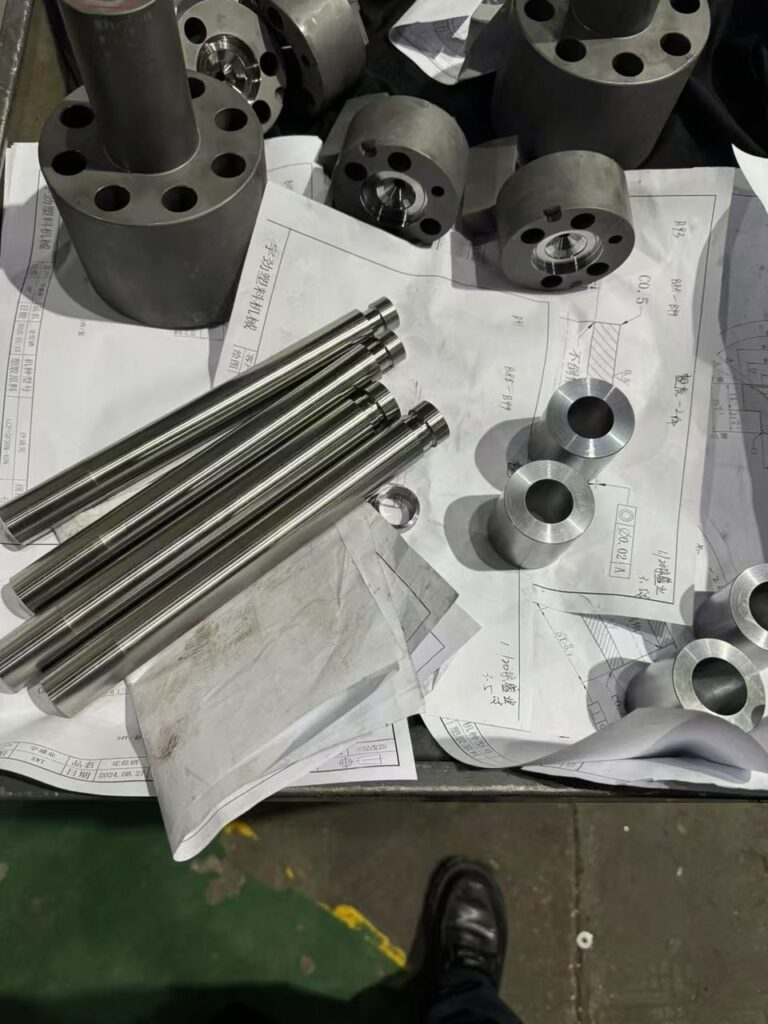
During start-up, allow the barrel to reach a stable temperature before screw rotation. Confirm that the feed path is clear and avoid dry rotation or forcing solidified material through the screw. These controls prevent impact damage that no coating can fully undo.
Protect the Barrel During Cleaning and Shutdown
Purge with a planned changeover method
Cleaning should remove residue without adding new abrasion. Choose a purge resin or cleaning compound compatible with the machine and the previous material. Follow a repeatable sequence, avoid unnecessary high speed, and stop when the discharge is clean. Do not use metal tools or aggressive scraping methods that can score the bore.
Without such fine polishing, plastic may adhere to rough surfaces, hindering the process. If residue returns after a normal purge, inspect for dead spots, damaged flight edges, degraded polymer, or a surface condition that needs professional correction.
Shut down dry, stable, and ready for the next start
Before an extended idle period, remove moisture-sensitive or corrosive material according to the resin supplier’s instructions. Leave the screw and barrel clean, protected from condensation, and documented with the last material and any abnormal observations. On restart, use a controlled heat-up and verify free movement before loading production resin.
Measure Wear Before It Changes Part Quality
Inspect the complete plasticizing assembly
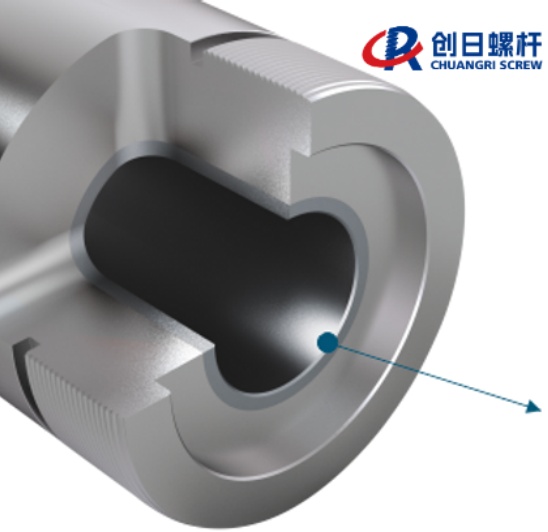
Remove and inspect the screw when process evidence indicates a persistent problem. Measure screw flight outside diameter and barrel inside diameter at matching zones rather than relying on a visual check at one end. Examine the feed, compression, and metering areas separately because wear is often localized. Also inspect the check ring, screw tip, nozzle, and alignment surfaces; replacing one worn part against another worn part can preserve the fault.
The manufacturing record should include fit clearance, concentricity, surface hardness, and dimensional accuracy. These checks are useful at replacement time and as a baseline for future inspections. If the clearance is already outside the process requirement, increasing back pressure may restore output briefly while accelerating heat and wear.
Turn inspection results into a maintenance interval
Use production hours, processed resin, filler loading, recovery-time trends, and measured dimensions to set the next inspection point. A high-abrasion line may need a shorter interval. The useful record should show where wear occurred, which settings were active, and whether the wear rate is changing.
Match Repair or Replacement to the Application
Decide whether the assembly can be corrected
Repair may be reasonable when damage is localized, enough base material remains, and the screw and barrel can return to matched geometry. Replacement is more sensible when wear is widespread, the bore is distorted, critical flight dimensions are lost, or repeated repairs changed the original design. Include downtime and dimensional risk in the decision.
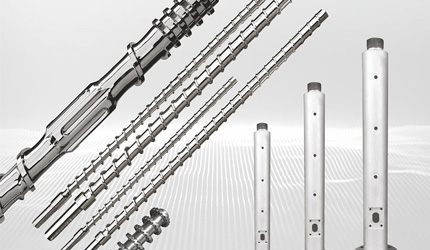
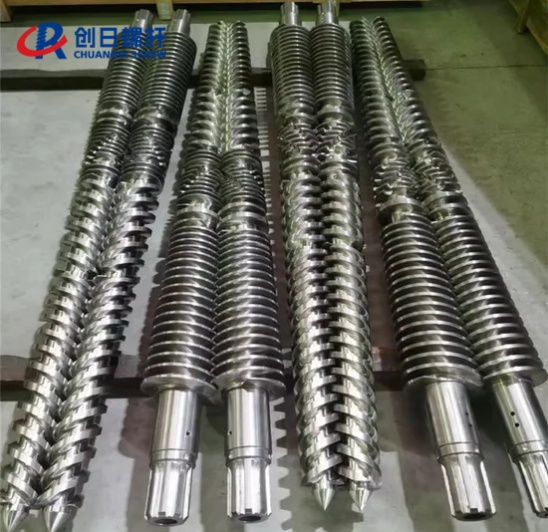
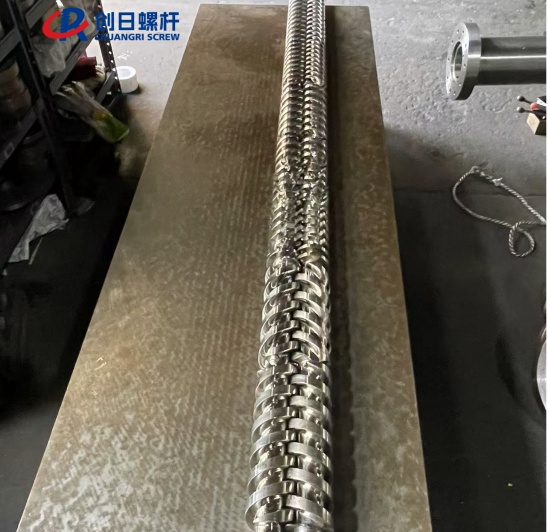
CHUANGRI SCREW combines design, machining, heat treatment, surface treatment, inspection, and after-sales support for screw and barrel work. Our production success stems from our engineering expertise, working closely with you to design the most efficient screws tailored to your production line, ensuring optimal performance in extrusion or injection molding processes. Our team can review drawings, resin conditions, wear photographs, and measured dimensions before recommending a matched solution.
Our injection molding and extrusion screws are built to deliver consistent final product quality, high performance, and wear resistance.
Before approving a replacement or repair, ask for evidence of the following:
*Performed on CNC lathes to machine the screw’s outer diameter and end faces.
*According to design specifications (pitch, lead, depth), thread profiles are milled, covering: Feeding zone, compression zone, metering zone, mixing section.
*Use grinding machines and polishing tools (abrasive belts or diamond grinding wheels) for rough polishing.
*Purpose: Remove milling burrs, improve surface finish, and prepare for nitriding or heat treatment.
*Ensures inner diameter accuracy and surface roughness (Ra ≤ 0.4μm).
*Using equipment such as coordinate measuring machines (CMM), internal diameter gauges, and hardness testers, we inspect all key parameters of the product.
*We check fit clearance, concentricity, surface hardness, and dimensional accuracy to ensure the product meets customer drawings and standards.
*We ensure proper fit and smooth rotation between the screw and barrel.
*Full CNC machining ensures better straightness and strength.
Different screw designs are intended to achieve specific processing effects. Therefore, customizing the right screw can improve productivity and reduce waste.
Select the material and treatment as a matched set
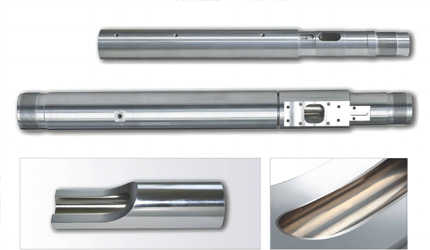
For general applications, a properly specified nitrided component may offer a practical balance of cost and wear resistance. For abrasive or corrosive formulations, a bimetallic barrel or an application-specific screw surface may provide a better life-cycle result. CHUANGRI SCREW’s Injection Molding Barrel range includes custom dimensions, CNC machining, and bimetallic lining options for filled materials.
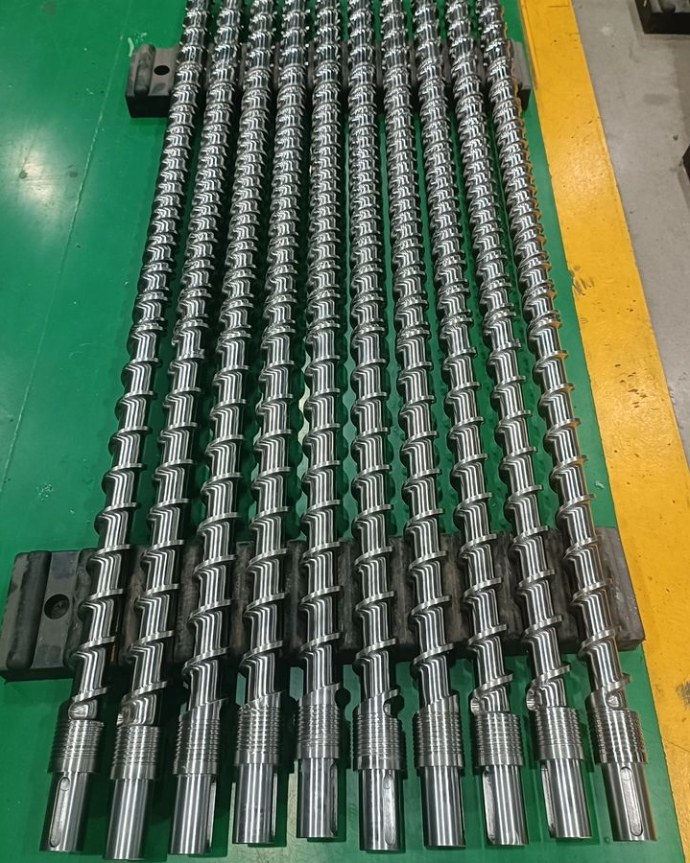
When the screw is the limiting component, compare the Bimetallic Injection Molding Screw with a Nitrided Injection Molding Screw against the real resin and duty cycle. The best answer is the one that preserves fit, plasticizing stability, and inspection access over the planned service interval, not merely the one with the highest initial hardness.
FAQ
Q: How can injection moulding barrels last longer?
A: Match the barrel and screw materials to the resin, control temperature and back pressure, prevent cold starts and foreign-object damage, purge methodically, and measure wear before shot consistency changes.
Q: What causes early wear in injection moulding barrels?
A: Common causes include glass fibre or mineral fillers, corrosive additives, contaminated regrind, excessive residence time, poor alignment, excessive clearance, dry rotation, and abrupt start-up.
Q: How do operators know when an injection moulding barrel is worn?
A: Look for a rising recovery time, unstable shot weight or cushion, increased screw speed or back pressure, black specks, melt-temperature variation, noise, vibration, and measured changes in bore or flight dimensions.
Q: Is a bimetallic barrel always better for injection moulding?
A: No. A bimetallic solution can be valuable for abrasive or corrosive duties, but the correct choice depends on the resin, filler level, throughput, screw design, operating window, and the cost of downtime.
Q: Should the screw and barrel be replaced together?
A: They should be inspected as a matched pair. Replacing only one part can leave excessive clearance or misalignment, so the decision should follow dimensional measurements and the condition of the check ring, screw tip, and nozzle.

 consult
 WHATSAPP
 leave message
 top
top